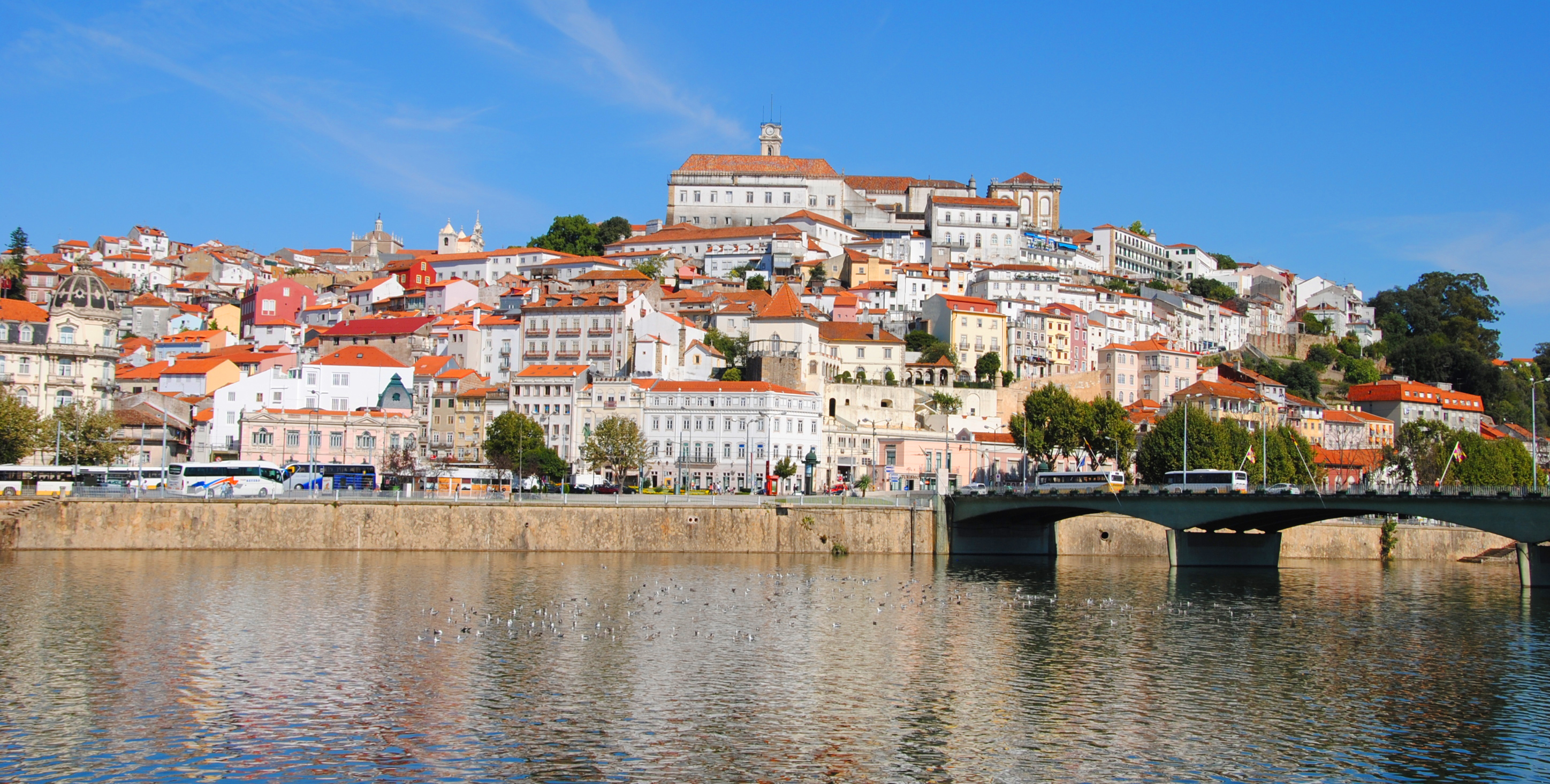
ANOZERO, the Coimbra Biennial of Contemporary Art, is the Portuguese biennial of the central interior, founded in 2015 by the Círculo de Artes Plásticas de Coimbra (CAPC) in partnership with the Municipality of Coimbra and the University of Coimbra. The institutional context of its founding is precise and unusually well-articulated: on 22 June 2013, the World Heritage Committee meeting in Phnom Penh inscribed the University of Coimbra – Alta and Sofia on the UNESCO World Heritage List under criteria (ii), (iv) and (vi), and ANOZERO was constituted two years later as a continuing programme of contemporary critical response to that inscription. The biennial's stated objective, in its own institutional language, is to engage reflection on the recent classification of the University of Coimbra – Alta and Sofia as World Heritage by UNESCO; that is, to establish a sustained confrontation between the heritage city and the practices of contemporary art, and to occupy the Coimbra urban fabric (the medieval Alta of the University, the Sofia axis of the sixteenth-century colleges, and the Santa Clara monastic district across the Mondego River) with a programme that is institutionally local and curatorially international.
The 6th edition, To hold, to give, to receive, opened on April 11, 2026 and ran through July 5 under the joint general curatorship of the Dutch-Canadian architecture historian Hans Ibelings (founder of the magazine A10: new European architecture, professor at the Daniels Faculty of Architecture, Landscape and Design at the University of Toronto) and the Canadian curator John Zeppetelli (director of the Musée d'art contemporain de Montréal from 2013 to 2024, organiser of the international touring exhibition Leonard Cohen: A Crack in Everything), with the Portuguese curator Daniel Madeira as assistant. The edition's title is etymological in its argument: the Proto-Indo-European root ghabh is the lexical ancestor of the English verb to have, of the noun habitat, and, across a longer route, of the verbs to hold, to give and to receive. The curatorial proposition, developed through Peter Kropotkin's Mutual Aid: A Factor of Evolution (1902), is that the gestures of holding, giving and receiving are the constituting acts of the habitat as a social form, and that contemporary art's working subject (in 2026, after a decade of pandemic isolation, ecological pressure and renewed displacement) is precisely the documentation and dramatisation of those gestures.
A biennial built from a UNESCO inscription
The structural feature that distinguishes ANOZERO from the Portuguese biennial system's older programmes (the Bienal de Cerveira (founded 1978 in Vila Nova de Cerveira, the oldest Portuguese visual-arts biennial in continuous activity) and the Lisbon Architecture Triennale (founded 2007 with its first edition Urban Voids) is the precision of its institutional argument. ANOZERO was conceived not as a generic city biennial but as a programmed response to a specific UNESCO inscription: the 2013 listing of the University of Coimbra – Alta and Sofia, the medieval-to-baroque ensemble of colleges, libraries (including the eighteenth-century Joanine Library), the Royal Palace of Alcáçova (housing the University since 1537) and the surrounding urban fabric, recognised by the World Heritage Committee for its exchange of architectural influences (criterion ii), its outstanding example of an integrated university city (criterion iv) and its association with universal traditions of higher learning (criterion vi). The biennial's institutional voice is the Círculo de Artes Plásticas de Coimbra (CAPC), founded in 1958 by students of the Coimbra Academy and recognised as the oldest Portuguese institution dedicated to the promotion of contemporary art; the programme's continuing argument is that the heritage city and the contemporary biennial are not antagonists but partners: to inscribe Coimbra on the World Heritage List is to commit the city, in perpetuity, to the work of contemporary critical reception.
The six editions to date document the institutional construction of that argument. The inaugural 2015 edition, Um Lance de Dados / A Throw of the Dice (31 October – 29 November), was curated by Carlos Antunes, Luís Quintais and Pedro Pousada with Luísa Santos as executive curator, taking Stéphane Mallarmé's 1897 poem Un Coup de Dés Jamais N'Abolira Le Hasard as its constituting reference and occupying more than twenty venues across the historic city, including the Museu Nacional Machado de Castro, the Joanine Library, the Museu da Ciência, the Mosteiro de Santa Clara-a-Velha and the Edifício Chiado. The 2017 second edition, Curar e Reparar / Healing and Repairing (11 November – 30 December), was curated by the Portuguese critic Delfim Sardo as chief curator with Luíza Teixeira de Freitas as associate, and gathered work by Francis Alÿs, William Kentridge, Louise Bourgeois, James Lee Byars, Danh Võ, Kader Attia and Dominique Gonzalez-Foerster among others across the Mosteiro de Santa Clara-a-Nova (which from this edition forward becomes the institutional anchor) and the Convento de São Francisco. The 2019 third edition, A Terceira Margem / The Third Bank (2 November – 29 December), was curated by the Brazilian critic Agnaldo Farias as chief curator (general curator of the 29th São Paulo Biennial in 2010) with Lígia Afonso and Nuno de Brito Rocha as associates, and took its title from João Guimarães Rosa's 1962 short story A Terceira Margem do Rio: a literary figure for the liminal third position between two opposed banks of a river, an unusually exact figure for Coimbra's geography across the Mondego.