The Anren Biennale

China's heritage-town contemporary biennial — founded 2017 in Anren Ancient Town, Dayi County, on the western edge of the Chengdu plain in Sichuan, and held within a Republic-era architectural inventory that has earned Anren the official designation "China Museum Town." Under artistic director Lü Peng, the biennial argues that contemporary curatorial work belongs inside a working heritage economy.

Established2017 — 20213 Editions
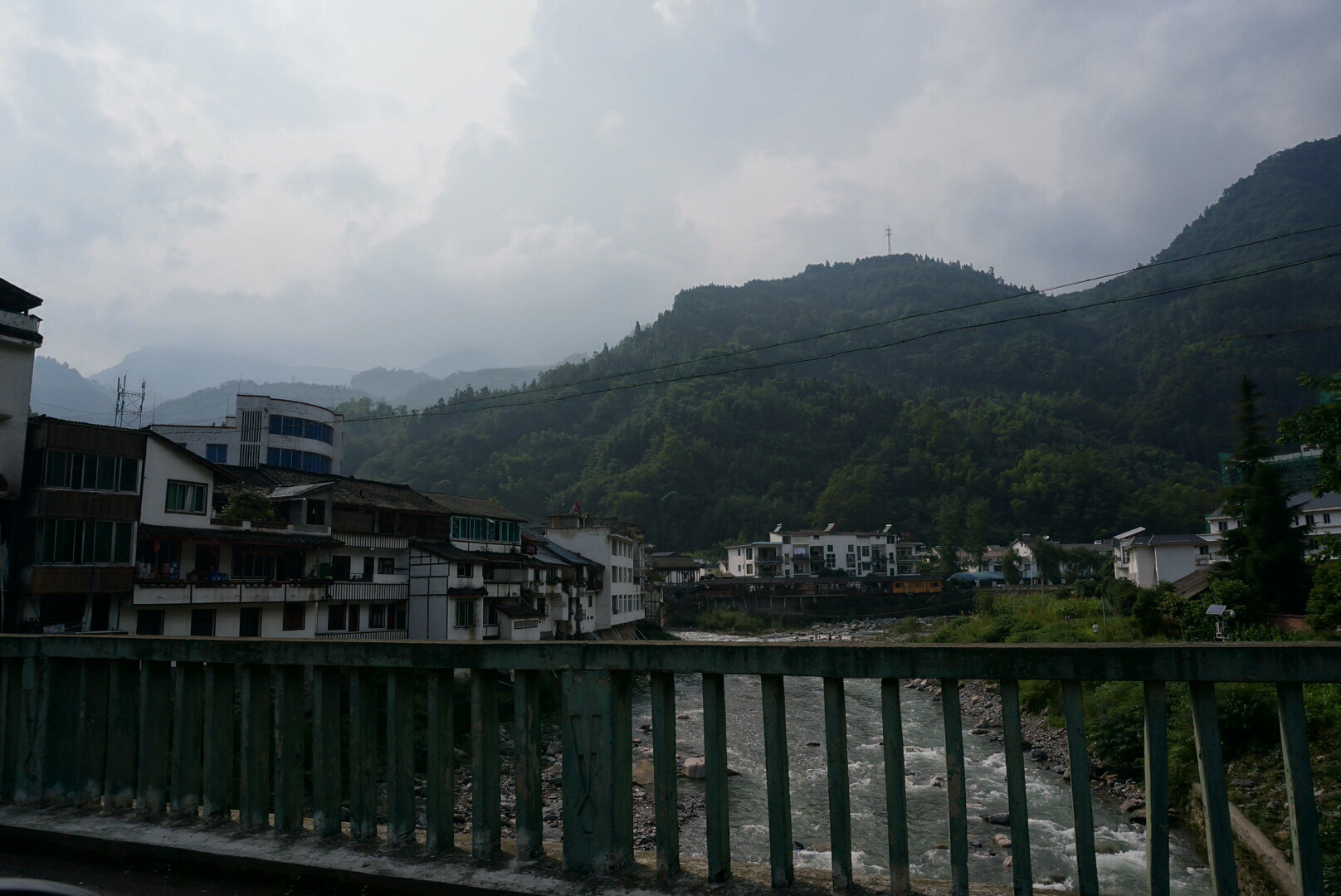
Anren Ancient Town, Sichuan — Republic-era mansions and the heritage streetscape that hosts the Anren Biennale.
Above Anren Ancient Town, Dayi County, Sichuan — the Republic-era heritage town, officially designated "China Museum Town," within which the Anren Biennale has been held since 2017.

The Lead Essay The inaugural and continuing editions

Lü Peng's museum-town biennial

The Anren Biennale, founded 2017 in the heritage town of Anren in Dayi County, Sichuan, has across three editions argued — under the artistic direction of the Chinese contemporary art historian Lü Peng — that the principal continuing site for Chinese curatorial argument may be a Republic-era museum-town rather than a metropolitan kunsthalle.

The Anren Biennale is the contemporary art biennial of Anren, a heritage town of approximately ten square kilometres on the western edge of the Chengdu plain in Dayi County, Sichuan. Anren has been designated by the Chinese national tourism authorities as the country's only "China Museum Town" — a designation that registers the town's unusual concentration of Republic-era courtyard mansions (more than twenty are preserved across three principal streets) and its inventory of more than thirty museums, of which the Liu's Manor Museum and the privately founded Jianchuan Museum Cluster are the principal anchors. The biennial was founded in 2017 to insert a contemporary curatorial argument into this working heritage economy, and across three editions it has continued to test what that insertion can be made to mean.

The inaugural edition, Today's Yesterday, opened on 28 October 2017 and ran to 28 February 2018 under the artistic direction of Lü Peng, the Chinese contemporary art historian (president of L-artUniversity, professor at the Sichuan Fine Arts Institute and the Xi'an Academy of Fine Arts) whose three-decade critical work has been one of the principal scholarly positions on the history of Chinese contemporary art since 1979. Lü's premise — that the dialogue between historical inheritance and contemporary practice is the constituting problem of work made in twenty-first-century China, and that Anren's heritage inventory makes it the structurally appropriate site at which that problem can be argued out — was developed across four thematic sections, each curated by a separate Chinese or international team.

The four sections of the founding edition

The four sections were: The Szechwan Tale: Theatre and History, curated by the Italian curator Marco Scotini (artistic director of the FM Centre for Contemporary Art, Milan), which took as its departure point the relationship between Bertolt Brecht's The Good Person of Szechwan (1940) and the Rent Collection Courtyard — the 1965 socialist-realist clay-sculpture cycle of 114 life-sized figures permanently installed in Anren's Liu's Manor; Crossroads, curated by Lü Jing and Liu Jie, which staged a survey of the Chinese contemporary scene; A Future That Never Returns, curated by Du Xiyun and Lan Qingwei; and Rhetoric of Genealogy, curated by Liu Ding and Carol Yinghua Lu, the artist-curator pair whose continuing critical project on the writing of Chinese art history is one of the principal contemporary positions on the question. More than 120 artists from over a dozen countries participated.

The 2nd Anren Biennale, A Confrontation of Ideals, opened on 12 October 2019 under the joint curatorial direction of Lü Peng, the Chinese art historian He Guiyan, and the Netherlands-based independent curator Siebe Tettero. The edition's premise — that the present moment of cultural and geopolitical contest is structurally a confrontation of ideals rather than of material conditions, and that contemporary art can stage that confrontation in a way no other institutional form can — was developed across multiple sub-themes and ran into early 2020. The 3rd edition opened in 2021 under the directorship of Gu Yuan, with a curatorial team that included Wang Lin, Zhao Li, Xia Kejun, Elsa Wang, Li Xiaofeng and Wen Ya; the edition brought together approximately 150 contemporary artists across multiple sub-themes and over 300 works.

The principal continuing venue is the Ningliang Old Factory — a renovated industrial site within Anren — together with selected interventions across the heritage mansions and the streetscape of the old town. The biennial's institutional sponsor has been the state-owned Overseas Chinese Town (OCT) Enterprises, the cultural-tourism developer which has invested at municipal scale in Anren's continuing development as a museum-town. The biennial's relationship to the OCT investment programme — that the cultural argument the biennial mounts is staged within an economic argument the developer is making — is the institutional condition the biennial is read against.

Critical Perspective A biennial inside a working heritage economy

The museum-town as institutional model

What distinguishes the Anren Biennale from the metropolitan Chinese biennial circuit is that its physical site is itself a Republic-era architectural exhibition, and its institutional sponsor is the cultural-tourism developer charged with reformatting that site at municipal scale. The biennial is the contemporary argument made inside the heritage argument.

The continuing argument made by the Anren Biennale — across the founding 2017 edition, the 2019 follow-up and the 2021 third edition — is that the appropriate site for a contemporary Chinese biennial may not be the metropolitan kunsthalle, but a working heritage town whose existing inventory of Republic-era mansions, museums and the famous Rent Collection Courtyard sculpture group together constitute one of the densest concentrations of twentieth-century Chinese material culture anywhere in the country. The Anren Biennale is one of very few biennials in the world whose physical site is itself a continuously functioning historical exhibition.

The institutional model — biennial-as-overlay onto a state-backed cultural-tourism development — is structurally novel within the Chinese contemporary art landscape. The Chengdu Biennale, an hour to the east, operates within the conventional metropolitan venue model; the Shanghai Biennale and Guangzhou Triennial each occupy major contemporary art museums in major cities. Anren's premise is the inverse: that the heritage-tourism economy of a small Sichuan town can absorb a contemporary biennial, and that the absorption can be made into the editorial subject of the biennial itself. The closest comparable institutional logic outside China is Thailand's Thailand Biennale, which rotates between provincial cultural-tourism destinations under the country's Office of Contemporary Art and Culture and stages each edition as a contribution to the host province's tourism programme. Both models — Anren and Thailand — represent a working hypothesis that the next generation of biennial-format programming may be sited within heritage and tourism economies rather than within metropolitan museum networks.

The critical question this institutional model raises is whether the contemporary argument the biennial is making can be sustained against the economic argument the developer is making, or whether the cultural work is in the end subordinated to the tourism work. The English-language critical response to the inaugural 2017 edition — including Aimee Lin's Frieze dispatch Fake It Till You Make It: A Look Inside the 1st Anren Biennale — registered exactly this tension, and the question has continued to organise the international reading of subsequent editions. The biennial's defenders argue that the heritage economy is itself a subject the contemporary argument can address; the biennial's sceptics argue that the institutional weight of the OCT investment programme structurally cannot be argued with from within. The 2021 edition's expanded curatorial slate, with seven sub-theme curators working across the heritage town, can be read as a partial response to that critique — distributing the curatorial argument across multiple positions rather than consolidating it under a single editorial line.

What the next edition will need to address is whether the gap between the 2021 third edition and the present extends into a structural pause in the biennial's institutional rhythm, or whether the OCT investment programme and the Anren municipal authorities continue to back the biennial-format insertion of contemporary curatorial argument into the heritage town. The institutional record so far establishes the museum-town model as a real and continuing experimental position. Whether that position holds is the editorial question the biennial's next iteration will answer.


The Institutional Spine

Defining moments

Five episodes from the Anren Biennale and its heritage-town setting.

1958Heritage origin

Liu's Manor becomes a state museum

The estate of Liu Wencai (1887–1949), a major Sichuan landlord whose family compound across more than five mansions and 540 rooms — Anren's largest single piece of Republic-era architecture — was nationalised after 1949 and opened as a state museum (the Dayi Landlord Manor Museum) in the late 1950s. The Rent Collection Courtyard — the 1965 socialist-realist clay-sculpture cycle of 114 life-sized figures depicting peasants delivering rent to the landlord — was installed in its courtyards and made it one of the most-visited museum sites in mid-twentieth-century China. The Manor's continuing presence is the structural condition of the Anren Biennale's later staging.

Sources: Wikipedia — Liu Wencai; Wikipedia — Rent Collection Courtyard

2003Jianchuan

Jianchuan Museum Cluster opens in Anren

The privately funded Jianchuan Museum Cluster, founded by the Sichuan industrialist Fan Jianchuan, opened across multiple buildings in Anren in 2005 with a holdings inventory of more than ten million items and more than thirty themed branches — devoted principally to the Second Sino-Japanese War, the Cultural Revolution and post-1949 social history. Jianchuan is the largest privately founded museum in China and made Anren a working museum-town at the national scale before the contemporary biennial arrived.

Sources: Wikipedia; China Daily

20171st edition

Lü Peng's Today's Yesterday

The 1st Anren Biennale, Today's Yesterday, opened on 28 October 2017 and ran to 28 February 2018 under the artistic direction of Lü Peng, with four thematic sections curated by Marco Scotini (The Szechwan Tale), Liu Ding & Carol Yinghua Lu (Rhetoric of Genealogy), Du Xiyun & Lan Qingwei (A Future That Never Returns) and Lü Jing & Liu Jie (Crossroads). The principal venue was the Ningliang Old Factory, with interventions sited across Anren's heritage town. More than 120 artists participated. The OCT Enterprises group was the principal institutional sponsor.

Sources: e-flux announcements; Universes in Universe; Frieze, Aimee Lin

20192nd edition

A Confrontation of Ideals

The 2nd Anren Biennale, A Confrontation of Ideals, opened on 12 October 2019 and ran to 12 February 2020, jointly curated by Lü Peng, He Guiyan (deputy dean of the School of Art at Tsinghua University at the time) and the Dutch independent curator Siebe Tettero. The edition's premise was that the contemporary moment is structurally a contest of ideals across geopolitical, technological and ecological registers, and that the role of the contemporary biennial is to stage the conditions under which such ideals can be put into argument with one another.

Sources: ASEF culture360; China Daily, June 2019

20213rd edition

Gu Yuan's expanded curatorial slate

The 3rd Anren Biennale, opened 2021 under the artistic direction of Gu Yuan, distributed the curatorial argument across seven sub-theme curators — Wang Lin, Zhao Li, Xia Kejun, Elsa Wang, Li Xiaofeng, Wen Ya and Gu Yuan himself — working across the heritage town with approximately 150 contemporary artists and over 300 works. The edition's distributed structure represented a methodological shift away from the single-editorial-line model of the founding 2017 and 2019 editions, and toward a federated curatorial model adapted to the multiple-sites character of Anren itself.

Sources: Biennial Foundation; Universes in Universe

People in the Anren Biennale

The figures behind Anren

Artistic Director · 1st & 2nd Editions

Lü Peng

Chinese contemporary art historian and curator (b. Chongqing, 1956). President of L-artUniversity; professor at the Sichuan Fine Arts Institute and the Xi'an Academy of Fine Arts. Author of multiple standard scholarly histories of Chinese contemporary art including A History of Art in Twentieth-Century China. Artistic director of the founding 1st Anren Biennale (2017) and co-curator of the 2nd Anren Biennale (2019), and the principal continuing editorial voice across the institution's first two cycles.

Source: Wikipedia; L-artUniversity

Curator · 1st edition (2017) — The Szechwan Tale

Marco Scotini

Italian curator and critic. Artistic director of the FM Centre for Contemporary Art, Milan. Curator of The Szechwan Tale: Theatre and History, the principal international section of the 1st Anren Biennale, which used Bertolt Brecht's The Good Person of Szechwan (1940) and Anren's permanent Rent Collection Courtyard sculpture group as twin departure points for a survey of the relationship between theatre, history and political representation in contemporary art.

Source: Droste Effect Mag; FM Centre for Contemporary Art

Co-curators · 1st edition (2017) — Rhetoric of Genealogy

Liu Ding & Carol Yinghua Lu

Beijing-based artist-and-curator pair whose two-decade collaborative project on the writing of Chinese contemporary art history is one of the principal continuing critical positions on the question. Lu was the artistic director of the 9th Shenzhen Sculpture Biennale (2014); Liu Ding's work has been shown at the Venice Biennale, the Gwangju Biennale and elsewhere. Co-curators of Rhetoric of Genealogy at the 1st Anren Biennale, 2017.

Source: Universes in Universe — Rhetoric of Genealogy

Co-curator · 2nd edition (2019)

He Guiyan

Chinese art critic, curator and scholar; long-standing figure in Sichuan and Beijing contemporary art institutions, with a continuing critical project on contemporary Chinese art history and the institutional conditions of Chinese contemporary practice. Co-curator of A Confrontation of Ideals, the 2nd Anren Biennale (2019), with Lü Peng and Siebe Tettero.

Source: ASEF culture360

Co-curator · 2nd edition (2019)

Siebe Tettero

Netherlands-based independent curator, exhibition architect and writer whose international work has included long-running collaborations across European and Chinese institutional contexts. Co-curator of the 2nd Anren Biennale, A Confrontation of Ideals (2019), with Lü Peng and He Guiyan — the principal European curatorial voice across the institution's first two cycles.

Source: ASEF culture360; China Daily, 2019

Director · 3rd edition (2021)

Gu Yuan

Chinese curator and director of the 3rd Anren Biennale (2021). Gu structured the edition as a distributed curatorial federation across seven sub-theme curators — Wang Lin, Zhao Li, Xia Kejun, Elsa Wang, Li Xiaofeng, Wen Ya and himself — working across the heritage sites of Anren Ancient Town with approximately 150 artists and over 300 works.

Source: Biennial Foundation

Founded
2017
Location
Anren · Dayi County, Sichuan
Frequency
Biennial
Principal venue
Ningliang Old Factory
Artistic director
Lü Peng (1st & 2nd)

Geography

The biennial in Anren Ancient Town

Principal venues

Ningliang Old Factory

Renovated industrial site within Anren; principal exhibition venue of the 1st Anren Biennale (2017)

Anren Town
Dayi County, Sichuan, China

Liu's Manor Museum

Republic-era landlord compound; permanent home of the Rent Collection Courtyard sculpture cycle

Anren Town
Dayi County, Sichuan, China

Jianchuan Museum Cluster

Privately funded museum complex, with more than thirty themed branches across Anren

Anren Town
Dayi County, Sichuan, China

From the Directory

Related biennials in the region

Browse the region →

Essential Reading

For further work

1st Anren Biennale — Today's Yesterday

Lü Peng, artistic director  ·  2017

Catalogue of the inaugural Anren Biennale, with the four section curatorial statements by Scotini, Liu Ding & Carol Yinghua Lu, Du Xiyun & Lan Qingwei, and Lü Jing & Liu Jie.

2nd Anren Biennale — A Confrontation of Ideals

Lü Peng, He Guiyan & Siebe Tettero, eds.  ·  2019

Catalogue of the 2nd Anren Biennale; the principal scholarly statement of the institution's second cycle.

Fake It Till You Make It: A Look Inside the 1st Anren Biennale

Aimee Lin  ·  Frieze, 2017

The principal English-language critical dispatch from the inaugural edition, registering the structural tension between contemporary curatorial work and the museum-town heritage-tourism programme.

A History of Art in Twentieth-Century China

Lü Peng  ·  Charta, 2010

The Anren artistic director's scholarly history of Chinese twentieth-century art — context for the curatorial argument the Anren Biennale makes about historical inheritance and contemporary practice.

Editorial content on biennale.com is published by the Biennale Editorial Team. Image credits as captioned. External links are provided for reference and verification.