Bergen Assembly

The Norwegian triennial founded 2013 as an explicit alternative to the standardised international biennial form — with each edition organised by a different curatorial convenor, and the Assembly format itself as the continuing institutional argument.

Established2013 — 20255 editions
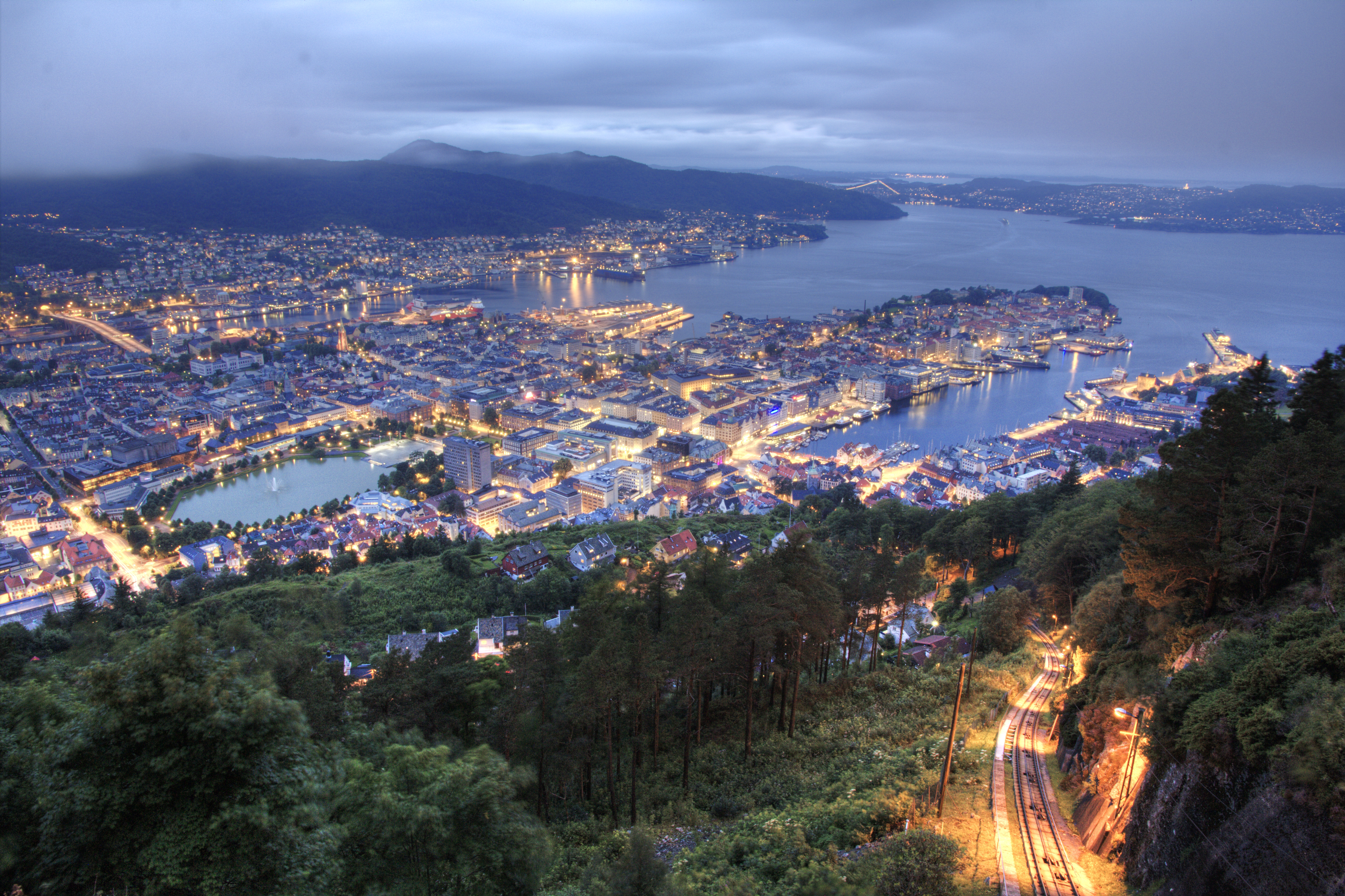
Bryggen — the UNESCO-listed Hanseatic wharf in Bergen, host city of the Bergen Assembly since 2013.
Above Bryggen — the UNESCO World Heritage Hanseatic wharf in Bergen, the historical heart of the Norwegian city that has hosted the Bergen Assembly since 2013.  ·  Photograph: Wikimedia Commons

The Lead Essay Twelve years and five editions

The triennial that began by asking whether to be one

In 2009 the City of Bergen commissioned a international conference to ask whether Bergen should establish a biennial. The conference's conclusion was that the international biennial form had become standardised in ways that worked against curatorial work, and that something else was required. The Bergen Assembly is what came of that conclusion.

The Bergen Assembly's founding institutional history is structurally distinctive within the international biennial form: the institution exists because the 2009 conference that the City of Bergen commissioned to advise on whether to establish a biennial concluded that the answer was no — that the international biennial form had become standardised in ways that worked against curatorial work, and that Bergen should establish something else instead. The Bergen Biennial Conference was organised by Solveig Øvstebø (then director of Bergen Kunsthall) and Marta Kuzma (then director of the Office for Contemporary Art Norway), and convened international curators, critics, and institutional figures across a five-day institutional argument about what the post-1990s proliferation of the biennial form had produced and what it had not. The Conference's published proceedings — The Biennial Reader (Hatje Cantz / Bergen Kunsthall, 2010), edited by Elena Filipovic, Marieke van Hal, and Øvstebø — remains the principal English-language reference on the post-1990 biennial conversation.

The substantive Conference conclusion was that the proliferation of the biennial form across the post-1990 international art conversation had produced a standardisation of the form — predictable curatorial premises, comparable institutional architectures, similar relationships to cultural-tourism economic outcomes — that worked against the curatorial work the form had been founded to enable. The question was what an institution founded in 2009–2013 could do that would not reproduce that standardisation. The institutional answer the Conference produced, and that the City of Bergen accepted as cultural-policy direction, was the Assembly: a triennial rather than a biennial, organised by a different curatorial convenor each edition, with discursive programming integrated into the visual exhibition, and a structural commitment to institutional experimentation rather than continuity of curatorial premise.

The 1st Bergen Assembly opened in August 2013 under conveners Ekaterina Degot and David Riff — the Russian curatorial pair whose subsequent institutional positions (Degot as director of Steirischer Herbst, Graz, from 2018; Riff continuing curatorial practice across European institutional contexts) extend through the post-2010 European biennial conversation. The 1st Assembly was titled Monday Begins on Saturday — a curatorial conceit drawn from the Strugatsky brothers' 1965 Soviet science-fiction novella of the same title — and engaged the post-Soviet institutional and intellectual conversation that the Degot-Riff curatorial position had developed across the 2000s. The 1st Assembly was a four-month programme of exhibitions, performances, and discursive events across the Bergen contemporary art infrastructure, and established the founding institutional premise.

The 2nd Bergen Assembly (2016) was convened by freethought — a six-member curatorial collective comprising Irit Rogoff, Stefano Harney, Adrian Heathfield, Massimiliano Mollona, Louis Moreno, and Nora Sternfeld, whose subsequent institutional position within the post-2010 international curatorial-and-academic conversation about infrastructure and collective practice has extended the Assembly's institutional argument. The 2nd Assembly engaged the concept of "infrastructure" as institutional argument — the post-2010 academic literature on the question of what infrastructures the contemporary art form depends on and what infrastructures it might produce. The freethought collective's continuing institutional position as a point of reference in the post-2015 international curatorial-collective conversation is the subsequent institutional record of the 2nd Assembly.

The 3rd Bergen Assembly (2019) was convened by Hans D. Christ and Iris Dressler (co-directors of the Württembergischer Kunstverein, Stuttgart, since 2005) under the title Actually, the Dead Are Not Dead. The 3rd Assembly engaged the post-2010 European cultural-political conversation about historical memory, political-historical continuity, and contemporary art's relationship to historical-political conditions. The 4th Bergen Assembly (2022) was convened by Yasmine d'O. — a fictional curator personifying the curatorial collective that the Assembly had assembled — under the title Yasmine and the Seven Faces of the Heptahedron. The fictional-curatorial-author construction extended the Assembly's continuing institutional experimentation with the form of curatorial authorship itself, and was the most institutionally experimental of the four editions to date.

The 5th Bergen Assembly (2025) was convened jointly by Ravi Agarwal, Adania Shibli, and the Bergen School of Architecture — a curatorial configuration that extends the Assembly's continuing institutional experimentation with the form of curatorial authorship. The continuing institutional argument — that the Assembly format constitutes curatorial experimentation that the standardised biennial form cannot — has held across twelve years and four prior editions, and exceeds in institutional weight what the Conference's 2009 critique had projected. Whether the Assembly format constitutes the alternative to the biennial form the founding institutional argument claimed, or constitutes a variant within the international biennial form that the post-2010 international biennial conversation has absorbed, is a continuing question.

The institutional architecture

The Bergen Assembly is organised by the Bergen Assembly Foundation, a non-profit institutional body established by the City of Bergen, the Hordaland County Council, and the principal Bergen contemporary art institutions (Bergen Kunsthall, KODE Bergen Art Museum, Hordaland Kunstsenter, BIT Teatergarasjen). Continuing institutional support comes from the City of Bergen, the Hordaland County Council, the Norwegian Arts Council, and private and corporate philanthropic partners. The Bergen Kunsthall is the continuing principal institutional anchor across all five editions to date.

A Second Reading The standardisation argument, twelve years on

What the Assembly refused and what it absorbed

The 2009 Bergen Biennial Conference's critique of the standardised biennial form was the founding institutional argument of the Bergen Assembly. Twelve years and five editions on, the question worth asking is what the Assembly format has refused that the standardised biennial form does, and what it has absorbed from that form despite its founding refusal.

The Assembly has refused the single-curator-as-author model that the post-2000 biennial form has standardised. The 1st Assembly's two-person convenership (Degot, Riff), the 2nd's six-member collective (freethought), the 3rd's two-person institutional team (Christ, Dressler), and the 4th's fictional-curator construction (Yasmine d'O.) are all distinct from the single-curator-as-institutional-author model that operates at Venice, the Whitney, Sharjah, Documenta. The Assembly has refused the cultural-tourism-economic argument that the post-2000 biennial form has standardised. The scale of the Bergen Assembly is smaller than its European peers' — the 4th Assembly's visitor attendance is below what comparable European biennials project — and the institutional argument the Assembly makes is that the smaller scale is the precondition for curatorial work rather than a institutional limitation.

What the Assembly has absorbed despite the founding refusal is more institutionally complicated. The Assembly operates within the international curatorial-and-academic conversation that the standardised biennial form has produced — its conveners are drawn from that conversation; its visitor flow is shaped by it; its institutional reading is determined by the same international art-press that reads the standardised biennials. The institutional position the Assembly has achieved is recognisable within the international biennial conversation as a variant of the form rather than as the alternative the founding institutional argument claimed.

The honest reading is that both are true. The Bergen Assembly has produced curatorial work that the standardised biennial form could not — the freethought infrastructure argument, the Yasmine d'O. fictional-curator construction, the discursive programming integrated into the visual exhibition at higher institutional weight than peer biennials produce. And the Assembly has continued to operate within the institutional infrastructure that the international biennial conversation has standardised — its conveners are recognisable, its visitor flow is recognisable, its institutional reading is part of the post-2010 international biennial conversation. The continuing institutional question is whether the Assembly format constitutes curatorial experimentation that the standardised biennial form cannot produce, or whether it constitutes a curatorial position within the biennial form that the post-2010 international biennial conversation has absorbed as one of its variants.

The Institutional Spine

Defining moments

Five episodes across twelve years.

2009Founding conference

The Bergen Biennial Conference

The 2009 Bergen Biennial Conference, organised by Solveig Øvstebø and Marta Kuzma, convened international curators, critics, and institutional figures to advise the City of Bergen on whether to establish a biennial. The Conference's conclusion — that the international biennial form had become standardised in ways that worked against curatorial work — was the founding institutional argument of the Bergen Assembly. Published proceedings: The Biennial Reader (Hatje Cantz, 2010).

Sources: Bergen Kunsthall archive; The Biennial Reader (2010)

20131st Assembly

Degot & Riff's Monday Begins on Saturday

The 1st Bergen Assembly opened in August 2013 under conveners Ekaterina Degot and David Riff. Titled Monday Begins on Saturday (after the Strugatsky brothers' 1965 Soviet science-fiction novella), the 1st Assembly engaged the post-Soviet institutional and intellectual conversation and established the founding institutional premise of the Assembly format.

Sources: Bergen Assembly archive; Monday Begins on Saturday catalogue, 2013

20162nd Assembly

freethought's infrastructure

The 2nd Bergen Assembly (2016) was convened by freethought — a six-member curatorial collective comprising Irit Rogoff, Stefano Harney, Adrian Heathfield, Massimiliano Mollona, Louis Moreno, and Nora Sternfeld. The 2nd Assembly engaged "infrastructure" as institutional argument and extended the Assembly format into collective-curatorial practice.

Sources: Bergen Assembly archive; freethought materials

20193rd Assembly

Christ & Dressler's Actually, the Dead Are Not Dead

The 3rd Bergen Assembly (2019), Actually, the Dead Are Not Dead, was convened by Hans D. Christ and Iris Dressler (co-directors of the Württembergischer Kunstverein, Stuttgart). The 3rd Assembly engaged the post-2010 European cultural-political conversation about historical memory and political-historical continuity.

Sources: Bergen Assembly archive; 2019 catalogue

20224th Assembly

Yasmine d'O. and the Heptahedron

The 4th Bergen Assembly (2022), Yasmine and the Seven Faces of the Heptahedron, was convened by Yasmine d'O. — a fictional curator personifying the curatorial collective the Assembly had assembled. The fictional-curatorial-author construction extended the Assembly's continuing institutional experimentation with the form of curatorial authorship itself.

Sources: Bergen Assembly archive; Heptahedron catalogue, 2022

People in the Assembly

The figures behind Bergen

Conference organisers · 2009

Solveig Øvstebø & Marta Kuzma

Norwegian curator (Øvstebø, then director of Bergen Kunsthall, subsequently director of the Renaissance Society at the University of Chicago from 2013) and American curator (Kuzma, then director of the Office for Contemporary Art Norway, subsequently Vice-Chancellor of the Royal Institute of Art, Stockholm, from 2014, and Dean of the Yale School of Art 2016–2021). Co-organisers of the 2009 Bergen Biennial Conference whose conclusion produced the institutional argument for the Bergen Assembly. Conference proceedings published as The Biennial Reader (Hatje Cantz, 2010), edited by Elena Filipovic, Marieke van Hal, and Øvstebø.

Source: Wikipedia · Kuzma

Convener · 1st Assembly (2013)

Ekaterina Degot

Russian-Austrian curator, art historian, and writer (b. 1958). Co-convener (with David Riff) of the 1st Bergen Assembly (Monday Begins on Saturday, 2013). Director of Steirischer Herbst, Graz, from 2018 — the Austrian festival of contemporary art and performance whose post-2018 institutional position has extended the post-Soviet curatorial conversation that the Degot 1st Assembly anchored.

Source: Wikipedia

Convener · 2nd Assembly (2016)

freethought

Six-member curatorial collective comprising Irit Rogoff, Stefano Harney, Adrian Heathfield, Massimiliano Mollona, Louis Moreno, and Nora Sternfeld. Convener of the 2nd Bergen Assembly (2016) on the theme of infrastructure. The collective's continuing institutional position within the post-2010 international curatorial-and-academic conversation about infrastructure and collective practice extends the Assembly's institutional argument.

Source: Bergen Assembly archive

Conveners · 3rd Assembly (2019)

Hans D. Christ & Iris Dressler

German curators. Co-directors of the Württembergischer Kunstverein, Stuttgart, since 2005. Conveners of the 3rd Bergen Assembly (Actually, the Dead Are Not Dead, 2019), which engaged the post-2010 European cultural-political conversation about historical memory and political-historical continuity.

Source: Württembergischer Kunstverein

Conveners · 5th Assembly (2025)

Ravi Agarwal, Adania Shibli & the Bergen School of Architecture

Indian artist and environmental activist (Agarwal), Palestinian writer (Shibli), and Bergen-based architectural school. Joint conveners of the 5th Bergen Assembly (2025), a curatorial configuration that extends the Assembly's continuing institutional experimentation with the form of curatorial authorship.

Source: Bergen Assembly

Founded
2013
Frequency
Triennial
Format
Assembly · convener-led
Host city
Bergen, Norway
Anchor
Bergen Kunsthall

Geography

The Assembly across Bergen

Principal venues

Bergen Kunsthall

Continuing principal institutional anchor

Rasmus Meyers allé 5
5015 Bergen, Norway

KODE Bergen Art Museum

Civic art museum · partner venue

Rasmus Meyers allé 9
5015 Bergen, Norway

Hordaland Kunstsenter

Artist-led centre · partner venue

Klosteret 17
5005 Bergen, Norway

BIT Teatergarasjen

Performance & discursive programme

Nøstegaten 54
5011 Bergen, Norway

Venues vary edition to edition. Consult the Bergen Assembly official guide for current programme dates and locations.

From the Directory

Related Nordic and northern European biennials

Browse the region →

Essential Reading

For further work

The Biennial Reader

Filipovic · van Hal · Øvstebø, eds.  ·  Hatje Cantz, 2010

The proceedings of the 2009 Bergen Biennial Conference. The principal English-language reference on the post-1990 biennial conversation, and the founding institutional document of the Bergen Assembly.

Monday Begins on Saturday

Degot & Riff, eds.  ·  2013

Catalogue of the 1st Bergen Assembly.

infrastructure

freethought  ·  2nd Assembly, 2016

The 2nd Assembly publication and the field reference for post-2015 curatorial work on infrastructure.

Actually, the Dead Are Not Dead

Christ & Dressler, eds.  ·  2019

Publication of the 3rd Assembly.

Yasmine and the Seven Faces of the Heptahedron

4th Assembly  ·  2022

The fictional-curator construction of the 4th Assembly.

Biennials and Beyond — Exhibitions That Made Art History 1962–2002

Bruce Altshuler  ·  Phaidon

Standard reference for the post-1990 biennial form against which the Assembly defines itself.

Images, attribution & rights

Photographs are reproduced from Wikimedia Commons under the Creative Commons licences stated in each caption. If you are the photographer of an image used here and wish to discuss its use, please write to rights@biennale.com.

Editorial content is original and credited to the Biennale Editorial Team.