Casablanca Biennale

Morocco's contemporary art biennial — founded 2012 in Casablanca by the Moroccan photographer Mostapha Romli, programmed around a South-South curatorial argument that positions the African continent's contemporary art conversation in relation to the Global South rather than to the Northern European biennial circuit.

Established2012 — 20235 editions
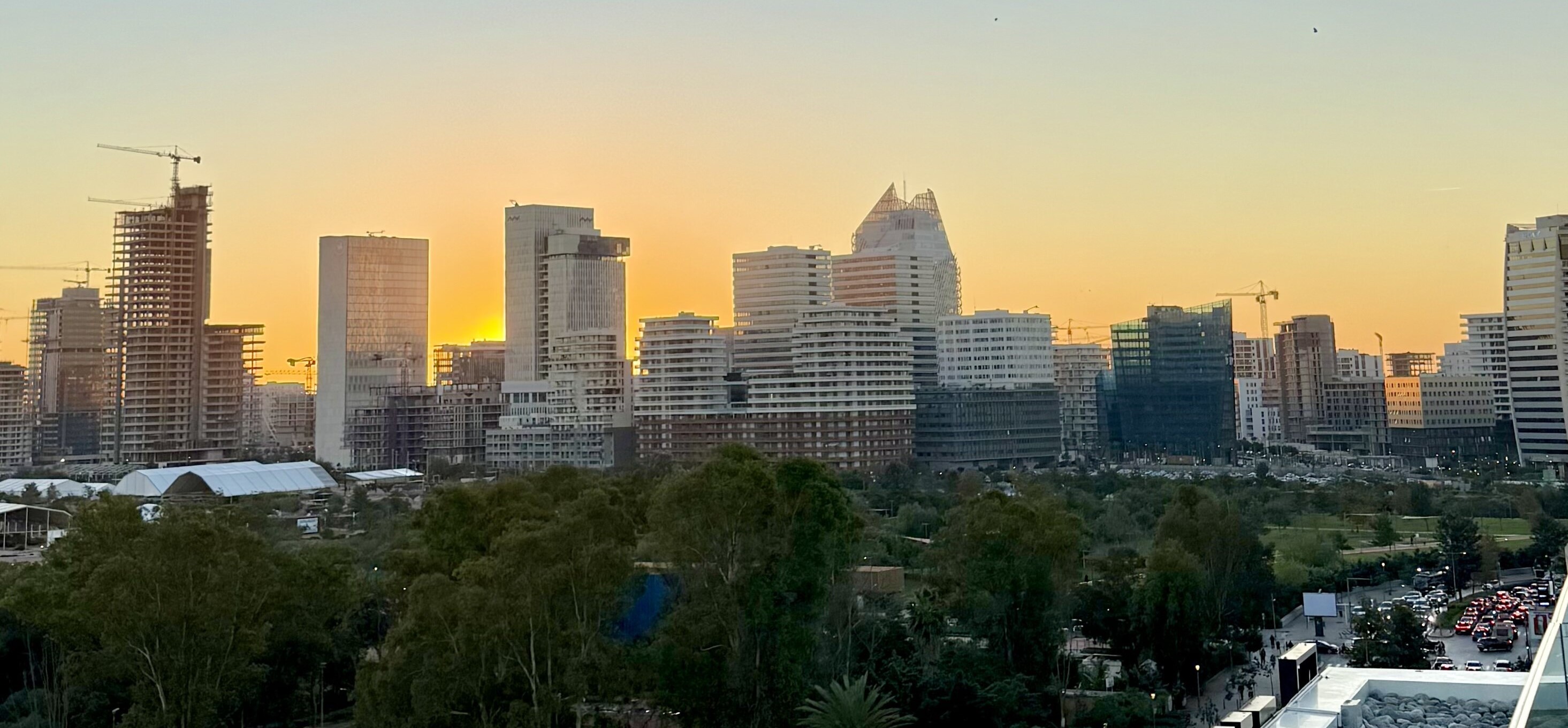
Casablanca — host city of the Biennale Internationale de Casablanca since 2012.
Above Casablanca, Morocco's economic capital and host city of the Biennale Internationale de Casablanca since the inaugural 2012 edition.

The Lead Essay Five editions of South-South curation

Romli's South-South biennial

The Casablanca Biennale, founded 2012 by the photographer Mostapha Romli, has built across five editions a curatorial argument that the African contemporary art conversation is best programmed in dialogue with the Global South rather than in subordinate position to the Northern European biennial circuit.

The Biennale Internationale de Casablanca was founded in 2012 by the Moroccan photographer Mostapha Romli, who has served as its Founding President across all five editions. The biennial's founding institutional argument was that Morocco's economic capital — Casablanca, with its colonial-era Bauhaus architecture, its mid-twentieth-century modernist heritage, and its continuing position as one of the largest urban centres on the African continent — was the right institutional venue at which to programme a contemporary art biennial whose curatorial frame would take the Global South as its principal axis. The South-South premise distinguished Casablanca from the post-2000 wave of African biennials whose institutional models often turned, by structural necessity, on cultural-diplomacy partnerships with European institutions.

The 4th edition (2018), Tales from the Water Margins, was developed under the artistic direction of the Cameroonian-French curator Christine Eyene, and took water as its starting point — examining how different cultures connected to water relate to the contemporary art that engages it. The 5th edition, The Words Create Images, continued under Eyene's artistic direction across two stages (17 November – 17 December 2022, then 9 February – 11 March 2023), turning the institution's curatorial premise to the relationship between language and image. Across both editions and the three that preceded them, the biennial's continuing institutional achievement has been programming at sustained ambition under conditions in which the European-anchored cultural-diplomacy networks that fund many African biennials are not the institutional architecture the Casablanca Biennale operates within.


Critical Perspective The artist-association biennial in Morocco's economic capital

An artist-founded biennial outside the state's contemporary art architecture

The structural fact about the Biennale Internationale de Casablanca is not its South-South curatorial argument but the institutional architecture it operates within: an artist-founded, association-led biennial programmed in Morocco's commercial capital, outside the state cultural-policy apparatus that anchors most African biennials of comparable ambition.

Across the African biennial landscape the principal organising authority is, with rare exceptions, the state. Dak'Art is a Senegalese state biennial; the Cairo Biennale is an Egyptian state biennial; the Bamako Encounters operate under the Malian Ministry of Culture in partnership with the Institut français. The Biennale Internationale de Casablanca sits outside this institutional pattern. It was founded in 2012 by the Moroccan photographer Mostapha Romli as an independent curatorial platform, and since 2014 has operated under the aegis of the Maroc Premium Foundation — a private Moroccan cultural foundation Romli also founded. The continuing institutional fact about the Casablanca Biennale is that it is an artist-association-led biennial in a country whose state contemporary art infrastructure remains, by international comparison, underdeveloped.

The structural argument this institutional form makes is consequential. The Casablanca Biennale operates without the cultural-diplomacy partnerships that produce both the funding and the curatorial geometry of most African biennials — without the Institut français anchoring, without the European foundation philanthropy at Marrakech Biennale scale, without the cultural-ministry coordination that produces Dak'Art's biennial rhythm. What it has instead is the institutional architecture of an artist-founded association, with the curatorial freedom and the institutional precarity that arrangement entails. The South-South curatorial frame the biennial has programmed across five editions — and the choice of Christine Eyene as Artistic Director for the 4th and 5th editions — is intelligible only against the structural fact that the institutional authority programming the biennial is the founding artist and the small association around him, not a ministry, not a foundation board with a permanent executive, not a state cultural apparatus.

The 2018 edition registered the cost of this institutional form. Siddhartha Mitter's Artforum diary of the 4th Biennale opening reported that fifteen of the thirty-five participating artists signed a letter to the organisers enumerating poor communication, late travel bookings, missing per diems and uncovered costs, and no installation assistance — the operational difficulties characteristic of a biennial programmed at international ambition through association infrastructure rather than ministry-scale logistics. The episode is structurally instructive: the curatorial argument of the 4th edition was internationally credible (Eyene's Tales from the Water Margins attracted strong submissions and the review's substantive readings were of the artists' work) but the institutional architecture supporting the artists during the opening was not at the scale the curatorial ambition required.

That Casablanca — Morocco's economic and most populous city — has anchored the biennial rather than Marrakech is itself a structural argument. Marrakech is Morocco's cultural-tourism capital and was the site, until 2016, of the Marrakech Biennale (paused indefinitely after the 2017–2018 Foundation crisis). The Casablanca Biennale's continuing operation in Morocco's commercial capital, through year-round programming at the BIC Project Space opened in 2019, makes a different institutional argument from the Marrakech model: that a Moroccan biennial does not require the cultural-tourism economy of Marrakech, the philanthropic-foundation architecture of the Branson–Kabbaj generation, or the international art-world cultural infrastructure that the Marrakech Biennale Foundation assembled across its six editions. Whether the artist-association biennial model produces the institutional durability the state-anchored or foundation-anchored models have offered is the continuing structural question of the Casablanca Biennale's institutional history.
The Institutional Spine

Defining moments

Five episodes from the institution's continuing history.

20121st Biennale

The founding under Romli

The 1st Biennale Internationale de Casablanca opened in 2012 under the Founding Presidency of the Moroccan photographer Mostapha Romli. The biennial was conceived as Morocco's continuing contemporary art biennial, with a South-South curatorial argument as its founding institutional premise.

Sources: Biennial Foundation; Casablanca Biennale archive

Oct 20142nd Biennale

The Éluard edition — Un autre monde est possible

The 2nd Biennale Internationale de Casablanca (3 – 12 October 2014) took as its curatorial premise the Paul Éluard line Un autre monde est possible mais il est dans celui-ci ("Another world is possible but it is in this one"), and programmed work by approximately two hundred artists from across Africa, the East and the West across emblematic Casablanca sites — among them United Nations Square, the former Sacré-Cœur church, and the city's tramway network. The edition consolidated the biennial's institutional argument that the city's mid-twentieth-century urban fabric was the right venue for a contemporary art biennial of Global South-facing ambition.

Sources: TelQuel (2014 Casablanca arts press); Biennial Foundation

Oct 20163rd Biennale

The seven-curator edition — We the People

The 3rd Biennale Internationale de Casablanca (14 – 23 October 2016), We the People / Nous, le peuple, was organised around the opening words of the U.S. Constitution's preamble and brought together seven curators from the Americas, Asia, Africa and Europe. The edition argued that artistic, intellectual and economic actors share responsibility with political leadership for social change — and instituted, for the first time at the biennial, the multi-curator pan-regional model that the 4th and 5th editions would refine under a single artistic director.

Sources: Yabiladi (2016 Moroccan arts press); Biennial Foundation

20184th Biennale

Eyene's Tales from the Water Margins

The 4th Casablanca Biennale (27 October – 2 December 2018), Tales from the Water Margins, was directed by the Cameroonian-French curator Christine Eyene as Artistic Director. It took water as its starting curatorial premise, examining how different cultures strongly connected to water relate to the contemporary art that engages it.

Sources: Biennial Foundation; Casablanca Biennale official site

2022–235th Biennale

Eyene's The Words Create Images

The 5th Casablanca Biennale, The Words Create Images, again under Artistic Director Christine Eyene (with Selma Naguib, Patrick Nzazi Kiama and Juste Constant Onana Amougui as assistant curators), took place across two stages: 17 November – 17 December 2022, then 9 February – 11 March 2023. The edition turned the institution's curatorial register to the relationship between language and image.

Sources: Biennial Foundation; Casablanca Biennale official site

People in the Biennial

The figures behind Casablanca

Founder & Founding President

Mostapha Romli

Moroccan photographer, publisher and curator. Founder and Founding President of the Biennale Internationale de Casablanca since the inaugural 2012 edition. His institutional argument — that Casablanca was the right venue for a Moroccan biennial whose curatorial frame would take the Global South as its principal axis — is the structural premise on which the biennial has been programmed across all five editions. Since 2014 the biennial has operated under the aegis of the Maroc Premium Foundation.

Source: Biennial Foundation; biennalecasablanca.org

Artistic Director · 4th & 5th editions

Christine Eyene

Cameroonian-French independent curator and art historian based in the United Kingdom. Artistic Director of the 4th Casablanca Biennale (2018), Tales from the Water Margins, and the 5th (2022–23), The Words Create Images. Her wider curatorial practice has engaged African and African-diasporic contemporary art across institutional venues in Europe, Africa and beyond.

Source: Biennial Foundation; Casablanca Biennale official site

Associate Curator · 5th edition

Selma Naguib

Moroccan cultural journalist, gallerist and curator. Associate Curator of the 5th Casablanca Biennale (2022–23), The Words Create Images, working under Artistic Director Christine Eyene. Founder of the Moroccan cultural web magazine Kawn Culture (2017) and co-founder of Art First Galerie (2020), an online and traveling gallery promoting young Moroccan contemporary artists. Her work has positioned the Moroccan contemporary scene within the biennial's wider South-facing curatorial register.

Source: en.biennalecasablanca.org/commissaires

Associate Curator · 5th edition

Patrick Nzazi Kiama

Cultural journalist and art critic from the Democratic Republic of the Congo, based between Kinshasa and Paris. Associate Curator of the 5th Casablanca Biennale (2022–23), under Christine Eyene. From 2013 to 2019 he coordinated the artists' residency programme at Kin ArtStudio in Kinshasa, and collaborated on Young Congo (2017), the exhibition that subsequently gave rise to the Congo Biennale. His appointment registered the 5th edition's continuing South-South curatorial axis — Central African contemporary art read in dialogue with North African and Moroccan contemporary practice.

Source: en.biennalecasablanca.org/commissaires

Critic · 4th edition

Siddhartha Mitter

American art critic and journalist, longtime contributor to Artforum, The New York Times and other international art-press venues. His December 2018 Artforum diary of the 4th Casablanca Biennale opening — at once an engaged reading of the participating artists (Haythem Zakaria, Héla Ammar, Oussama Tabti, Shiraz Bayjoo among them) and a frank account of the operational difficulties registered in the artists' open letter to organisers — remains the principal international critical document of the biennial's curatorial argument under Eyene.

Source: Siddhartha Mitter, Artforum, December 2018

Institutional anchor · 2014 onwards

Maroc Premium Foundation

Moroccan private cultural foundation, also founded by Mostapha Romli, under whose aegis the Biennale Internationale de Casablanca has operated since 2014. The Foundation also oversees a contemporary art centre established in 2011, a collection of contemporary work, and the BIC Project Space — a 300-square-metre venue in Casablanca opened in April 2019 to host year-round programming, workshops and the biennial's incubation phase between editions. The Foundation's continuing institutional commitment is the structural fact that has carried the biennial across five editions in the absence of state cultural-policy anchoring.

Source: en.marocpremium.info/bic; Biennial Foundation, April 2019

Founded
2012
Frequency
Biennial
Format
Citywide · South-South
Host city
Casablanca, Morocco
Founder
Mostapha Romli

Geography

The biennial across Casablanca

Principal locations

Casablanca citywide

Multiple cultural and heritage venues

Casablanca, Morocco — see the official venue guide for each edition.

From the Directory

Related editions across North Africa & the Mediterranean

Browse the region →

Essential Reading

For further work

4th Casablanca Biennale — Tales from the Water Margins

Biennale Internationale de Casablanca  ·  2018

Programme materials of the 4th edition.

5th Casablanca Biennale — The Words Create Images

Biennale Internationale de Casablanca · Christine Eyene, AD  ·  2022–23

Programme materials of the 5th edition, staged across two phases between November 2022 and March 2023.

Editorial content on biennale.com is published by the Biennale Editorial Team. Image credits as captioned. External links are provided for reference and verification.