Dhaka Art Summit

South Asia's principal non-commercial research and exhibition platform — founded 2012 by Nadia and Rajeeb Samdani's Samdani Art Foundation in Dhaka, Bangladesh, and organised biennially around the chief-curatorial intelligence of Diana Campbell.

Established2012 — 20267 editions (by 2026)
The Bangladesh Shilpakala Academy in Dhaka — host of every Dhaka Art Summit since 2012.
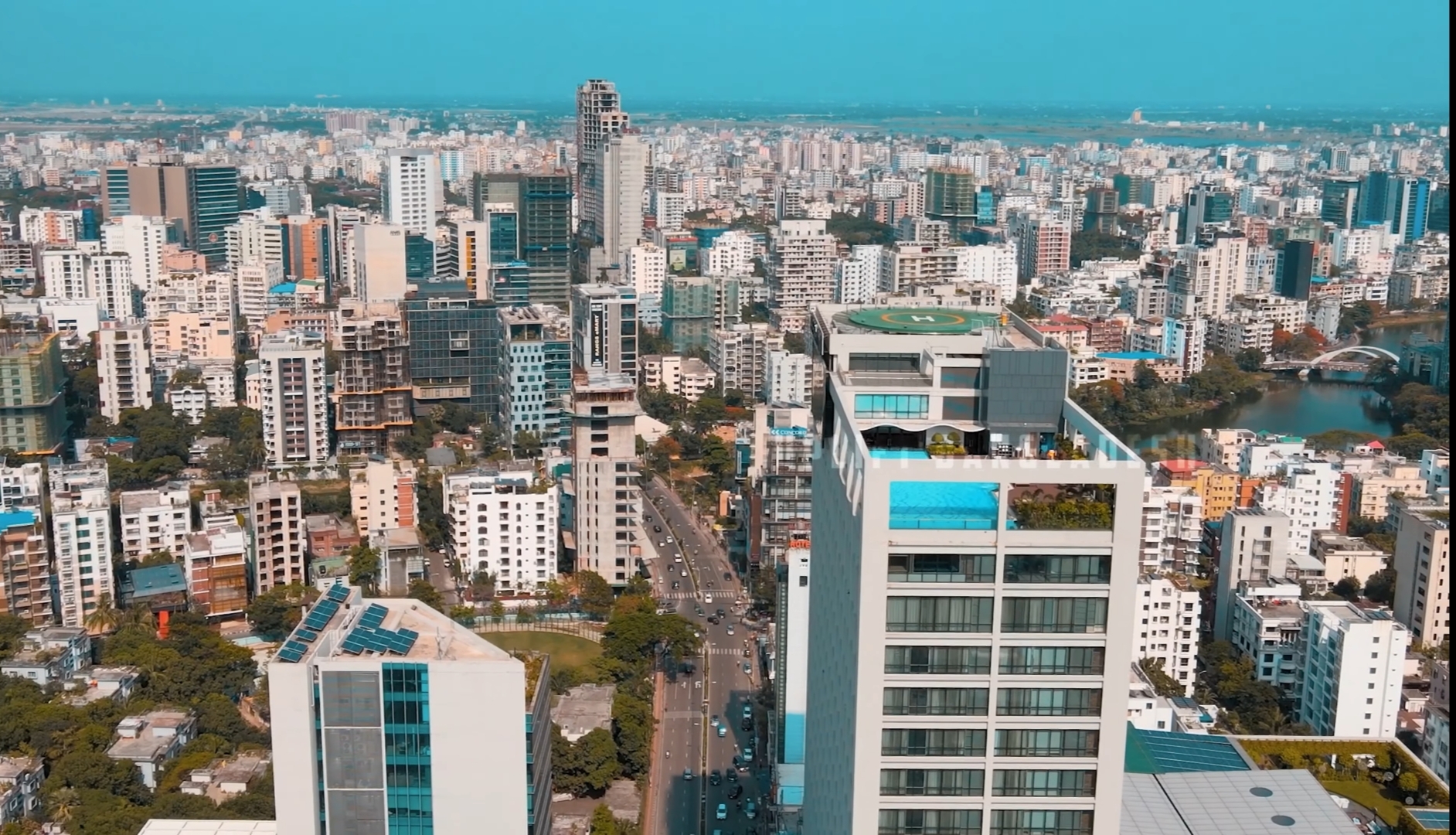
Above Dhaka — host city of the Dhaka Art Summit since 2012, programmed at the Bangladesh Shilpakala Academy (the National Academy of Fine and Performing Arts).

The Lead Essay The Samdani model

A research platform that is also a biennial

The Dhaka Art Summit is the principal contemporary art institution of Bangladesh — a free, non-commercial research and exhibition platform organised every two years around the chief-curatorial intelligence of Diana Campbell Betancourt (Chief Curator since 2014), with an audience that has grown to more than half a million visitors per edition.

The Dhaka Art Summit (DAS) is, on the available institutional record, one of the most consequential contemporary art institutions in South Asia. It was founded in 2012 by the Samdani Art Foundation — itself founded in 2011 by the Bangladeshi collectors Nadia Samdani and Rajeeb Samdani — and is held biennially in Dhaka, principally at the Bangladesh Shilpakala Academy (the National Academy of Fine and Performing Arts). The institutional argument the founding edition took — that South Asia's contemporary art conversation deserved a sustained, free-of-admission, non-commercial research platform at biennial scale — has shaped the Summit's continuing operation across seven editions to 2026.

The Chief Curator across the Summit's continuing history since 2014 is Diana Campbell Betancourt, the Founding Artistic Director of the Samdani Art Foundation. Campbell's continuing institutional position — as the curatorial intelligence the Summit has been organised around for more than a decade — has produced an exhibition programme that has consistently sat at the boundary between a biennial and a research conference: not an exhibition for sale, not an art fair, but a continuing institutional argument about how South Asian and adjacent contemporary practice should be programmed at sustained ambition.

The 2023 edition (DAS 2023, 3–11 February) registered the Summit's institutional weight in numbers — more than 160 events, 500,000 visitors. The 2026 edition, TONDRA, takes place in February 2026 at the Bangladesh Shilpakala Academy.


Critical Perspective A privately-funded research platform, not a state biennial

The structural argument of the Samdani model

The Dhaka Art Summit is not a state biennial. It is a foundation programme — privately funded, free at the door, single-venue, biennially organised — and that structural condition is the institutional argument the Summit is making about contemporary art in South Asia.

It is worth being precise about what the Dhaka Art Summit is, because the question of what kind of institution it is — and is not — is itself the principal editorial question. DAS is not a state biennial in the lineage of São Paulo or Venice. It is not an art fair. It is, on its own institutional terms and as documented by its operator, a free, non-commercial research and exhibition platform organised every two years by the Samdani Art Foundation — a private foundation founded in 2011 by the Bangladeshi collectors Nadia and Rajeeb Samdani — and held at the Bangladesh Shilpakala Academy, the country's national academy of fine and performing arts. The Summit is, in other words, a privately-funded foundation programme operating inside a state cultural building. That hybrid arrangement is unusual at this scale anywhere in the region.

The curatorial argument the Summit has been organised around since 2014 — when Diana Campbell Betancourt became its Chief Curator — is that South Asian contemporary art needed a continuing institutional venue for sustained, non-commercial, research-led programming at biennial scale, and that no existing public infrastructure across the region was going to produce it. The Summit's continuing function — across seven editions to 2026 — has been to act as the principal continuing programme for South Asian contemporary art's international engagement, at the curatorial level the region had not otherwise been operating at.

The critical question that follows is the one of foundation programming more generally: a private foundation's continuing curatorial direction is, structurally, an extension of its founders' and its director's institutional taste. The Summit has been transparent about this — its Chief Curator has held continuous position for more than a decade, and its Artistic Direction sits within the Samdani Art Foundation. That is the model the institution has chosen to make. It also means the Summit's continuing institutional argument — about which South Asian artists, architectures and conversations should be programmed at sustained ambition — is being made by a small, continuing curatorial team rather than rotated through a cycle of guest curators on the model of a state biennial.

The free-of-admission, non-commercial condition matters, then, less as a marketing claim and more as the institutional argument the Summit is making about what biennial-scale contemporary art programming in South Asia should look like: that it should be free at the door, that it should be a research platform as much as an exhibition, that it should be organised around a continuing curatorial intelligence rather than around the art market. Whether that is the right model for the region — or whether South Asia's contemporary art conversation should instead be carried by state biennials in the lineage of São Paulo, Sharjah, or Gwangju — is the live editorial question the Summit's continuing operation poses.
The Institutional Spine

Defining moments

Five episodes from a fourteen-year platform.

20121st DAS

The founding Summit

The first Dhaka Art Summit (2012) was held in collaboration with the Shilpakala Academy and the Bangladesh National Museum, and showcased the works of 249 Bangladeshi artists and 19 galleries. The 1st edition focused on local artists; subsequent editions extended the institutional frame into South Asia and beyond. The Samdani Artist Development Award and the Samdani Young Talent Award were established at the closing of the 1st edition.

Sources: Wikipedia — Dhaka Art Summit; Samdani Art Foundation archive

20184th DAS

The Bearing Points edition

DAS 2018 (2–10 February 2018) presented work by more than 350 artists, curators and thinkers from South Asia and beyond. Its centrepiece exhibition, Bearing Points, curated by Chief Curator Diana Campbell Betancourt, was structured around the points of a compass to provide orientations for forms of dissent — in architecture, postcolonialism, ecology, labor, migration and community — and was organised in five subsections including Politics: The Most Architectural Thing To Do and Residence Time. The edition consolidated the Summit's position as a curatorial research platform rather than an exhibition for sale.

Sources: Wikipedia — Dhaka Art Summit; ArtReview — What to expect: 2018 Dhaka Art Summit; Ocula — Into the Blue: Dhaka Art Summit 2018

20205th DAS

The Seismic Movements edition

The fifth edition, Seismic Movements (7–15 February 2020), was the last edition before the pandemic. Organised under the artistic directorship of Diana Campbell Betancourt, it brought together over 500 cross-disciplinary artists, scholars, curators and thinkers, and plotted movements, solidarities and exchanges across the Global South. The title drew on the geological reading of summit as the top of a mountain — considering the ruptures that have realigned and continue to shift the face of our moving planet. The edition included The Collective Body, co-curated with Kathryn Weir.

Sources: e-flux — Seismic Movements: Dhaka Art Summit 2020; Ocula — Dhaka Art Summit 2020; Samdani Art Foundation — DAS 2020

20236th DAS

The Bonna edition

DAS 2023 (3–11 February 2023), led by Chief Curator Diana Campbell, was titled Bonna — a word that in Bangla denotes both flood and a common girls' name. The duality functioned as the curatorial thread, framed through the imagination of a fictional young girl contemplating the precarious environment around her, to examine the social and ecological impact of climate change in Bangladesh. The edition programmed more than 160 events with more than 120 artists and architects, and was reported to have drawn more than 500,000 visitors — figures that register the Summit's continuing institutional weight as one of the principal contemporary art platforms in South Asia.

Sources: e-flux — Dhaka Art Summit, "বন্যা/Bonna"; Samdani Art Foundation — DAS 2023; Wikipedia — Dhaka Art Summit

2026DAS 2026

The TONDRA edition

DAS 2026, titled TONDRA, takes place in February 2026 at the Bangladesh Shilpakala Academy. The Bangla title describes a state where reality and dreams collide — a lucid dream — and frames the edition's curatorial premise. The Summit's continuing biennial cycle is being programmed under the Chief Curatorship of Diana Campbell Betancourt with the Samdani Art Foundation's continuing operational team.

Sources: Samdani Art Foundation — DAS 2026

People in the Summit

The figures behind DAS

Chief Curator · Artistic Director, Samdani Art Foundation

Diana Campbell

American curator (b. 1984, Los Angeles; Princeton-educated). Founding Artistic Director of the Samdani Art Foundation from 2013 and Chief Curator of the Dhaka Art Summit, leading the 2014, 2016, 2018, 2020, 2023 and 2026 editions. Concurrently Head of Global Initiatives at the Hartwig Art Foundation, Amsterdam. Her continuing institutional position has shaped the Summit's programme across the past decade, making it one of the principal venues for South Asian contemporary art at biennial scale.

Source: Samdani Art Foundation

Co-founder · Samdani Art Foundation

Nadia Samdani

Bangladeshi collector and patron. Co-founder of the Samdani Art Foundation (2011) with her husband Rajeeb Samdani, and the institutional architect of the Dhaka Art Summit.

Source: Wikipedia — Samdani Art Foundation

Co-founder · Samdani Art Foundation

Rajeeb Samdani

Bangladeshi collector and patron. Co-founder of the Samdani Art Foundation (2011) with his wife Nadia Samdani.

Source: Wikipedia — Samdani Art Foundation

Institutional operator · Private foundation

Samdani Art Foundation

Private foundation founded in 2011 by Nadia and Rajeeb Samdani, Dhaka. The Foundation is the institutional operator of the Dhaka Art Summit and of the Samdani Art Award — a biennial award created to support emerging Bangladeshi artists aged 22 to 40 — and runs a research and exhibition programme around South Asian and adjacent contemporary practice. The Foundation's continuing operation as a privately-funded, non-commercial cultural institution is the structural condition that defines the Summit's institutional character.

Source: samdani.com.bd

Principal venue · National Academy

Bangladesh Shilpakala Academy

The national academy of fine and performing arts of Bangladesh, established on 19 February 1974 under the Bangladesh Shilpakala Academy Act and operating as a statutory organisation under the Ministry of Cultural Affairs. Located at 14/3 Segunbagicha, Dhaka, with branches in all 64 districts of Bangladesh, the Academy is the principal state-sponsored national cultural centre — and the institutional venue of every Dhaka Art Summit since 2012. The Summit's continuing arrangement — a private foundation programme inside the country's state cultural building — is unusual at this scale in the region.

Source: Wikipedia — Bangladesh Shilpakala Academy

Artist · Recurring DAS participant

Naeem Mohaiemen

Bangladeshi artist and writer (b. 1969), Turner Prize–nominated (2018) and one of the artists most consistently programmed across the Dhaka Art Summit's continuing editions. His work has appeared at multiple DAS editions — including his Turner Prize–nominated Tripoli Cancelled, and a series of sandstone sculptures echoing the outlines of family photographs, shown within Deepak Ananth's exhibition B/DESH. Mohaiemen's continuing participation is part of how the Summit has built its institutional argument about Bangladeshi contemporary art's international position.

Source: Wikipedia — Dhaka Art Summit

Founded
2012
Frequency
Biennial
Format
Single-venue · non-commercial · free
Host city
Dhaka, Bangladesh
Operator
Samdani Art Foundation

Geography

The Summit at Shilpakala

Principal venue

Bangladesh Shilpakala Academy

National Academy of Fine and Performing Arts · principal DAS venue

14/3 Segunbagicha
Dhaka 1000, Bangladesh

From the Directory

Related editions across South Asia

Browse the region →

Essential Reading

For further work

Dhaka Art Summit institutional archive

Samdani Art Foundation

The full institutional record of the Summit's editions and programmes.

Dhaka Art Summit 2023

Samdani Art Foundation  ·  2023

Programme materials of the 2023 edition.

Editorial content on biennale.com is published by the Biennale Editorial Team. Image credits as captioned. External links are provided for reference and verification.