FRONT International

The Northeast Ohio contemporary art triennial — founded 2018 by Fred Bidwell and the Cleveland cultural-philanthropic establishment as the institutional response to the Rust Belt post-industrial cultural-economic conditions, staged in 2018 and 2022 across Cleveland, Akron and Oberlin. In February 2024 the FRONT Exhibition Company cancelled the planned 2025 edition and announced it would wind down operations, citing fund-raising shortfalls in the post-pandemic philanthropic environment.

Established2018 — 20222 editions · organisation dissolved 2024
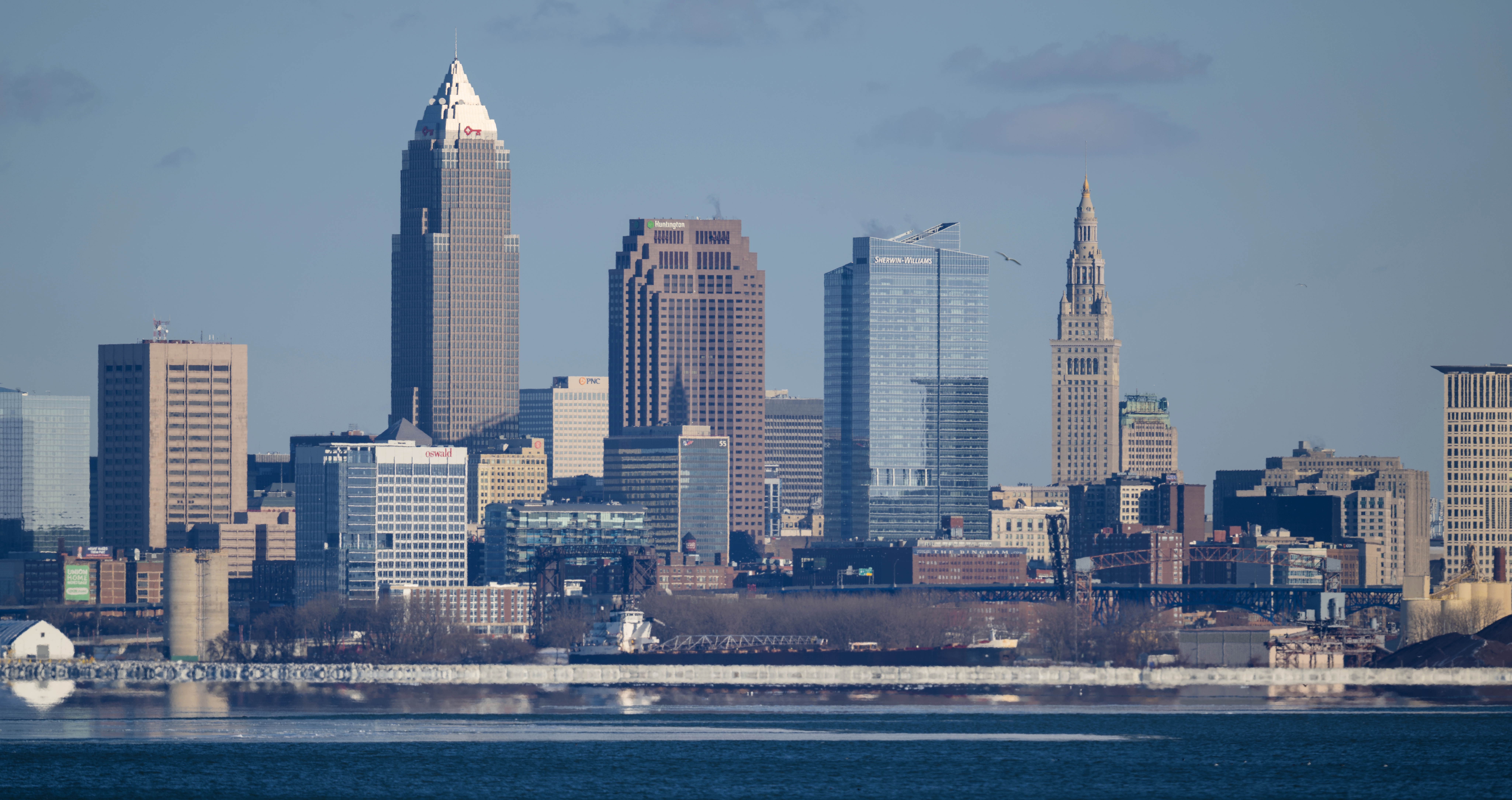
Cleveland — host city of FRONT International since 2018.
Above Cleveland — anchor city of FRONT International, the Northeast Ohio triennial whose institutional argument addresses the Rust Belt post-industrial cultural-economic conditions across Cleveland, Akron, and Oberlin.

The Lead Essay Two editions, then a wind-down

The Rust Belt triennial and the cultural-led-recovery argument

FRONT International was founded on the institutional argument that Cleveland and the Northeast Ohio cultural infrastructure could support a major international contemporary art triennial — and that doing so would benefit the Rust Belt post-industrial cultural-economic conditions in ways that comparable American cultural-policy interventions had not.

FRONT International was founded in 2018 by Fred Bidwell — a Cleveland-based contemporary art collector, philanthropist, and arts administrator who had previously co-founded the Transformer Station contemporary art venue in Cleveland (with Laura Bidwell, 2013) — and the Cleveland cultural-philanthropic establishment, anchored by the Cleveland Foundation (one of the founding American community foundations, established 1914). The founding institutional argument was that the Northeast Ohio cultural infrastructure — anchored by the Cleveland Museum of Art (founded 1913, one of the American major museums), the Museum of Contemporary Art Cleveland (MOCA Cleveland), the Akron Art Museum, the Allen Memorial Art Museum at Oberlin College (one of the American college art museums), and the network of Northeast Ohio cultural institutions — warranted a international contemporary art triennial that would make this infrastructure internationally legible.

The structural context for the founding institutional argument was the Rust Belt post-industrial conversation. Cleveland, Akron, and the Northeast Ohio region had been major American industrial centres across the twentieth century (Cleveland as steel-and-manufacturing centre; Akron as rubber-industry centre); the post-1970s American deindustrialisation had reshaped the regional economic-cultural conditions, with population loss (Cleveland's population fell from approximately 914,000 in 1950 to approximately 372,000 by 2020), industrial-infrastructure abandonment, and continuing economic-political pressure. The post-2000 Cleveland Foundation cultural-policy programme had supported cultural-institutional infrastructure as component of Rust Belt cultural-led recovery; FRONT International was conceived as a extension of that programme into the international biennial form.

The 1st FRONT International (14 July – 30 September 2018), An American City: Eleven Cultural Exercises, was curated by Michelle Grabner — the American artist and curator who had been one of three co-curators of the 2014 Whitney Biennial. The founding edition programmed across more than 25 venues in Cleveland, Akron, and Oberlin, with commissioned and presented work by approximately 100 artists. The 1st edition's An American City framing engaged Cleveland as a case study of the post-industrial American cultural-political conversation. The founding edition established the institutional argument and produced the visitor flow that the founding philanthropic programme had projected.

The 2nd FRONT International (16 July – 2 October 2022), Oh, Gods of Dust and Rainbows, was curated by Prem Krishnamurthy — the American designer and curator and co-founder of the Project Projects studio. The 2nd edition was postponed from 2021 by Covid-19 and operated under continuing pandemic conditions. The Krishnamurthy curatorial work framed art as a vehicle of healing and extended the FRONT institutional argument into engagement with post-2020 American cultural-political conditions, particularly questions of racial justice, cultural memory, and the question of who American cultural institutions serve.

On 12 February 2024 the FRONT Exhibition Company announced that the planned 3rd edition — scheduled for summer 2025 — had been cancelled and that the organisation would wind down operations. In statements to The Art Newspaper, Artforum and the Cleveland press, Fred Bidwell attributed the closure to a sharp post-2020 shift in the American philanthropic environment, with FRONT's fund-raising falling significantly short of the roughly $5.5 million benchmark required to produce the triennial at its previous scale. The 2018 edition had drawn approximately 90,000 visitors and the 2022 edition approximately 75,000; the cancellation closed the FRONT institutional history at two completed editions.

The wind-down has prompted continuing conversation in the Cleveland and national cultural press about what the Rust Belt biennial form can and cannot sustain. The post-2020 American cultural-philanthropic environment shifted in ways the founding 2018 institutional architecture did not anticipate; the founders have not announced any successor programme. Whether the Cleveland Foundation, the Cleveland Museum of Art, or other Northeast Ohio cultural institutions will absorb elements of the FRONT model into a smaller continuing programme is the open question the 2024 cancellation has left.

The institutional architecture

FRONT International is organised by the FRONT Exhibition Company, a non-profit cultural organisation founded in 2017 by Fred Bidwell and the Cleveland cultural-philanthropic establishment. Continuing institutional support comes from private and corporate philanthropic partners (the Cleveland Foundation, the John S. and James L. Knight Foundation, the Andy Warhol Foundation for the Visual Arts, and the Ohio Arts Council), the Northeast Ohio museum-and-cultural-institutional partners (Cleveland Museum of Art, MOCA Cleveland, Akron Art Museum, Allen Memorial Art Museum at Oberlin College, and other Northeast Ohio cultural institutions), and individual patron support.
A Second Reading The American Rust Belt and the biennial form

When the biennial argues for the Rust Belt

FRONT International's founding institutional argument — that the Rust Belt post-industrial cultural-economic conditions warrant international biennial-form institutional engagement — is institutionally distinctive within the post-2010 American contemporary art conversation, and the structural question worth developing is what the two-edition history, and its February 2024 wind-down, demonstrate about that argument.

The American Rust Belt cultural-policy conversation has debated the question of cultural-led recovery across the post-2010 period. The Detroit cultural-policy programme (anchored by the Detroit Institute of Arts, the Cranbrook Academy of Art, the Heidelberg Project), the Pittsburgh cultural-policy programme (the Carnegie International — the founding 1896 American Rust Belt biennial, the Andy Warhol Museum, the Mattress Factory), the Cleveland cultural-policy programme (which FRONT extended), and the network of American Rust Belt cultural-institutional initiatives have produced one of the American institutional case-studies of post-industrial cultural-led recovery questions. The outcomes of these programmes have been mixed: cultural-tourism economic outcomes, cultural-institutional visibility, international institutional reading — alongside continuing demographic-and-economic decline that the cultural-policy programmes have not reversed.

FRONT International operated within this continuing institutional conversation. The two completed editions produced visitor flow into Northeast Ohio (the founding 2018 edition drew approximately 90,000 visitors; the 2022 edition approximately 75,000), international art-press attention to the Cleveland-Akron-Oberlin cultural infrastructure, and cultural-tourism economic outcomes for the regional cultural-institutional architecture. What the FRONT history did not produce is reversal of the Rust Belt structural demographic-economic conditions — Cleveland's population continued to decline across the FRONT period, and the regional post-industrial conditions have continued to develop along trajectories that the cultural-policy programme cannot address. The February 2024 announcement that the planned 2025 edition was cancelled, and that the FRONT Exhibition Company would wind down, made these constraints visible.

This is the structural reading that the post-2010 American cultural-led-recovery literature has developed: that cultural-policy programmes can produce cultural-tourism and cultural-institutional outcomes, but cannot reverse structural political-economic conditions that operate at different institutional scales. FRONT International is an instructive American case study of this reading, and the February 2024 wind-down — driven not by curatorial failure but by post-pandemic philanthropic conditions — has clarified what the Rust Belt biennial-form institutional argument was able to produce and what it was not.

The Institutional Spine

Defining moments

Five episodes across the FRONT operating history.

2013Precursor

Transformer Station opens

In 2013 Fred and Laura Bidwell co-founded the Transformer Station contemporary art venue in Cleveland — the founding institutional precursor of the FRONT institutional architecture. The Transformer Station established the Bidwell-led cultural-philanthropic position within the Cleveland contemporary art conversation that subsequently anchored FRONT.

Sources: Transformer Station archive; Cleveland arts-press coverage 2013

2017Incorporation

The FRONT Exhibition Company is founded

In 2017 Fred Bidwell and the Cleveland cultural-philanthropic establishment incorporated the FRONT Exhibition Company as the non-profit organising body of the planned Northeast Ohio triennial. The 2017 incorporation consolidated the founding institutional architecture across the Cleveland Foundation, the John S. and James L. Knight Foundation, the Andy Warhol Foundation for the Visual Arts, the Ohio Arts Council, and the Northeast Ohio museum-and-cultural-institutional partners — the Cleveland Museum of Art, MOCA Cleveland, the Akron Art Museum, and the Allen Memorial Art Museum at Oberlin College. The 2017 founding architecture is the institutional argument that the two completed editions, and the February 2024 wind-down, subsequently tested.

Sources: FRONT archive; Cleveland Foundation cultural-policy programme records

Jul–Sep 20181st edition

Grabner's An American City

The 1st FRONT International (14 July – 30 September 2018), An American City: Eleven Cultural Exercises, was curated by Michelle Grabner (previously co-curator of the 2014 Whitney Biennial). The founding edition programmed across more than 25 venues with approximately 100 artists and engaged Cleveland as a case study of post-industrial American cultural conditions. The edition drew roughly 90,000 visitors.

Sources: FRONT archive; The New York Times, Artforum coverage

Jul–Oct 20222nd edition

Krishnamurthy's Oh, Gods of Dust and Rainbows

The 2nd FRONT International (16 July – 2 October 2022), Oh, Gods of Dust and Rainbows, was curated by Prem Krishnamurthy. Postponed from 2021 by Covid-19, the edition extended the institutional argument into engagement with post-2020 American cultural-political conditions, particularly questions of racial justice, cultural memory, and the question of who American cultural institutions serve. It drew roughly 75,000 visitors and proved the last edition staged.

Sources: FRONT 2022 catalogue; Artforum, Hyperallergic, Ocula coverage

Feb 2024Wind-down

Cancellation of the 2025 edition

On 12 February 2024 the FRONT Exhibition Company announced the cancellation of the planned 2025 edition and the wind-down of the organisation. Fred Bidwell cited a post-Covid shift in the American philanthropic environment that had cut FRONT's fund-raising significantly below the roughly $5.5 million benchmark required to produce the triennial. The cancellation closed FRONT's history at two completed editions.

Sources: The Art Newspaper, 12 February 2024; Artforum; Artnet News; Cleveland Scene

People in the Triennial

The figures behind FRONT

Founder · Executive Producer

Fred Bidwell

American contemporary art collector, philanthropist, and arts administrator. Co-founder (with Laura Bidwell) of the Transformer Station contemporary art venue in Cleveland (2013). Founding Executive Producer of FRONT International (2018). The Bidwell-led institutional architecture is the foundation on which the FRONT continuing institutional history depends.

Source: FRONT archive

Curator · 1st FRONT (2018)

Michelle Grabner

American artist, curator, writer, and educator. Curator of the 1st FRONT International (An American City, 2018). Previously co-curator of the 2014 Whitney Biennial (with Anthony Elms and Stuart Comer). Continuing artistic and curatorial practice; professor at the School of the Art Institute of Chicago.

Source: Wikipedia

Curator · 2nd FRONT (2022)

Prem Krishnamurthy

American designer, curator, and writer. Curator of the 2nd FRONT International (Oh, Gods of Dust and Rainbows, 2022). Co-founder of the Project Projects design and curatorial studio (2004–2017). Continuing curatorial-and-design practice across international institutional contexts.

Source: FRONT archive

Principal philanthropic anchor

Cleveland Foundation

American community foundation established 1914 — one of the founding American community foundations. Continuing principal philanthropic anchor of FRONT International alongside the John S. and James L. Knight Foundation. The Cleveland Foundation cultural-policy programme has supported the Cleveland cultural-institutional infrastructure across the post-2000 period.

Source: Cleveland Foundation

Continuing institutional partners

CMA · MOCA · Akron · Oberlin

The Northeast Ohio museum-and-cultural-institutional partners. The Cleveland Museum of Art (founded 1913, one of the American major museums). MOCA Cleveland (the Cleveland contemporary art venue, opened in its Farshid Moussavi-designed building in 2012). The Akron Art Museum. The Allen Memorial Art Museum at Oberlin College (one of the American college art museums, founded 1917).

Source: Cleveland Museum of Art

Organising body

FRONT Exhibition Company

American non-profit cultural organisation founded 2017 by Fred Bidwell and the Cleveland cultural-philanthropic establishment. Institutional body behind the two completed FRONT editions in 2018 and 2022. In February 2024 the FRONT Exhibition Company announced the cancellation of the planned 2025 edition and the wind-down of the organisation, citing post-pandemic philanthropic shortfalls. Founding institutional support came from the Cleveland Foundation, the John S. and James L. Knight Foundation, the Andy Warhol Foundation, the Ohio Arts Council and the Northeast Ohio museum-and-cultural-institutional partners.

Source: FRONT International

Founded
2018
Frequency
Triennial (2018, 2022)
Format
Multi-city · Northeast Ohio
Host cities
Cleveland · Akron · Oberlin
Status
Wound down Feb 2024

Geography

FRONT across Northeast Ohio

Principal venues across editions

Cleveland Museum of Art

Continuing principal partner since 2018

11150 East Boulevard
Cleveland, OH 44106

MOCA Cleveland

Museum of Contemporary Art Cleveland · continuing partner

11400 Euclid Avenue
Cleveland, OH 44106

Akron Art Museum

Akron anchor venue

1 South High Street
Akron, OH 44308

Allen Memorial Art Museum at Oberlin College

Oberlin anchor venue

87 North Main Street
Oberlin, OH 44074

Karamu House & Northeast Ohio commission sites

Network of historic civic and cultural venues

Northeast Ohio

From the Directory

Related biennials in North America

Browse the region →

Essential Reading

For further work

Images, attribution & rights

Photographs are stored locally and licensed for editorial use. If you are the photographer of an image used here and wish to discuss its use, please write to rights@biennale.com.

Editorial content is original and credited to the Biennale Editorial Team.