Guangzhou Triennial

The Guangdong Museum of Art's continuing contemporary art triennial — founded 2002 in Guangzhou with an inaugural edition curated by Wu Hung (with co-curators Wang Huangsheng and Feng Boyi), and one of the principal museum-led triennials in mainland China.

Established2002 — 20237 editions
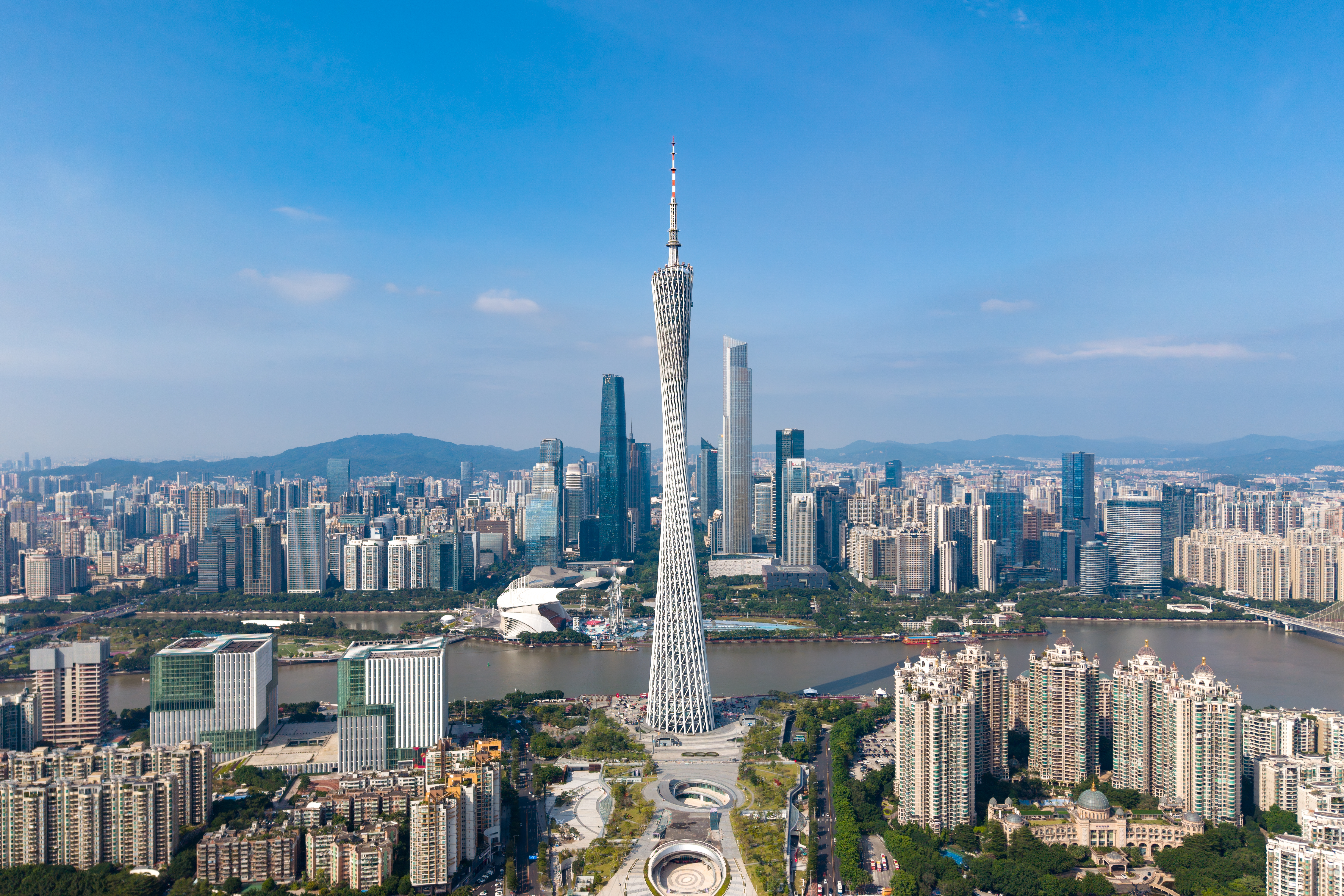
Guangzhou — Pearl River Delta city and host of the Guangzhou Triennial at the Guangdong Museum of Art since 2002.
Above Guangzhou — Pearl River Delta city and continuing host of the Guangzhou Triennial at the Guangdong Museum of Art since 2002.

The Lead Essay Seven editions in

The Pearl River Delta's museum triennial

The Guangzhou Triennial is the Guangdong Museum of Art's continuing contemporary art programme. Founded 2002 with an inaugural Reinterpretation edition curated by Wu Hung (and Hou Hanru, Hans Ulrich Obrist and Guo Xiaoyan curating the second, 2005), it has built across seven editions a curatorial position that the southern Chinese contemporary art conversation belongs at biennial-scale institutional ambition.

The Guangzhou Triennial was founded in 2002 at the Guangdong Museum of Art, then under the directorship of Wang Huangsheng (Director, 2000–2009). The inaugural edition, Reinterpretation: A Decade of Experimental Chinese Art (1990–2000), was curated by Wu Hung with co-curators Wang Huangsheng and Feng Boyi, and opened on 18 November 2002. The founding edition's institutional argument was that the Pearl River Delta's contemporary art conversation — already, by 2002, one of the most consequential in China — deserved a continuing museum-led triennial of international institutional weight. The 2nd edition (2005), BEYOND: An Extraordinary Space of Experimentation for Modernization, brought in Hou Hanru, Hans Ulrich Obrist and Guo Xiaoyan, extending the institution's international curatorial reach.

The 7th Guangzhou Triennial, Symphony of All the Changes, opened on 10 January 2023 and closed on 10 April 2023 at the Guangdong Museum of Art. The edition was the first to open after the institution's pandemic-period programming reorganisation and registered the continuing operational and curatorial commitment of the Guangdong Museum of Art to the Triennial's continuing institutional position. The institution also operates a parallel programme — the Guangzhou Image Triennial — focused on contemporary photography and image practice.


Critical Perspective The Chinese state-museum biennial

A museum triennial inside a state institution

The Guangzhou Triennial is the most institutionally consequential example of a contemporary art biennial programmed as the public-facing programme of a Chinese provincial state museum. The structural choice carries both its strengths and its limits.

The Guangzhou Triennial's defining structural feature, across its twenty-three-year history, is that it is not a biennial in the European sense — a free-standing organisation with a founding director, an independent board, and a continuing editorial argument that the institution makes against or alongside the host city's other cultural infrastructure. The Triennial is, instead, the periodic flagship programme of the Guangdong Museum of Art, the provincial state museum of Guangdong, China. Every edition has been organised by GdMoA's curatorial staff with whichever international curators the museum has chosen to commission for the cycle; every edition has been programmed inside GdMoA's continuing institutional and political architecture; every edition's continuing operation has depended on the museum's continuing relationship with the Guangdong provincial government.

That structural choice has produced consequences. The Triennial's editorial register has been, across editions, more interested in institutional curation than in the kind of contested public argument that biennials sited in independent organisational structures (Sydney, Venice, Berlin, even Sharjah) have produced. The 1st (2002, Wu Hung) was an historical review of Chinese experimental art of the 1990s — exactly the kind of museum-historiographic project a state museum's curatorial intelligence is well placed to mount. The 2nd (2005, Hou Hanru and Hans Ulrich Obrist) extended the international curatorial reach but operated within the institutional frame the museum had established. Across the subsequent five editions, the Triennial's most-discussed achievement has been the consistent quality of the museum-curated programme, not the public-political argument the European biennial form is institutionally structured to produce.

The institutional question this raises — about the relationship between a state-museum-anchored biennial and the broader Chinese contemporary art conversation — is sharper in the post-2015 period than it was at the Triennial's founding. The Chinese state museum infrastructure has, across the past decade, become both more institutionally ambitious (the Power Station of Art in Shanghai, the Long Museum, the Yuz, the institutional consolidation of the Beijing museum scene) and more institutionally constrained by the political conditions in which it operates. The Guangzhou Triennial's continuing curatorial position — that the museum-anchored model is the right institutional form for a Chinese contemporary art biennial — is a position that has been programmatically maintained across the Triennial's continuing operation, and is the institutional inheritance the museum has committed to.

The continuing editorial question is whether the museum-anchored model can continue to produce the institutional reading it has produced across the past two decades, or whether the changing conditions of Chinese contemporary art curation across the post-2015 period — the rise of the independent private museums, the institutional weight of Shanghai, the continuing relationship between Chinese state cultural institutions and the international biennial circuit — will eventually push the Triennial toward a different institutional architecture. The 8th edition, if and when it is announced, will be the moment at which that question is publicly addressed.

The Institutional Spine

Defining moments

Five episodes from a twenty-three-year museum triennial.

20021st Guangzhou Triennial

Wu Hung's Reinterpretation

The 1st Guangzhou Triennial, Reinterpretation: A Decade of Experimental Chinese Art (1990–2000), opened on 18 November 2002 at the Guangdong Museum of Art under the directorship of Wang Huangsheng. The exhibition was curated by Wu Hung with co-curators Wang Huangsheng and Feng Boyi, and presented an historic review of experimental Chinese art of the 1990s. The founding edition established the Triennial's continuing institutional position as one of the principal museum-led contemporary art triennials in mainland China.

Sources: Guangdong Museum of Art archive; The First Guangzhou Triennial catalogue, 2002

20052nd Guangzhou Triennial

Hou Hanru and Obrist's BEYOND

The 2nd Guangzhou Triennial (2005), BEYOND: An Extraordinary Space of Experimentation for Modernization, was curated by Hou Hanru, Hans Ulrich Obrist and Guo Xiaoyan. The edition extended the institution's international curatorial reach at a moment when the post-1990 biennial form was rapidly expanding beyond Europe and North America.

Sources: Guangdong Museum of Art archive

20083rd Guangzhou Triennial

Maharaj, Gao Shiming and Chang Tsong-Zung — Farewell to Post-Colonialism

The 3rd Guangzhou Triennial (2008), Farewell to Post-Colonialism: Querying the Global Now, was curated by Sarat Maharaj with Gao Shiming and Chang Tsong-Zung. The edition argued, in title and curatorial framing, that the post-colonial frame that had organised the dominant register of international contemporary art curation since Enwezor's documenta 11 had reached its institutional limits, and that the Chinese contemporary art conversation needed to develop a different theoretical vocabulary for the global condition.

Sources: Guangdong Museum of Art archive; Farewell to Post-Colonialism catalogue, 2008

20124th Guangzhou Triennial

Jiang Jiehong's The Unseen

The 4th Guangzhou Triennial (2012), The Unseen, was curated by Jiang Jiehong, the Birmingham City University–based Chinese curator whose curatorial practice has continued to engage Chinese contemporary art and its international institutional reception. The 4th's curatorial premise — what contemporary art makes visible and what it leaves invisible — extended the institution's continuing argument about the conditions of contemporary art's institutional reception in the Chinese context.

Sources: Guangdong Museum of Art archive; The Unseen catalogue, 2012

20237th Guangzhou Triennial

Symphony of All the Changes

The 7th Guangzhou Triennial, Symphony of All the Changes, ran from 10 January through 10 April 2023 at the Guangdong Museum of Art. The edition was the first major Guangzhou Triennial to open in the immediate post-pandemic period and confirmed the institution's continuing programmatic commitment to the Triennial format.

Sources: Guangdong Museum of Art; CityUHK Scholars conference proceedings

People in the Triennial

The figures behind Guangzhou

Curator · 1st Guangzhou Triennial (2002)

Wu Hung

Chinese-American art historian and curator. Harrie A. Vanderstappen Distinguished Service Professor of Art History at the University of Chicago. Chief curator of the inaugural 1st Guangzhou Triennial (2002), Reinterpretation: A Decade of Experimental Chinese Art, with co-curators Wang Huangsheng and Feng Boyi.

Source: Wikipedia

Founding Museum Director · 2000–2009

Wang Huangsheng

Chinese curator and museum director. Director of the Guangdong Museum of Art from 2000 to 2009, the institutional architect of the Guangzhou Triennial's founding in 2002 and co-curator of the 1st edition. The Triennial's continuing institutional position is the structural inheritance of his directorship.

Source: Wikipedia

Co-curator · 2nd Guangzhou Triennial (2005)

Hou Hanru

Chinese-French curator and critic. Co-curator (with Hans Ulrich Obrist and Guo Xiaoyan) of the 2nd Guangzhou Triennial, BEYOND (2005). Subsequent curatorial work has included Artistic Direction of MAXXI – National Museum of XXI Century Arts, Rome (2013–2023) and major international biennials.

Source: Wikipedia

Co-curator · 2nd Guangzhou Triennial (2005)

Hans Ulrich Obrist

Swiss curator, critic, and historian of art. Co-curator of the 2nd Guangzhou Triennial, BEYOND (2005), with Hou Hanru and Guo Xiaoyan. Artistic Director of the Serpentine Galleries, London, since 2006.

Source: Wikipedia

Institutional operator

Guangdong Museum of Art

The continuing institutional operator of the Guangzhou Triennial since 2002 and of the parallel Guangzhou Image Triennial. The museum's continuing programmatic commitment to the Triennial format is the institutional architecture under which all seven editions have been programmed.

Source: Guangdong Museum of Art

Curator · 4th Guangzhou Triennial (2012)

Jiang Jiehong

Chinese-born curator and art historian. Professor of Chinese Art at Birmingham School of Art (Birmingham City University, UK). Chief curator of the 4th Guangzhou Triennial, The Unseen (2012), which organised itself around the invisible — censored, lost, withheld — as a curatorial premise for reading Chinese contemporary art's recent past. Continuing scholarly voice on Chinese contemporary art's relationship with international curatorial frameworks.

Source: Birmingham City University

Founded
2002
Frequency
Triennial
Format
Museum-anchored
Host city
Guangzhou, China
Operator
Guangdong Museum of Art

Geography

The Triennial at Guangdong

Principal venue

Guangdong Museum of Art

Founding venue · every edition since 2002

38 Yanyu Road
Ersha Island, Yuexiu District
Guangzhou, Guangdong 510105, China

From the Directory

Related editions across East Asia

Browse the region →

Essential Reading

For further work

The 7th Guangzhou Triennial — Symphony of All the Changes

Guangdong Museum of Art  ·  2023

Catalogue of the 7th edition.

Guangzhou Triennial institutional archive

Guangdong Museum of Art

The full institutional record of seven editions.

From the news desk

Editorial content on biennale.com is published by the Biennale Editorial Team. Image credits as captioned. External links are provided for reference and verification.