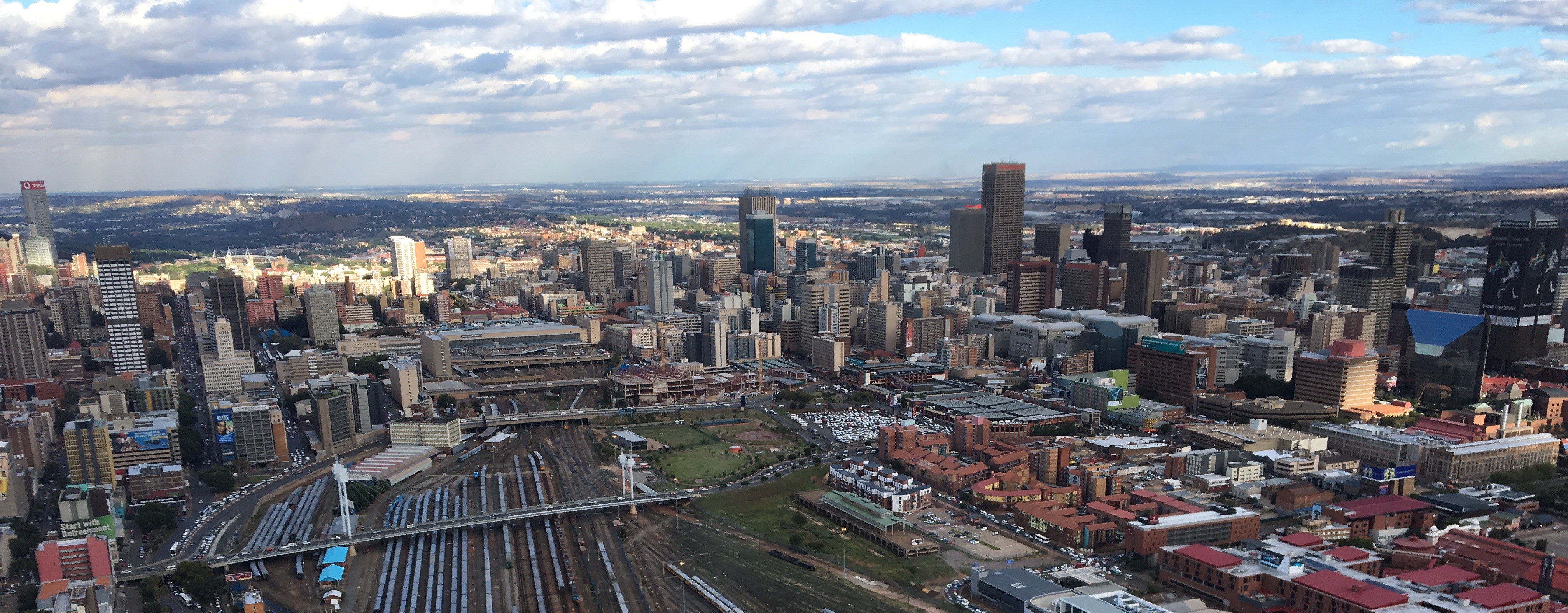
The Johannesburg Biennale was not lost. It was discontinued. The decision the City of Johannesburg made in early 1998 is the central fact of South African cultural-policy debate about the international biennial format, and it has not been reversed.
The standard institutional account of the Johannesburg Biennale records its closure as a regrettable financial event: a young biennial that, despite the curatorial weight of its second edition, ran out of municipal patience and operating capacity in early 1998. The account is accurate as far as it goes. It also tends, in the telling, to flatten the more uncomfortable structural reading: the City of Johannesburg, faced with the choice between continuing an internationally recognised contemporary art biennial in its post-apartheid economic capital and absorbing the political and budgetary cost of doing so, chose not to continue. That choice is the institutional fact that the subsequent three decades have not reopened.
The decision sits awkwardly against the curatorial reception of the 2nd edition. Trade Routes: History and Geography is now routinely cited, alongside Catherine David's documenta X of the same year, as one of the two biennial events of the 1990s that reorganised contemporary art's institutional vocabulary around the post-colonial frame. Enwezor's subsequent appointment to documenta 11 (2002) was, in the institutional record, a direct consequence of the Johannesburg edition; the curatorial method he developed there (multi-continental curatorial team, platforms structure, deliberate displacement of the European centre) is the method documenta 11 took up. The biennial that produced that curatorial template was closed by its host city within months of its second edition's opening.
The municipal account at the time emphasised cost overruns, low domestic attendance figures, and the operational difficulty of mounting an international biennial in a city still negotiating the political and security transitions of the immediate post-apartheid period. Each of these is, on the available evidence, factually defensible. None of them, individually or together, explain why a biennial of Trade Routes' international standing could not be reconfigured rather than discontinued. The comparison that the closure invites, to Dakar's Dak'Art, founded six years earlier and continuing, is, in this respect, instructive. Dak'Art operates at a fraction of Trade Routes' 1997 budget and has produced fifteen continuing editions. The structural question is not whether Johannesburg could have afforded a biennial, but whether the post-apartheid city's cultural-policy framework was prepared to defend one as a continuing institutional commitment.
It is in this sense that the Johannesburg Biennale's continuing absence functions as a cultural-policy argument rather than a historical accident. Proposals for revival have surfaced periodically in South African art-world discussion, most visibly in the mid-2010s, and have not produced a successor institution. The argument the absence makes is that the international biennial format, as inherited from Venice and as adapted by Enwezor, was not legible to the municipal authorities of the late-1990s South African state as part of the cultural infrastructure the new democracy required. That illegibility is itself the most consequential thing the Johannesburg Biennale produced. The 2nd edition is the curatorial reference; the closure is the institutional one. Both belong to the record.