The Kampala Art Biennale

Uganda's biennial of contemporary African art, founded in 2014 in Kampala by the artist, gallerist and curator Daudi Karungi through the Kampala Arts Trust (KART). The programme has run across four editions to date — the inaugural Progressive Africa (KAB14, 2014); the Elise Atangana-curated Seven Hills (KAB16, 2016); the Simon Njami-libretto'd The Studio (KAB18, 2018), built around a master-and-apprentice studio model with seven internationally established African artists; and Get Up Stand Up, the cycle's closing edition — with the institution making its primary argument as the Ugandan platform for a continuing pan-African contemporary art conversation operating from East Africa.

Established2014 — 2026Four editions
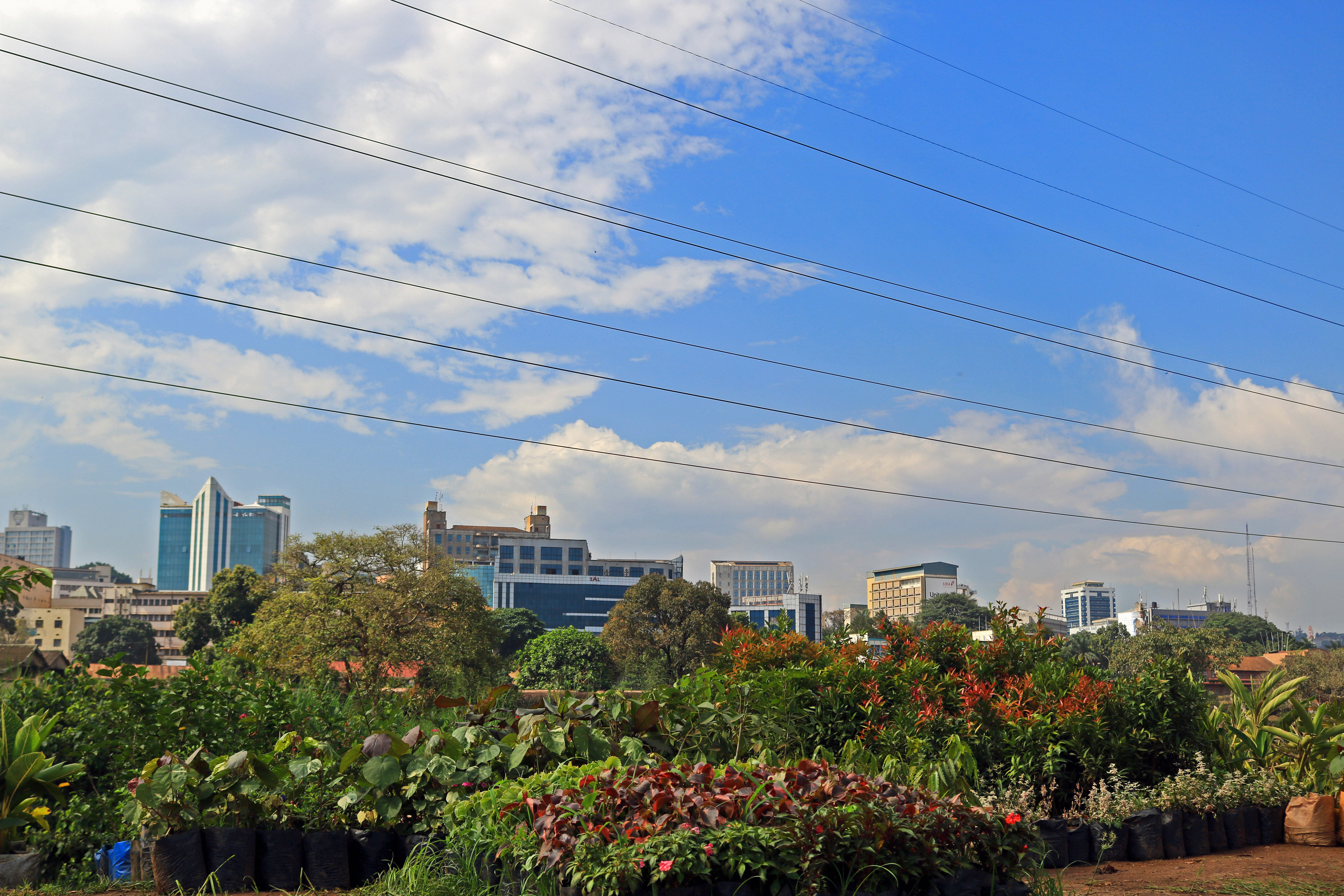
The seven hills of Kampala — the East African capital from which the Kampala Art Biennale takes its title, its 2016 curatorial framing and its institutional geography.
Above Kampala, Uganda — the East African capital built across its named hills, the city from which Daudi Karungi and the Kampala Arts Trust have run the biennial since 2014 and the site that the 2016 edition curator Elise Atangana took as the structural metaphor for her Seven Hills programme.

The Lead Essay The Kampala Art Biennale

Karungi's Kampala

The Kampala Art Biennale is the Ugandan biennial of contemporary African art, founded 2014 by the artist, gallerist and curator Daudi Karungi through the Kampala Arts Trust. Across its first four editions — Progressive Africa (2014), Seven Hills (2016), The Studio (2018) and Get Up Stand Up — the programme has built the working argument that a continuing pan-African contemporary art platform can operate from East Africa outside the older Dak'Art / Bamako axis, on a curatorial model that has moved successively from group survey to thematic essay to a master-and-apprentice studio.

The Kampala Art Biennale (KAB) is Uganda's biennial of contemporary African art, founded in 2014 in the East African capital by the artist, gallerist and curator Daudi Karungi through the Kampala Arts Trust — the artists' coalition Karungi co-founded in 2007 alongside the criticism journal START Journal and as the institutional partner to his Afriart Gallery (founded 2002). The biennial was conceived, in Karungi's framing, as a showcase of contemporary art from Africa with the aim to expose, educate and create debate about the value of art in Ugandan society — and as the East African pole of a pan-African contemporary art conversation that, at the founding moment, was institutionally anchored on Dakar's DAK'ART (1990) in the West African Atlantic and on the Bamako Encounters of African Photography (1994) in the Sahel, with no continuing equivalent on the continent's eastern axis.

Across its first four editions, the Kampala Art Biennale has moved through three distinct curatorial models. The inaugural edition, Progressive Africa, opened in August 2014 as a survey-format presentation of contemporary African painting, sculpture, photography and installation distributed across Kampala venues, with Karungi himself curating from the Kampala Arts Trust. The second edition, Seven Hills, ran from 3 September to 2 October 2016 under the curatorship of the independent curator Elise Atangana (Yaoundé / Paris) — known for her co-curatorship of the 2014 Dakar Biennale — who took the seven hills on which the East African capital is built as her organising metaphor, working with twenty-five international contemporary artists across a network of venues and with the sub-theme of virtual mobilities: the question of what it means to circulate, to migrate and to be seen from elsewhere in a contemporary African city. The third edition, The Studio, opened on 24 August 2018 and ran to 24 September under a curatorial libretto by the Cameroonian critic Simon Njami (long-time co-editor of Revue Noire; curator of the 2016 and 2018 Dakar Biennales), who replaced the conventional thematic-group format with a master-and-apprentice studio model: seven internationally established African artists — Abdoulaye Konaté, Bili Bidjocka, Godfried Donkor, Myriam Mihindou, Radenko Milak, Aida Muluneh and Pascale Marthine Tayou — opened studios in Kampala over consecutive ten-day intensive workshops, with selected young Ugandan, East African and African apprentices working alongside each master. The fourth edition, Get Up Stand Up, again with Njami as librettist, closed the institution's first cycle.

An institution carried by a gallerist, a journal and a trust

The structural feature that distinguishes the Kampala Art Biennale from the older continental biennials at Dakar and Bamako, and from its near-neighbour the East Africa Art Biennale (EASTAFAB, founded 2003 in Dar es Salaam), is the architecture of the institution that carries it. Where DAK'ART is a Senegalese state institution operating under the Ministry of Culture, and the Bamako Encounters are an intergovernmental programme run between the Malian state and the French Institut Français, and EASTAFAB is registered as a Tanzanian non-profit headquartered at the University of Dar es Salaam, the Kampala Art Biennale runs from a Ugandan artists' coalition — the Kampala Arts Trust — which Karungi co-founded in 2007 and which works through the existing infrastructure of his Afriart Gallery on Kampala's Lugogo Bypass, the editorial network of START Journal, and a working relationship with international funders including the EU Delegation in Kampala, the TotalEnergies Foundation and other diplomatic and corporate cultural sponsors.

The artistic argument the Kampala programme makes is that pan-African contemporary art does not need a continental capital to organise around it. The 2016 Seven Hills edition framed Kampala's urban geography — the named hills of Mengo, Kibuli, Namirembe, Lubaga, Nsambya, Nakasero and Old Kampala, with the city's expansion now folding in further hills around the original seven — as a working diagram for thinking about virtual mobility, migration and the dispersed contemporary African subject. The 2018 Studio edition then reframed the biennial form itself: rather than a thematic exhibition assembled from completed works, KAB18 took the biennial's two-year cycle as a transmission medium, with seven established masters each spending ten days in residence with selected apprentices, and the resulting works — and the relationships between the artists — constituting the exhibition. The argument was that the master-and-apprentice studio, which the European canon long treated as a pre-modern practice, has in fact continued in African artistic training across the twentieth century and into the present, and that the biennial form could productively be turned toward that continuing tradition rather than against it. The 2020 closing edition, Get Up Stand Up, again under Njami as librettist, made the political argument the institution had not yet directly made — that contemporary African art is not a separate object of curatorial attention but an active position within the wider African political and cultural project.

Critical Perspective The African biennial map

Kampala and the East African position

Dakar (DAK'ART, 1990) is the senior pan-African biennial and the Atlantic anchor. Bamako (Rencontres, 1994) holds the continental photography position. The discontinued Johannesburg Biennale (1995, 1997) made the strongest single argument before going silent for three decades. EASTAFAB (Dar es Salaam, 2003) holds the pan-East-African position on a regional intergovernmental footing. Kampala is the Ugandan biennial — the smallest and youngest of the East African platforms, the one most tightly identified with a single artistic founder, and the one whose curatorial argument has moved furthest from the exhibition convention toward the studio.

The African biennial map is older and more variegated than the dominant institutional narratives — built around DAK'ART, the Johannesburg Biennale of the 1990s, and the post-2000 multiplication of platforms — usually suggest. The Alexandria Biennial of the Mediterranean Countries was founded in 1955 and the Cairo Biennale opened in 1984, both as state-run institutions of the Egyptian Ministry of Culture; the Bamako Encounters of African Photography opened in 1994 as a Franco-Malian collaboration; the discontinued Johannesburg Biennale opened in 1995 under post-apartheid municipal sponsorship, holding its second and final edition in 1997 under Okwui Enwezor's curatorship before its abrupt closure; and the East Africa Art Biennale opened in 2003 in Dar es Salaam under a working partnership between the Belgian-born curator Yves Goscinny and Prof. Elias Jengo at the University of Dar es Salaam. The Kampala Art Biennale, founded 2014, arrived more than a decade after the EASTAFAB, more than two decades after Bamako, and almost a quarter-century after Dakar — the youngest of the continuing African biennials of any scale.

The structural argument the Kampala programme makes, against this older institutional field, is twofold. The first argument is geographic. EASTAFAB had taken the pan-East-African position from 2003 onwards on the footing of the East African Community's five member states — Tanzania, Kenya, Uganda, Rwanda and Burundi — and on a touring model in which the biennial moved by road across the region. The Kampala Art Biennale, by contrast, was founded as a specifically Ugandan institution operating from the East African Community's third capital, with the working assumption that a pan-African (rather than pan-East-African) contemporary art conversation could be hosted in Kampala without a regional touring obligation. The institutional bet was that Kampala — the East African capital with the longest continuing art-school tradition through the Margaret Trowell School of Industrial and Fine Arts at Makerere University, founded as the East African School of Fine Art in 1937 — could host that conversation on the basis of its own infrastructure.

The second argument is curatorial. Where Dakar and Bamako had both, by the 2010s, settled into the contemporary biennial convention of a single thematic curator producing a large group exhibition with a national-pavilion structure, and where EASTAFAB worked from a National Committee model in which each member state's committee selected its own artists, the Kampala Art Biennale used its second and third editions to argue for two distinct alternatives to the thematic-survey model. Seven Hills (2016) under Elise Atangana proposed that the curatorial frame could be drawn from the host city's own urban geography rather than from an abstract international theme — that Kampala's seven hills could organise both an exhibition and a sub-theme (virtual mobilities) that addressed the contemporary African condition without leaving the city. The Studio (2018) under Simon Njami then went further, proposing that the biennial form itself could be repurposed: rather than presenting completed works, the exhibition would present the encounter between masters and apprentices, with the studio as the central institutional unit. That argument — that an African biennial could be a transmission mechanism rather than a presentation mechanism — is the curatorial position that distinguishes Kampala from every other continuing African biennial and that constitutes the institution's contribution to the continental conversation.

The institutional question the Kampala programme continues to address is the question of scale. The biennial runs on a small operating budget, with a part-time team working through Kampala Arts Trust and Afriart Gallery, and with each edition assembled around a single guest curator's libretto and the network of international and regional partners that curator can mobilise. The continuing argument is that the modest scale is not a weakness but the structural feature that allows the institutional bet — pan-African contemporary art operating from East Africa on a continuing two-year cycle, with each edition reframing what a biennial can be — to be sustained. The work the institution continues is to demonstrate, edition by edition, that the bet holds.


The Institutional Spine

Defining moments

Five episodes from the first decade of Uganda's biennial.

2007Pre-history

The Kampala Arts Trust founding

Seven years before the inaugural biennial, the institutional infrastructure that would carry it was assembled. In 2007 the artist and Afriart Gallery founder Daudi Karungi — who had opened Afriart five years earlier on Kampala's Lugogo Bypass — co-founded the Kampala Arts Trust (KART), a coalition of artists and art appreciators working toward the integration of contemporary art into Ugandan public life, and in the same year launched START Journal, a continuing online journal of art criticism and writing on the East African contemporary art scene. The Trust and the Journal between them constituted the institutional ground from which the biennial would be launched.

Sources: Kampala Art Biennale — About; START Journal

2014Foundation

Progressive Africa — the inaugural edition

The first Kampala Art Biennale, Progressive Africa, opened in August 2014 as a survey-format exhibition of contemporary African art across Kampala venues, organised through the Kampala Arts Trust and curated from KART by Daudi Karungi. The edition was conceived, in Karungi's framing, as the institutional demonstration that a continuing biennial of contemporary African art could operate from Uganda — and that Kampala's combination of the Makerere art-school tradition, the Afriart Gallery infrastructure and the Kampala Arts Trust's continuing artists' network could constitute the working basis for such an institution.

Sources: Kampala Art Biennale 2014 — official page; Africa Is a Country, 2014

2016II

Atangana's Seven Hills

The second edition, Seven Hills, ran from 3 September to 2 October 2016 under the curatorship of the Yaoundé / Paris-based independent curator Elise Atangana, who had previously co-curated the 11th Dakar Biennale (2014). Atangana's curatorial frame took the named hills on which the East African capital is built as a working diagram, with the sub-theme of virtual mobilities: twenty-five international contemporary artists presented work across a network of Kampala venues addressing questions of migration, circulation and the dispersed contemporary African subject. The edition was the first sustained argument the institution made for a curatorial model drawn from the host city's own geography rather than from an externally imported theme.

Sources: Kampala Art Biennale — KAB16; START Journal interview with Atangana; Africanah.org

2018III

Njami's Studio — masters and apprentices

The third edition, The Studio, opened on 24 August 2018 and ran to 24 September under a curatorial libretto by the Cameroonian-French critic Simon Njami. Seven internationally established African artists — Abdoulaye Konaté, Bili Bidjocka, Godfried Donkor, Myriam Mihindou, Radenko Milak, Aida Muluneh and Pascale Marthine Tayou — were invited to Kampala to open studios for ten-day intensive workshops with selected young Ugandan, East African and continental apprentices, with the resulting works and relationships constituting the edition's exhibition. The Studio model proposed that the biennial form could function as a transmission mechanism rather than a presentation mechanism — the institutional argument the Kampala programme has continued to make against the dominant convention of the contemporary thematic biennial.

Sources: Contemporary And — KAB returns with a new concept; Africanah.org on KAB18; START Journal — Transmission at the Kampala Biennale

2020IV

Get Up Stand Up — closing the first cycle

The fourth edition, Get Up Stand Up, returned Simon Njami as librettist and made — through the Bob Marley title — the political argument the institution had not yet directly stated: that contemporary African art is not a separate object of curatorial attention but an active position within the wider African cultural and political project. The edition closed the institution's first cycle and reframed the biennial's terms for the editions to follow, with the institutional question now turned outward to the wider continental field.

Sources: Kampala Art Biennale — Introduction to KAB 2020; Kampala Art Biennale — The Librettist 2020: Simon Njami

People in the Kampala programme

The figures behind KAB

Founder & Director · 2014 onward

Daudi Karungi

Ugandan artist, gallerist and curator. Born in Kampala; trained at the Margaret Trowell School of Industrial and Fine Arts at Makerere University. Founded the Afriart Gallery on Kampala's Lugogo Bypass in 2002, now Uganda's leading contemporary art gallery. In 2007 co-founded both the Kampala Arts Trust (KART) and START Journal, the East African art-criticism platform. Founded the Kampala Art Biennale in 2014 through KART and has served as its director across all four editions; curated the inaugural Progressive Africa programme from KART in 2014.

Source: Kampala Art Biennale — About; OnCurating, Issue 32; Independent Curators International

Curator · KAB16 (2016)

Elise Atangana

Cameroonian independent curator and producer based between Yaoundé and Paris. Co-curator (with Smooth Ugochukwu Nzewi and Abdelkader Damani) of the 11th Dakar Biennale (DAK'ART, 2014). Curator of the 2nd Kampala Art Biennale, Seven Hills, in 2016, where she proposed Kampala's named hills as a working curatorial diagram and the sub-theme of virtual mobilities as the edition's organising question. Continuing curatorial work across the pan-African contemporary art scene, with residencies and project partnerships including the Delfina Foundation and AtWork.

Source: START Journal — interview with Atangana; Delfina Foundation; ART AFRICA Magazine

Librettist · KAB18 (2018) & KAB20

Simon Njami

Cameroonian-Swiss critic, novelist and curator. Co-founder of Revue Noire (Paris, 1991), the journal that did more than any other institutional voice to construct the international platform for contemporary African art across the 1990s. Curator of Africa Remix (2004–07), one of the defining travelling exhibitions of African contemporary art of the 2000s. Artistic Director of the 12th and 13th Dakar Biennales (2016, 2018). Librettist (Njami's preferred term, replacing "curator") of the 3rd and 4th Kampala Art Biennales — The Studio in 2018 and Get Up Stand Up — where he developed the master-and-apprentice format that distinguished the Kampala programme from the conventional thematic biennial.

Source: Kampala Art Biennale — The Librettist 2020: Simon Njami; Contemporary And

Master · KAB18 (2018)

Pascale Marthine Tayou

Cameroonian artist based in Ghent, Belgium. One of the seven masters invited by Simon Njami to KAB18's Studio programme, where he ran a ten-day intensive workshop in Kampala with selected apprentices. Long-running international career across painting, sculpture, installation and performance addressing migration, the postcolonial city and African modernism. Documented work with KAB18 apprentices was presented as part of the edition's principal exhibition.

Source: Kampala Art Biennale — Tayou's KAB18 Studio Apprentices

Master · KAB18 (2018)

Aida Muluneh

Ethiopian photographer based in Addis Ababa and founder of the Addis Foto Fest (2010), the East African photography festival that since 2010 has been the principal continuing platform for contemporary African and international photography in the Horn of Africa. One of the seven masters at the 2018 Kampala Studio, where she ran a workshop with selected apprentices on contemporary African photographic practice. Her continuing work across editorial, fine-art and curatorial practice has made her a connecting figure between the photography institutions of the African continent — Bamako, Addis, Lagos Photo, Kampala — and the global photography circuit.

Source: Contemporary And — KAB18; Kampala Art Biennale

Master · KAB18 (2018)

Abdoulaye Konaté

Malian artist based in Bamako, working principally with large-scale textile and bogolan-influenced installations. Long-time director of the Conservatoire des Arts et Métiers Multimédia Balla Fasséké Kouyaté (CAMM) in Bamako, the institutional ground from which much of the city's continuing position as a continental photography and contemporary art hub is sustained. One of the seven masters invited to KAB18's Studio, where his ten-day workshop addressed the relationship between textile, material culture and contemporary African visual practice.

Source: Contemporary And — KAB18; Kampala Art Biennale

Founded
2014 · Kampala
Founder
Daudi Karungi
Organiser
Kampala Arts Trust
Editions
KAB14 · KAB16 · KAB18 · KAB20
Frame
Pan-African contemporary art

Geography

The Kampala Art Biennale across the city

Principal institutions

Afriart Gallery

Daudi Karungi's gallery, founded 2002 on Kampala's Lugogo Bypass — Uganda's leading commercial contemporary art gallery and the institutional partner of the Kampala Arts Trust across the biennial's editions.

7 Kira Road / Lugogo Bypass
Kamwokya, Kampala
Uganda

Margaret Trowell School of Industrial and Fine Arts (MTSIFA), Makerere University

East Africa's senior fine-arts school, founded by the British artist and educator Margaret Trowell as the East African School of Fine Art in 1937 and incorporated into Makerere University in 1949. The institutional source of the modern Ugandan art scene and a continuing partner to the Kampala Art Biennale across its editions.

Makerere University
Makerere Hill, Kampala
Uganda

Kampala Arts Trust (KART)

The artists' coalition Daudi Karungi co-founded in 2007 as the institutional body that would later produce the biennial. KART continues to operate START Journal and the biennale programme from Kampala.

via Afriart Gallery
Kamwokya, Kampala
Uganda

From the Directory

Related African biennials

Browse the region →

Essential Reading

For further work

Kampala Art Biennale 2014 — Progressive Africa

Kampala Arts Trust  ·  2014

Documentation of the inaugural KAB programme — the institutional argument for an East African pan-African biennial operating from Kampala.

Kampala Art Biennale 2016 — Seven Hills

Elise Atangana, curator  ·  2016

Catalogue of the second edition, with Atangana's Seven Hills / virtual mobilities curatorial frame and the twenty-five participating international contemporary artists.

Kampala Art Biennale 2018 — The Studio

Simon Njami, librettist  ·  2018

Catalogue of the master-and-apprentice studio edition with the seven masters — Konaté, Bidjocka, Donkor, Mihindou, Milak, Muluneh and Tayou — and the resulting apprentice works.

Daudi Karungi: Director, Kampala Art Biennale

OnCurating, Issue 32  ·  2017

Conversation with Karungi on the institutional architecture of the biennial, the Afriart Gallery and the Kampala Arts Trust.

Kampala Art Biennale 2020 — Get Up Stand Up

Simon Njami, librettist  ·  2020

Catalogue of the closing edition of the institution's first cycle.

From the news desk

Institutional record

Context: the African biennial field

Editorial content on biennale.com is published by the Biennale Editorial Team. Image credits as captioned. External links are provided for reference and verification.