The 5th Kyiv Biennial, opened in October 2023 with a cascade of openings across eight cities in Ukraine and the European Union, is the first edition of the biennial to be programmed after Russia's full-scale invasion of Ukraine. Organised by the Visual Culture Research Center under Vasyl Cherepanyn, it is the institution's pan-European response to the war.
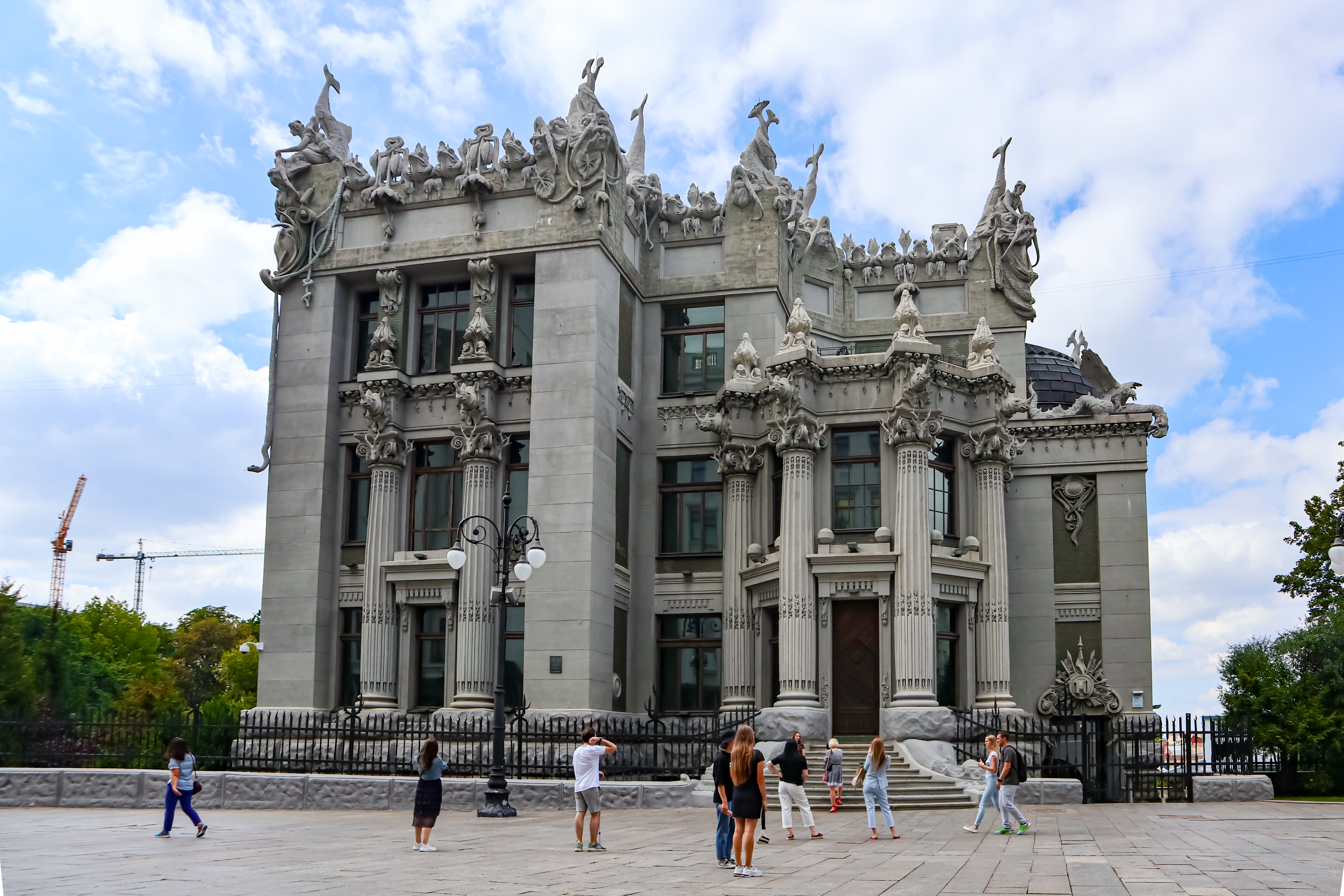
The Kyiv Biennial is the international biennial of contemporary art organised, since its first edition in 2015, by the Visual Culture Research Center, an independent cultural and research institution founded in Kyiv in 2008 by Vasyl Cherepanyn, Nadia Parfan, Inna Sovsun, Olga Bryukhovetska and others, originally at the National University of Kyiv-Mohyla Academy. VCRC's biennial is institutionally and editorially distinct from the 2012 "Arsenale" exhibition at the Mystetskyi Arsenal under David Elliott, with which it is sometimes confused: the VCRC-organised Kyiv Biennial counts its first edition as The School of Kyiv, opened on 8 September 2015 at the House of Clothes in central Kyiv under curators Hedwig Saxenhuber and Georg Schöllhammer.
The 5th edition, Against the Logic of War, is the first programmed after Russia's full-scale invasion of Ukraine on 24 February 2022. It opened at Kyiv's Dovzhenko Centre on 5 October 2023, with subsequent openings in Ivano-Frankivsk on 7 October and Uzhhorod on 8 October, before extending across the European Union: Augarten in Vienna from 17 October 2023, the Museum of Modern Art in Warsaw from 23 October 2023, and onwards through Berlin, Antwerp and Lublin into 2024. The edition was realised in partnership with tranzit.at (Vienna), the Museum of Modern Art in Warsaw, the Dovzhenko Centre, Asortymentna Kimnata (Ivano-Frankivsk), Sorry, No Rooms Available (Uzhhorod), and a range of European cultural-policy institutions. In November 2023 the critic Jason Farago, writing in The New York Times, described the 5th edition as "the most energizing exhibition of the year."
A biennial that became a perennial
The institutional argument the 5th edition made (and the argument under which the VCRC has continued to programme since 2024) is that the biennial form, as developed across the post-1990s European biennial system, presumes a degree of civic and infrastructural stability that no longer obtains for a biennial sited in a country at war. VCRC's response has been to reframe the biennial as a Kyiv Perennial: a continuing, dispersed, multi-city programme that retains the biennial's institutional weight while abandoning the biennial's single-city, fixed-date structure. The 2024 Kyiv Perennial extension in Berlin and the continuing programme across European partner cities are the post-5th editorial vehicle through which the institution has carried that argument forward. The 6th edition, Near East, Far West, opened in October 2025 across Warsaw, Antwerp, Dnipro, Kyiv and Linz and concluded with its Berlin chapter, A Bird That Cannot Land, at KW Institute for Contemporary Art on September 13, 2026.
The continuing institutional condition under which the biennial operates (programmed by a Ukrainian organisation whose director and staff are simultaneously displaced and continuing to work, whose principal Kyiv venues are intermittently subject to air-raid conditions, and whose European partner venues are the only continuing condition of physical opening for several editions of the programme) is one of the most consequential institutional questions in the European biennial system since 2022. The 5th edition has been read across the press as the principal artistic-institutional response to the war from within Ukrainian contemporary art-making.