Lisbon Architecture Triennale

Portugal's principal international architecture forum — founded in 2007 by José Mateus and a circle of Portuguese architects under the institutional name Trienal de Arquitectura de Lisboa, and the principal European platform on which the post-2008 architectural reading of crisis, housing, climate and demographic pressure has been continuously argued. The seventh edition, How Heavy is a City?, runs through December 2025 under chief curators Ann-Sofi Rönnskog and John Palmesino of Territorial Agency.

Established2007 — 2025Seven editions
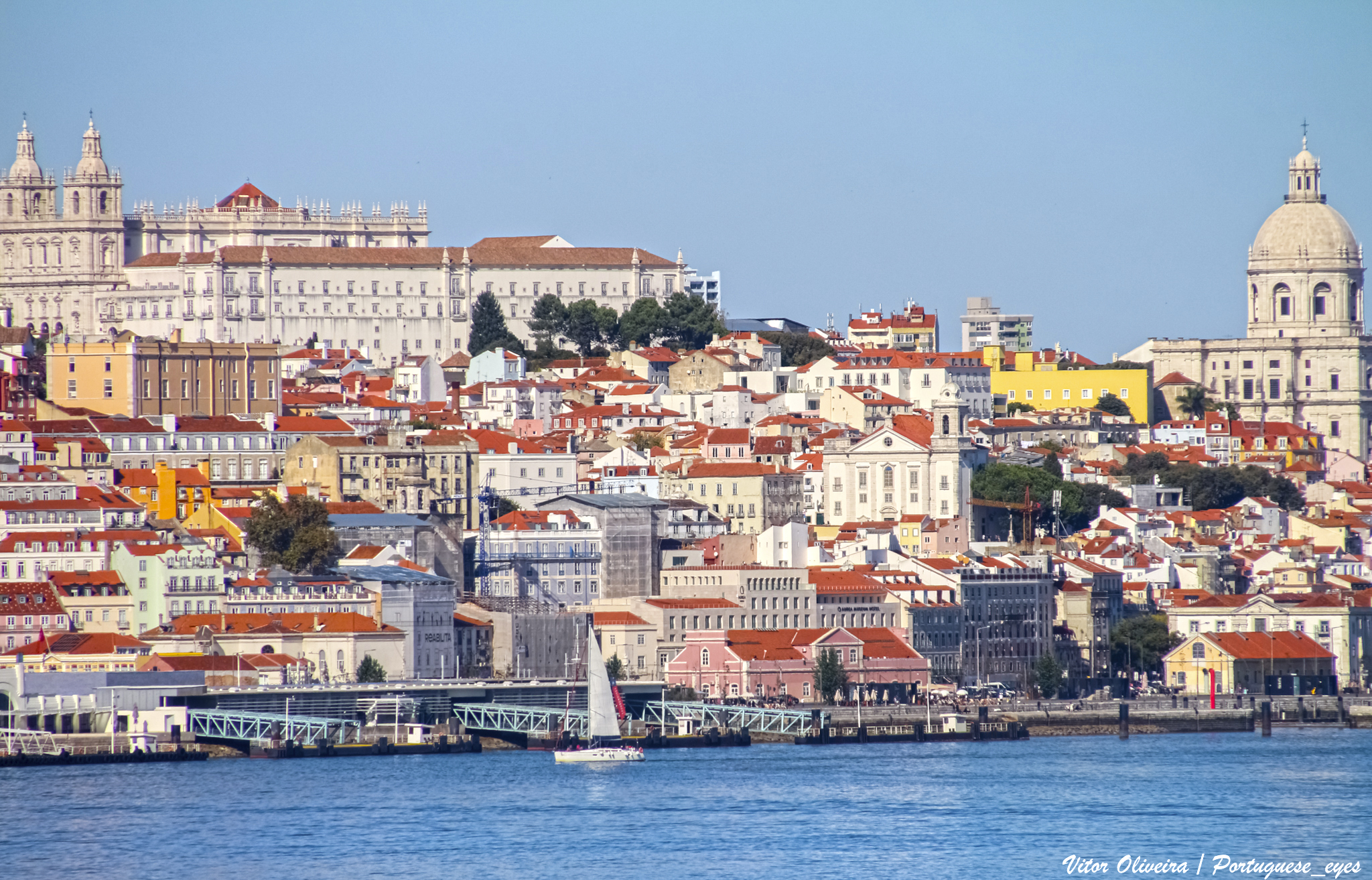
Lisbon waterfront and the historic city of seven hills — the geographical and institutional setting of the Lisbon Architecture Triennale since 2007.
Above The Lisbon waterfront and the historic city of seven hills — the geographical and institutional setting of the Trienal de Arquitectura de Lisboa, founded in 2007 and continuing as Portugal's principal international architecture forum.

The Lead Essay The Seventh Triennale

Rönnskog and Palmesino's How Heavy is a City?

The seventh edition of the Lisbon Architecture Triennale, How Heavy is a City?, runs from 2 October to 8 December 2025 under chief curators Ann-Sofi Rönnskog and John Palmesino, founders of the London- and Stockholm-based research practice Territorial Agency, with a programme structured around three research lines — Fluxes, Spectres and Lighter — sited across MAAT, the Palácio Sinel de Cordes, MUDE and the Calouste Gulbenkian Foundation.

The Lisbon Architecture Triennale is Portugal's principal international architecture forum, founded in 2007 under the institutional name Trienal de Arquitectura de Lisboa by the Lisbon architect José Mateus — co-founder, with Nuno Mateus, of the practice ARX Portugal — together with a circle of Portuguese architects who proposed an institutional platform on which Portuguese architecture could be continuously read in international company. Across seven editions and eighteen years it has become the principal European venue at which the architectural reading of post-2008 crisis — the European debt-and-housing crisis of which Portugal was at the epicentre, the climate emergency, the demographic transformation of European cities, and the planetary reconfiguration of the architectural problem — has been continuously argued.

The seventh edition, How Heavy is a City?, opened to the public on 2 October 2025 and runs to 8 December 2025 under chief curators Ann-Sofi Rönnskog and John Palmesino, the founding partners of Territorial Agency, the research practice working at the intersection of architecture, geography and the planetary sciences. The curatorial premise — that the city is most consequentially understood not as a built form but as a planetary mass, the cumulative weight of materials, energies, populations and atmospheres that the architectural profession has, until recently, not been institutionally equipped to read — is developed across three research lines, each comprising an exhibition, a book chapter and a talk series. Fluxes, at MAAT, transforms the former Tejo Power Station's coal-fired interior into an immersive installation on the material flows of urbanisation. Spectres, at MUDE — Museum of Design and Fashion — uses sonar and radar to render legible the hidden dimensions of the contemporary city. Lighter, at Garagem Sul (Centro Cultural de Belém), assembles propositions for low-carbon, socially just urban futures. The conference programme Talk, Talk, Talk runs from 29 to 31 October 2025 at the Calouste Gulbenkian Foundation.

An institution at the centre of the post-2008 European architectural conversation

The Triennale's institutional argument across seven editions is that Lisbon — the geographical and political periphery of the European architectural conversation when the institution was founded in 2007 — has become, across the post-2008 period, one of the principal European platforms at which architecture's continuing reading of the relationship between built form and the wider crisis condition has been programmed. The third edition, Close, Closer (2013), curated by the London-based critic Beatrice Galilee with associate curators José Esparza Chong Cuy, Mariana Pestana and Liam Young, is widely regarded as the institution's international breakout — a three-month programme that, working in the immediate aftermath of the Portuguese sovereign-debt crisis, asked what architecture could be, mean or do when the institutional and economic conditions of professional architecture had themselves been substantially reconfigured. The fourth edition, The Form of Form (2016), curated by André Tavares and the late Diogo Seixas Lopes (who died of cancer in February 2016 before the edition opened), was the institution's continuing response to the same conditions through the disciplinary question of form. The fifth, The Poetics of Reason (2019), under the Paris architect Éric Lapierre, returned the institution to the disciplinary question of architectural reasoning. The sixth, Terra (2022), under Cristina Veríssimo and Diogo Burnay, made the climate question the institution's continuing subject. The seventh, How Heavy is a City?, places the planetary-scale material reading of the city at the centre of the programme.

What this institutional record establishes — and what the seventh edition continues to demonstrate — is the Triennale's continuing capacity to programme the architectural argument at the European platform level, from a Portuguese institutional base, across the period in which European architecture has been most substantially reshaped by the post-2008 conditions of crisis. The institution's continuing operation across this period is, in itself, an architectural argument.
Critical Perspective Lisbon and the post-2008 European argument

The Triennale as the European architecture biennial of the crisis

Founded in 2007 — on the immediate eve of the global financial crisis — and continuing across the period in which Portugal was at the epicentre of the European debt-and-housing emergency, the Lisbon Architecture Triennale has been the principal European platform at which architecture's continuing reading of that condition has been institutionally programmed. The institutional record is the argument.

The Lisbon Architecture Triennale was founded in 2007. The Lehman Brothers collapse came in September 2008. The Portuguese sovereign-debt crisis came in 2010–2011. The European Stability Mechanism bailout of Portugal was signed in May 2011. By the time the Triennale's third edition opened in September 2013, Portugal had been operating under European Commission, European Central Bank and International Monetary Fund supervision for more than two years, and Lisbon had become — within Portugal and beyond — one of the principal European cities in which the architectural and urbanistic consequences of the crisis condition were being most visibly worked out: housing emergency, demographic transformation, mass migration, the entry of large-scale international capital into the historic city, and the institutional reconfiguration of the Portuguese architecture profession itself.

The Triennale's institutional position across this period is best understood not as a national architecture biennial that happened to be founded just before a crisis, but as the European architecture biennial that the post-2008 crisis itself produced. The third edition's title — Close, Closer — was at once a curatorial proposition and an institutional position: that the architectural conversation had, in the post-crisis condition, to come closer to the questions that the architectural profession had not previously been institutionally equipped to address, and that the Triennale's position was to be the European platform at which that closer reading could happen. Beatrice Galilee's curatorial team, with associate curators including the Mexican curator José Esparza Chong Cuy (later Chief Curator at the Storefront for Art and Architecture in New York), the Portuguese architect-curator Mariana Pestana and the Australian architect Liam Young, programmed an edition that international architectural criticism continues to read as the institution's breakout to the European platform level.

The continuing curatorial register of the fourth, fifth, sixth and seventh editions has extended that institutional position. The Form of Form (2016), under André Tavares and Diogo Seixas Lopes, asked what the disciplinary question of architectural form continued to mean in a profession whose institutional and economic conditions had been substantially reconfigured. The Poetics of Reason (2019), under the Paris architect Éric Lapierre — working with the philosopher Sébastien Marot and a team that included Mariabruna Fabrizi and Fosco Lucarelli of Socks-Studio — returned the question of architectural reasoning to the centre of the institutional programme. Terra (2022), under Cristina Veríssimo and Diogo Burnay, made the climate question the institution's continuing institutional subject. The continuing argument is that the Lisbon Architecture Triennale has, across these editions, become the principal European platform at which the architectural reading of crisis — financial, demographic, climatic, planetary — has been programmed at institutional scale.

The seventh edition, How Heavy is a City?, under Territorial Agency, extends this argument from the human-scale crisis condition to the planetary-scale material condition. The continuing institutional question across the post-2025 period is whether the Triennale's continuing position at the European platform level can be sustained as the institutional ecology of European architecture biennials continues to expand, and as the planetary-scale architectural conversation continues to demand institutional capacities that the European national-architecture-biennial format was not originally designed to carry. The Lisbon Architecture Triennale's continuing operation across the next decade will be one of the principal institutional records by which the answer to that question can be read. In late 2025 the institution announced the appointment of the Portuguese architect and academic Joaquim Moreno, Associate Professor at the Faculty of Architecture of the University of Porto, as chief curator of the eighth Triennale, scheduled for the autumn of 2028 — the three-year curatorial lead-time following the institutional pattern established in earlier editions.


The Institutional Spine

Defining moments

Seven episodes from the post-2007 institutional record of Portugal's principal international architecture forum, from the founding edition in 2007 to the seventh under Territorial Agency in 2025.

2007I · Foundation

The founding — Vazios Urbanos

The first Lisbon Architecture Triennale ran from 31 May to 31 July 2007 under the title Vazios Urbanos (Urban Voids), with founder-president José Mateus as chief curator working with a team of twenty-three Portuguese and international collaborators. The edition's premise was the architectural reading of urban rarefaction — the abandoned, undefined or programmed-out spaces of the contemporary city's expanded peripheries. The founding edition established the institutional argument that Lisbon would programme as a continuing European platform under Mateus's presidency.

Sources: Trienal de Arquitectura de Lisboa — 2007; WorldCat — catalogue record; Biennial Foundation

2010II

Sardo's Let's Talk About Houses

The second Triennale, Let's Talk About Houses (in Portuguese, Falemos de Casas), opened in October 2010 under the continuing curatorship of Delfim Sardo, with a programme of four exhibitions, an international conference and four competitions. The edition was the Triennale's first sustained institutional reading of the residential question — opened months before the sovereign-debt crisis would render the Portuguese housing condition one of the principal continuing subjects of European architecture criticism.

Sources: Trienal de Arquitectura de Lisboa — Triennali archive; Biennial Foundation

2013III · breakout

Galilee's Close, Closer

The third Triennale, Close, Closer, ran from 12 September to 15 December 2013 under chief curator Beatrice Galilee, the London-based critic, with associate curators José Esparza Chong Cuy, Mariana Pestana and Liam Young (and additional co-curator Dani Admiss). The edition's three-month programme of installations, live performances, interventions, debates, exhibitions, film screenings and workshops asked what architecture could be, mean or do, and is widely read in international architecture criticism as the institution's breakout to the European platform level. The edition opened in the immediate aftermath of the Portuguese sovereign-debt crisis.

Sources: Beatrice Galilee — case study; Dezeen, September 2013; Wallpaper*

2016IV

Tavares and Seixas Lopes's The Form of Form

The fourth Triennale, The Form of Form, ran from 5 October to 11 December 2016 under chief curators André Tavares and Diogo Seixas Lopes. Seixas Lopes died of cancer in February 2016, before the edition opened. The principal exhibition was developed by three architecture offices — Johnston Marklee (Los Angeles), Nuno Brandão Costa (Porto) and OFFICE Kersten Geers David Van Severen (Brussels) — working jointly on a reflection on form and authorship, with content compiled by Mariabruna Fabrizi and Fosco Lucarelli of Socks-Studio. The edition returned the disciplinary question of architectural form to the centre of the institutional programme.

Sources: The Form of Form — official; ArchDaily; Biennial Foundation

2019V

Lapierre's The Poetics of Reason

The fifth Triennale, The Poetics of Reason, ran from 3 October to 2 December 2019 under chief curator Éric Lapierre, the Paris architect, working with a curatorial team of nine that included the philosopher Sébastien Marot, Ambra Fabi, Giovanni Piovene, Mariabruna Fabrizi, Fosco Lucarelli, Laurent Esmilaire, Tristan Chadney and Vasco Pinheiro de Melo. The edition returned the disciplinary question of architectural reasoning — what it is for architecture to be reasoned, and what kinds of reasoning architecture continues to be capable of — to the centre of the Triennale's institutional argument.

Sources: Trienal de Arquitectura — 2019; ArchDaily — Lapierre appointment; e-flux

2022VI

Veríssimo and Burnay's Terra

The sixth Triennale, Terra, ran from 29 September to 5 December 2022 under chief curators Cristina Veríssimo and Diogo Burnay, with a programme of four exhibitions, four books, three awards, three days of conferences (Talk, Talk, Talk, 26–28 October 2022) and a selection of independent projects. The edition's premise — the evolution from a fragmented, linear and resource-extractive system model towards a circular and holistic balance between communities, resources and processes — placed the climate question at the institutional centre of the Triennale's continuing programme.

Sources: Trienal de Arquitectura — 2022; ArchDaily; e-flux

2025VII · current

Territorial Agency's How Heavy is a City?

The seventh Triennale, How Heavy is a City?, runs from 2 October to 8 December 2025 under chief curators Ann-Sofi Rönnskog and John Palmesino, founders of Territorial Agency. The programme is structured around three research lines — Fluxes at MAAT (Museum of Art, Architecture and Technology), Spectres at MUDE (Museum of Design and Fashion) and Lighter at Garagem Sul (Centro Cultural de Belém) — each an exhibition, a book chapter and a talk series. The conference programme Talk, Talk, Talk ran 29–31 October 2025 at the Calouste Gulbenkian Foundation.

Sources: Seventh Lisbon Architecture Triennale — official; ArchDaily, October 2025; Wallpaper* review, 2025

People at the Triennale

The figures behind Lisbon

Founder & President · Trienal de Arquitectura de Lisboa (2007 – present)

José Mateus

Portuguese architect (b. Castelo Branco, 1963). Educated at the Faculty of Architecture of the Technical University of Lisbon (FAUTL, 1986). Co-founder, with his brother Nuno Mateus, of ARX Portugal Arquitectos (Berlin, 1991; now Lisbon). Founder and President of the Director's Board of the Lisbon Architecture Triennale since its founding in 2007, and Executive Director of the first two editions (2007 and 2010). Has held teaching positions at the Instituto Superior Técnico in Lisbon and at ESARQ-UIC in Barcelona.

Source: Trienal de Arquitectura de Lisboa — José Mateus; ARX Portugal

Chief Curator · III Triennale (2013) — Close, Closer

Beatrice Galilee

British architecture critic and curator. Chief Curator of Close, Closer, the third Lisbon Architecture Triennale (2013) — widely regarded in international architecture criticism as the institution's breakout edition. Subsequently Daniel Brodsky Associate Curator of Architecture and Design at the Metropolitan Museum of Art, New York (2014–2019), and founder of The World Around (2020 – present), a New York-based platform for contemporary architecture and design. Author of Radical Architecture of the Future (Phaidon, 2021).

Source: Beatrice Galilee — Close, Closer case study; Dezeen, September 2013

Chief Curator · II Triennale (2010) — Let's Talk About Houses

Delfim Sardo

Portuguese curator, critic and academic. Chief curator of the second Lisbon Architecture Triennale, Falemos de Casas / Let's Talk About Houses (2010), with co-curators including the brothers José and Manuel Aires Mateus and Sir Peter Cook. The principal exhibition was presented at the Museu Colecção Berardo, occupying the entire 3,000 m2 ground floor and examining the blurring boundaries between art and architecture and the production of new solutions to the question of dwelling — organised around the Portuguese SAAL housing project and Alison and Peter Smithson's House of the Future. The edition opened months before the Portuguese sovereign-debt bailout (May 2011) would render the residential question one of the principal continuing subjects of European architecture criticism.

Source: Trienal de Arquitectura de Lisboa — 2010; ArchDaily — Let's Talk About Houses

Chief Curators · IV Triennale (2016) — The Form of Form

André Tavares & Diogo Seixas Lopes

Portuguese architecture historian (Tavares; co-founder of the publishing house Dafne Editora, Porto) and Portuguese architect (Seixas Lopes; co-founder of the practice Barbas Lopes Arquitectos, Lisbon; author of Melancholy and Architecture: On Aldo Rossi, 2015). Co-chief curators of the fourth Triennale. Seixas Lopes died of cancer in February 2016, before the edition opened to the public on 5 October 2016 — a loss that the edition's catalogue and continuing institutional memory of the Triennale record as one of the institution's most consequential.

Source: The Form of Form — official; Archis — Form and Beyond

Chief Curator · V Triennale (2019) — The Poetics of Reason

Éric Lapierre

French architect, theorist and critic (b. 1965). Founder of Eric Lapierre Experience (ELEx), Paris. Editor of multiple critical-architectural volumes and a continuing figure in the European architectural-theory conversation. Chief curator of the fifth Lisbon Architecture Triennale (The Poetics of Reason, 2019), with a curatorial team of nine including the philosopher Sébastien Marot.

Source: ArchDaily — Lapierre appointment; e-flux — curatorial team

Chief Curators · VI Triennale (2022) — Terra

Cristina Veríssimo & Diogo Burnay

Portuguese architects (founders of CVDB Arquitectos, Lisbon) and continuing figures in the Portuguese architectural-academic conversation. Veríssimo has held teaching positions at the Faculty of Architecture of the University of Lisbon and at the University of Évora; Burnay has held a teaching position at the Daniels Faculty of Architecture, University of Toronto. Co-chief curators of the sixth Lisbon Architecture Triennale (Terra, 2022), the institution's continuing institutional reading of the climate question.

Source: ArchDaily — appointment; Biennial Foundation

Founded
2007 · Lisbon
Founder & President
José Mateus
Frequency
Triennial
Headquarters
Palácio Sinel de Cordes
Current edition
VII · How Heavy is a City?

Geography

The Triennale across Lisbon

Principal venues

Palácio Sinel de Cordes

Eighteenth-century palace in Campo de Santa Clara; the Triennale's institutional headquarters since 2012 and a continuing year-round programming venue

Campo de Santa Clara, 142
1100-474 Lisbon, Portugal

MAAT — Museum of Art, Architecture and Technology

Belém riverside; site of Fluxes at the seventh edition, with the exhibition installed in the former Tejo Power Station

Avenida Brasília
1300-598 Lisbon, Portugal

MUDE — Museum of Design and Fashion

Baixa, Rua Augusta; site of Spectres at the seventh edition

Rua Augusta, 24
1100-053 Lisbon, Portugal

Garagem Sul — Centro Cultural de Belém

CCB, Belém; site of Lighter at the seventh edition

Praça do Império
1449-003 Lisbon, Portugal

Calouste Gulbenkian Foundation

Avenida de Berna; host venue for the seventh edition's Talk, Talk, Talk conference (29–31 October 2025)

Avenida de Berna, 45A
1067-001 Lisbon, Portugal

From the Directory

Related architecture biennials and triennials

Browse the region →

Essential Reading

For further work

I Trienal — Vazios Urbanos / Urban Voids

José Mateus, ed.  ·  2007

Catalogue of the founding edition under chief curator José Mateus and a team of twenty-three Portuguese and international collaborators.

II Trienal — Let's Talk About Houses

Delfim Sardo, ed.  ·  2010

Catalogue of the second edition, with co-curators including José and Manuel Aires Mateus and Sir Peter Cook — the institutional reading of the residential and dwelling question at the Museu Colecção Berardo.

III Trienal — Close, Closer

Beatrice Galilee, ed.  ·  2013

Catalogue of the breakout third edition, with associate curators José Esparza Chong Cuy, Mariana Pestana and Liam Young.

IV Trienal — The Form of Form

André Tavares & Diogo Seixas Lopes, eds.  ·  2016

Catalogue of the fourth edition, with the principal exhibition designed jointly by Johnston Marklee, Nuno Brandão Costa and OFFICE Kersten Geers David Van Severen.

V Trienal — The Poetics of Reason

Éric Lapierre, ed.  ·  2019

Catalogue of the fifth edition, with the curatorial team of nine.

VI Trienal — Terra

Cristina Veríssimo & Diogo Burnay, eds.  ·  2022

Catalogue of the sixth edition — the institution's continuing institutional reading of the climate question.

VII Trienal — How Heavy is a City?

Ann-Sofi Rönnskog & John Palmesino (Territorial Agency), eds.  ·  2025

Books and exhibition chapters of the seventh edition, structured across Fluxes, Spectres and Lighter.

Editorial content on biennale.com is published by the Biennale Editorial Team. Image credits as captioned. External links are provided for reference and verification.