La Triennale di Milano

Italy's design and architecture international — founded 1923 in Monza as a biennial of decorative arts and relocated to Milan in 1933, where the Palazzo dell'Arte built by Giovanni Muzio has housed the Triennale ever since. Now in its second century: the 24th International Exhibition, Inequalities, runs through November 2025 under President Stefano Boeri.

Established1923 — 202524 International Exhibitions
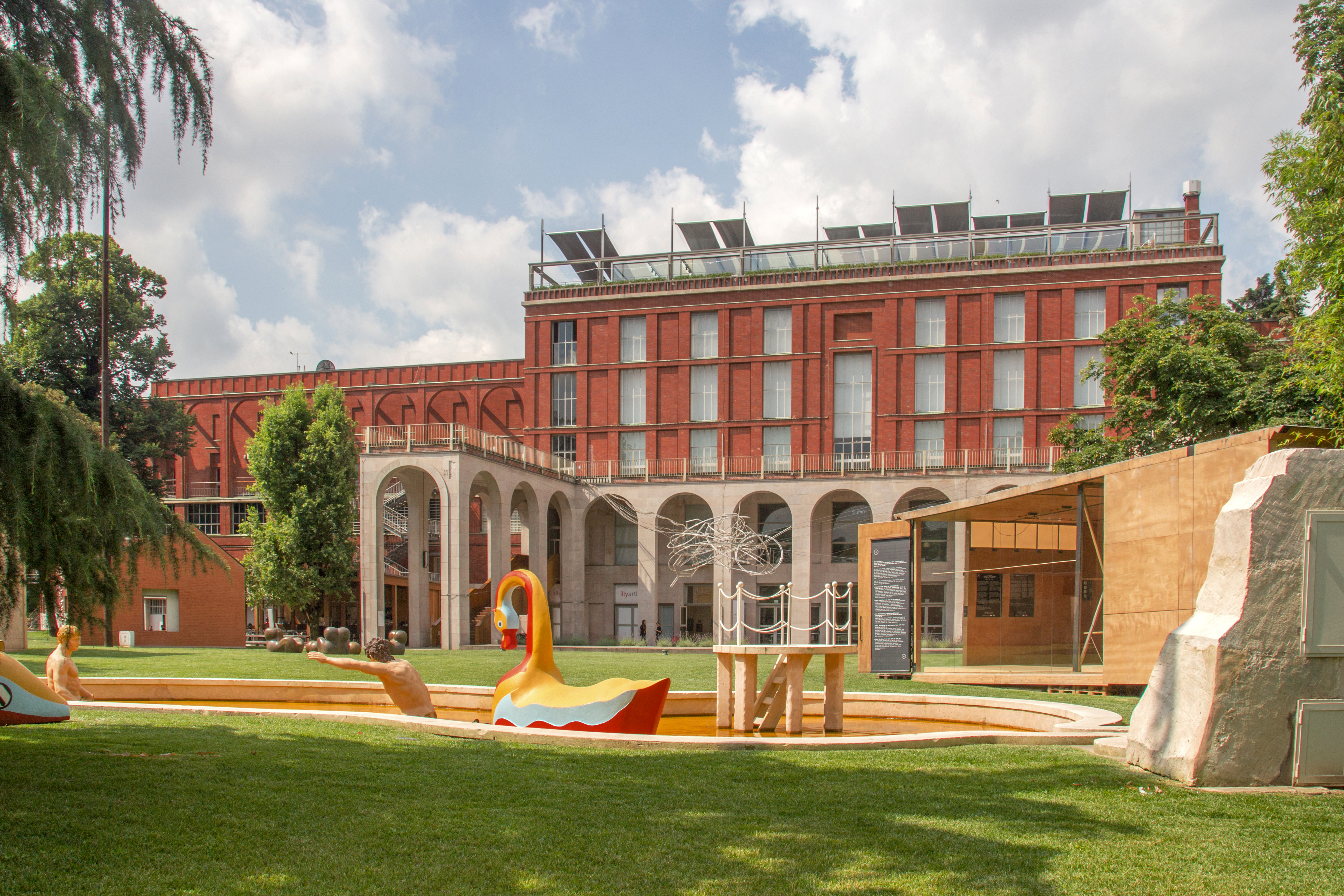
Palazzo dell'Arte by Giovanni Muzio, Milan — seat of the Triennale di Milano since 1933.
Above The Palazzo dell'Arte, designed by Giovanni Muzio and inaugurated in 1933 — seat of every Triennale International Exhibition since the institution's relocation from Monza to Milan in that year.

The Lead Essay The 24th International Exhibition

Boeri's Inequalities

The 24th International Exhibition of La Triennale di Milano, Inequalities, ran from 13 May to 9 November 2025 under Triennale President and Commissioner General Stefano Boeri, with a curatorial team including Norman Foster, Beatriz Colomina, Mark Wigley, Hans Ulrich Obrist, Theaster Gates, Telmo Pievani, and a network of additional curators across 28 sections.

La Triennale di Milano is Italy's design and architecture international, founded in 1923 in Monza as a biennial of decorative arts (the Biennale delle Arti Decorative), and relocated to Milan in 1933, where it took its current name and was housed in the purpose-built Palazzo dell'Arte designed by the architect Giovanni Muzio. The institution is one of three Italian world's-fair-recognised events under the Bureau International des Expositions, and across its hundred-and-two-year history it has been the principal Italian institutional venue at which the design and architecture professions have argued out their continuing positions. After a long pause across the late twentieth century, the International Exhibition returned to its three-year rhythm with the 21st edition in 2016.

The 24th International Exhibition, Inequalities, opened on 13 May 2025 and ran to 9 November 2025 under President and Commissioner General Stefano Boeri, the Milanese architect (founder of Stefano Boeri Architetti, designer of the Bosco Verticale) who has led the Triennale Foundation since 2018. The curatorial premise — that the most consequential continuing question facing design and architecture is the geopolitical and biopolitical fact of inequality, and that design's principal continuing instrument is the production of more equal futures — was developed by a curatorial team including Norman Foster (whose Norman Foster Foundation's Towards an Equal Future occupied the ground floor with research on housing in emergency contexts), the architectural historian Beatriz Colomina and the architect Mark Wigley, Hans Ulrich Obrist (Director of the Serpentine Galleries) with Natalia Grabowska, the Chicago-based artist Theaster Gates, the philosopher Telmo Pievani, and twenty-eight further curators working across 341 authors from 43 countries.

An institution at the centenary, retooled

The structural argument the Triennale has made under Boeri is that the historic International Exhibition format — the prewar pavilion model out of which the postwar Italian design industry was institutionally produced — required reformatting for the twenty-first century if the Triennale was to retain the institutional weight it once held. The XXII edition, Broken Nature: Design Takes on Human Survival, opened on 1 March 2019 under curator Paola Antonelli (Senior Curator, Department of Architecture and Design at MoMA, New York), with restorative design — design that addresses the threads connecting humans to their natural environments — as its constituting subject. The XXIII edition, Unknown Unknowns: An Introduction to Mysteries, ran from 15 July to 11 December 2022 under curators Ersilia Vaudo (astrophysicist; Chief Diversity Officer at the European Space Agency) and Francis Kéré (founder of Kéré Architecture; Pritzker Architecture Prize 2022), and addressed what the human and physical sciences continue not to know.

The XXI edition, in 2016 — 21st Century. Design After Design — was the institution's restart after a twenty-year interruption in the International Exhibition cycle, with exhibits spread across nineteen venues in and around Milan and 22,000 square metres of exhibition area. The scientific committee included Andrea Branzi, who co-curated Neo-Prehistory: 100 Verbs with Kenya Hara and The Multi-ethnic Metropolis. The 2016, 2019, 2022 and 2025 editions together constitute the institution's contemporary working argument.

Critical Perspective Italy's century-old design institution

The Triennale as design's longest institutional argument

Founded 1923 in Monza and continuing — with one twenty-year interruption — into the present, La Triennale di Milano is the longest continuously operating institutional venue for design and architecture anywhere in the world. The continuity is the institutional argument.

The Triennale's most distinctive structural feature is not the curatorial register of any single edition but the sheer continuity of the institutional commitment. The institution was founded in 1923 as the Biennale Internazionale delle Arti Decorative in Monza, became a triennial in 1930, moved to Milan and into Giovanni Muzio's Palazzo dell'Arte in 1933, and has — across one century of Italian institutional history that includes Mussolini's fascist period, the Second World War, the post-war reconstruction, the 1970s political crisis, the 1990s reorganisation of Italian state culture, and the early-twenty-first-century restart — maintained its position as the principal Italian venue at which design and architecture are programmed as continuing institutional argument.

The continuity is the institutional argument. Few cultural institutions anywhere in the world have continued to operate at biennial-or-greater frequency for a hundred years without major institutional rupture. The Triennale's continuing operation across multiple Italian political regimes is the institutional record by which design and architecture's institutional position in Italy can be read; the Palazzo dell'Arte's continuing function as the venue is the architectural record of that institutional position.

The institutional question this raises is whether the Triennale's continuing position can be sustained in a moment when the European design conversation has been substantially reshaped by the post-2000 expansion of design biennials elsewhere (London 2016, Chicago 2015, Lisbon's Architecture Triennale, the broader design-festival circuit that includes Milan Design Week itself). The Triennale's editorial argument, made implicit across the post-2016 restart period and explicit under the current presidency of Stefano Boeri, is that the institutional weight of a hundred-year continuing programme is itself the argument — that no founded-in-2016 design biennial can match the institutional inheritance the Triennale carries. The post-2025 reading of the XXIV edition under Foster, Colomina, Wigley, Obrist, Gates and Pievani is the institution's working demonstration of the continuing relevance of that argument.

What the next decade of Triennale programming will continue to address is whether the Italian state's continuing institutional support, the Palazzo dell'Arte's continuing structural conditions, and the international design conversation's continuing engagement with the institution can together sustain the programme across what is likely to be a substantially reshaped design-biennial field across the post-2025 period. The institutional record so far suggests they can. Whether they will is the editorial question the institution continues to answer in each cycle.


The Institutional Spine

Defining moments

Five episodes from a century of Italian design's principal international.

1923Foundation

The Monza founding

The Triennale was founded in 1923 in Monza as a biennial exhibition of decorative arts (Biennale delle Arti Decorative), the institutional premise of which was to provide an international venue at which the decorative arts and applied design could be programmed at the institutional weight of fine art. The exhibition relocated to Milan in 1933, took the name La Triennale di Milano, and was sited in the new Palazzo dell'Arte designed by Giovanni Muzio specifically for the institution.

Sources: Triennale Milano; Wikipedia

2016XXI

Design After Design — the restart

The 21st International Exhibition, 21st Century. Design After Design, ran from 2 April to 12 September 2016 and marked the institution's return to the International Exhibition format after a twenty-year pause. Exhibits were sited across nineteen venues in and around Milan with 22,000 square metres of exhibition area and a further 17,000 square metres at the former Expo 2015 site (City After the City). Andrea Branzi sat on the scientific committee and co-curated Neo-Prehistory: 100 Verbs with Kenya Hara.

Sources: BIE; Inexhibit

2019XXII

Antonelli's Broken Nature

The 22nd International Exhibition, Broken Nature: Design Takes on Human Survival, opened on 1 March 2019 under curator Paola Antonelli (MoMA Senior Curator). The exhibition's premise — that restorative design is the principal continuing subject of contemporary practice, and that the threads connecting humans to their natural environments are now consequentially frayed or severed — set the agenda under which the institution has continued to programme. Antonelli's curatorial argument was presented in February 2019 by Stefano Boeri at the opening symposium.

Sources: brokennature.org; BIE

2022XXIII

Vaudo and Kéré's Unknown Unknowns

The 23rd International Exhibition, Unknown Unknowns: An Introduction to Mysteries, ran from 15 July to 11 December 2022 under curators Ersilia Vaudo and Francis Kéré. Vaudo — Chief Diversity Officer at the European Space Agency and an astrophysicist — and Kéré — Pritzker Architecture Prize 2022 and founder of Kéré Architecture — programmed an edition that took as its principal subject what design, architecture and the physical sciences continue not to know.

Sources: Wikipedia; BIE

2025XXIV · current

Boeri's Inequalities

The 24th International Exhibition, Inequalities, ran from 13 May to 9 November 2025 under Triennale President and Commissioner General Stefano Boeri, with a curatorial team including Norman Foster, Beatriz Colomina, Mark Wigley, Hans Ulrich Obrist with Natalia Grabowska, Theaster Gates, Telmo Pievani and a wider network across 28 curators and 341 authors from 43 countries. The exhibition's structure was eight exhibitions, ten special projects, an International Participations section, a continuing public programme, and a performing arts programme through October and November.

Sources: Triennale Milano; Dezeen, May 2025

People in the Triennale

The figures behind Milan

President · Triennale Milano

Stefano Boeri

Italian architect and urbanist (b. Milan, 1956). Founder of Stefano Boeri Architetti, designer of the Bosco Verticale in Milan (2014). Professor of urban planning at the Politecnico di Milano. President of the Foundation of La Triennale di Milano and Commissioner General of the 22nd, 23rd and 24th International Exhibitions.

Source: Stefano Boeri Architetti; Triennale Milano

Curator · XXIV (2025) — Towards an Equal Future

Norman Foster

British architect (b. Manchester, 1935). Founder of Foster + Partners (1967) and the Norman Foster Foundation, Madrid. Recipient of the Pritzker Architecture Prize (1999), the AIA Gold Medal and the RIBA Royal Gold Medal. At the 24th International Exhibition, the Norman Foster Foundation's Towards an Equal Future programme occupied the Palazzo dell'Arte's ground floor with research on housing in emergency contexts, including the Affordable Future Mock-Up and the Displaced Communities Mock-Up.

Source: Norman Foster Foundation

Co-curators · XXIV (2025)

Beatriz Colomina & Mark Wigley

Architectural historian (Colomina; Professor of Architecture at Princeton) and architect (Wigley; Professor and former Dean at Columbia GSAPP). Long-standing collaborators whose joint work has been the principal continuing scholarly position on the relationship between architecture, media and the politics of modernism. Curators of a principal section of Inequalities at the 24th International Exhibition, 2025.

Source: Dezeen, 2025

Curator · XXII (2019)

Paola Antonelli

Italian-born curator. Senior Curator, Department of Architecture and Design, and Director of Research and Development at the Museum of Modern Art, New York. Curator of the 22nd International Exhibition, Broken Nature: Design Takes on Human Survival (2019), and one of the most consequential continuing institutional voices on the relationship between design and the environmental crisis.

Source: brokennature.org; MoMA

Co-curators · XXIII (2022)

Ersilia Vaudo & Francis Kéré

Astrophysicist (Vaudo; Chief Diversity Officer at the European Space Agency) and architect (Kéré; founder of Kéré Architecture, Berlin/Burkina Faso; Pritzker Architecture Prize 2022). Co-curators of the 23rd International Exhibition, Unknown Unknowns: An Introduction to Mysteries, 2022, structured around what the physical and design sciences continue not to know.

Source: Wikipedia

Continuing Triennale figure · second half of the twentieth century

Andrea Branzi

Italian architect, designer and theorist (Florence, 1938 – Milan, 2023). Co-founder of the Florentine radical architecture group Archizoom Associati in 1966 and a continuing figure across Italian design culture for six decades. Founder of the Domus Academy in 1982, Compasso d'Oro recipient (1987 and later), and the author of multiple historical and critical positions developed through Triennale exhibitions and publications. His continuing presence across Triennale editions made him one of the principal living embodiments of the Triennale's relationship to Italian radical design history.

Source: Wikipedia; Triennale Milano

Founded
1923 · Monza
In Milan since
1933
Frequency
Triennial · International Exhibition
Host venue
Palazzo dell'Arte
President
Stefano Boeri

Geography

The Triennale at the Palazzo dell'Arte

Principal venue

Palazzo dell'Arte

Designed by Giovanni Muzio for the Triennale's relocation from Monza in 1933

Viale Alemagna, 6
20121 Milan, Italy

Parco Sempione

The Palazzo dell'Arte sits within Milan's principal urban park, adjacent to the Castello Sforzesco

Parco Sempione
20121 Milan, Italy

From the Directory

Related design and architecture biennials

Browse the region →

Essential Reading

For further work

XXI Triennale — 21st Century. Design After Design

Triennale di Milano  ·  2016

Catalogue of the restart edition, the Triennale's return to the International Exhibition format after twenty years.

XXII Triennale — Broken Nature: Design Takes on Human Survival

Paola Antonelli, ed.  ·  2019

Catalogue of the 22nd International Exhibition, on restorative design.

XXIII Triennale — Unknown Unknowns: An Introduction to Mysteries

Ersilia Vaudo & Francis Kéré, eds.  ·  2022

Catalogue of the 23rd International Exhibition.

XXIV Triennale — Inequalities

Triennale Milano  ·  2025

Catalogue of the 24th International Exhibition, currently the most recent edition.

From the news desk

Institutional record

Editorial content on biennale.com is published by the Biennale Editorial Team. Image credits as captioned. External links are provided for reference and verification.