China's first international biennial of contemporary art, founded 1996 by Fang Zengxian at the Shanghai Art Museum, and since 2012 the principal exhibition of the Power Station of Art (PSA), mainland China's first state-run museum dedicated to contemporary art, which presented its 15th edition under chief curator Kitty Scott.
Established199615 editions
8 November 2025 – 31 March 2026
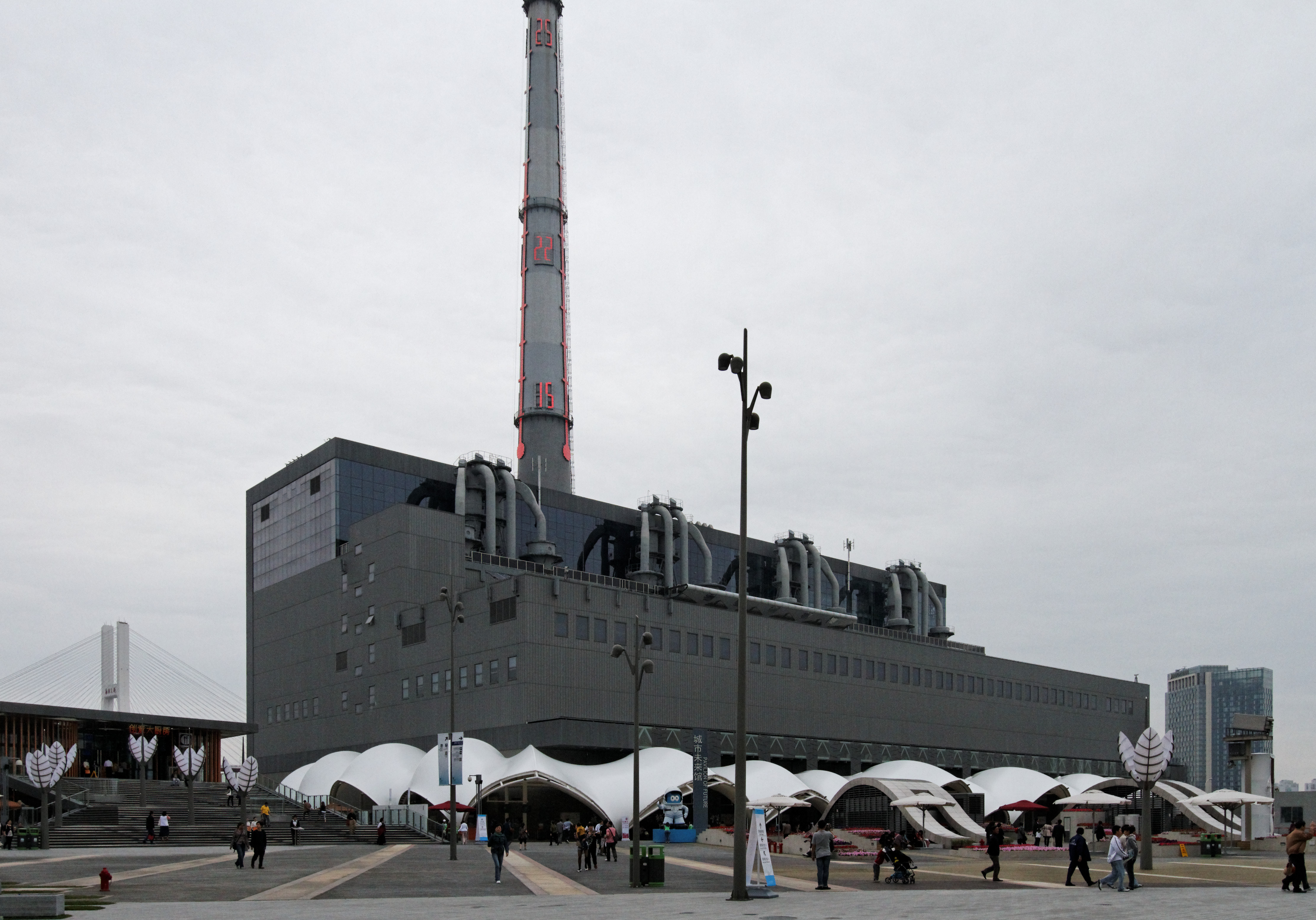
Above The Power Station of Art (PSA) on the Puxi (west) bank of the Huangpu River, Shanghai: mainland China's first state-run museum dedicated to contemporary art (opened October 2012), housed in the former Nanshi Power Plant and the host institution of every Shanghai Biennale since the 9th edition in 2012.
Next edition announced
The 15th Shanghai Biennale, Does the flower hear the bee?, closed on March 31, 2026; the 16th edition, under chief curator Ferran Barenblit, is due to open in November 2027.
The 15th Shanghai Biennale, curated by Kitty Scott with co-curators Daisy Desrosiers and Xue Tan, opened on November 8, 2025 and ran through March 31, 2026 at the Power Station of Art, with 250+ works by 67 artists and collectives.
By the Biennale Editorial Team
The Shanghai Biennale is China's first international biennial of contemporary art. Founded in 1996 by Fang Zengxian, then director of the Shanghai Art Museum, and approved by China's Ministry of Culture and the Shanghai Municipal Administration, the inaugural edition opened on 18 March 1996 under the title Open Space, with a working premise (Chinese painting in dialogue with international contemporary practice) that has since broadened across fifteen editions into the principal continental survey of contemporary art-making in and from China. The biennial was sited at the Shanghai Art Museum on People's Square through its first eight editions; it moved in 2012 to the Power Station of Art, a converted former power plant on the Huangpu River, where it has been programmed at substantially expanded scale ever since.
The 15th edition, Does the flower hear the bee?, opened on 8 November 2025 under the curatorship of the Canadian curator Kitty Scott (formerly Carol and Morton Rapp Curator of Modern and Contemporary Art at the Art Gallery of Ontario, Chief Curator at the Serpentine Gallery in London, and Curator of Contemporary Art at the National Gallery of Canada), working with co-curators Daisy Desrosiers and Xue Tan and curators Long Yitang and Zhang Yingying. The exhibition ran through March 31, 2026, gathered more than 250 works by 67 artists and collectives (with sixteen from China and more than thirty new commissions), and takes its title from recent botanical research on plant–pollinator signalling: the working premise is that flowers themselves operate as information-gathering agents, and that the exhibition's argument turns on the broader question of sensorial intelligence across the "more-than-human world."
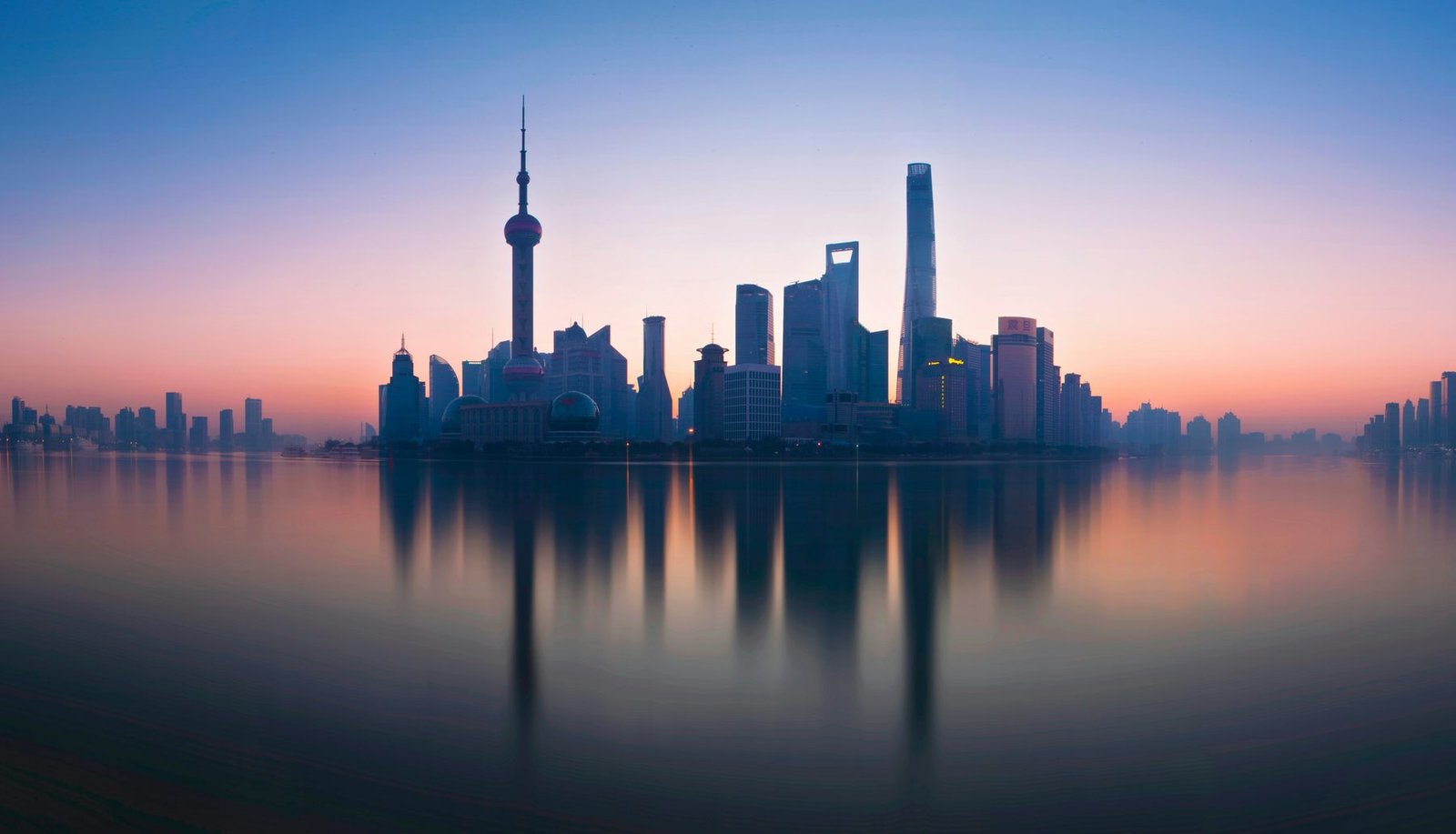
Lujiazui seen from the Bund at dawn, Shanghai. Photo: Freeman Zhou.
From the Shanghai Art Museum to the Power Station of Art
The institutional spine of the Shanghai Biennale is in two phases. The first, 1996 to 2010, was sited at the Shanghai Art Museum: a city-museum biennial sponsored by the Ministry of Culture and the municipality, with early editions devoted to Chinese ink painting (1996, 1998) and a gradual opening (under the third edition Spirit of Shanghai in 2000, headed by a curatorial team including Hou Hanru) to a broader international contemporary register. The second phase, from 2012 to the present, is sited at the Power Station of Art on the Puxi (west) bank of the Huangpu, in the former Nanshi Power Plant. PSA, which opened on 1 October 2012 as the first state-run museum dedicated to contemporary art on mainland China, was conceived from the outset as the biennial's permanent home; the 9th edition, Reactivation, curated by Qiu Zhijie with Johnson Chang, Boris Groys and Jens Hoffmann, was the inaugural Biennale at the new site.
Subsequent editions across the PSA period have continued at the format the institution settled on in 2012: a single-museum exhibition supplemented by City Projects across the wider Shanghai urban fabric. The 12th edition, Proregress (2018), under Cuauhtémoc Medina, the 13th edition Bodies of Water (November 2020 – June 2021, in three phases) under Andrés Jaque, and the 14th edition Cosmos Cinema (2023) under Anton Vidokle each programmed at roughly that institutional scale. The 15th edition, programmed under PSA's continuing relationship with the Shanghai Municipal Government and the Ministry of Culture, opened the institution's first survey of the post-2024 cycle.
Critical Perspective China's first international biennial
A state biennial — under continuing ministerial and municipal authority
Shanghai is a Ministry-of-Culture and municipal-government biennial, sited at China's first state-run contemporary art museum. The institutional question, across thirty years and fifteen editions, is the relationship between a state cultural-policy commitment and an international curatorial conversation.
By the Biennale Editorial Team
The Shanghai Biennale's structural condition is unlike any of its international peers. It was founded in 1996 by the Shanghai Municipal Administration and the Ministry of Culture as the first international biennial of contemporary art on mainland China, and has continued under that joint ministerial and municipal authority across fifteen editions. The 2012 move to the Power Station of Art (the first state-run museum dedicated to contemporary art on mainland China) settled the institutional architecture: a single-museum biennial under continuing state cultural-policy oversight, with PSA as the permanent home.
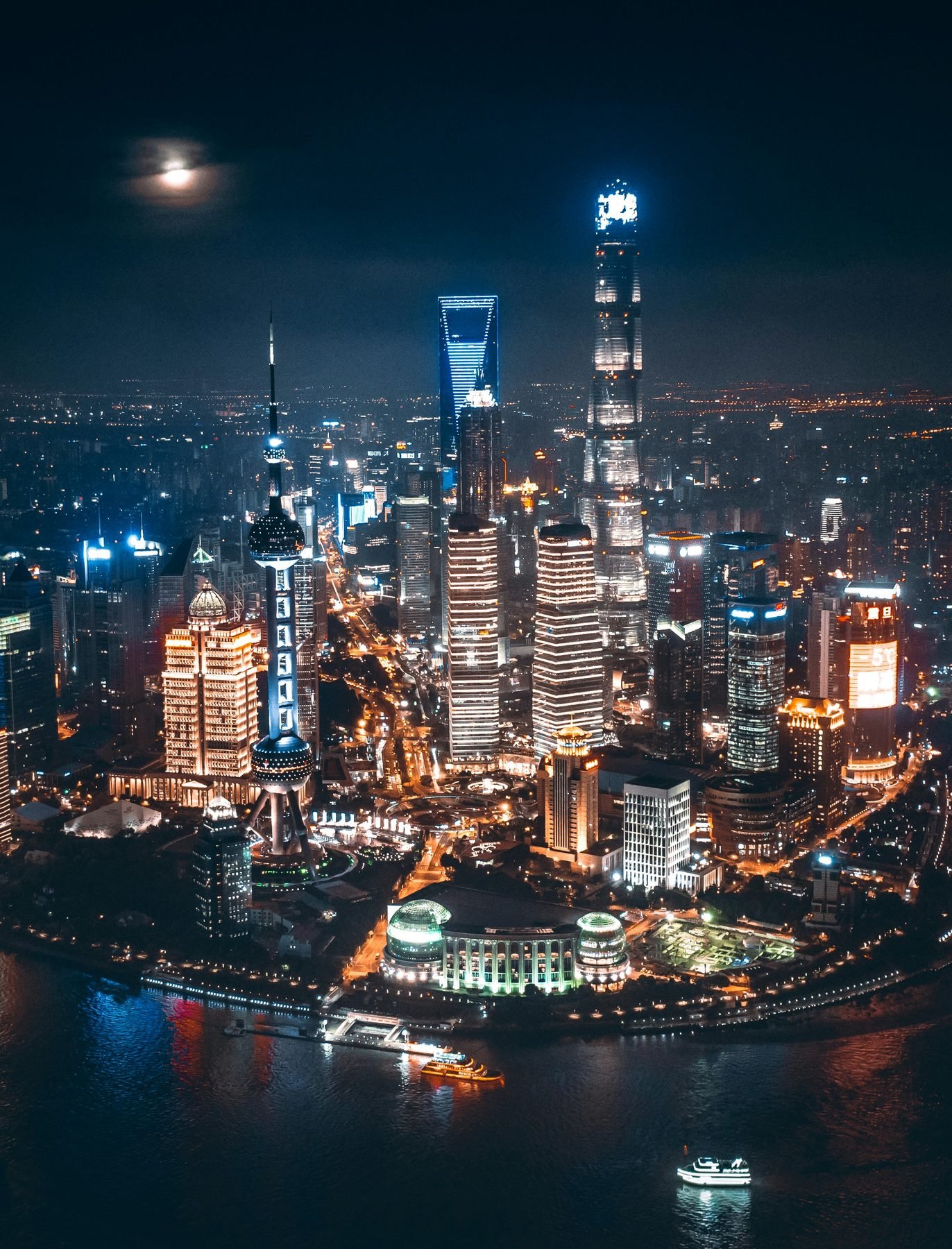
Lujiazui at night under the moon, Shanghai. Photo: Yiran Ding.
The structural question (which has been the editorial argument since at least the 3rd edition under Hou Hanru in 2000) is whether a state biennial under joint ministerial and municipal authority can sustain the international curatorial weight that the format requires. The institutional record reads in two registers. Editions under international curators (Hou Hanru's 3rd in 2000; Qiu Zhijie's 9th in 2012 with Groys, Chang and Hoffmann; Medina's 12th in 2018; Jaque's 13th in 2021; Vidokle's 14th in 2023; Scott's 15th in 2025) have been read in the international press as among the principal Asian biennials of their cycle. Other editions have programmed at a more domestic register.
The continuing tension, and the institutional argument, is that no biennial sited in mainland China under continuing state cultural authority can operate at the full curatorial register of Venice, Sharjah or Gwangju, because the structural conditions are different in kind. What Shanghai has continued to demonstrate, across the post-2012 PSA period, is that a state biennial can nonetheless sustain a curatorial conversation of international weight under those conditions, and that the conversation is itself one of the principal sites at which the relationship between the Chinese state cultural infrastructure and the international contemporary art field is rehearsed.
The 15th edition under Kitty Scott, running November 2025 through March 2026, extends that demonstration. Scott's Does the flower hear the bee? assembles more than 250 works by 67 artists, including sixteen from China, across an exhibition that reads the museum as a terrain rather than a route. The continuing PSA programme is the institutional record by which the Shanghai Biennale's structural position can be read; the curatorial register of each successive edition is the editorial demonstration of what that position continues to make possible.
In Shanghai
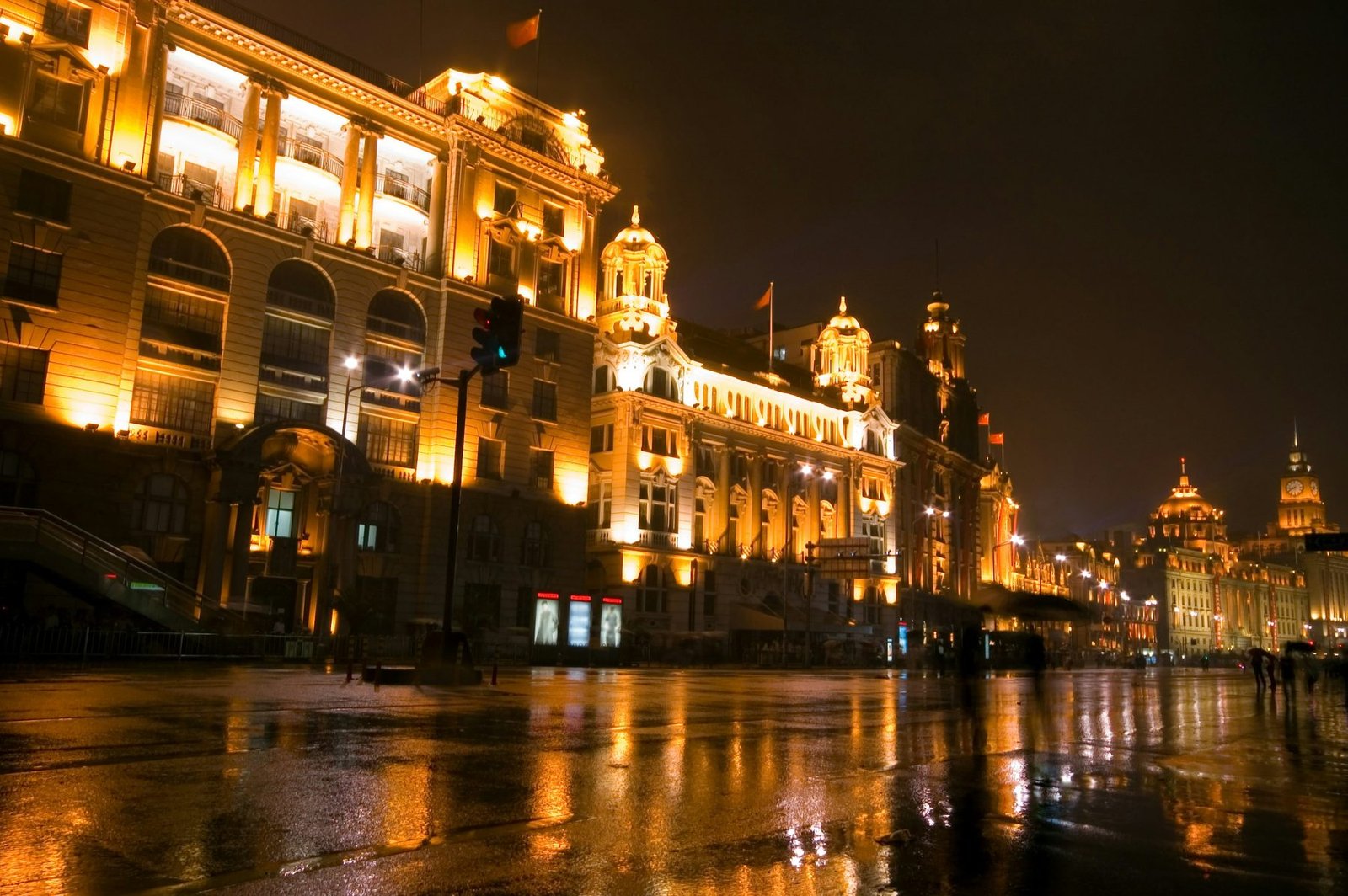
Lit buildings along the Bund at night, Shanghai. Photo: Curated Lifestyle.
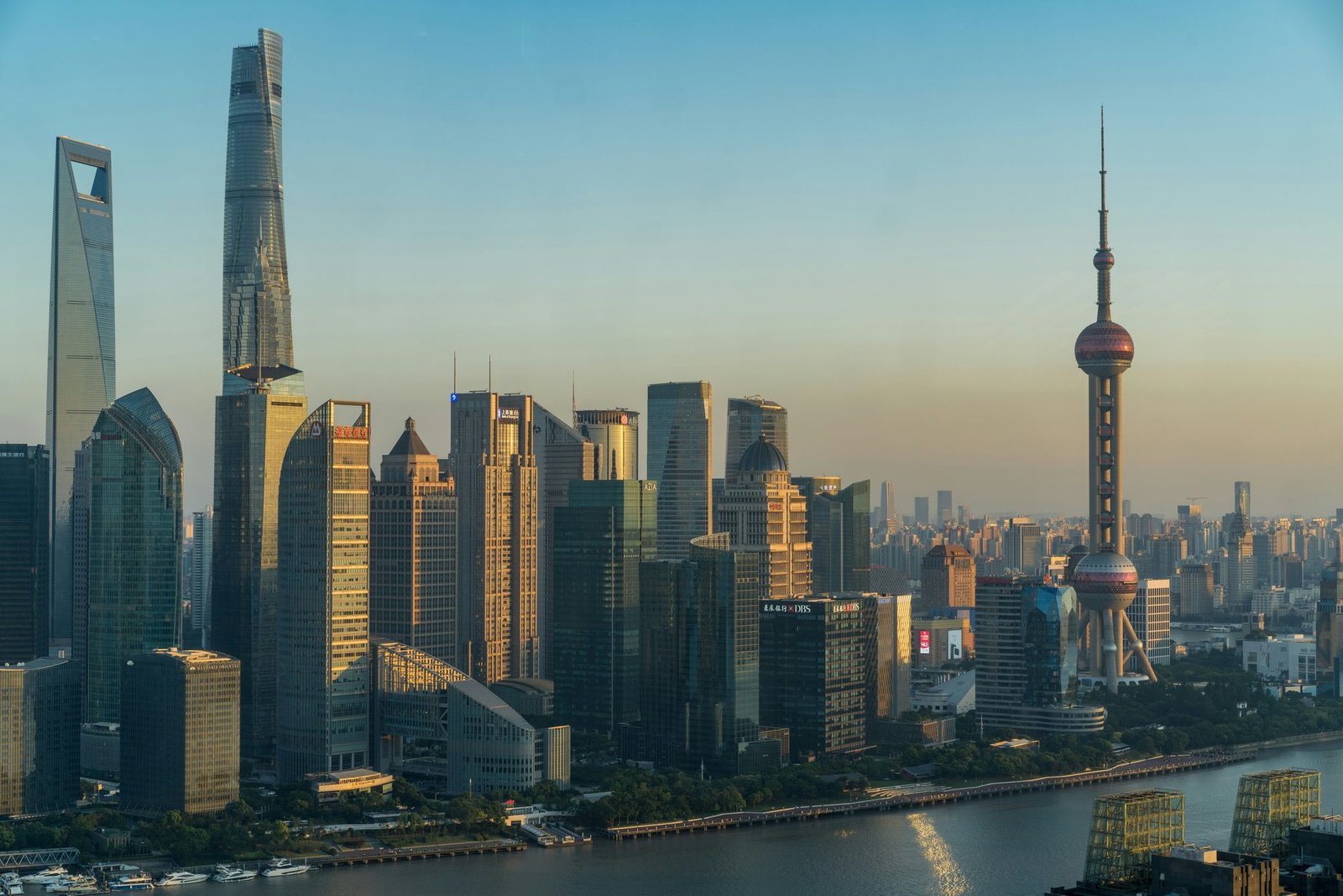
The Lujiazui towers and Oriental Pearl Tower in morning light, Shanghai. Photo: Vin Jack.
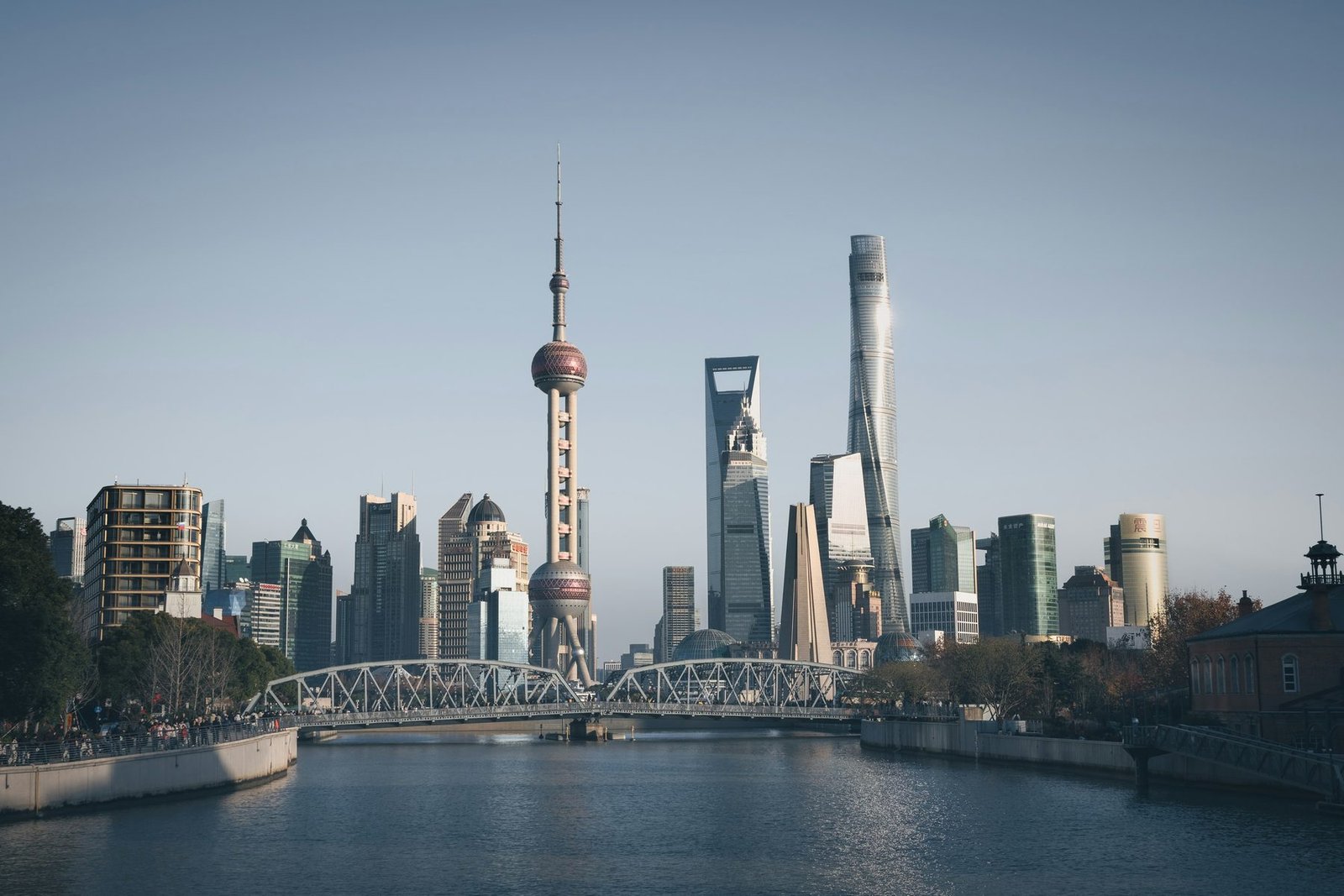
Waibaidu Bridge on Suzhou Creek with the Lujiazui towers behind, Shanghai. Photo: Wenhao Ruan.
The Institutional Spine
Defining moments
Five episodes from thirty years of China's first international biennial.
19961st Shanghai Biennale
Fang Zengxian's founding
The first Shanghai (Fine Art) Biennale opened on 18 March 1996 at the Shanghai Art Museum on People's Square, under director Fang Zengxian. Approved by China's Ministry of Culture and the Shanghai Municipal Administration, the inaugural edition was titled Open Space and devoted principally to Chinese ink painting and contemporary Chinese practice. It was the first international biennial of contemporary art organised in mainland China, and established the institutional framework (a city-museum biennial under joint ministerial and municipal authority) that has continued through every subsequent edition.
Sources: Shanghai Art Museum archive; Asia Art Archive, Shanghai Biennale 1996
20003rd edition
Hou Hanru's Spirit of Shanghai
The 3rd Shanghai Biennale opened on 6 November 2000 at the Shanghai Art Museum and ran through 6 January 2001, curated by a team including Hou Hanru, Toshio Shimizu, Li Xu and Zhang Qing. Variously translated Spirit of Shanghai or Shanghai Spirit (海上·上海), this was the first edition open to international artists and curators, gathering Chinese and international practitioners (including Matthew Barney, Cai Guo-Qiang, Marlene Dumas, Anish Kapoor, William Kentridge, Lee Bul, Mariko Mori, Fiona Tan and Wang Jianwei) at scale for the first time and recentring the biennial as an international rather than national programme. The international press reading of the edition established the institutional position the Shanghai Biennale has continued to occupy.
Sources: ArtLinkArt; Asia Art Archive, Shanghai Biennale 2000; Hou Hanru bibliography
20129th edition
Move to the Power Station of Art
The 9th Shanghai Biennale, Reactivation, opened on 2 October 2012 at the newly-inaugurated Power Station of Art on the Huangpu River, a converted former Nanshi Power Plant which had served as the Pavilion of Future at the 2010 Shanghai Expo. The edition, curated by Qiu Zhijie with co-curators Johnson Chang, Boris Groys and Jens Hoffmann, was the inaugural Biennale at PSA, and the institution opened simultaneously as mainland China's first state-run museum dedicated to contemporary art. The move effectively reset the biennial's institutional weight and produced the structural model (single-museum core plus citywide projects) that subsequent editions have continued.
Sources: Power Station of Art; Reactivation 9th Shanghai Biennale catalogue, 2012
202314th edition
Vidokle's Cosmos Cinema
The 14th Shanghai Biennale, Cosmos Cinema, opened on 9 November 2023 and ran through 31 March 2024 at the Power Station of Art under chief curator Anton Vidokle, the e-flux co-founder and artist whose continuing engagement with Russian cosmism informed the exhibition's premise. The curatorial team included Zairong Xiang, Hallie Ayres and Lukas Brasiskis, with Ben Eastham as publications editor. The edition presented works by more than eighty artists working in China and internationally, dating from the early twentieth century to the present, and proposed the museum as a spacetime in which to consider humanity's place within the cosmos.
The 15th Shanghai Biennale, Does the flower hear the bee?, opened at the Power Station of Art on 8 November 2025 under chief curator Kitty Scott, with co-curators Daisy Desrosiers and Xue Tan. The exhibition ran through 31 March 2026 and assembled more than 250 works by 67 artists and collectives (including sixteen artists from China and more than thirty new commissions) across an exhibition design (titled "Walking a Garden-Like Landscape") that reimagines PSA as a terrain rather than a route. The title borrows from recent research on plant–pollinator signalling and the curatorial argument extends to questions of sensorial intelligence across the more-than-human world.
Sources: Power Station of Art; International Biennial Association; Mousse Magazine
People in the Biennial
The figures behind Shanghai
Chief curator · 15th edition (2025–26)
Kitty Scott
Canadian curator and writer with twenty-five years of major museum experience. Carol and Morton Rapp Curator of Modern and Contemporary Art at the Art Gallery of Ontario (2012–2019); Deputy Director and Chief Curator, National Gallery of Canada (from January 2020); previously Director of Visual Arts at The Banff Centre, Chief Curator at the Serpentine Gallery, London, and Curator of Contemporary Art at the National Gallery of Canada. Co-curated the 2018 Liverpool Biennial and was a core agent for dOCUMENTA (13). Chief curator of the 15th Shanghai Biennale, Does the flower hear the bee?, 2025–26.
Artist and editor (b. 1965, Moscow), based in New York. Co-founder of e-flux (with Julieta Aranda) and of the Institute of the Cosmos (with Arseny Zhilyaev). His ongoing research engages Russian cosmism, the early-twentieth-century philosophical movement that the Cosmos Cinema curatorial project elaborated. Chief curator of the 14th Shanghai Biennale, Cosmos Cinema, 2023–24.
Chinese painter and museum director (1931–2019). One of the principal representatives of twentieth-century Chinese realist figure painting and founder of the New Zhejiang School. Director of the Shanghai Art Museum from 1985, in which capacity he founded the Shanghai Biennale in 1996. Recipient of the Chinese Art Award, Lifelong Achievement Award (2013).
Chinese artist and curator. Chief curator of the 9th Shanghai Biennale, Reactivation (2012), the inaugural edition of the biennial at the Power Station of Art, co-curated with Johnson Chang, Boris Groys and Jens Hoffmann. Dean of the School of Experimental Art at the Central Academy of Fine Arts (CAFA), Beijing.
Source: Power Station of Art; Reactivation catalogue, 2012
Curator · 3rd edition (2000)
Hou Hanru
Chinese-French curator and critic. A core member of the curatorial team of the 3rd Shanghai Biennale, Spirit of Shanghai / Shanghai Spirit (2000), the first edition open to international artists and curators, which opened the institution from a domestic Chinese-ink frame to a broader international contemporary register and recentred the biennial as an international programme. Subsequent positions have included Artistic Director of MAXXI – National Museum of XXI Century Arts, Rome (2013–2023).
The Power Station of Art (PSA), opened on 1 October 2012 in the former Nanshi Power Plant on the Puxi (west) bank of the Huangpu River, is the first state-run museum dedicated to contemporary art on mainland China. PSA has been the permanent home of the Shanghai Biennale since the 9th edition (2012) and the continuing institutional operator of the biennial across all subsequent editions.
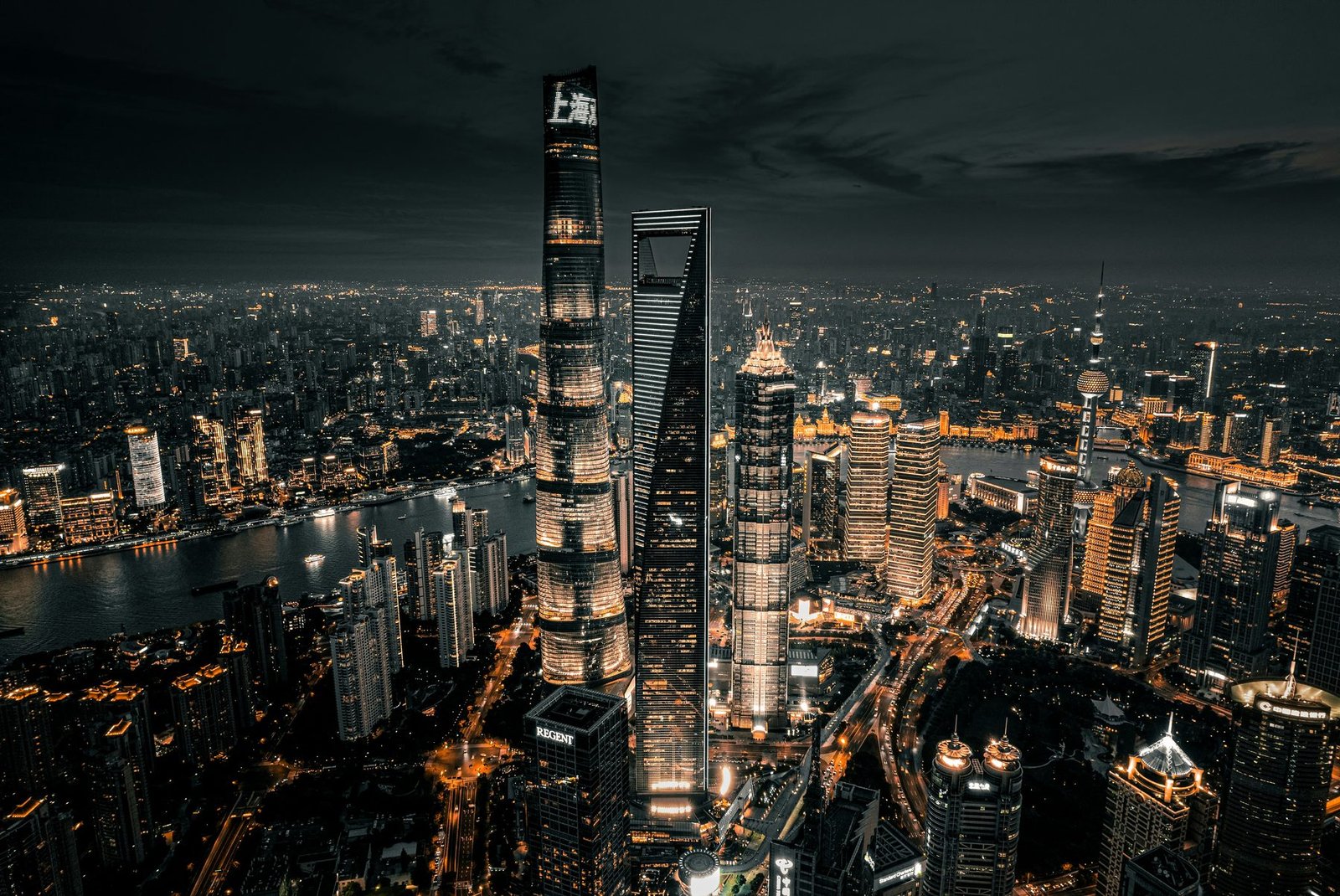
The Lujiazui towers at night from the air, Shanghai. Photo: Zhou Xian.
Principal venue
Power Station of Art (PSA)
Mainland China's first state-run contemporary art museum, opened 2012
200 Huayuangang Road Huangpu District, Shanghai 200011, China
City Projects
Public-art and off-site programme
Multiple sites across Shanghai: see each edition's programme.
Quick answers
Shanghai Biennale: what people ask
When is the next Shanghai Biennale?
The 16th Shanghai Biennale, under chief curator Ferran Barenblit, is due to open in November 2027 at the Power Station of Art; exact dates have not been announced. The 15th edition closed on March 31, 2026.
Where is the Shanghai Biennale held?
Since 2012 the Shanghai Biennale has been held at the Power Station of Art (PSA), 200 Huayuangang Road in Huangpu District, mainland China's first state-run museum dedicated to contemporary art. Editions also include City Projects at sites across Shanghai.
When was the Shanghai Biennale founded?
The Shanghai Biennale was founded in 1996 by Fang Zengxian, then director of the Shanghai Art Museum, as China's first international biennial of contemporary art. The inaugural edition opened on March 18, 1996 under the title Open Space.
What was the 15th Shanghai Biennale?
The 15th Shanghai Biennale, Does the flower hear the bee?, ran at the Power Station of Art from November 8, 2025 to March 31, 2026. It was curated by chief curator Kitty Scott with Daisy Desrosiers and Xue Tan.
My Biennale
Carry the Biennale with you
Save this biennale to your circuit, follow its artists as their pages grow, and sync every opening and closing to your own calendar on the companion app.
Editorial content on biennale.com is published by the Biennale Editorial Team. Image credits as captioned. External links are provided for reference and verification.