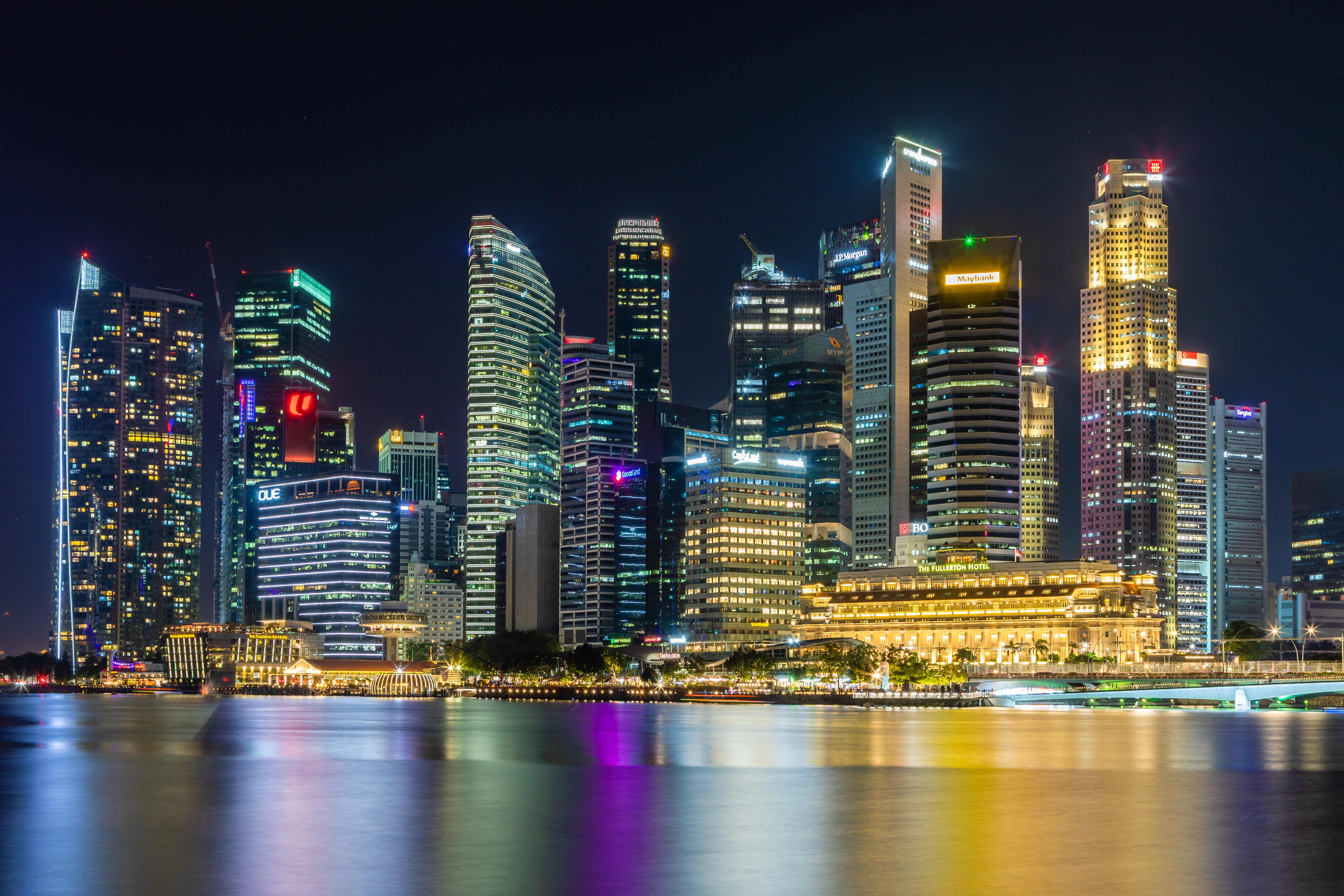
Singapore's institutional cultural-policy approach to the contemporary art form has been distinctive across the post-2000 period. The Singapore Biennale is one of the institutional outcomes of that approach, and its continuing reading depends on what one makes of the relationship between state cultural-policy ambition and curatorial work.
The Singapore Biennale was founded in 2006 by the Singapore Art Museum (SAM, founded 1996) and the National Arts Council of Singapore (NAC) as a component of the Singapore state's continuing cultural-policy programme across the post-2000 period. The Singapore state cultural-policy programme has been institutionally distinctive within Southeast Asia: state investment in cultural infrastructure across the post-1990 period (the Esplanade: Theatres on the Bay, opened 2002; the Gillman Barracks contemporary art cluster, opened 2012; the National Gallery Singapore, opened 2015 in the former Supreme Court and City Hall buildings; the network of state-funded cultural institutions including SAM, the Asian Civilisations Museum, and the NAC-funded contemporary art commissioning programmes) has produced one of the most institutionally elaborate state cultural-policy architectures in the region. The Singapore Biennale is one of the principal institutional outputs of that architecture.
The 1st Singapore Biennale (2006), Belief, was directed by Fumio Nanjo (then Deputy Director, subsequently Director, of the Mori Art Museum, Tokyo) with co-curators Roger McDonald (Japan), Sharmini Pereira (Sri Lanka/UK) and Eugene Tan (Singapore). The founding edition programmed across Singapore religious-and-civic sites including Tanglin Camp, the City Hall area, and places of worship across the city, engaging the cultural-religious-and-political diversity of Singapore through commissioned and presented work. The 1st edition established the institutional model: a state-anchored biennial whose commissioning budget allowed international curatorial engagement at scale, with programming across the Singapore cultural-civic infrastructure.
The 2nd Singapore Biennale (2008), Wonder (11 September – 16 November 2008), again under Nanjo's artistic direction, extended the founding institutional argument across a second edition. The 3rd Singapore Biennale (2011), Open House, was led by artistic director Matthew Ngui with curators Russell Storer (then of the Queensland Art Gallery, Brisbane) and Trevor Smith (then of the Peabody Essex Museum, Salem). The 4th Singapore Biennale (2013), If the World Changed, was overseen by Tan Boon Hui as Project Director with twenty-seven co-curators across Southeast Asia, the institutional model extended into pan-Southeast-Asian curatorial collaboration. The 5th Singapore Biennale (2016), An Atlas of Mirrors (28 October 2016 – 26 February 2017), had Susie Lingham (Director of SAM until March 2016) as Creative Director, with SAM curators Joyce Toh, Tan Siuli, Louis Ho, Andrea Fam and John Tung and four Associate Curators (Suman Gopinath, Nur Hanim Khairuddin, Michael Lee, Xiang Liping).
The 6th Singapore Biennale (2019), Every Step in the Right Direction, was curated by Patrick Flores (the Filipino curator and curator at the Vargas Museum, University of the Philippines) with co-curators. The 6th edition extended the pan-Southeast-Asian curatorial conversation that the 4th edition had begun. The 7th Singapore Biennale (16 October 2022 – 19 March 2023), Natasha, was led by a team of four co-artistic directors: June Yap (Director of Curatorial Programmes at SAM), Binna Choi (Utrecht-based South Korean curator), Nida Ghouse (Berlin-based Indian curator), and Ala Younis (Amman-based artist and curator). The 7th edition extended the Singapore Biennale across new venues including the newly-renovated SAM at Tanjong Pagar Distripark.
The 8th Singapore Biennale (October 31, 2025 – March 29, 2026), Pure Intention, was curated by Duncan Bass, Hsu Fang-Tze, Ong Puay Khim and Selene Yap (SAM curators), commissioned by the National Arts Council and supported by the Ministry of Culture, Community and Youth. The 8th edition employs a dispersal method, programming more than 100 artworks across five geographical clusters (public parks, historic houses, shopping malls, community libraries and museums), with contributions from independent organisations and curatorial collectives including Hyphen— (Indonesia), Asian Film Archive (Singapore), Hothouse (Singapore) and The Packet (Sri Lanka). The continuing institutional question is what the Singapore state cultural-policy programme produces over the post-2025 period. The Singapore state's continuing cultural-policy investment has exceeded what comparable Southeast Asian state cultural-policy programmes have produced; the outcomes of that investment (international institutional visibility, pan-Southeast-Asian institutional reach, curatorial work at scale) are substantive. Whether the state-cultural-policy-anchored institutional model continues to produce curatorial work that exceeds the state cultural-policy programme's diplomatic-cultural-projection objectives is the continuing structural question.
The institutional architecture
The Singapore Biennale is organised by the Singapore Art Museum (SAM), a state museum under the Singapore Ministry of Culture, Community and Youth. Continuing institutional support comes from the National Arts Council Singapore, the Singapore Tourism Board, and private and corporate philanthropic partners. SAM's continuing institutional position within the Singapore cultural-institutional architecture, alongside the National Gallery Singapore (opened 2015), the Asian Civilisations Museum, the Gillman Barracks contemporary art cluster, and the network of state-funded contemporary art commissioning programmes, constitutes the state-cultural-policy infrastructure within which the biennial operates.