The AFiRIperFOMA Biennial

Africa's first biennial dedicated to contemporary performance and live art, founded in 2011 in Lagos by the Nigerian performance artist Jelili Atiku as an artists-and-curators-led collective and rotating festival of performance practice across the African continent. The inaugural biennial opened in Harare in November 2013 under the title Mnemonic; the second was staged across Lagos from October to November 2015 with a performance section curated by the Berlin-based Portuguese artist and curator Márcio Carvalho.

Founded2011 · Lagos2 verified editions
A street performance in Lagos by the Nigerian artist Jelili Atiku, founder of AFiRIperFOMA — striking costume, public-space staging, Yoruba symbolic vocabulary.
Above The Nigerian performance artist Jelili Atiku — founder and artistic director of AFiRIperFOMA — at work in public space. Atiku's continuing argument is that contemporary performance is not an imported avant-garde form but the contemporary continuation of an African performance culture older than colonial interruption; the AFiRIperFOMA biennial is the institutional expression of that argument.

The Lead Essay The AFiRIperFOMA Biennial

Atiku's continental platform for performance

AFiRIperFOMA was founded in 2011 in Lagos by Jelili Atiku — the Nigerian sculptor, video and performance artist who is widely regarded as the originating figure of contemporary Nigerian performance art — as the first biennial in Africa dedicated specifically to performance and live art. The inaugural biennial opened in Harare in November 2013 under the title Mnemonic; the second was staged across Lagos in October–November 2015. The wider project is an artists-and-curators-led non-profit collective with administrative headquarters in Ejigbo, Lagos, and a continuing programme of symposia, workshops and rotating editions across African cities.

AFiRIperFOMA — an artists-and-curators-led non-profit organisation and collective of performance and live artists working across the African continent — was founded in 2011 by Jelili Atiku, the Nigerian sculptor, video and performance artist born 27 September 1968 in Ejigbo, a town in Lagos State. The platform was conceived as a networking and discursive space for the expansion of contemporary performance practice on the African continent and as the operating body for what would become the first biennial in Africa dedicated specifically to performance and live art. From the founding statement, AFiRIperFOMA committed to organising a rotating biennial performance festival in different African countries; to developing educational and public programmes around performance practice; to providing current information about performance projects and resources across the continent; and to building international networks with institutions outside Africa working in the same field.

The first AFiRIperFOMA Biennial opened on 8 November 2013 in Harare, Zimbabwe, and ran for two weeks to 22 November, staged under the general title Mnemonic. The Harare edition's curatorial argument — articulated in the AFiRIperFOMA programme statement and in the institutional record collected by the Biennial Foundation and by African Performance Review — was that the mnemonic, the device of memory, is the proper figure for a contemporary African performance practice that does not begin with European avant-garde history but with the long performance cultures of the African continent that long predate colonial interruption. The participating artists — including the Egyptian-German media artist Sameh Al Tawil, the American performance artist Gabrielle Civil, the Beninese painter and performance artist Rafiy Okefolahan and the Dominican-American artist Charo Oquet, alongside Atiku and a wider roster of continental practitioners — worked across public urban space and gallery settings in Harare on questions of identity, the power of objects, and spiritual and cultural transmigration. The Mnemonic edition was the institutional declaration that performance had a continuing biennial home on the African continent.

The Lagos second edition and the Marcio Carvalho curatorship

The second AFiRIperFOMA Biennial returned to Lagos and ran from 2 October to 27 November 2015 — an extended eight-week programme of live performance in the public urban space of the Nigerian commercial capital, with the performance section under the curatorial direction of Márcio Carvalho, the Portuguese visual artist and independent curator (born 1981) long resident in Berlin and the co-founder of the CO-LAB performance programme. The Lagos edition's working argument was that performance art's institutional home in the African continent was not Senegal — where Dak'Art, founded 1992, had become the principal pan-African biennial of contemporary art — but Lagos, where the absence of a comparable continental institution and the city's continuing position as the largest urban concentration on the continent together made the case for a Lagos-anchored continental network. The 2015 programme was complemented by the AFiRIperFOMA symposium Performance Art: Time Immemorial, which had run at the Nkem Gallery in Lagos in December 2013 as a closing intellectual frame for the inaugural Harare biennial and which made the project's continuing case for performance as the African contemporary art form with the longest continuous history.

The two confirmed biennial editions — Harare 2013 and Lagos 2015 — together constitute the verified institutional record. Subsequent edition planning has been recorded in the AFiRIperFOMA communications and in the Atiku archive, but a continuous biennial sequence has not been independently confirmed in the secondary literature; the project's continuing activity has expressed itself instead through Atiku's own performance practice — including his 2015 Prince Claus Award (one of ten laureates honoured by HRH Prince Constantijn of the Netherlands on 2 December 2015 in Amsterdam) and his performance Mama Say Make I Dey Go, She Dey My Back at the preview of the 57th Venice Biennale (Christine Macel's Viva Arte Viva) at the Arsenale on 12 May 2017 — and through the continuing institutional presence of AFiRIperFOMA as a network rather than as a regular biennial calendar.

The structural significance of the project is independent of the question of edition continuity. AFiRIperFOMA is the institutional argument — first such argument in the African biennial system — that contemporary performance is not a marginal subset of the contemporary visual arts but an independent practice with its own institutional needs, its own rotating geography and its own curatorial protocols, and that the African continent is the proper site for the first dedicated continental institution committed to those needs.
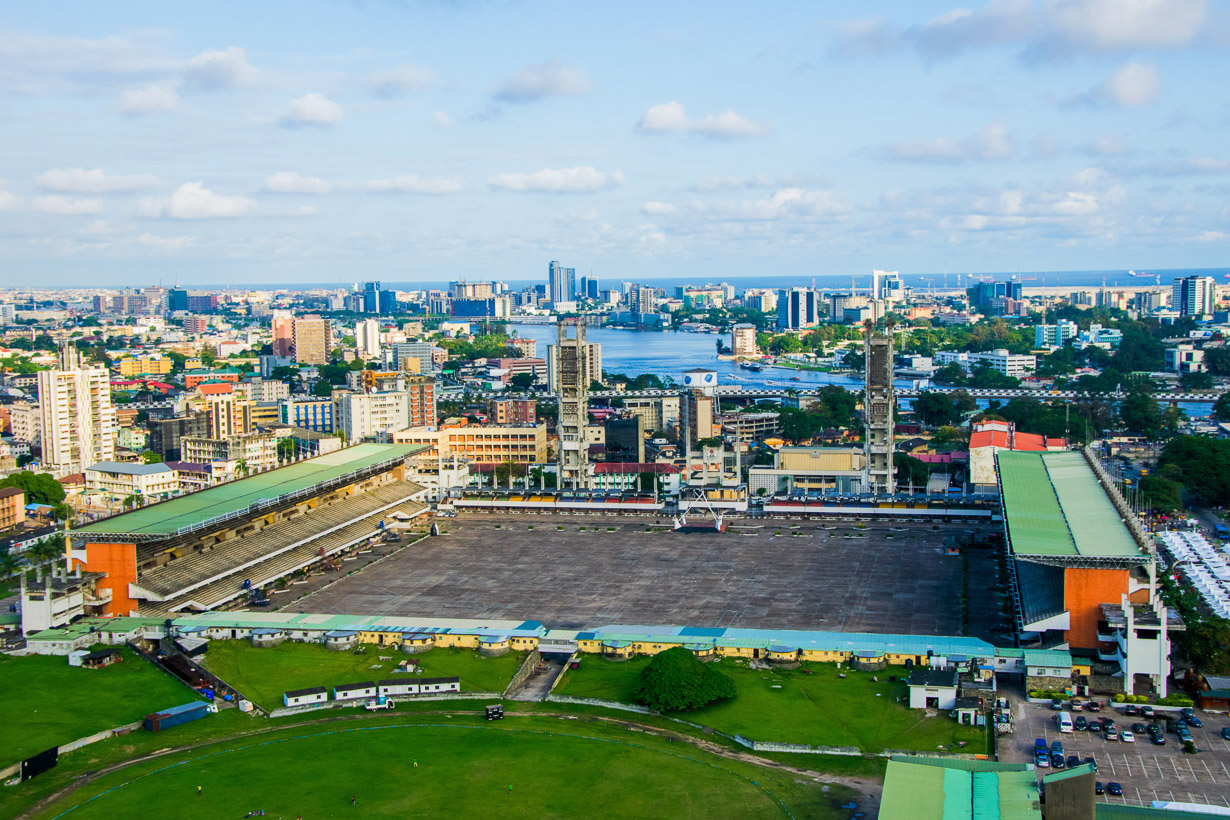

Critical Perspective Performance and the African biennial system

The argument Dak'Art does not make

The continent has Dak'Art (Dakar, 1992) as its senior pan-African biennial of contemporary art, the Rencontres de Bamako (1994) as its biennial of African photography, the Cairo Biennale (1984) as its Mediterranean-anchored institution. None of them is a biennial of performance. AFiRIperFOMA was founded in 2011 as the institutional argument that performance — the form with the longest continuous history on the African continent — deserves its own continental biennial.

The African biennial system as it has developed since the founding of Dak'Art in 1992 has been organised around the contemporary visual arts as a general field, with performance presented — when it is presented at all — as a programme element within a wider exhibition of painting, sculpture, photography, installation and video. Dak'Art, the senior institution of the system, has run continuously since 1992 from Dakar with a pan-African remit and has been the principal continental platform for contemporary African artists; the Rencontres de Bamako (founded 1994 in the Malian capital) holds the photography position; the Cairo Biennale (founded 1984) holds the longest-running Mediterranean-anchored position. None of these institutions is a biennial of performance. Performance work has been programmed within their wider exhibitions, but the curatorial protocols, the publication record and the institutional positioning of each have remained those of a general contemporary art biennial.

The argument AFiRIperFOMA makes — and which distinguishes it from the older African biennial institutions — is that performance is not adequately served by inclusion within a general contemporary art programme. Performance has its own working temporality (the live moment rather than the durational object), its own documentation problem (the photograph and the video as second-order records rather than the work itself), its own audience configuration (the participant rather than the spectator), and its own institutional infrastructure requirement (the public urban space, the workshop, the symposium, the networked community of practitioners). A biennial committed to performance has to be organised around those specific working conditions, and the argument the founding statement of AFiRIperFOMA made — and which the Harare 2013 and Lagos 2015 editions enacted — is that a dedicated continental biennial is the appropriate institutional form for that commitment.

The further argument the project makes — articulated in the Mnemonic framing and in Atiku's continuing curatorial statements — is that contemporary African performance is not an imported avant-garde form. The African continent has the longest continuous performance tradition of any cultural region; the masks, costumes and ritual objects that fill the European museums were not autonomous sculptural objects but the apparatus of performance milieux, and the contemporary African performance artist works within that long continuous tradition rather than as a late-twentieth-century derivative of European or North American performance art history. The mnemonic frame of the 2013 Harare edition was the curatorial expression of that argument: performance as the memory-device of a continental practice that has been continuous across the colonial rupture and that the contemporary artist now reactivates.

The institutional limit the project has encountered — and which any reading of the AFiRIperFOMA record has to acknowledge — is the funding limit. The founding statement records that AFiRIperFOMA relies on internally generated funds for its activities and that grants and donations remain a forward hope rather than a continuing institutional reality. Two verified biennial editions across the 2010s — Harare 2013 and Lagos 2015 — is the working record; whether the project can be sustained as a continuing biennial against the funding constraint, against the dispersal of performance work into the wider Lagos and continental contemporary art scenes (the Lagos Biennial founded 2017 absorbing some of the institutional energy), and against the structural difficulty of biennial-level performance documentation, is the open institutional question of the project's second decade.


The Institutional Spine

Defining moments

Five episodes from the first decade of Africa's performance biennial.

2011Foundation

Atiku founds AFiRIperFOMA in Lagos

The Nigerian performance artist Jelili Atiku — based in Ejigbo, Lagos State, and by 2011 already established as the originating figure of contemporary Nigerian performance art — founded AFiRIperFOMA in Lagos as an artists-and-curators-led non-profit collective of performance and live artists working across the African continent. The founding mandate committed the project to inspiring and promoting contemporary performance practice in Africa, to developing educational and public programmes, and to organising a rotating biennial performance festival across African countries.

Sources: Biennial Foundation; Wikipedia

2013I · Mnemonic

The Harare inaugural biennial

The 1st AFiRIperFOMA Biennial opened on 8 November 2013 in Harare, Zimbabwe, and ran for two weeks under the title Mnemonic. The participating roster included the Egyptian-German media artist Sameh Al Tawil, the American performance artist Gabrielle Civil, the Beninese performance and visual artist Rafiy Okefolahan and the Dominican-American artist Charo Oquet, alongside Atiku and a wider continental cohort. The curatorial argument framed performance as the African contemporary art form with the longest continuous history; the title functioned as an allegory of the multi-dimensionality of the continent's past and contemporary present.

Sources: Sameh Al Tawil — participating-artist record; Africa Unchained — Mnemonic announcement

2013Symposium

The Time Immemorial symposium

As a closing intellectual frame for the inaugural biennial, AFiRIperFOMA convened the symposium Performance Art: Time Immemorial in Lagos in December 2013, examining the history of performance with specific reference to African societies and its continuing influence on contemporary art practice. The symposium constituted the project's working brief — that performance is not an imported form but the African contemporary art form with the longest continuous history — as a discursive proposition presented to a Nigerian and pan-African audience.

Sources: Contemporary And; Biennial Foundation

2015II · Lagos

The Lagos second edition under Carvalho

The 2nd AFiRIperFOMA Biennial ran from 2 October to 27 November 2015 in Lagos, with the performance section curated by the Portuguese visual artist and independent curator Márcio Carvalho — Berlin-based, born 1981, holder of master's degrees from HZT/UDK Berlin (performing arts) and ESAD Portugal (visual arts), and co-founder of the CO-LAB performance programme. The Lagos edition's eight-week programme staged performance work across the public urban space of the Nigerian commercial capital — the institutional argument that Lagos, and not Dakar, was the appropriate continental home for a biennial dedicated to performance.

Sources: Márcio Carvalho — curator's page; Biennial Foundation

2015Recognition

Atiku's Prince Claus Award

On 2 December 2015, Jelili Atiku was honoured by the Netherlands-based Prince Claus Fund as one of ten laureates in that year's awards cycle, with the award presented by HRH Prince Constantijn of the Netherlands. The Fund cited Atiku for creating a new artistic language combining Yoruba traditional art forms with international performance practice, for taking personal and artistic risks to open new possibilities for audiences, and — most significant to the AFiRIperFOMA institutional record — for his pioneering dedication to establishing a space for contemporary performance art in Nigeria. The award arrived during the second AFiRIperFOMA biennial's closing weeks.

Sources: Prince Claus Fund; ART AFRICA, 2015

People in the AFiRIperFOMA project

The figures behind AFiRIperFOMA

Founder & artistic director · 2011 – present

Jelili Atiku

Nigerian multimedia performance artist and sculptor, born 27 September 1968 in Ejigbo, Lagos State. BA Fine Arts, Ahmadu Bello University, Zaria (1998); MA Visual Arts, University of Lagos (2006). Widely regarded as the founding figure of contemporary Nigerian performance art; founder of AFiRIperFOMA in 2011 and continuing artistic director. Honoured with the Prince Claus Award in 2015 for his pioneering dedication to establishing performance art in Nigeria; performed Mama Say Make I Dey Go, She Dey My Back at the preview of the 57th Venice Biennale (Christine Macel's Viva Arte Viva) at the Arsenale on 12 May 2017.

Source: Wikipedia; Prince Claus Fund; La Biennale di Venezia

Performance section curator · II (Lagos, 2015)

Márcio Carvalho

Portuguese visual artist and independent curator, born 1981, long resident in Berlin. Master's degree in performing arts at HZT/UDK Berlin and master's in visual arts at ESAD, Portugal. Co-founder and curator of the CO-LAB performance art programme; founder of the Hotel25 artist residency in Berlin; initiator of the Plot in Situ performance festival in Berlin. Curator of the performance section at the 2nd AFiRIperFOMA Biennial in Lagos, 2 October – 27 November 2015 — the institutional bridge between the Berlin-based performance scene and the Lagos-anchored AFiRIperFOMA network.

Source: Márcio Carvalho — curator's page; New Performance Turku Festival

Participating artist · I (Harare, 2013)

Sameh Al Tawil

Egyptian-German media artist, based between Cairo and Berlin, working across sound, performance and interactive media installation. Participating artist at the 1st AFiRIperFOMA Biennial in Harare, November 2013, with the sound-performance work A442Hz — one of the institutional records of the Mnemonic edition's commitment to cross-continental dialogue, with North African and European-based African and Arab-world practice presented alongside continental African performance.

Source: Sameh Al Tawil — official website

Participating artist · I (Harare, 2013)

Gabrielle Civil

American performance artist, poet and writer, long working at the intersection of black performance studies, feminist poetics and live art. Participating artist at the 1st AFiRIperFOMA Biennial in Harare, November 2013, contributing to the Mnemonic edition's working argument that the African continental performance conversation extends to the diasporic and African-American practitioners working in continuing dialogue with continental contexts.

Source: Aster(ix) Journal — Civil archive

Founded
2011 · Lagos
Founder
Jelili Atiku
First biennial
Harare · 2013
Theme · I
Mnemonic
Headquarters
Ejigbo, Lagos

Geography

The AFiRIperFOMA network — Lagos & Harare

Principal venues & locations

AFiRIperFOMA — Administrative headquarters

The Lagos administrative base of the AFiRIperFOMA collective, located in Atiku's home district of Ejigbo in Lagos State — the organising and correspondence address recorded in the Biennial Foundation institutional profile and in the AFiRIperFOMA founding documents.

29 Ifoshi Road, Ejigbo
P.O. Box 1890, Isolo
Lagos, Nigeria

Harare — site of the inaugural biennial (2013)

The Zimbabwean capital hosted the 1st AFiRIperFOMA Biennial, Mnemonic, from 8 to 22 November 2013, with performance work staged across public urban space and gallery settings in the city. The choice of Harare for the inaugural edition reflected AFiRIperFOMA's founding commitment to rotating editions across African cities.

Harare
Zimbabwe

Lagos — site of the second biennial (2015)

The Nigerian commercial capital hosted the 2nd AFiRIperFOMA Biennial across an eight-week programme from 2 October to 27 November 2015, with the performance section curated by Márcio Carvalho. The Lagos edition staged work across public urban space throughout the city.

Lagos
Nigeria

From the Directory

Related African and performance biennials

Browse the region →

Essential Reading

For further work

1st AFiRIperFOMA Biennial — Mnemonic

AFiRIperFOMA, ed.  ·  Harare, 2013

Programme of the inaugural biennial in Harare (8–22 November 2013), with the curatorial statement framing performance as the African contemporary art form with the longest continuous history.

AFiRIperFOMA Symposium — Performance Art: Time Immemorial

AFiRIperFOMA, ed.  ·  Lagos, December 2013

The closing intellectual frame for the inaugural biennial — a symposium on performance with reference to African societies and the continuing African performance tradition.

2nd AFiRIperFOMA Biennial — Lagos

Márcio Carvalho, performance-section curator  ·  Lagos, 2015

Programme of the second edition (2 October – 27 November 2015) — the Lagos eight-week programme of performance work across public urban space, with Carvalho curating the performance section.

Jelili Atiku — Prince Claus Award citation

Prince Claus Fund  ·  Amsterdam, 2015

The institutional citation honouring Atiku's pioneering dedication to establishing space for contemporary performance art in Nigeria — the international institutional recognition of the AFiRIperFOMA project's working argument.

Jelili Atiku — Mama Say Make I Dey Go, She Dey My Back

La Biennale di Venezia  ·  Venice, 12 May 2017

The Venice Biennale Channel record of Atiku's performance at the preview of the 57th International Art Exhibition, Christine Macel's Viva Arte Viva, at the Arsenale — the most internationally visible single performance of the AFiRIperFOMA director.

Editorial content on biennale.com is published by the Biennale Editorial Team. Image credits as captioned. External links are provided for reference and verification.