Introduction
The Ballarat International Foto Biennale (BIFB) is Australia's leading contemporary photographic event, transforming the historic gold rush city of Ballarat into a vibrant showcase for photography from Australia and around the world. Established in 2005, the biennale presents a comprehensive program of exhibitions, workshops, talks, and projections across multiple venues throughout the city.
BIFB aims to celebrate the art of photography in all its forms, from traditional practices to cutting-edge experimental work. It provides a platform for established and emerging photographers while fostering public engagement with photographic art. The event's distinctive character emerges from its integration with Ballarat's remarkable Victorian-era architecture and cultural heritage, creating unique contexts for the presentation of contemporary images.
In the News
Current coverage of Ballarat International Foto Biennale
In the Frame: How Ballarat's Gold Rush Legacy Created Australia's Photographic Capital
Before dawn on a crisp August morning in 2005, photographer Jeff Moorfoot carefully arranged a series of black and white prints in a converted 19th-century storefront in Daylesford, a small spa town in Victoria's goldfields. Stepping back to survey his work, Moorfoot couldn't have anticipated how his modest exhibition would evolve into Australia's most significant photographic event, or that the gold-rush history surrounding him would prove pivotal to its success.
After hosting two successful iterations in Daylesford, Moorfoot made the fateful decision in 2009 to relocate his growing festival to nearby Ballarat—a move that would transform both the event and the city's cultural identity. What had begun as a passion project soon tapped into something more profound: the deep resonance between Ballarat's architectural legacy and the art of photography itself, both products of the same Victorian era that saw the concurrent rise of gold-rush prosperity and photographic innovation.
"Ballarat was built with gold money at precisely the same time photography was establishing itself as a medium," explains Fiona Sweet, who took over as Creative Director in 2017. "In the 1850s, when these extraordinary Victorian buildings were being constructed, photography was emerging from its experimental phase into widespread cultural significance. There's a beautiful symmetry to showing contemporary photography in spaces built during photography's infancy."
This serendipitous historical alignment is most evident in the biennale's flagship venue, the National Centre for Photography, housed in the heritage-listed former Union Bank building in Ballarat's historic center. Built in 1863-64 when the goldfields were producing unprecedented wealth, the building features the grand proportions and classical detailing typical of the era's institutional architecture. The soaring ceilings and natural light that once impressed banking clients now create ideal conditions for viewing photographic works.
But the relationship between Ballarat's gold-rush heritage and the biennale extends beyond architectural convenience. The city's identity was forged during a period of rapid change, massive immigration, and cultural collision—themes that resonate through the contemporary photographic work showcased during each festival. "Many of our exhibitions explore questions of identity, displacement, rapid technological change, and environmental impact," notes current Artistic Director and CEO Vanessa Gerrans. "These are conversations that were equally relevant during the gold rush."
The biennale's physical expansion throughout Ballarat mirrors the historical pattern of the city's development during the gold rush. Just as the discovery of gold in 1851 transformed a sleepy pastoral settlement into a bustling metropolis with distinct neighborhoods and purposes, the biennale has grown to encompass diverse venues across the urban landscape. From the stately Art Gallery of Ballarat (Australia's oldest regional gallery) to the industrial spaces of the Mining Exchange, and from historic churches to contemporary cafes, the festival creates a photography-led journey through layers of history.
This distributed exhibition model serves both practical and philosophical purposes. Practically, it allows for a scale and diversity impossible in a single venue. Philosophically, it encourages visitors to experience Ballarat as a palimpsest—a text written over many times, with traces of each era remaining visible. As visitors move between exhibition spaces, they physically navigate the city's historical narrative, from gold-rush prosperity through industrial decline to cultural renaissance.
The biennale's success has catalyzed broader cultural change in Ballarat. Since its relocation to the city in 2009, property owners have increasingly repurposed historic buildings for creative and cultural uses. The establishment of the National Centre for Photography in 2018 represented a pivotal moment, securing a permanent home for photographic arts in what was once a temple to gold-rush finance.
As the 11th Ballarat International Foto Biennale approaches in 2025, centered around the theme "Lifeforce," the event continues to evolve while maintaining its distinctive connection to place. Headline exhibitions will include works by acclaimed British-Ghanaian photographer Campbell Addy, whose exhibition "I Love Campbell" explores identity and visibility, and a specially curated presentation of Robert Mapplethorpe's iconic images by former British Vogue editor Edward Enninful.
What began as a photographer's dream has become an event of international significance that transforms Ballarat every two years into Australia's photographic capital. In doing so, it has written a new chapter in the city's history—one that builds upon rather than replaces its gold-rush legacy. Through the lens of contemporary photography, visitors experience Ballarat as a living historical document, where past and present exist in constant dialogue, illuminating each other across the centuries.
Artistic Vision & Themes
Each edition of the Ballarat International Foto Biennale is developed around specific thematic frameworks that respond to contemporary issues and photographic practices. The 2025 edition, centered on the theme "Lifeforce," explores what it means to be alive, to connect, to endure, and to create. It examines identity, resilience, and the unseen energies that shape how we live and interact with each other and our environment.
The biennale consistently emphasizes the diversity of contemporary photographic practice, showcasing work that ranges from documentary and photojournalism to fine art photography, conceptual approaches, and new media experiments that push the boundaries of the medium. This inclusive approach creates dialogue between different photographic traditions and encourages visitors to consider the medium's multiple roles and possibilities.
BIFB utilizes a two-tier exhibition structure: a curated Core Program featuring major national and international photographers, complemented by an Open Program that provides opportunities for emerging and mid-career photographers to present their work. This model creates a dynamic ecosystem that supports both established practitioners and new voices, fostering the development of photographic culture in Australia.
History & Legacy
The Ballarat International Foto Biennale was founded in 2005 by photographer Jeff Moorfoot OAM, initially as the Daylesford Foto Biennale. After two successful editions, the event relocated to Ballarat in 2009, where its scale and ambition expanded significantly. In 2017, photographer and curator Fiona Sweet took over as Creative Director, continuing to build the biennale's reputation and international connections. In 2023, Vanessa Gerrans assumed leadership as Artistic Director and CEO, introducing new vision and partnerships for the event.
The biennale's identity is closely tied to its host city, Ballarat, which offers a distinctive historical context for contemporary photography. As a UNESCO Creative City of Craft and Folk Art and one of Australia's most significant gold rush cities, Ballarat possesses a wealth of Victorian-era architecture and cultural heritage sites that serve as compelling venues for photographic exhibitions.
Founded as the Daylesford Foto Biennale by Jeff Moorfoot OAM
Relocated to Ballarat, becoming the Ballarat International Foto Biennale
Fiona Sweet appointed as Creative Director, expanding the biennale's international focus
Acquired the former Union Bank building as the National Centre for Photography
Celebrated the biennale's 10th edition with expanded program and record attendance
Vanessa Gerrans appointed as Artistic Director and CEO
From the Art World
Contemporary art news and visual culture from leading sources
Sources: Hyperallergic • ARTnews • This is Colossal
Exhibition Venues
The 2025 Ballarat International Foto Biennale spans more than 100 indoor and outdoor venues throughout the city, from major cultural institutions to cafes, laneways, and public spaces. The core program of the festival takes place across several key venues.
The National Centre for Photography, housed in the heritage-listed former Union Bank building on Lydiard Street, serves as the symbolic hub for the biennale. Newly restored for the 2025 edition, it showcases significant exhibitions and provides a central information point for visitors.
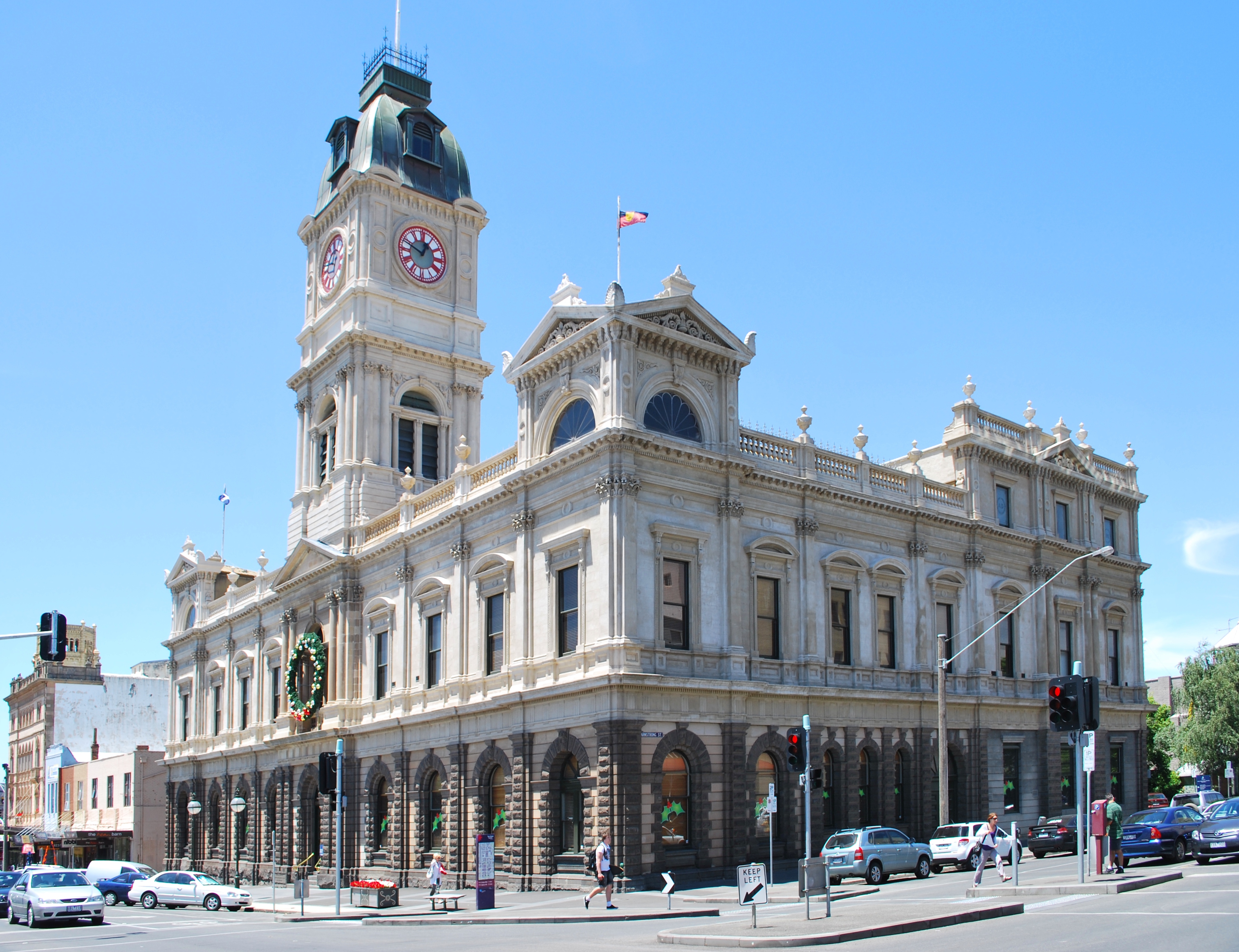
Additional primary venues include the Ballarat Mining Exchange (hosting Campbell Addy's headline exhibition "I Love Campbell"), Ballarat Town Hall (featuring the world premiere of Catherine Leroy's Vietnam War photography), Post Office Gallery (presenting the Enninful x Mapplethorpe exhibition), the Miners Tavern (showcasing "Long Exposure: The Legacy of Prahran College"), and the Ballarat GovHub. RACV Goldfields Resort in nearby Creswick also serves as a satellite venue with multiple exhibitions and special events.
Video Experience
Explore the unique venues and groundbreaking artworks of the Ballarat International Foto Biennale through this immersive visual journey across the historic gold rush city's transformation into a contemporary art destination.
Video: Ballarat International Foto Biennale | Watch on YouTube
Venue Locations
The Ballarat International Foto Biennale spans multiple venues across the city, with the Festival Hub located at 12 Lydiard Street North serving as the central information point.
- Festival Hub - 12 Lydiard Street North, Ballarat
- Ballarat Mining Exchange - 12 Lydiard Street North, Ballarat
- Ballarat Town Hall - 225 Sturt Street, Ballarat
- Post Office Gallery - Corner Sturt and Lydiard Street North, Ballarat
- Miners Tavern - 120 Lydiard Street North, Ballarat
- Ballarat GovHub - 101 Armstrong Street North, Ballarat
- RACV Goldfields Resort - 1500 Midland Highway, Creswick
Ballarat City Guide
Experience the rich cultural heritage and contemporary creative energy of Ballarat, Victoria's gold rush capital. When visiting the Foto Biennale, take time to explore the city's other attractions, dining venues, and hidden gems.
Living gold rush museum
Australia's oldest regional gallery
Home to the original Eureka Flag
Historic gardens with Prime Ministers Avenue
Cultural Districts
- 📍 Lydiard Street: Historic banking precinct with Victorian architecture
- 📍 Sturt Street: Grand boulevard with gardens, monuments, and dining
- 📍 Bridge Mall: Shopping district with heritage buildings
- 📍 Lake Wendouree: Scenic lake with walking paths and wildlife
Getting Around
Ballarat is located approximately 110 km northwest of Melbourne (about 90 minutes by car or train). The city center is compact and walkable, with most biennale venues within easy walking distance. Local buses connect to outer areas, and taxis/rideshares are readily available. V/Line trains run regularly from Melbourne's Southern Cross Station to Ballarat Station.