Bamako Encounters

Africa's photography biennial — founded 1994 in Bamako and co-produced by Mali's Ministry of Culture and the Institut Français, the longest-running continental platform for African and African-diasporic photography, currently between its 14th edition (KUMA, 2024–25) and its 15th (Refabulation(s), 2026–27).

Established1994 — 202615 editions (by 2026)
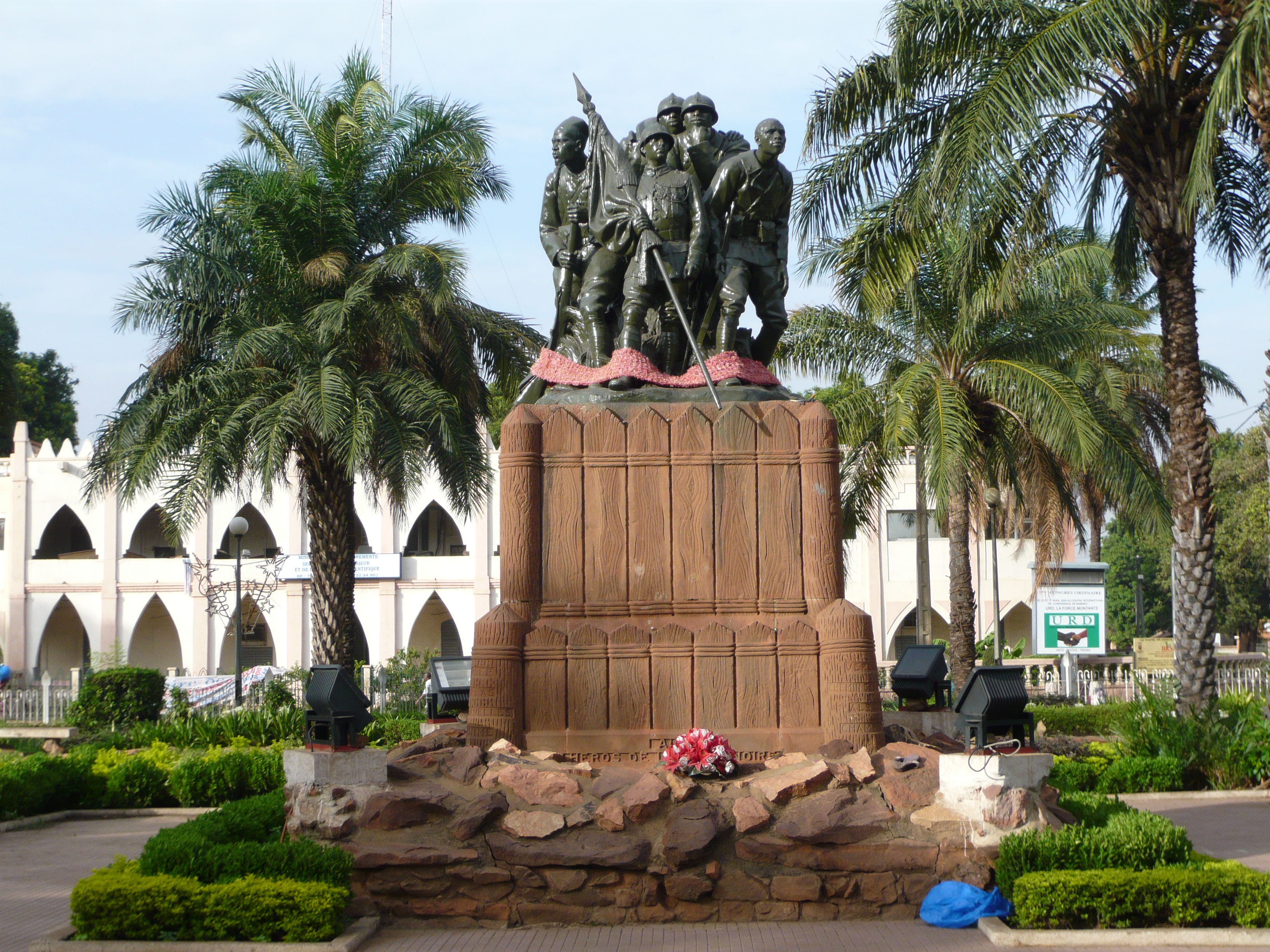
Bamako — host city of the Rencontres de Bamako, the African Biennial of Photography, since 1994.
Above Bamako, capital of Mali — host city of the Rencontres de Bamako, Africa's longest-running photography biennial, since the inaugural edition in 1994.

The Lead Essay Between the 14th and the 15th

After KUMA, before Refabulation(s)

The 14th Bamako Encounters, KUMA (Word), curated by Lassana Igo Diarra, closed on 16 January 2025. The 15th, Refabulation(s), opens in Bamako on 26 November 2026 under curator Armelle Dakouo.

The Rencontres de Bamako — known in English as the Bamako Encounters and on the institutional record as the African Biennial of Photography — has, since 1994, been the continent's principal platform for photography and the moving image. It is one of the very few major biennials anywhere in the world whose institutional model is both a sovereign-government cultural programme (Mali's Ministry of Culture) and a bilateral cultural-diplomacy partnership (the Institut Français), and the only continuing African biennial of this scale to have been founded explicitly to address the question of who photographs the continent. The premise the founding edition took — that the photographic record of Africa was, by 1994, still principally produced and circulated by photographers from outside the continent, and that a biennial sited in Bamako could be one of the institutional venues at which African photography could establish a different working relationship to its own subject — has been the continuing argument across all fourteen subsequent editions.

The 14th edition, KUMA (Word), opened on 16 November 2024 and closed on 16 January 2025 under the curatorship of the Bamako-based curator Lassana Igo Diarra. The title borrowed the eponymous Salif Keita song — KUMA, the Bambara word for "word" or "speech" — and used it to frame an exhibition about photography as a register of voice rather than as a register of image alone. The 14th was the biennial's thirtieth-anniversary edition; it expanded the institution's activities across broader regions of Mali in addition to the Bamako venues, and it operated under the continuing institutional conditions of Mali's post-2020 political reordering and the regional Sahel security situation. The fact that the edition opened at all, and at the institutional weight it did, has been read within the international art press as institutionally consequential.

The 15th edition, Refabulation(s), opens on 26 November 2026 and runs through 26 January 2027 under the curatorship of the independent curator Armelle Dakouo. Dakouo's curatorial premise — to reimagine African narratives in a post-colonial register, foregrounding the continuing work of African and African-diasporic photographers to refabricate the documentary record from which the continent's photographic image has been built — extends the founding argument of the biennial into a curatorial register that the post-2020 African contemporary art conversation has developed. The 15th will be the first Bamako Encounters under the post-2024 institutional weather and the first programmed under the post-30th-anniversary cycle.


Critical Perspective The Institut Français Question

A biennial half-funded from Paris

The Bamako Encounters is among the very few continuing African biennials of its scale to operate as a bilateral cultural-diplomacy programme. That structural choice is the institution's defining strength — and the question its continuing institutional history keeps asking.

The Bamako Encounters' founding institutional architecture — co-produced and co-funded by Mali's Ministry of Culture and the Institut Français, the French state cultural-diplomacy institution — is the most consequential structural fact about the biennial. It is the reason the institution was able to launch in 1994 at the scale and ambition it did, when the African continent's other contemporary art biennials were either in their first edition (Dak'Art, founded 1989, then in its second cycle) or had not yet been founded. It is the reason the Encounters has been able to sustain operations across thirty years of changing political conditions in Mali — including the 2012 Tuareg insurgency and military coup, the long French-led security operations across the Sahel that followed, and the post-2020 reordering of Mali's foreign relations. And it is the reason the institution's continuing operation in 2024–25, against the broader continental conversation about French cultural-diplomacy's role in Africa, raises a question no other African biennial of comparable institutional weight has to answer.

The question is whether an African biennial can be programmed as African contemporary art, in continuing African institutional terms, when half its operating architecture is the cultural-diplomacy arm of a former colonial power. The Institut Français — formerly Cultures France, before that AFAA — is constitutively the institutional vehicle by which the French state projects French cultural influence into the regions of French historical interest. Its support for the Bamako Encounters is not neutral: it is the French state, through one of its principal cultural-diplomacy bodies, sustaining an African institutional venue whose continuing existence reinforces the post-colonial Franco-African cultural relationship that the post-2020 African political conversation has been increasingly willing to question.

The defense the institution has consistently offered — implicit in its programming choices, explicit in the curatorial argument across multiple editions — is that the alternative is no biennial. The continental record across the post-1990 period is that African biennials without sovereign-state cultural-diplomacy underwriting (Casablanca, Kampala, Lagos) have struggled to sustain operations at institutional weight; the few that have approached the Bamako Encounters' scale (Dak'Art in Senegal, the Johannesburg Biennale in its 1990s two-edition run) have either depended on different sovereign-state architectures or have simply not been able to continue. The Encounters' continuing institutional position — that the cultural-diplomacy compromise is the cost of operating at sustained ambition — is one of the more honestly-stated institutional arguments in the contemporary biennial conversation.

The 15th edition, scheduled for November 2026 under Armelle Dakouo, will open in a moment when the question is sharper than it has been since the founding. France's continuing institutional relationships across the Sahel have been reshaped by the post-2020 political reorderings in Mali, Burkina Faso, and Niger; the African contemporary art conversation has become more vocal about the structural inheritance of French cultural diplomacy. Whether the Bamako Encounters' continuing institutional architecture can hold across the next decade — and whether the Mali Ministry of Culture's continuing partnership with the Institut Français can survive the political weather it now operates within — is the continuing institutional question. The institution's editorial argument is that it can. The continuing African contemporary art conversation is, on the evidence of the post-2020 period, less convinced.
The Institutional Spine

Defining moments

Five episodes from thirty years of Africa's photography biennial.

19941st Encounters

The founding in Bamako

The first Rencontres de Bamako opened in 1994 in Bamako, Mali — the inaugural edition of what would become Africa's longest-running photography biennial. Founded by the French photographers Françoise Huguier and Bernard Descamps with support from Malian President Alpha Oumar Konaré, and structured as a continuing partnership between Mali's Ministry of Culture and the Institut Français, the founding institutional argument was that African photography needed a continent-sited biennial venue at which its production and reception could be programmed at sustained institutional weight. The inaugural edition introduced studio photographers Seydou Keïta and Malick Sidibé to a broader international audience.

Sources: Rencontres de Bamako archive; Institut Français institutional records

202430th anniversary

The 14th — Diarra's KUMA (Word)

The 14th Bamako Encounters, KUMA (Word), opened on 16 November 2024 and closed on 16 January 2025 under curator Lassana Igo Diarra. Themed after Salif Keita's song of the same title, the edition celebrated three decades of the African Biennial of Photography and expanded its activities into broader regions of Mali beyond Bamako. The 14th was the institution's thirtieth-anniversary edition.

Sources: Biennial Foundation; Rencontres de Bamako 14th edition records, 2024

202615th edition · forthcoming

Dakouo's Refabulation(s)

The 15th Bamako Encounters, Refabulation(s), opens on 26 November 2026 under the curatorship of independent curator Armelle Dakouo. Dakouo's announcement was first reported in Gazette Drouot. The curatorial premise foregrounds the reimagining of African narratives in a post-colonial register, extending the founding institutional argument of the biennial into the post-2020 African contemporary art conversation.

Sources: Gazette Drouot; Biennial Foundation

20077th Encounters

Simon Njami's In the City and Beyond

The 7th Rencontres de Bamako (2007), In the City and Beyond, was directed by the Cameroonian curator and critic Simon Njami — by 2007 one of the most internationally circulated African curatorial voices, recently the founding artistic director of Africa Remix, the touring African contemporary art survey. Njami's edition was widely read as the moment the Encounters' editorial register expanded beyond the documentary-and-portrait photography traditions of Keïta and Sidibé into the broader contemporary photographic and video conversation. The 7th was, by the consensus of the African contemporary art press of the period, the institution's most consequential single editorial extension.

Sources: Biennial Foundation; Rencontres de Bamako 2007 catalogue

ContinuingInstitutional model

The Mali–Institut Français model

The Bamako Encounters is one of the very few continuing African biennials of this scale to operate as a bilateral cultural-diplomacy programme: co-organised and co-produced by Mali's Ministry of Culture and the Institut Français (the French state cultural-diplomacy institution). The structural question this raises — about the relationship between an African biennial's continuing operation and the French cultural-diplomacy programme that part-funds it — is the central institutional question the biennial's continuing history has addressed.

Sources: Institut Français institutional records; Mali Ministry of Culture

People in the Bamako programme

The figures behind the Encounters

Founding co-director · 1994

Françoise Huguier

French photographer and reporter. Co-founder, with Bernard Descamps, of the Rencontres africaines de la photographie in Bamako in 1994 — convened with the backing of Mali's first democratically elected president Alpha Oumar Konaré and the French state cultural-diplomacy agency AFAA. The founding argument — that African photography needed a continent-sited biennial — gave the institution its structural premise across the subsequent thirty years.

Source: Wikipedia

Artistic director · 2024 (14th edition)

Lassana ‘Igo’ Diarra

Bamako-based curator and arts administrator. Artistic Director of the 14th Bamako Encounters, KUMA (Word) — La Parole, 16 November 2024 – 16 January 2025 — the biennial's thirtieth-anniversary edition. A longstanding member and board member of the International Biennial Association, Diarra borrowed the edition's title from Salif Keita's song Kuma and framed photography as a register of voice rather than image alone.

Source: ART AFRICA Magazine; International Biennial Association

Artistic director · 2026 (15th edition, forthcoming)

Armelle Dakouo

Independent curator. Appointed in May 2026 as commissaire générale of the 15th Bamako Encounters, Refabulation(s), scheduled 26 November 2026 – 26 January 2027 — the first Francophone African woman to direct the artistic orientation of the biennial. Her curatorial premise borrows from Chinua Achebe's argument for narration as a tool against cultural dispossession; the edition extends from the Musée National du Mali across four further Bamako sites.

Source: The Art Newspaper; Notre Nation, Mali

Artistic director · 2019 & 2022 (12th, 13th editions)

Bonaventure Soh Bejeng Ndikung

Cameroonian-German curator, biotechnologist and writer. Artistic Director of two consecutive Bamako Encounters: the 12th (Streams of Consciousness, 2019–20), with a curatorial team of Aziza Harmel, Astrid Sokona Lepoultier and Kwasi Ohene-Ayeh; and the 13th (Maa ka Maaya ka ca a yere kono, 2022–23), with Akinbode Akinbiyi, Meriem Berrada, Tandazani Dhlakama and Liz Ikiriko. Founding director of SAVVY Contemporary, Berlin, and from 2023 Intendant of Haus der Kulturen der Welt.

Source: e-flux (2019); e-flux (2022)

Artistic director · 2017 (11th edition)

Marie-Ann Yemsi

Independent curator and cultural consultant based between Paris and the African continent. Artistic Director of the 11th Bamako Encounters, Afrotopia, 2 December 2017 – 31 January 2018 — selecting approximately forty photographers and video artists from more than three hundred submissions through a curatorial advisory committee that included Sammy Baloji, Aïda Muluneh and Azu Nwagbogu. The edition's title was borrowed from Senegalese intellectual Felwine Sarr's book of the same name.

Source: Contemporary And; ART AFRICA Magazine

Artistic director · 2015 (10th edition)

Bisi Silva

Nigerian curator (1962–2019) and founding director of the Centre for Contemporary Art (CCA), Lagos. Artistic Director of the 10th Bamako Encounters, Telling Time, 31 October – 31 December 2015 — the first edition curated by an African woman and the institutional return after the four-year hiatus that followed the 2011 edition. Silva took Mali's storytelling tradition and the 2012 political upheavals as the curatorial points of departure.

Source: Aperture (Silva, 2015); e-flux (2015)

Founded
1994 · Bamako, Mali
Editions to date
14 mounted · 15th in 2026
14th edition
KUMA · 16 Nov 2024 – 16 Jan 2025
15th edition
Refabulation(s) · 26 Nov 2026 – 26 Jan 2027
Co-organisers
Mali Ministry of Culture · Institut Français

Geography & Venues

The Encounters across Bamako

Principal venues across the 14th and forthcoming 15th editions

Musée National du Mali

The institutional core of the Encounters since 1994 — the standing co-organising museum under the Ministry of Culture and the principal exhibition venue of every edition. Holds the national archaeological, ethnographic and historical collections of Mali; the museum has been the anchor against which the biennial's curatorial programmes have propagated outward.

Route de Koulouba
Avenue de la Liberté · BP 159
Bamako, Mali

Maison Africaine de la Photographie

Founded 2004 by the Malian Ministry of Culture, housed within the Bibliothèque Nationale du Mali, to manage the institutional weight of the Rencontres and to support African photographic practice across editions. Second institutional anchor of the biennial across the 2010s and 2020s; one of the five sites of the 15th edition (Refabulation(s)) in 2026–27.

Hamdallaye — Bibliothèque Nationale
Bamako, Mali

Mémorial Modibo Keïta

Memorial to the first President of independent Mali (1960–1968); one of the five exhibition sites announced for the 15th Bamako Encounters in 2026–27. The selection extends the biennial's programming into Bamako's commemorative civic architecture, alongside its museum, library and central-square venues.

Quartier du Fleuve
Bamako, Mali

Palais de la Culture Amadou Hampâté Ba

Bamako's principal performing and cultural arts complex, named after the Malian writer and ethnologist Amadou Hampâté Bâ (1900/01–1991). Announced as one of the five exhibition sites for the 15th edition in 2026–27, alongside the National Museum, the Maison Africaine de la Photographie, the Mémorial Modibo Keïta and the OMVS square.

Rive droite du Niger
Bamako, Mali

OMVS square — Bamako-Coura

Central urban square in the historic Bamako-Coura district, named for the Organisation pour la Mise en Valeur du fleuve Sénégal. Announced as the fifth and most public-facing of the 15th edition's exhibition sites — the deployment of the biennial into central Bamako's everyday urban fabric, continuous with the institutional argument across editions.

Bamako-Coura
Bamako, Mali

From the Directory

Related biennials — Africa and the continental conversation

Browse the region →

Essential Reading

For further work on the Encounters

KUMA — Catalogue of the 14th Bamako Encounters

Lassana Igo Diarra, artistic director  ·  2024

Catalogue of the thirtieth-anniversary edition (16 November 2024 – 16 January 2025) — the principal institutional document of the curatorial argument around Salif Keita's Kuma and the thirty selected artists.

Streams of Consciousness — Catalogue of the 12th Bamako Encounters

Bonaventure Soh Bejeng Ndikung et al., curators  ·  2019

Catalogue of the 25th-anniversary edition (30 November 2019 – 31 January 2020) — the four-chapter, eighty-five-artist exhibition that is the most internationally circulated catalogue from the biennial's 2010s decade.

Afrotopia

Felwine Sarr  ·  Editions Philippe Rey / Jimsaan, 2016

The Senegalese intellectual's book on the African continent's capacity to establish itself as the centre of its own worldview — the source text Marie-Ann Yemsi borrowed from for the title of the 11th Bamako Encounters in 2017.

Bamako Revisited

Bisi Silva  ·  Aperture, 2015

Silva's reflective essay on her curation of Telling Time, the 10th Bamako Encounters — the principal first-person curatorial document of the institutional return after the four-year hiatus that followed the 2011 edition.

Institutional record

14th edition · KUMA (2024–25)

15th edition · Refabulation(s) (2026–27)

Editorial content on biennale.com is published by The Biennale Editorial Team. Image credits as captioned. External links are provided for reference and verification.