The Contour Biennale

Mechelen's biennale of the moving image, founded in 2003 by Etienne Van den Bergh in the Flemish city between Brussels and Antwerp — the longest-running art biennale in Belgium, and one of the few European biennales whose constituting medium is the moving image rather than contemporary art at large. The 11th edition, The Thought of the Heart and the Soul of the World, is curated by Sofia Lemos from 4 September to 1 November 2026, with the programme distributed across the medieval and baroque heritage venues of central Mechelen.

Established2003 — 202611 editions
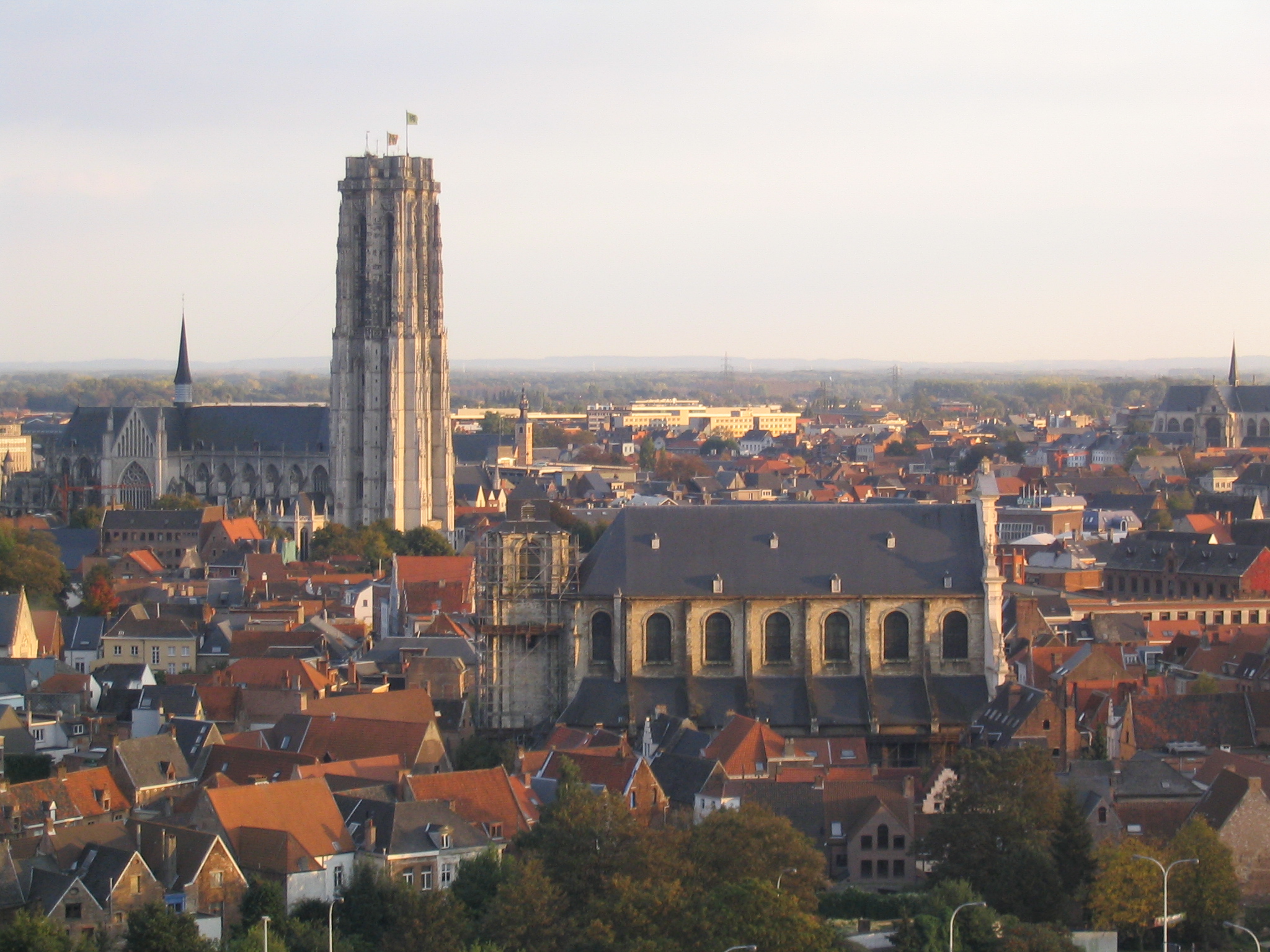
Mechelen, Belgium — the historic Flemish city between Brussels and Antwerp that has hosted the Contour Biennale of moving image since 2003.
Above Mechelen, Belgium — the historic Flemish city between Brussels and Antwerp that has hosted the Contour Biennale of moving image at its medieval and baroque venues across eleven editions since 2003.

The Lead Essay The 11th Contour Biennale

Lemos's The Thought of the Heart and the Soul of the World

The 11th Contour Biennale, The Thought of the Heart and the Soul of the World, runs from 4 September to 1 November 2026 under the curatorship of the Portuguese curator and writer Sofia Lemos, with a programme that takes transformation — the question of how old systems and habits make way for the new — as its constituting subject across the heritage venues of central Mechelen.

The Contour Biennale is Belgium's biennale of the moving image — founded in 2003 in the Flemish city of Mechelen by Etienne Van den Bergh, who curated the first edition by inviting fifteen artists, mostly from Belgium and the Netherlands, to install video works across eight historic locations in the heart of the city including St John's Church, the Church of the Beghinage and the contemporary art centre De Garage. The biennale ran biennially across the following decade under successive guest curators — Cis Bierinckx in 2005, Nav Haq's Decoder in 2007, Katerina Gregos's Hidden In Remembrance Is The Silent Memory Of Our Future in 2009, Anthony Kiendl's Sound and Vision: Beyond Reason in 2011, and Jacob Fabricius's Leisure, Discipline and Punishment in 2013 — before the editions of the late 2010s and 2020s that the editorial moments below trace in detail. It is the longest-running art biennale in Belgium, and, alongside the Biennale de l'Image en Mouvement in Geneva, one of the very few biennales in Europe whose constituting medium is the moving image rather than contemporary art at large.

The 11th edition, The Thought of the Heart and the Soul of the World, opens on 4 September 2026 and runs through 1 November under the curatorship of Sofia Lemos — the Portuguese curator and writer who served on the curatorial team of Contour 8 in 2017, who was associate curator of the second Riga Biennial in 2020, and whose practice across institutions including Museu de Serralves, MACBA Barcelona and Culturgest Lisbon has consistently programmed the intersection of moving image, ecology and critical theory. The edition's curatorial argument — that the contemporary moment is a moment of transformation, and that the figure of the heart and the figure of the world-soul are the working metaphors through which the question of how old systems and habits make way for the new can be put — is developed across a programme that returns Contour to its medium-specific premise while extending its political and ecological vocabulary in the direction Lemos's recent practice has built up over the last decade.

An institution organised around a medium, not a theme

The structural feature that distinguishes the Contour Biennale from the older and larger European contemporary biennials — Venice (founded 1895), documenta (1955), Manifesta (1996) — is that Contour's constituting category is a medium, not a generation or a politics or a region. Every Contour edition since 2003 has been programmed under the explicit institutional commitment that the moving image is the working subject of the biennale: that the medium is the framing argument, and that the curator's task is to demonstrate what the medium can be made to do under the conditions of the present. That structural choice — the medium-specific biennale — is now uncommon in the European biennial field, where the major institutions long ago broadened to programme contemporary art at scale across all media. Contour is one of the institutional holdouts.

The institutional argument the 2026 edition makes is that the medium-specific biennale is not a residual category but a productive one — that programming moving image across the historic buildings of Mechelen produces an editorial encounter between the medium and the city that the larger biennials' broader programming cannot stage in the same way. The 11th edition is curated by Sofia Lemos, appointed in 2025 through an open international curatorial call that the new organising body — the Contouristen vzw, formed in 2024 — issued through e-flux and the Flanders Arts Institute. The Contouristen, a collective of Belgium-based curators and artists, took over the institutional running of the biennale from the Mechelen-based nona art centre, which had organised the editions from 2017 to 2023 and which today still runs the Contour Series — a separate continuing programme distinct from the Biennale.

Critical Perspective The medium-specific biennale

Why moving-image biennales persist

Every major contemporary biennial — Venice, documenta, the Whitney — programmes moving image at scale. So why does a biennale whose constituting medium is the moving image, like Contour in Mechelen or the Biennale de l'Image en Mouvement in Geneva or the Seoul Mediacity Biennale, continue to make sense as a separate institutional category? The answer is that medium-specificity remains a productive editorial premise.

The European biennial field is structured around three institutional categories. The first is the historical biennial of contemporary art — Venice (1895), São Paulo (1951), documenta (1955) — whose framing argument is the contemporary moment, programmed across all media that contemporary artists work in. The second is the nomadic or thematic biennial — Manifesta (1996), the European Biennial of Contemporary Art, which moves between European cities and which is constituted around the European condition as its subject. The third is the medium-specific biennale: the much smaller institutional category of biennales whose constituting subject is a single medium, programmed seriously and continuously as the working object of curatorial attention. The Contour Biennale, founded in 2003 in Mechelen, is the principal continuing European example of this third category for the moving image.

The structural objection — that the major contemporary biennials all programme moving image at scale, that Venice and documenta have for two decades reserved entire pavilions and entire halls for film and video, and that the medium-specific biennale is therefore institutionally redundant — has been made repeatedly across the 2010s and 2020s. The continuing answer the Contour programme makes, across the editions from Nicola Setari's 2015 Fooling Utopia through Natasha Ginwala's 2017 Polyphonic Worlds: Justice as Medium and Nataša Petrešin-Bachelez's 2019 Coltan as Cotton to Auguste Orts's 2023 We Are Rooted But We Flow, is twofold.

The first argument is that medium-specific programming permits a depth of engagement with the working conditions of the moving image — its production economies, its distribution channels, its archive — that broad-spectrum biennials structurally cannot. The Coltan as Cotton edition in 2019 was the cleanest demonstration of that argument: Petrešin-Bachelez's programme took the question of the conflict-mineral supply chains that produce the screens through which moving image circulates and made that infrastructural question the working subject of the biennale across a year of programming in three phases. A contemporary biennial that programmes moving image alongside painting and sculpture cannot put the infrastructural question of the medium itself at its centre in the same way; the medium-specific biennale can.

The second argument is that the moving image's continuing institutional partner outside the museum — the cinema, the festival, the broadcaster, the streaming platform — produces a curatorial conversation that medium-specific biennales are uniquely positioned to host. The Seoul Mediacity Biennale, founded in 2000 as part of the Seoul Metropolitan Government's Millennium Project, addresses the question from the institutional side of the new-media museum and the technology biennial; Contour addresses it from the institutional side of the moving-image artist's practice and the heritage city. The two institutions, taken together, are the structural argument the medium-specific biennale continues to make against the broader contemporary field — and the Contouristen's reorganisation of Contour in 2024, after the long programmatic difficulty of the post-2019 period, is the working bet that the argument continues to hold.

The 2026 edition is the institutional demonstration of that bet. Sofia Lemos's appointment as curator — through an open international call, with a programme that consolidates the medium-specific premise rather than dispersing it into a multi-medium contemporary frame — is the editorial signal that Contour intends to continue programming moving image as its constituting medium across the second decade of its second decade. The institutional question that follows is whether the Flemish funding base, the Mechelen urban anchor and the international curatorial network can together hold the medium-specific position into the late 2020s, as the broader biennial field continues to consolidate around very large contemporary international exhibitions whose moving-image programming alone exceeds Contour's entire scale.


The Institutional Spine

Defining moments

Five episodes from two decades of Belgium's moving-image biennale.

2003Foundation

Van den Bergh's founding walk

The first Contour was organised in 2003 by Etienne Van den Bergh, who invited fifteen artists — mostly from Belgium and the Netherlands — to install moving image works across eight historic locations in the heart of Mechelen, including St John's Church, the Church of the Beghinage and the contemporary art centre De Garage. The framing argument was a short walking route between downtown venues that let a visitor spend a full day with moving image across the city — the institutional structure the biennale has kept across every subsequent edition.

Sources: Contour Biennale — About; Biennial Foundation

2015VII

Setari's Fooling Utopia

The 7th edition, Contour 7, ran from 29 August to 8 November 2015 under the curatorship of Nicola Setari, who dedicated the biennale to the humanist and statesman Thomas More — who wrote the lion's share of Utopia during a stay in Flanders in 1515. Setari programmed over twenty artists across two themes, Fooling Utopia and Monsters, Martyrs & Media, in venues including the Mechelen Academy, Mechelen Cultural Centre, De Vlietenkelder, Hof van Busleyden, Kazerne Dossin and De Noker.

Sources: Contour 7 — official; e-flux announcement

2017VIII

Ginwala's Polyphonic Worlds: Justice as Medium

The 8th edition opened on 11 March 2017 and ran to 21 May under the curatorship of Natasha Ginwala, in dialogue with the critical theorist Denise Ferreira da Silva and the artist Judy Radul as key advisors; the writer Rachel O'Reilly co-curated the edition's Roaming Assembly #12 public programme on Planetary Records: Performing Justice Between Art and Law. The programme took the Mechelen Great Council — the historic medieval court established in the city in the fifteenth century — and the city's polyphonic music tradition as twin reference points for a reflection on how legal infrastructure, social justice and colonial power are formalised and exercised. Sternberg Press published the edition's reader Hearings.

Sources: Frieze; e-flux Criticism

2019IX

Petrešin-Bachelez's Coltan as Cotton

The 9th edition, curated by Nataša Petrešin-Bachelez, broke with Contour's earlier ten-week format by opening with an introductory phase on 25 October 2018 and then running across three weekend phases in 2019 — 11–13 January, 17–19 May, and 18–20 October — aligned with the lunar cycle. The title was drawn from Saul Williams's poem The Bear/Coltan as Cotton; the programme took Belgium's colonial history and its contemporary continuation in the conflict-mineral supply chains of central Africa as its constituting subject, with newly commissioned films, installations and performances on decolonisation, degrowth and solidarity.

Sources: e-flux announcement; Biennial Foundation

2023X

Auguste Orts's We Are Rooted But We Flow

The 10th edition, C0N10UR — We Are Rooted But We Flow, ran from 9 September to 5 November 2023 under the curatorship of Auguste Orts — the Brussels production and distribution platform led by the artists Anouk De Clercq, Fairuz Ghammam, Herman Asselberghs, Manon de Boer and Sven Augustijnen. The title was borrowed via Rosi Braidotti's restatement of Virginia Woolf's The Waves (1931); for its anniversary edition Contour expanded beyond Mechelen with cultural partners argos centre for audiovisual arts in Brussels and Kunsthal Extra City in Antwerp.

Sources: Cultuurcentrum Mechelen; International Biennial Association

People in the Contour programme

The figures behind Contour

Curator · XI (2026)

Sofia Lemos

Portuguese curator and writer whose practice operates across the intersections of art, performance and discourse, with a continuing focus on ecology and critical practice. Associate curator of the 2nd Riga Biennial (2020); guest curator at Galeria Municipal do Porto (2017–18); member of the curatorial team of Contour Biennale 8 (2017); collaborator with institutions including Culturgest, Galerias Municipais de Lisboa, Museu de Serralves and MACBA. Appointed curator of the 11th Contour Biennale in 2025 through an open international call.

Source: e-flux open call; Radio Reflex, 2025

Founder & Curator · I (2003)

Etienne Van den Bergh

Belgian curator and founder of the Contour Biennale. Organised the first edition of Contour in 2003, inviting fifteen artists — largely from Belgium and the Netherlands — to install moving image works across eight historic locations in the heart of Mechelen, establishing the walking-route format and the heritage-venue premise that have remained the institutional signature of the biennale across all subsequent editions.

Source: Contour Biennale — About; nona — Contour 2003

Curator · VII (2015)

Nicola Setari

Italian-Belgian curator, art historian and editor; co-founder of the Brussels-based curatorial platform LUCA and continuing voice in the Flemish moving-image curatorial circuit. Curated the 7th Contour Biennale in 2015 under the motto Fooling Utopia, with a programme dedicated to Thomas More and the humanist legacy of Flanders, presenting work by over twenty artists across the historic venues of central Mechelen.

Source: Contour 7 — official; Kunstenpunt — Setari

Curator · VIII (2017)

Natasha Ginwala

Indian-born curator, researcher and writer; artistic director of Colomboscope (Sri Lanka), associate curator at large at Gropius Bau Berlin, and member of the curatorial team of documenta 14. Curated the 8th Contour Biennale, Polyphonic Worlds: Justice as Medium, in 2017, in dialogue with the philosopher Denise Ferreira da Silva and the artist Judy Radul as advisors, with Rachel O'Reilly co-curating the edition's Roaming Assembly #12 public programme. The edition's reader Hearings was published by Sternberg Press.

Source: Frieze; Ginwala — Hearings

Curator · IX (2019)

Nataša Petrešin-Bachelez

Slovenian-French curator, editor and writer based in Paris; former director of the Centre international d'art et du paysage on the Île de Vassivière and editor-in-chief of the journal Manifesta Journal. Curated the 9th Contour Biennale, Coltan as Cotton, in 2019 as a year-long three-phase programme — breaking with the biennale's earlier ten-week format — on decolonisation, conflict-mineral supply chains and Belgium's colonial history and its present continuation.

Source: e-flux announcement; NTU CCA Singapore

Curator · X (2023)

Auguste Orts

Brussels-based production and distribution platform for artists' moving image, founded in 2008 and led by the artists Anouk De Clercq, Fairuz Ghammam, Herman Asselberghs, Manon de Boer and Sven Augustijnen. Curated the 10th Contour Biennale, C0N10UR — We Are Rooted But We Flow, in 2023; for the anniversary edition Contour expanded beyond Mechelen with partner venues at argos centre for audiovisual arts in Brussels and Kunsthal Extra City in Antwerp.

Source: Auguste Orts — C0N10UR; Biennial Foundation, 2022

Founded
2003 · Mechelen
Founder
Etienne Van den Bergh
Frequency
Biennial
Constituting medium
Moving image
Organiser (2024–)
Contouristen vzw

Geography

The Contour Biennale across Mechelen

Principal venues

Hof van Busleyden

Renaissance city palace built between 1503 and 1517 by the humanist Hieronymus van Busleyden; once a meeting place for Thomas More and Erasmus, today the city museum of Mechelen and one of the principal venues of the Contour Biennale across recent editions.

Frederik de Merodestraat 65
2800 Mechelen
Antwerp, Belgium

Kazerne Dossin

Memorial, museum and documentation centre on the Holocaust and human rights, occupying the former barracks that operated as a Nazi transit camp from which Jewish and Roma deportees were transported to Auschwitz. Used as a Contour venue across multiple editions for works programmed in critical relation to the site.

Goswin de Stassartstraat 153
2800 Mechelen
Antwerp, Belgium

Cultuurcentrum Mechelen

The municipal cultural centre of Mechelen and the city's principal cultural-programming partner of the Contour Biennale; hosted the anniversary edition C0N10UR — We Are Rooted But We Flow in 2023 and recurring screenings and exhibition components across editions.

Minderbroedersgang 5
2800 Mechelen
Antwerp, Belgium

From the Directory

Related moving-image and European biennials

Browse the region →

Essential Reading

For further work

Contour — A Walk Along Contemporary Moving Image

Etienne Van den Bergh, curator  ·  2003

Catalogue of the founding 2003 exhibition, presenting fifteen artists across eight historic locations in central Mechelen — the institutional template the Contour programme has carried across every subsequent edition.

Contour 7 — Fooling Utopia

Nicola Setari, ed.  ·  2015

Catalogue of the 7th edition, dedicated to Thomas More on the 500th anniversary of his Flemish stay and the writing of Utopia; programmed across the Mechelen Academy, Hof van Busleyden, Kazerne Dossin and other historic sites.

Hearings: A Reader. Contour Biennale 8

Natasha Ginwala, ed.  ·  Sternberg Press, 2018

Reader for the 8th edition's Polyphonic Worlds: Justice as Medium, with essays on legal infrastructure, social justice and colonial power read against the Mechelen Great Council and the city's polyphonic music tradition.

Contour Biennale 9 — Coltan as Cotton

Nataša Petrešin-Bachelez, ed.  ·  2019

Publication of the 9th edition's three-phase programme on Belgium's colonial history and its present continuation — borrowing its title from Saul Williams's poem on the conflict-mineral supply chains of central Africa.

C0N10UR — We Are Rooted But We Flow

Auguste Orts, eds.  ·  2023

Publication of the 10th anniversary edition curated by the Brussels artists' platform, with cultural partners argos in Brussels and Kunsthal Extra City in Antwerp.

Institutional record

Context: the moving-image biennale

Editorial content on biennale.com is published by the Biennale Editorial Team. Image credits as captioned. External links are provided for reference and verification.