The Bienal del Fin del Mundo

The End of the World Biennial — the contemporary art biennial founded in 2007 in Ushuaia, capital of Argentina's Tierra del Fuego and the world's southernmost city, as a contribution to UNESCO's International Polar Year 2007–09. Organised by the Fundación Patagonia Arte y Desafío with the Memorial Foundation of the Parlamento Latinoamericano of São Paulo, the programme has, across its four documented editions, presented work by artists from across the five continents at the Beagle Channel and, in 2009, at an experimental platform installed on the Antarctic Peninsula.

Established2007 — 2014/154 documented editions
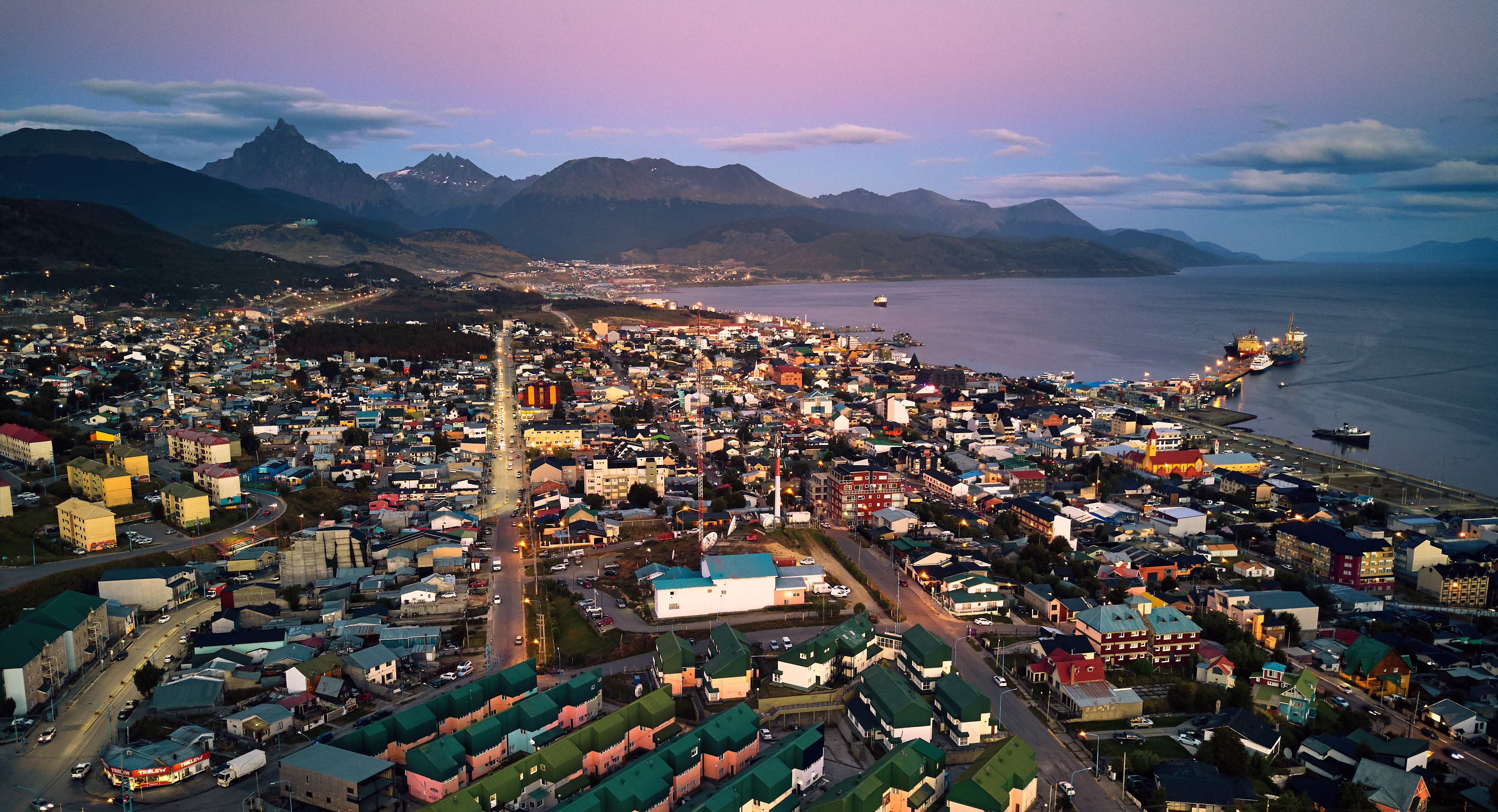
The port of Ushuaia, capital of Argentina's Tierra del Fuego Province on the southern coast of Isla Grande, bounded by the Martial mountain range to the north and the Beagle Channel to the south — host city of the Bienal del Fin del Mundo since 2007.
Above Ushuaia, capital of Tierra del Fuego — the southernmost city in the world, on the Beagle Channel — has been the host venue of the Bienal del Fin del Mundo since the founding edition opened on 30 March 2007 as a contribution to the UNESCO International Polar Year 2007–09.

The Lead Essay The Bienal del Fin del Mundo

A biennial at the 56th parallel south

The Bienal del Fin del Mundo is the world's southernmost contemporary art biennial — founded in 2007 in Ushuaia, capital of Argentina's Tierra del Fuego Province on the Beagle Channel, by the Fundación Patagonia Arte y Desafío in collaboration with the Memorial Foundation of the Parlamento Latinoamericano of São Paulo. Four documented editions have been staged: Ushuaia 2007 (Iris Fernández Abascal & Leonor Amarante), Intemperie in 2009 under Alfons Hug (with the ICEPAC platform installed at Antarctic research stations in February 2009), Bienvenidos al Antropoceno in 2011 under Consuelo Císcar of the IVAM, and the 2014–15 binational Contrastes & Utopías under the Italian curator Massimo Scaringella, in which the institution moved its headquarters to Mar del Plata and extended its programme to Valparaíso and Punta Arenas in Chile.

The Bienal del Fin del Mundo — the Biennial of the End of the World, or, in the institution's standing English form, the End of the World Biennial — is the contemporary art biennial of Ushuaia, capital of Argentina's Tierra del Fuego Province and the world's southernmost permanent city. The founding edition opened on 30 March 2007 and ran through 29 April, presented by the Fundación Patagonia Arte y Desafío together with the Memorial Foundation of the Parlamento Latinoamericano of São Paulo, as Argentina's principal cultural contribution to UNESCO's International Polar Year 2007–09. The first edition's general curatorship was held by Iris Fernández Abascal and Leonor Amarante, who selected approximately sixty artists across more than twenty countries from some three hundred submitted proposals; the central exhibition was hosted at the Museo Marítimo y del Presidio de Ushuaia, the maritime and former-penitentiary museum that occupies the city's nineteenth-century reincidence prison.

The second edition, Intemperie (Inclement Weather, or — in the looser local idiom — Without Shelter), opened on 24 April 2009 and closed on 25 May, under the general curatorship of the German critic Alfons Hug (twice curator of the São Paulo Biennial), with Fernando Farina as curator for Argentina, Alberto Saraiva as curator for Brazil and curatorial assistants Paz Guevara and Melina Valente. The 2009 programme staged its principal exhibition across the disused hangar of the former Ushuaia naval airfield on the Beagle Channel shore, the Antigua Usina at San Martín and Lasserre, the Museo Marítimo's prison galleries, the Packewaia cinema and Yatana Park; it included some forty-two artists and groups and, as a separate logistical-curatorial component, the ICEPAC (International Catabatic Experimental Platform for Antarctic Culture) deployment, which placed eighteen artists' works at Antarctic Peninsula research stations across 3–17 February 2009. The most-photographed work of the edition — and the one that established the participating Argentine artist's career on the international biennial circuit — was Adrián Villar Rojas's Mi familia muerta, a twenty-eight-metre clay whale beached among the trees of Yatana Park.

An institution structured around an extreme geography

The third edition, Bienvenidos al Antropoceno (Welcome to the Anthropocene), ran from 25 August into late October 2011 under the general curatorship of Consuelo Císcar, then director of Valencia's IVAM (Instituto Valenciano de Arte Moderno), with the Spanish critic Avelino Sala among the participating curatorial voices; it was inaugurated at the Centro Beagle in Ushuaia and presented some hundred and fifty works by more than a hundred artists, including twenty-two Argentine artists. The edition's working subject — programmed before the term had reached its current general circulation in the geological and cultural literatures — was the proposition that the contemporary period constitutes a new geological era, the Anthropocene, in which the human species is the principal geological agent; the biennial's organising triad of art — society — environment was developed across the programme as the curatorial argument for an extreme-southern position from which to think the planet.

The fourth edition, Contrastes & Utopías, opened in Mar del Plata on 12 December 2014 and ran through 22 February 2015 under the artistic direction of the Italian curator Massimo Scaringella, with Italy as the honoured country, a committee of ten international curatorial selectors, and more than a hundred and fifty artists from thirty-five countries across five continents. The 2014–15 edition was the institutional moment at which the headquarters of the biennial relocated from Ushuaia to the Atlantic-coast resort city of Mar del Plata in Buenos Aires Province, on the argument that the larger summer-resort audience would expand the programme's reach; Ushuaia continued as a participating venue, and the edition extended binationally to Valparaíso and Punta Arenas in Chile. After the fourth edition the institution's continuing programming record is broken: announcements of further editions have appeared on the periphery of the institutional record, and a VI Bienal Internacional de Arte Contemporáneo was programmed for Ushuaia in February 2026 under the direction of María Elena Beneito, but the principal documented continuous programming arc of the Fundación Patagonia Arte y Desafío's Bienal del Fin del Mundo remains the four editions of 2007, 2009, 2011 and 2014–15.


Critical Perspective The Southern Cone biennial map

Programming at the planetary periphery

The southern hemisphere biennial map is structurally thinner than the northern. The institutional argument the Bienal del Fin del Mundo makes — that contemporary art can be programmed against an extreme southern geography rather than against a continuing metropolitan audience — is the working southern complement to the Antarctic Biennale (Alexander Ponomarev, 2017), the Marrakech Biennale's south-Mediterranean position, and Sharjah's southern Gulf programming. The Ushuaia institution sits on the southernmost continuous landmass of the inhabited world, twelve hundred kilometres from the Antarctic Peninsula.

The structural feature of the contemporary biennial field that the Bienal del Fin del Mundo throws into relief is the asymmetry of the southern and northern hemisphere biennial maps. The principal continuous biennials of the world—Venice (1895), São Paulo (1951), documenta (1955, formally a quinquennial), Whitney (1932), Sydney (1973), Istanbul (1987), Lyon (1991), Sharjah (1993), Manifesta (1996)—cluster overwhelmingly in the northern hemisphere or, where southern, on the temperate latitudes of the south-eastern Australian and southern Brazilian coasts. The bands south of the 40th parallel south are programmed by an extremely small institutional set: in Argentina by the Bienal del Fin del Mundo in Ushuaia (54°48′ S) and, secondarily, by the Mar del Plata extension of the 2014–15 edition (38°00′ S); in Chile by the Valparaíso (33°02′ S) and Punta Arenas (53°10′ S) co-venues of that same 2014–15 edition; in New Zealand by the SCAPE Public Art programme in Christchurch (43°31′ S) and the now-paused Auckland Triennial (36°50′ S); in southern Australia by the Adelaide Biennial (34°55′ S) and the Tasmanian Dark Mofo programme (42°53′ S, Hobart). The continuous biennial of the inhabited high southern latitudes is, in the strict geographic sense, Ushuaia.

That structural argument is the working one the Fundación Patagonia Arte y Desafío has made and continues to make across the institution's published programme. The Bienal del Fin del Mundo is not — and has never claimed to be — a competitor to the global-scale biennial institutions in the metropolitan north; it is the southern-pole programming gesture, conceptually parallel to the Antarctic Biennale that the Russian artist Alexander Ponomarev launched in 2017 from a shipborne platform crossing the Drake Passage. The two southern programmes have a structural relation: the 2009 Bienal del Fin del Mundo's ICEPAC platform, in collaboration with the Argentine Antarctic Institute and the Dirección Nacional del Antártico, placed artists' works at Antarctic Peninsula research stations during the International Polar Year — a precursor proposition to the Ponomarev model of a biennial sited aboard an Antarctic research vessel that emerged eight years later.

The competing argument the Bienal del Fin del Mundo institution made against its founding extreme-southern geography was the relocation of the fourth edition's headquarters from Ushuaia to Mar del Plata: a calibration of the biennial's working audience against the limits of the Tierra del Fuego summer-season tourist base. The institution's wager — that an Atlantic coastal summer-resort city could host the southern-cone biennial more sustainably than the original Beagle Channel host — is the structural counter-bet against the original founding argument; it is also the working acknowledgement that the institutional sustainability of an extreme-southern biennial depends on the audience economy as much as on the curatorial proposition. The Antarctic Biennale's ten-year continuing record after 2017, by contrast, has demonstrated that a shipborne expedition model can be sustained where a continuous land-based extreme-southern biennial cannot. The institutional question the Bienal del Fin del Mundo continues to put — and continues to leave partly open — is whether the world's southernmost city can be programmed as a continuing biennial venue without the resort-coast audience economy that the 2014–15 Mar del Plata pivot conceded was necessary.


The Institutional Spine

Defining moments

Five episodes from the documented programming arc of the Patagonian biennial.

2007I

The founding edition — Ushuaia 2007

The first Bienal de Arte Contemporáneo del Fin del Mundo opened on 30 March 2007 and ran through 29 April, under the curatorship of Iris Fernández Abascal and Leonor Amarante. The Argentine Foreign Ministry's official communiqué described it as the Argentine cultural contribution to UNESCO's International Polar Year. Around sixty artists were selected from more than three hundred proposals from over twenty countries; the central exhibition was sited at the Museo Marítimo y del Presidio de Ushuaia, the maritime and former-penitentiary museum on the Beagle Channel.

Sources: Cancillería Argentina; Museo Marítimo de Ushuaia

2009II — Intemperie

Hug's Intemperie and the ICEPAC Antarctic platform

The 2009 edition, Intemperie (Inclement Weather), was curated by Alfons Hug (24 April–25 May), with Fernando Farina (Argentina) and Alberto Saraiva (Brazil) as country curators. Its principal exhibition occupied the disused naval airfield hangar on the Beagle Channel shore. As a separate component, the ICEPAC (International Catabatic Experimental Platform for Antarctic Culture) deployed eighteen artists' works to Antarctic Peninsula research stations across 3–17 February 2009 — a curatorial extension into Antarctica that anticipated the Antarctic Biennale model that emerged in 2017.

Sources: Universes in Universe — 2009 edition; UiU — ICEPAC dossier

2009II — Villar Rojas

Adrián Villar Rojas's Mi familia muerta

The most-photographed work of the second edition was the Rosario-born artist Adrián Villar Rojas's Mi familia muerta — a clay whale, twenty-eight metres long by three metres high on a wooden internal structure, beached among the trees of Yatana Park. The work was the principal documentary image of the 2009 Bienal del Fin del Mundo to circulate in the international art press and is generally identified as the moment at which Villar Rojas's working method entered the global biennial circuit; he was awarded the Special Mention of the Argentine Pavilion at the 54th Venice Biennale in 2011, two years later.

Sources: UiU — Adrián Villar Rojas, 2009; Artishock — Venice 2011 award

2011III — Anthropocene

Císcar's Bienvenidos al Antropoceno

The third edition opened on 25 August 2011 under the general curatorship of Consuelo Císcar, then director of the IVAM (Instituto Valenciano de Arte Moderno) in Valencia, and ran through late October. Inaugurated at the Centro Beagle in Ushuaia, the programme staged around a hundred and fifty works by more than a hundred artists from across the five continents — twenty-two of them Argentine — under the proposition that contemporary art's working subject is the new geological era of the Anthropocene. The edition's argument was organised around the triad art — society — environment.

Sources: VADB; Le Monde Diplomatique (es)

2014IV — Mar del Plata

Scaringella's Contrastes & Utopías and the binational pivot

The fourth edition opened in Mar del Plata on 12 December 2014 and ran through 22 February 2015 under the artistic direction of the Italian curator Massimo Scaringella, with a committee of ten international curatorial selectors, Italy as honoured country, and more than 150 artists from 35 countries. The edition marked the institutional relocation of the biennial's headquarters from Ushuaia to the Atlantic-coast summer-resort city of Mar del Plata in Buenos Aires Province, and the simultaneous binational extension of the programme to Valparaíso and Punta Arenas in Chile.

Sources: Arteinformado; Artishock — Argentina + Chile

People in the Fin del Mundo programme

The figures behind the Bienal del Fin del Mundo

General Curator · II (2009)

Alfons Hug

German art critic and curator, long-standing director of the Goethe-Institut in São Paulo and Rio de Janeiro and twice curator of the Bienal de São Paulo (25th, 2002 and 26th, 2004). Hug was general curator of the 2009 Intemperie edition of the Bienal del Fin del Mundo, structuring the principal exhibition at the disused Ushuaia naval airfield hangar on the Beagle Channel and the ICEPAC Antarctic Peninsula platform deployed during the International Polar Year. Hug is a continuing voice in the Latin-American biennial circuit and in 2011 also co-curated the rename edition of the Bienal Internacional de Curitiba alongside Ticio Escobar.

Source: Universes in Universe — 2009; Biennial Foundation

Co-curator · I (2007)

Iris Fernández Abascal & Leonor Amarante

The Argentine-Brazilian pair of curators who held the curatorial direction of the founding 2007 edition. The first edition's selection was made from some three hundred submitted proposals, with approximately sixty artists from more than twenty countries presented across the Museo Marítimo y del Presidio de Ushuaia and a network of central Ushuaia venues. The founding edition's argument was framed as Argentina's principal contribution to UNESCO's International Polar Year 2007–09.

Source: Museo Marítimo de Ushuaia; Cancillería Argentina

General Curator · III (2011)

Consuelo Císcar

Spanish curator and museologist; director of the Instituto Valenciano de Arte Moderno (IVAM) in Valencia from 2004 to 2014. General curator of the third Bienal del Fin del Mundo, Bienvenidos al Antropoceno, in 2011 — the institution's first edition to programme its working subject around the proposition of the Anthropocene as a geological-cultural condition for contemporary art. The third edition presented around 150 works by more than a hundred artists from across five continents.

Source: VADB; Avelino Sala — III Bienal report

Artistic Director · IV (2014–15)

Massimo Scaringella

Italian curator, born Rome; founder and director of ARS Maxjer Cooperativa di Cultura and a continuing curatorial voice in the southern-cone biennial circuit. Artistic director of the fourth Bienal del Fin del Mundo, Contrastes & Utopías, in 2014–15 — the binational Argentina–Chile edition that relocated the institution's headquarters to Mar del Plata, took Italy as honoured country and worked with a committee of ten international selectors to present more than 150 artists from 35 countries. Scaringella subsequently programmed sections of the Bienal Internacional de Curitiba's 2017 and 2019 editions.

Source: Arteinformado — Scaringella; Massimo Scaringella

Participating artist · II (2009)

Adrián Villar Rojas

Argentine artist born Rosario, 1980. His participation in the 2009 Intemperie edition with Mi familia muerta — a twenty-eight-metre clay whale beached in Yatana Park — circulated as the principal documentary image of the second Bienal del Fin del Mundo and is generally identified as the working moment of his entry to the international biennial circuit. He was awarded the Special Mention of the Argentine Pavilion at the 54th Venice Biennale in 2011, two years later.

Source: UiU — Villar Rojas; Artishock — Venice 2011

Curator for Argentina · II (2009)

Fernando Farina

Argentine critic and curator from Rosario, Santa Fe province; long-standing director of the Castagnino+macro museum complex in Rosario and curator for Argentina of the 2009 Bienal del Fin del Mundo's Intemperie edition under Alfons Hug, alongside Alberto Saraiva (Brazil) and curatorial assistants Paz Guevara and Melina Valente. Farina has continued as a working voice in the southern-cone curatorial conversation.

Source: UiU — 2009 curatorial team

Founded
2007 · Ushuaia
Founding context
UNESCO International Polar Year
Frequency
Biennial
Principal venue
Museo Marítimo y del Presidio
Organiser
Fundación Patagonia Arte y Desafío

Geography

The Bienal del Fin del Mundo on the Beagle Channel

Principal venues

Museo Marítimo y del Presidio de Ushuaia

The maritime and former-penitentiary museum that occupies the city's nineteenth-century reincidence prison (Ex-Presidio); the principal central-Ushuaia exhibition venue across the 2007, 2009 and 2011 editions of the Bienal del Fin del Mundo.

Yaganes 199 (at Gobernador Paz)
V9410 Ushuaia
Tierra del Fuego, Argentina

Hangar de la Aeroestación Naval (ex-aeropuerto)

The 5,000 m² disused hangar of the former Ushuaia naval airfield, on the Beagle Channel shore — the principal exhibition pavilion of Alfons Hug's Intemperie edition in 2009, hosting the bulk of that edition's video installation programme.

Antigua Aeroestación Naval
Costa del Canal Beagle
Ushuaia, Tierra del Fuego, Argentina

Parque Yatana

Urban park within central Ushuaia, programmed for public-space installations across the 2007 and 2009 editions; in 2009 it hosted Adrián Villar Rojas's twenty-eight-metre Mi familia muerta beached whale.

Calle Magallanes 615
Ushuaia, Tierra del Fuego, Argentina

From the Directory

Related southern and polar biennials

Browse the region →

Essential Reading

For further work

1ª Bienal del Fin del Mundo — Ushuaia 2007

Iris Fernández Abascal & Leonor Amarante, curators  ·  2007

Catalogue of the founding edition, framed as Argentina's contribution to UNESCO's International Polar Year. Around sixty artists across more than twenty countries.

2ª Bienal del Fin del Mundo — Intemperie

Alfons Hug, general curator  ·  2009

Catalogue of the 2009 edition: the disused naval airfield hangar on the Beagle Channel, the Adrián Villar Rojas whale and the ICEPAC Antarctic Peninsula platform.

3ª Bienal del Fin del Mundo — Bienvenidos al Antropoceno

Consuelo Císcar, general curator  ·  2011

Catalogue of the 2011 Anthropocene edition — among the earliest curatorial uses of the geological-era term in a biennial context.

4ª Bienal del Fin del Mundo — Contrastes & Utopías

Massimo Scaringella, artistic director  ·  2014–15

Catalogue of the binational Argentina–Chile edition (Mar del Plata · Ushuaia · Valparaíso · Punta Arenas), with Italy as honoured country.

Intemperie / Inclemency — bilingual reader

Subte, Montevideo  ·  2009

Bilingual reader produced in dialogue with the Montevideo Subte exhibition space, accompanying the southern travelling discussion of the second edition.

Editorial content on biennale.com is published by the Biennale Editorial Team. Image credits as captioned. External links are provided for reference and verification.