Finland's principal contemporary art biennial, founded 2021 on Vallisaari, a former Russian and Finnish military island in the Helsinki archipelago, with the maritime ecology of the Gulf of Finland as its founding curatorial premise rather than the conventional city-survey model.
Established2021–20253 editions
8 June – 21 September 2025
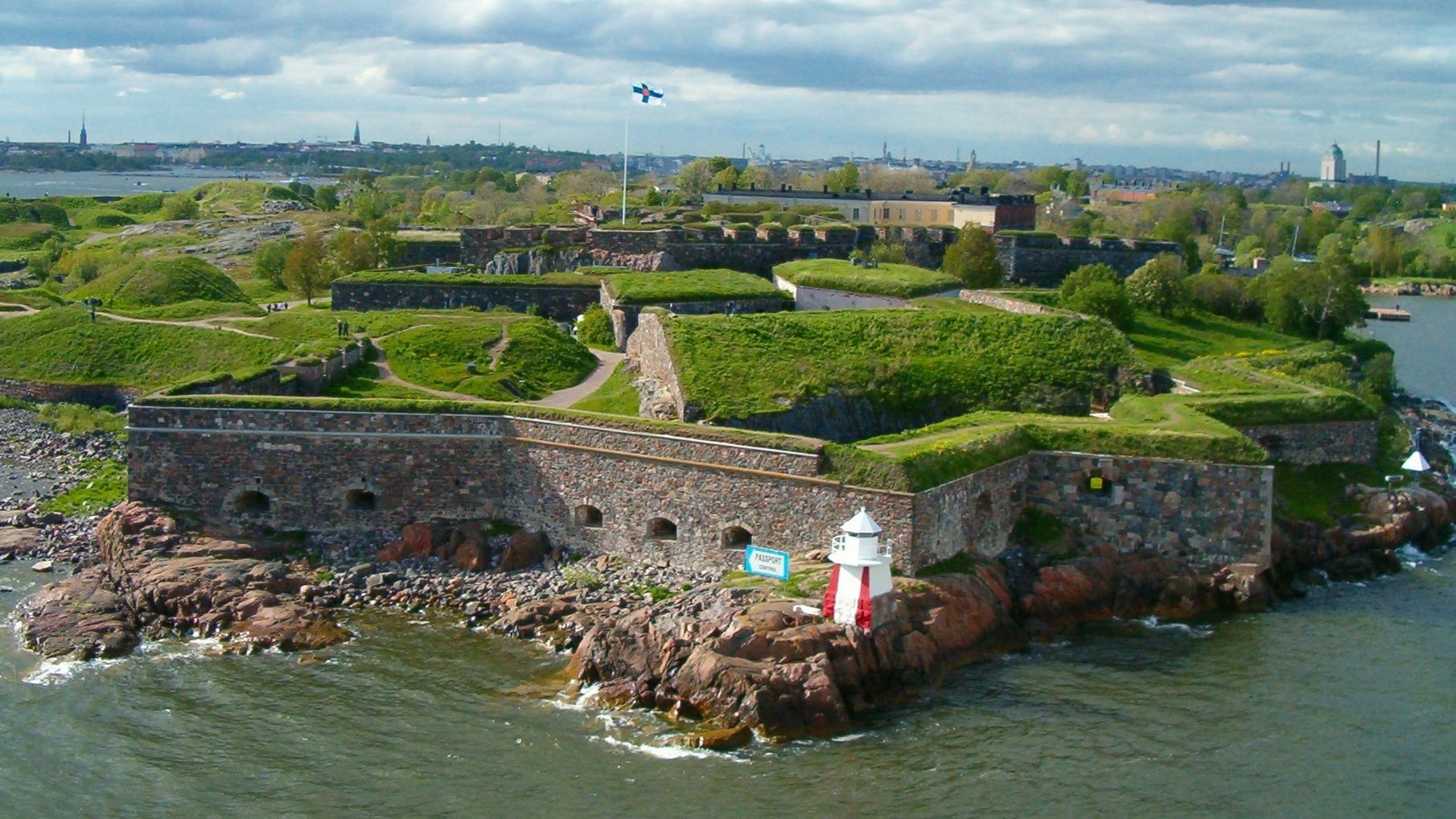
Above Helsinki and its archipelago, the host environment of the Helsinki Biennial, with Vallisaari Island twenty minutes by ferry from the Market Square as the biennial's founding venue.
Next edition announced
The 4th Helsinki Biennial, Unknowns, curated by Mami Kataoka and Arja Miller, is scheduled for June 6 to September 19, 2027 on Vallisaari, in Esplanade Park and at HAM Helsinki Art Museum.
When the Helsinki Biennial opened its first edition in June 2021 on Vallisaari, the institutional argument was that the biennial's curatorial work should begin with the maritime ecology that its venue was, not with the city the venue belonged to administratively.
By the Biennale Editorial Team
The Helsinki Biennial was founded by HAM Helsinki Art Museum and the City of Helsinki, opening for its inaugural edition on 12 June 2021 under HAM head curators Pirkko Siitari and Taru Tappola, with founding biennial director Maija Tanninen-Mattila. The founding institutional premise was unusual within the international biennial form. Rather than the conventional city-wide biennial that takes its host city's cultural infrastructure as the principal frame, the Helsinki Biennial took Vallisaari (a former Russian and Finnish military island in the Helsinki archipelago, twenty minutes by ferry from the central Market Square) as its principal venue. Vallisaari had been a closed military zone until 2016, when it opened to the public as a nature reserve managed by Metsähallitus (the Finnish state forestry and parks authority). The founding argument was that the maritime ecology of the Gulf of Finland archipelago, with its specific environmental conditions, layered military and ecological history, and seasonal accessibility imposed by the Baltic winter, would structure the biennial's curatorial work rather than be background to it.
The 1st Helsinki Biennial (12 June – 26 September 2021), The Same Sea, curated by Pirkko Siitari and Taru Tappola, presented 41 artists and collectives, with more than half of the works new site-specific commissions, and engaged the Baltic Sea as a shared but ecologically threatened maritime environment. Commissioned works were sited across Vallisaari's military ruins, forest landscape, and shoreline. The 1st edition established the institutional model: a central concentration of commissioned works on Vallisaari, accessible to visitors only by ferry during the summer-to-early-autumn season, alongside smaller satellite programming at HAM and other city venues. The model imposed logistical constraints on the curatorial work (Vallisaari's military-era infrastructure is fragile, ferry capacity is finite, and the works had to engage the island's continuing ecological-and-military layered history rather than be merely sited on it), and the founding edition demonstrated that those constraints could produce curatorial work rather than merely limit it.
The 2nd Helsinki Biennial (11 June – 17 September 2023), New Directions May Emerge, was curated by Joasia Krysa (Polish-British curator and academic, Professor of Exhibition Research at Liverpool John Moores University) with a team of "curatorial intelligences" (Museum of Impossible Forms, TBA21-Academy, Critical Environmental Data, ViCCA at Aalto Arts, and an A.I.) alongside Krysa as lead curator. The title drew on Anna Lowenhaupt Tsing's notion of "noticing", and three conceptual vectors structured the edition: contamination, regeneration, and agency. Around 30 artists and collectives participated. The Krysa curatorial method anticipated, by approximately twelve months, the broader international art-world conversation about generative AI and the curatorial form that the 2024 international art press would develop.
The 3rd Helsinki Biennial (8 June – 21 September 2025), Shelter: Below and Beyond, Becoming and Belonging, curated by Blanca de la Torre (Spanish curator) and Kati Kivinen (Chief Curator of Helsinki Art Museum / HAM Helsinki), brought together 37 artists and collectives across Vallisaari, the HAM Helsinki Art Museum, and Esplanadi Park. The edition engaged shelter as ecological, political, and architectural condition, with a particular shift of focus from humans to non-human nature (animals, water, plants, insects, minerals) and emphasised practice from the Nordic countries, Latin America, and Asia.
The 4th Helsinki Biennial, Unknowns, curated by Mami Kataoka and Arja Miller, runs from June 6 to September 19, 2027 across Vallisaari, Esplanade Park and HAM Helsinki Art Museum. The institutional question that has continued across three editions is whether the Vallisaari-anchored island-biennial model can sustain the logistical-and-ecological pressure that the visitor flow generates. Vallisaari is a fragile ecosystem; the visitor pressure that a international biennial produces is institutionally in continuing tension with the conservation mandate that Metsähallitus maintains over the island. The relationship between the Helsinki Biennial and the Metsähallitus institutional position has been negotiated edition by edition, and the 4th edition will test whether the negotiation can continue at the scale the 3rd edition established.
The Helsinki Biennial's continuing institutional argument, that the biennial's curatorial work begins with the maritime ecology of the venue rather than with the cultural infrastructure of the host city, has produced one of the more institutionally distinctive biennials of the post-2020 generation. The four-year continuing institutional history is short by the standards of the international biennial form, but the founding institutional argument has held and exceeded the founding philanthropic-and-cultural-policy expectations that established the institution.
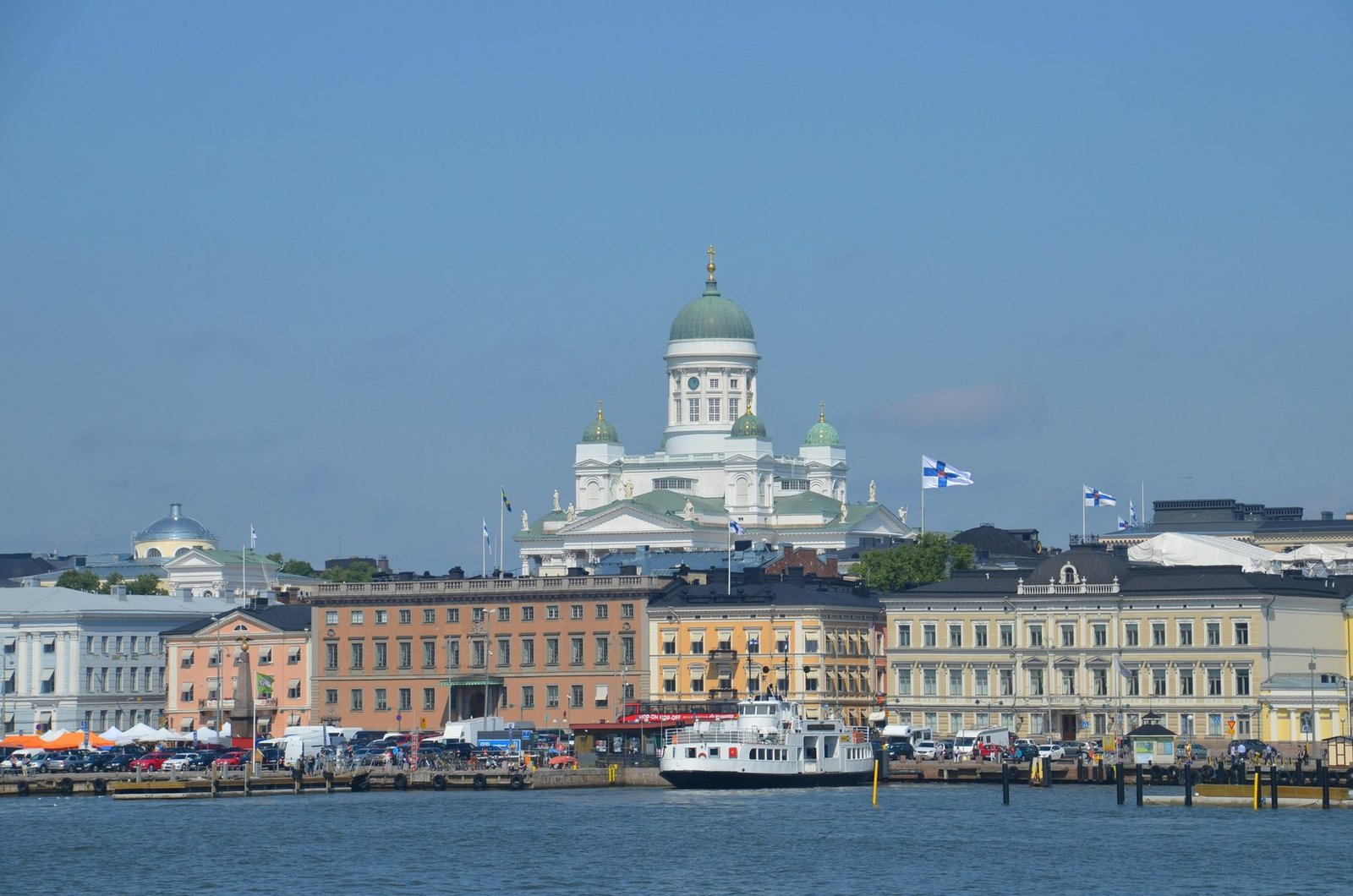
Helsinki Cathedral above the Market Square from the water. Photo: Andras Ratonyi.
The institutional architecture
The Helsinki Biennial is organised by HAM Helsinki Art Museum (the City of Helsinki's principal contemporary art institution) with continuing institutional support from the City of Helsinki, the Finnish Ministry of Education and Culture, Metsähallitus (as the Vallisaari custodial authority), and private and corporate philanthropic partners. The HAM-anchored institutional architecture is structurally distinctive within the international biennial form: most major biennials are organised by purpose-built biennial foundations rather than by continuing municipal contemporary art museums, and the HAM-as-organiser model constitutes one of the institutional experiments of the post-2020 international biennial conversation.
A Second Reading The ecological-logistical tension
When the biennial's venue is also its conservation question
The Helsinki Biennial's Vallisaari-anchored institutional model is institutionally distinctive within the international biennial form, and the structural question worth developing is what it means to centre a biennial on a venue that is itself a conservation-management challenge.
Vallisaari is not a conventional cultural venue. It is a fragile ecosystem managed by Metsähallitus as a nature reserve under post-2016 conservation protocols. The military-era infrastructure on the island (the mid-19th-century Russian fortifications, the early-20th-century Finnish military installations, the Cold-War-era surveillance infrastructure) constitutes both the historical-cultural substance the biennial works with and the physical constraint that limits what the commissioned works can do. The ecological substance (bird populations, plant communities, soil systems) constitutes both the subject matter many of the commissioned works engage and the conservation mandate that constrains the visitor flow and installation work.
The structural question this raises is whether the Helsinki Biennial constitutes an example of how the international biennial form can engage the ecological-and-conservation questions of the post-2020 period, or whether it constitutes an instance of the international biennial form appropriating a conservation-management challenge as curatorial content while compounding the pressure on the ecosystem the curatorial work engages. The honest reading is that both are true: the Helsinki Biennial has produced curatorial work on the maritime-ecological conditions of the Gulf of Finland that could not have been produced through conventional museum exhibition, and the Helsinki Biennial has produced visitor pressure on Vallisaari that exceeds what the pre-biennial conservation programme had projected.
The continuing institutional negotiation between the Helsinki Biennial and Metsähallitus is the structural fact on which the Vallisaari-anchored model depends. Whether the 4th and subsequent editions can preserve the founding institutional argument under continuing conservation pressure, or whether the visitor flow that the 3rd edition demonstrated forces an institutional restructuring of the model, is the continuing structural question.
In Helsinki
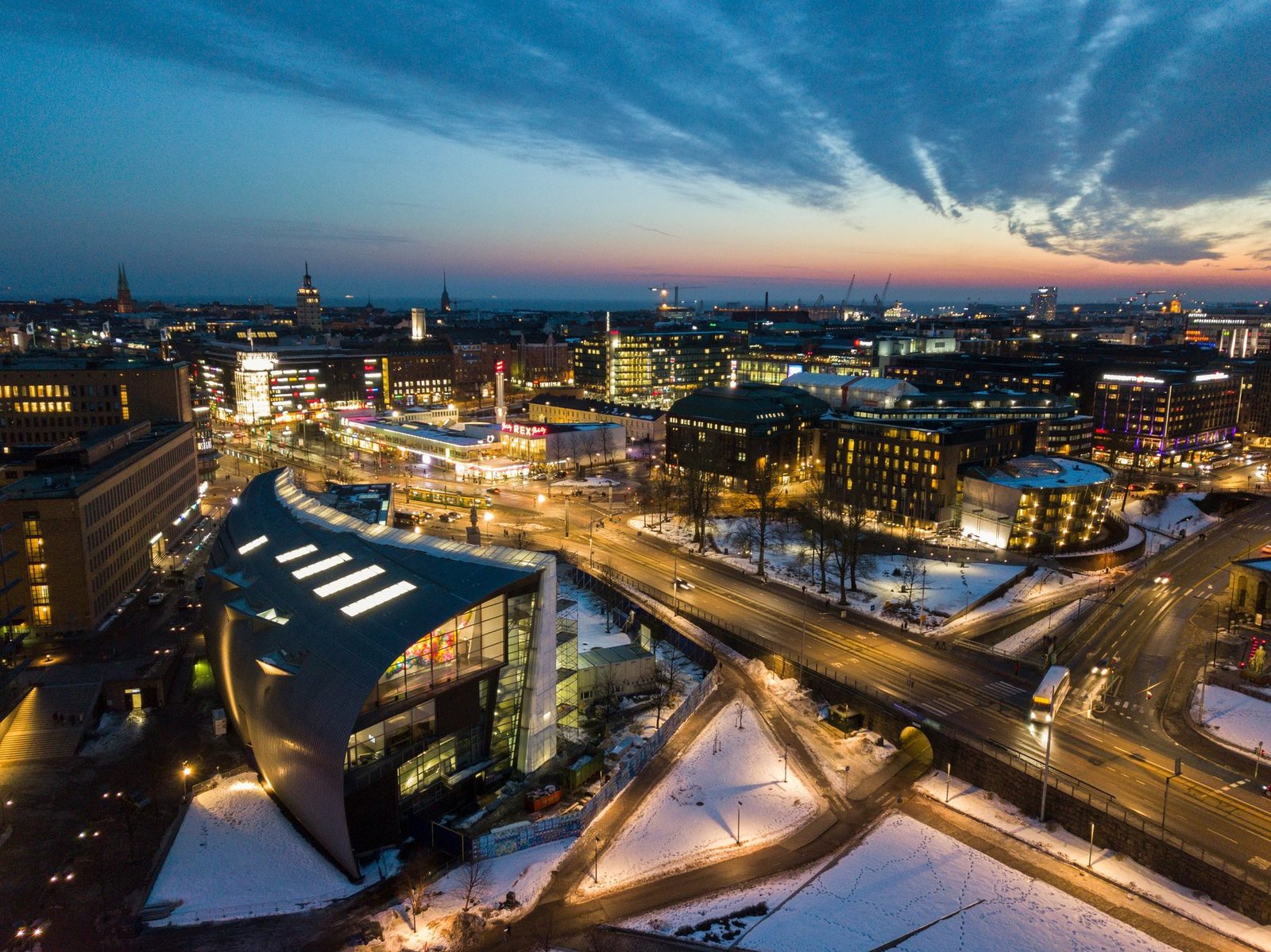
The city center at dusk in winter from above, Helsinki. Photo: Julius Jansson.
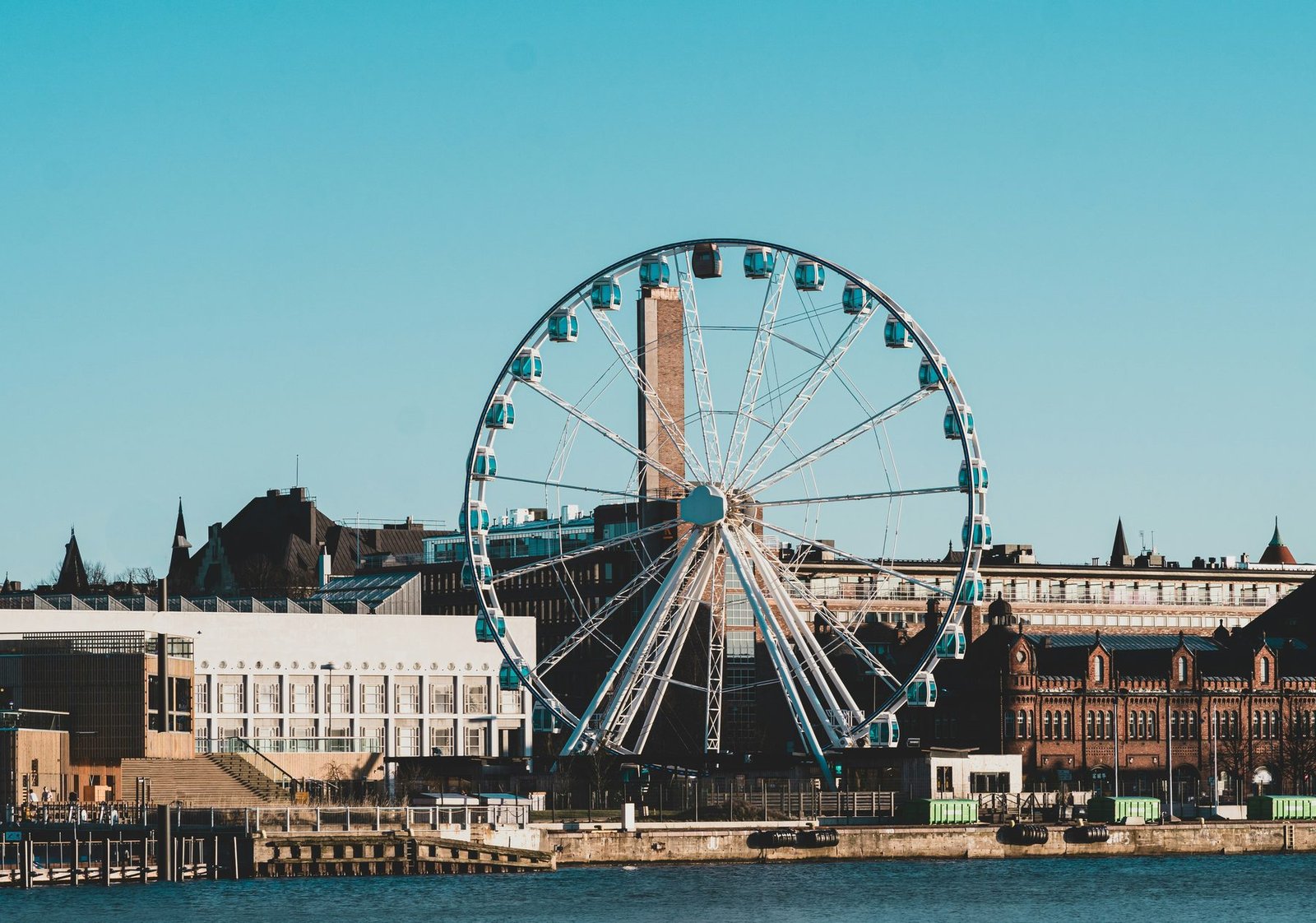
The SkyWheel on the harbor, Helsinki. Photo: Tom Brunberg.
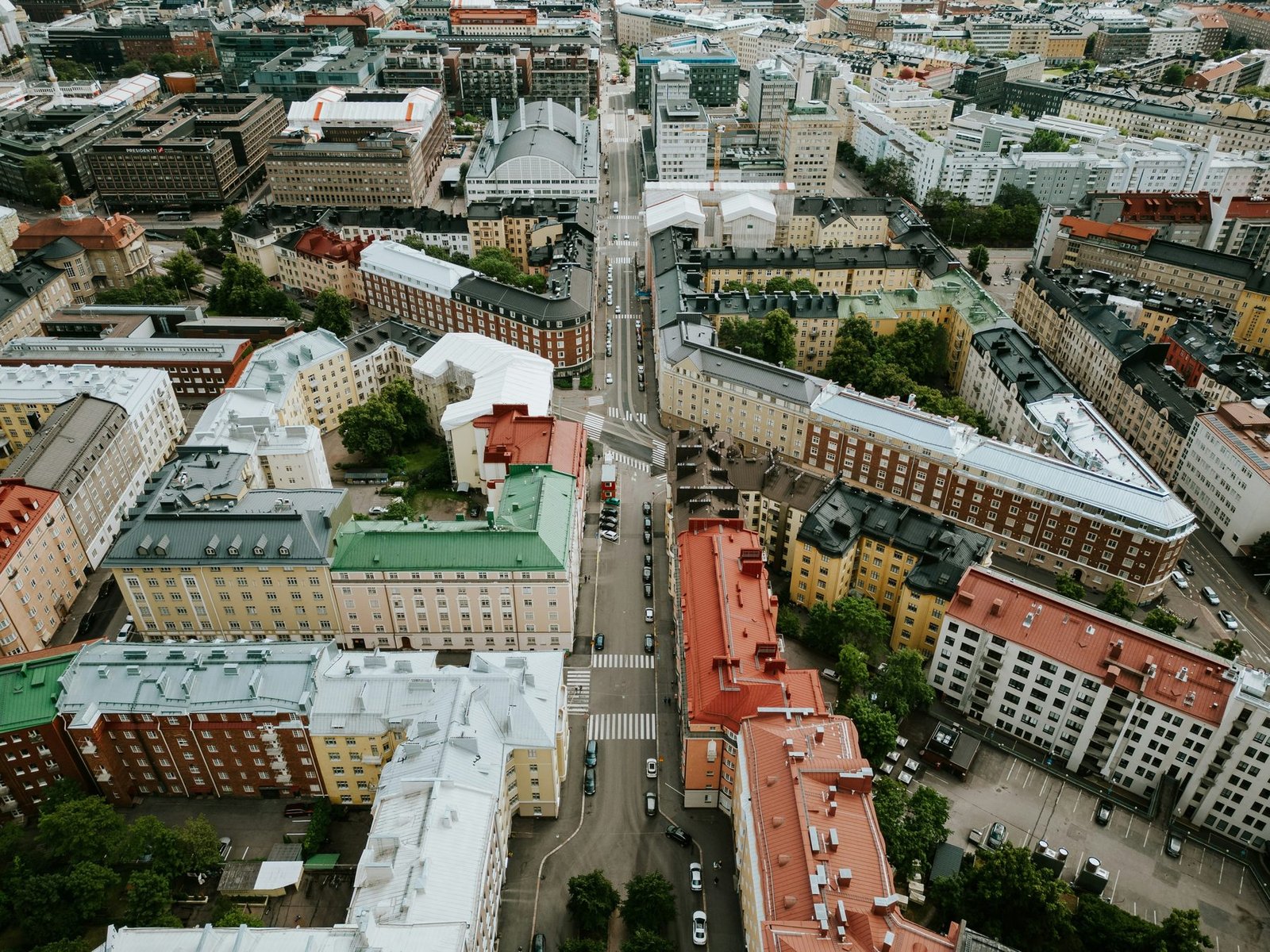
City blocks and rooftops from above, Helsinki.
The Institutional Spine
Defining moments
Five episodes across four years.
2016Precursor
Vallisaari opens to the public
In 2016 the Finnish state opened Vallisaari to the public as a nature reserve managed by Metsähallitus, the precondition for the Helsinki Biennial's subsequent founding institutional argument. The post-2016 conservation programme and the visitor infrastructure that Metsähallitus developed across 2016–2020 were the institutional foundation on which the founding biennial could operate.
Sources: Metsähallitus archive; Finnish cultural-policy records
20211st edition
Siitari & Tappola's The Same Sea
The 1st Helsinki Biennial opened June 2021 on Vallisaari under curators Pirkko Siitari and Taru Tappola, titled The Same Sea. The 1st edition established the institutional model and engaged the Baltic Sea as a shared but ecologically threatened maritime environment.
Sources: Helsinki Biennial archive; HAM Helsinki records
20232nd edition
Krysa's New Directions May Emerge
The 2nd Helsinki Biennial (June–September 2023), New Directions May Emerge, curated by Joasia Krysa, extended the biennial into questions of artificial intelligence, environmental data, and the ecology-technology relationship. The Krysa curatorial method anticipated the broader international art-world conversation about generative AI and the curatorial form by approximately twelve months.
Sources: Helsinki Biennial 2023 catalogue; HAM Helsinki archive
June–Sep 20253rd edition
de la Torre & Kivinen's Shelter
The 3rd Helsinki Biennial (8 June – 21 September 2025), Shelter: Below and Beyond, Becoming and Belonging, curated by Blanca de la Torre and Kati Kivinen, extended the biennial across Vallisaari, HAM, Esplanadi Park, and other city venues. The 3rd edition is the largest of the three editions to date.
Sources: Helsinki Biennial 2025 programme
20274th anticipated
The continuing institutional question
The 4th Helsinki Biennial is anticipated for 2027. The continuing institutional question is whether the Vallisaari-anchored model can sustain the visitor pressure that the 3rd edition demonstrated, or whether the conservation negotiation with Metsähallitus forces an institutional restructuring of the model.
Sources: HAM Helsinki announcements; Finnish arts-press coverage
People in the Biennial
The figures behind Helsinki
Founding Director
Maija Tanninen-Mattila
Finnish arts administrator. Director of HAM Helsinki Art Museum during the founding 1st Helsinki Biennial period (2021). The Tanninen-Mattila directorship produced the institutional architecture within which the founding Vallisaari-anchored biennial could operate.
Finnish curator. Head curator at HAM Helsinki Art Museum and co-curator with Taru Tappola of the 1st Helsinki Biennial (The Same Sea, 2021). Earlier institutional positions across Finnish contemporary art institutions including Kiasma (Museum of Contemporary Art, Helsinki). The founding Siitari-Tappola curatorial argument established the institutional model that has continued across subsequent editions.
Source: Helsinki Biennial archive
Curator · 2nd Helsinki Biennial (2023)
Joasia Krysa
Polish-British curator and academic. Curator of the 2nd Helsinki Biennial (New Directions May Emerge, 2023). Professor of Exhibition Research at Liverpool John Moores University. Her practice engages questions of art, technology, and exhibition-making across international institutional contexts.
Spanish curator and writer (de la Torre) and Finnish curator (Kivinen, Chief Curator of Helsinki Art Museum / HAM Helsinki). Co-curators of the 3rd Helsinki Biennial (Shelter, 2025). De la Torre's continuing curatorial practice engages contemporary ecological and climate questions; Kivinen's continuing institutional position at HAM Helsinki anchors the curatorial team within the HAM-as-organiser institutional architecture.
Finnish state forestry and parks authority, custodial body for Vallisaari since the island opened to the public in 2016. The continuing institutional partnership between HAM Helsinki Art Museum and Metsähallitus is the structural condition on which the Vallisaari-anchored Biennial depends.
The City of Helsinki's principal contemporary art institution. Organiser of the Helsinki Biennial across all three editions to date (2021, 2023, 2025). The HAM-as-organiser model, a continuing municipal contemporary art museum operating the biennial, is structurally distinctive within the international biennial form, where most major biennials are organised by purpose-built foundations.
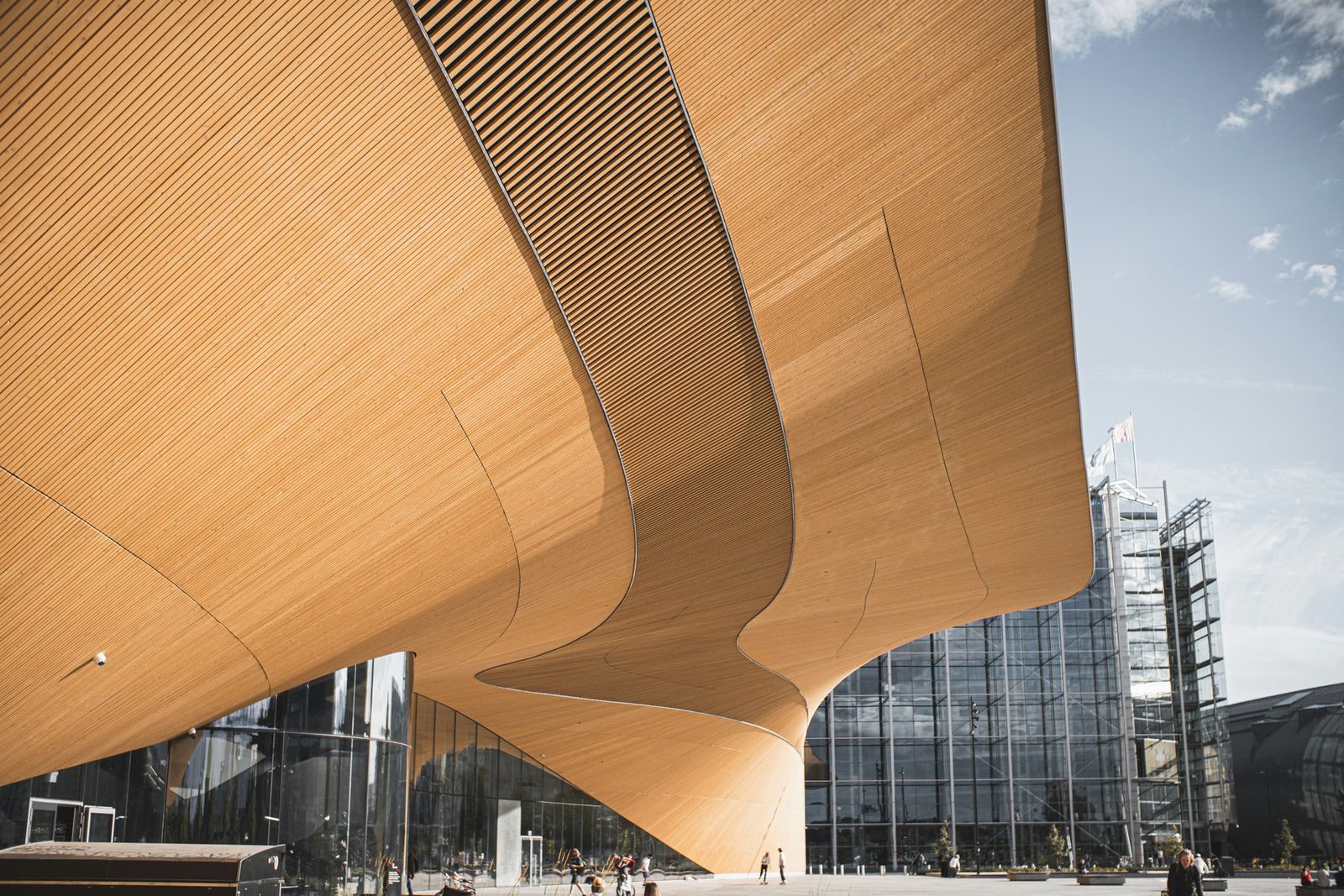
The timber canopy of Oodi Central Library, Helsinki. Photo: Vadim Morozov.
Principal venues
Vallisaari Island
Founding venue · former military island · twenty minutes by ferry from Market Square
Vallisaari Helsinki archipelago · Finland
HAM Helsinki Art Museum
Organising institution and mainland exhibition anchor
Eteläinen Rautatiekatu 8 00100 Helsinki · Finland
Esplanadi Park
Outdoor city venue · added 2025
Esplanadi 00130 Helsinki · Finland
Market Square (Kauppatori)
Ferry departure point for Vallisaari
Eteläranta 00170 Helsinki · Finland
My Biennale
Carry the Biennale with you
Save this biennale to your circuit, follow its artists as their pages grow, and sync every opening and closing to your own calendar on the companion app.
Helsinki Biennial 2023 — New Directions May Emerge
Joasia Krysa, ed. · 2023
Catalogue · 2021
Helsinki Biennial 2021 — The Same Sea
Pirkko Siitari & Taru Tappola, eds. · 2021
Reference
Biennials and Beyond 1962–2002
Bruce Altshuler · Phaidon
Theory
The Biennale Reader
Filipovic · van Hal · Øvstebø, eds.
Images, attribution & rights
Photographs are stored locally and licensed for editorial use. If you are the photographer of an image used here and wish to discuss its use, please write to contact@biennalemail.com.
Editorial content is original and credited to the Biennale Editorial Team.