Thailand Biennale

Thailand's state biennial of contemporary art — organised by the Office of Contemporary Art and Culture (OCAC) under the Ministry of Culture, founded 2018, structured as a rotating-province exhibition that sites each edition in a different Thai region, currently in its fourth edition on the island of Phuket under artistic directors Arin Rungjang and David Teh.

Established2018 — 20264 editions
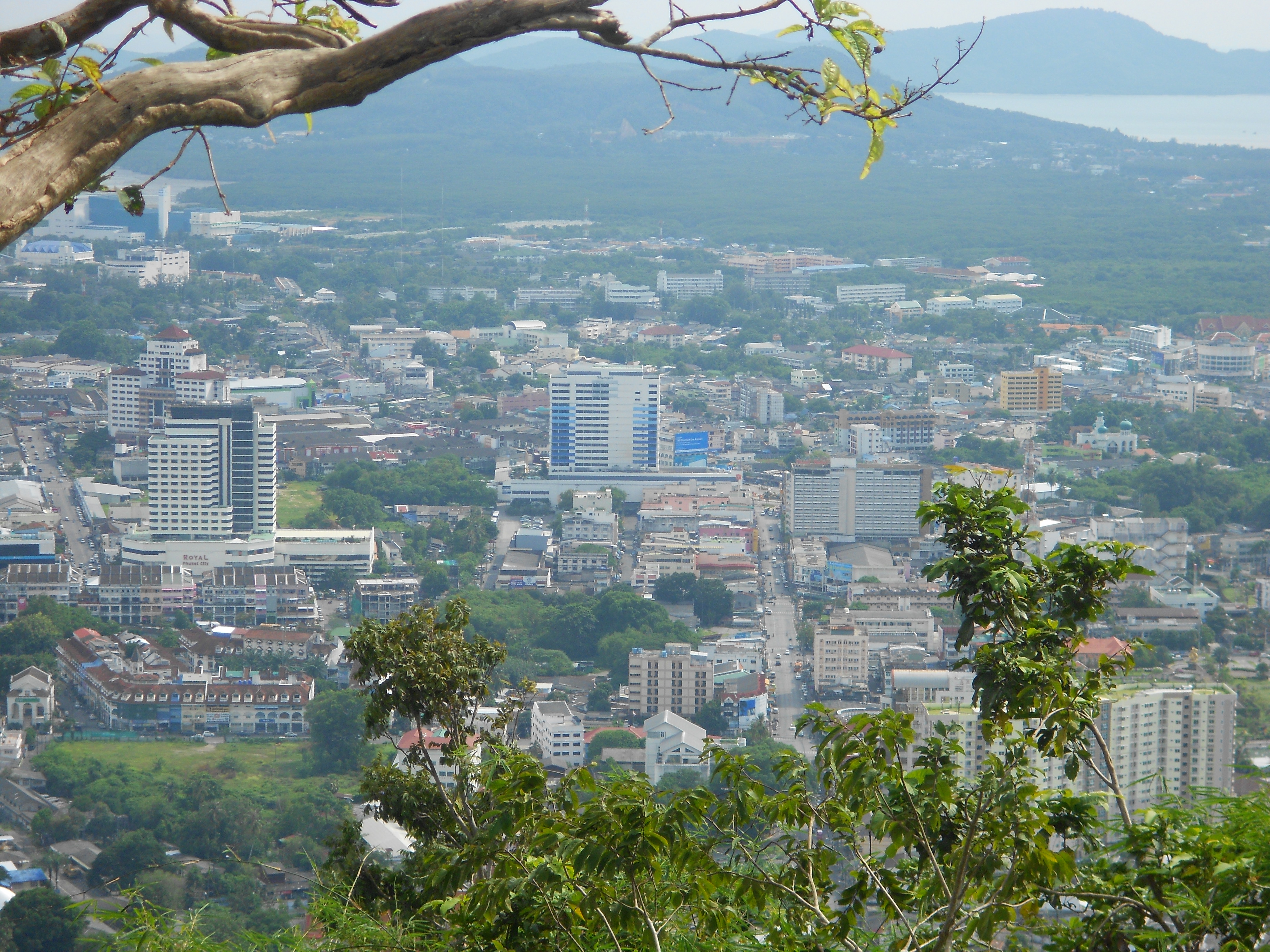
Phuket, southern Thailand — host province of the 4th Thailand Biennale, 2025–26.
Above Phuket — the southern Thai island province that hosts the 4th Thailand Biennale, Eternal [Kalpa], from November 2025 to April 2026, under artistic directors Arin Rungjang and David Teh.

The Lead Essay The 4th Edition

Rungjang and Teh's Eternal [Kalpa]

The 4th Thailand Biennale, sited across the island of Phuket, opened in November 2025 under artistic directors Arin Rungjang and David Teh, with curators Hera Chan and Marisa Phandharakrajadej, and runs through April 2026.

The Thailand Biennale is Thailand's state biennial of contemporary art, organised by the Office of Contemporary Art and Culture (OCAC) under the Ministry of Culture and structured, since its founding in 2018, as a rotating-province exhibition. Each edition is sited in a different Thai province, programmed in partnership with the provincial government, and presented across outdoor and public-space locations as well as adapted indoor sites — a deliberate institutional argument that the biennial's curatorial conversation should also be a national-development conversation about cultural tourism, regional infrastructure and the relationship between contemporary art-making and the specific landscapes of Thailand. Four editions in, the rotating-province structure has produced exhibitions at four very different scales: Krabi's karst coastline (2018), Korat's plateau (2021), Chiang Rai's Golden Triangle (2023) and now Phuket's island geography (2025).

The 4th edition, Eternal [Kalpa], opened in November 2025 across Phuket under artistic directors Arin Rungjang and David Teh — the artist (b. 1975, Bangkok), a Documenta 14 and 55th Venice Biennale participant who co-founded the As Yet Unnamed collective; and the critic and Associate Professor at the National University of Singapore who has held curatorial roles at biennials in Europe, Australia and Asia — with curators Hera Chan (Adjunct Curator, Asia-Pacific, at Tate Modern) and Marisa Phandharakrajadej (lecturer at the School of Architecture, Art and Design, King Mongkut's Institute of Technology Ladkrabang). The exhibition opened on 29 November 2025 and runs through 30 April 2026, gathering some sixty-five artists and collectives from twenty-five countries across nineteen venues and SALA pavilions in three districts of the island — Mueang, Kathu and Thalang. The Sanskrit-derived title takes kalpa — the long Buddhist cosmological epoch — as its working frame: the curatorial premise is that the sustainable relationship between humans and nature is best understood at geological and cosmological rather than political scales, and the exhibition takes Phuket's island ecology and coastal infrastructure as its working sites.

The rotating-province argument

The Thailand Biennale's distinguishing institutional feature is its rotation. Each edition is hosted by a different Thai province, and the curatorial commission is correspondingly site-specific: the inaugural Krabi 2018 edition, Edge of the Wonderland, was curated by Birmingham-based Professor Jiang Jiehong with fifty participating artists, deliberately staged outdoors to engage Krabi's karst landscape and local communities; the second, Korat 2021 — Butterflies Frolicking on the Mud: Engendering Sensible Capital — was directed by the Japanese curator Yuko Hasegawa from 18 December 2021 to 31 March 2022, with fifty-four artists from twenty-six countries and a curatorial frame drawn from a 2020-2021 butterfly outbreak that Hasegawa read as a register of pandemic-era ecological recovery; the third, Chiang Rai 2023 — The Open World — was the first edition with a local artistic-direction team, Rirkrit Tiravanija and Gridthiya Gaweewong, with curators Angkrit Ajchariyasophon and Manuporn Luengaram and sixty artists from twenty-one countries, sited across seventeen venues spanning Chiang Rai city and Chiang Saen district from 9 December 2023 to 30 April 2024. The Phuket 4th, again under a Thai-led artistic direction, continues that pattern.

The institutional question the biennial has continued to address — under each rotating-province administration — is the relationship between OCAC's national curatorial argument and the provincial cultural-tourism programme that part-funds the edition. The structure is, by intent, a hybrid: a state contemporary biennial that is also a cultural-tourism development instrument; a curatorial conversation that is also a national-infrastructure conversation. Each edition has produced a different curatorial reading of that hybrid.

Critical Perspective Cultural tourism and contemporary art

The rotating-province question — A national biennial as cultural-tourism programme

The Thailand Biennale is part contemporary art biennial and part provincial cultural-tourism development instrument. The Office of Contemporary Art and Culture's structural decision — to rotate the biennial across Thai provinces — has produced a hybrid format whose curatorial register has continued to address the relationship between national-curatorial argument and provincial development funding.

The Thailand Biennale is, by institutional design, a hybrid. It is organised by the Office of Contemporary Art and Culture (OCAC) under the Ministry of Culture, and co-organised with the relevant provincial government for each edition. Each province contributes funding and infrastructure; the OCAC contributes the national curatorial argument; the artistic director (or directors) contribute the curatorial reading. The continuing structural condition is that the biennial is, at the same time, a contemporary art programme and a provincial cultural-tourism development instrument — a state cultural-policy commitment that operates on two registers at once.

The institutional question has been the same across all four editions: how does a curatorial argument made by an internationally appointed artistic director relate to a provincial tourism-development programme that part-funds the edition? The answers have varied. Jiang Jiehong's Krabi 2018 framed the karst coastline as the curatorial site and engaged Krabi communities directly. Yuko Hasegawa's Korat 2021 used the butterflies-frolicking-on-the-mud title as a reading of pandemic-era ecological recovery and held a curatorial register that was more international than provincial. Tiravanija and Gaweewong's Chiang Rai 2023 — the first Thai-led artistic direction — engaged Lan Na cultural inheritance and the Mekong corridor at a register the international press read as one of the strongest Asian biennial editions of the recent cycle. Rungjang and Teh's Phuket 2025 takes the island's tourism economy and coastal ecology as its working sites in registers the international press has read as sharper still.

The structural critique is straightforward. A biennial whose funding model depends on provincial cultural-tourism development cannot be entirely independent of cultural-tourism's editorial pressures: the choice of host province is itself a tourism-development decision, and the budget conditions that follow are tourism-budget conditions. The continuing curatorial argument — the one the OCAC has continued to make and that the international press has continued to engage — is that the relationship is itself a productive constraint: the cultural-tourism frame is the institutional condition the biennial has continued to work within and through, rather than to dissolve.

The Phuket 4th — opening in November 2025 — extends the institutional record. What the next decade of Thailand Biennale programming will continue to address is whether the rotating-province model can be sustained as the curatorial weight of the institution increases, and whether the OCAC's national curatorial position can hold across continuing changes of Thai government cultural policy. The institutional record so far suggests the structural argument can hold; whether it will is the editorial question each successive edition continues to answer.

The Institutional Spine

Defining moments

Five episodes from a rotating-province biennial.

20181st edition · Krabi

Jiang's Edge of the Wonderland

The first Thailand Biennale opened in Krabi Province on the west coast of southern Thailand in November 2018 and ran to February 2019, under Professor Jiang Jiehong (Director of the Centre for Chinese Visual Arts, Birmingham City University). Titled Edge of the Wonderland, the inaugural edition presented more than fifty artists — including forty-eight international artists from twenty-five countries, two emerging artists selected via open call, and four Thai National Artists — staged outdoors to engage Krabi's karst coastline and local communities. The edition established the rotating-province model that has continued.

Sources: Office of Contemporary Art and Culture; Birmingham City University; Thailand Biennale Krabi 2018 catalogue

20212nd edition · Korat

Hasegawa's Butterflies Frolicking on the Mud

The 2nd Thailand Biennale opened in Nakhon Ratchasima (Korat) on 18 December 2021 and ran to 31 March 2022 under artistic director Yuko Hasegawa, the Japanese curator, with co-curators Tawatchai Somkong, Vipash Purichanont and Seiha Kurosawa. Titled Butterflies Frolicking on the Mud: Engendering Sensible Capital, the edition gathered fifty-four artists from twenty-six countries. The title was drawn from a 2020–21 outbreak of butterflies in Thailand which Hasegawa read as a register of pandemic-era ecological recovery; the exhibition extended across Korat's plateau geography under public-health-modified opening conditions.

Sources: Office of Contemporary Art and Culture; Biennial Foundation; e-flux Announcements

20233rd edition · Chiang Rai

Tiravanija and Gaweewong's The Open World

The 3rd Thailand Biennale opened in Chiang Rai on 9 December 2023 and ran to 30 April 2024, under the first local artistic-direction team — Rirkrit Tiravanija and Gridthiya Gaweewong — with curators Angkrit Ajchariyasophon and Manuporn Luengaram. Titled The Open World after a 13th-century Buddha statue at Pa Sak temple in Chiang Saen, the edition gathered sixty artists from twenty-one countries (thirty-eight international, twenty-two Thai) across seventeen venues spanning Chiang Rai city and Chiang Saen district — including the Golden Triangle area, Wat Pa Sak and the Chiang Saen National Museum. It was the first Thailand Biennale entirely directed by Thai curators, and the first to engage the Mekong-cultural and Lan Na historical context as a curatorial frame.

Sources: Office of Contemporary Art and Culture; Biennial Foundation; ArtReview

20254th edition · Phuket · current

Rungjang and Teh's Eternal [Kalpa]

The 4th Thailand Biennale opened in Phuket on 29 November 2025 under artistic directors Arin Rungjang and David Teh, with curators Hera Chan and Marisa Phandharakrajadej, and runs through 30 April 2026. The edition gathers sixty-five artists and collectives from twenty-five countries across nineteen venues and SALA pavilions in three districts of the island — Mueang, Kathu and Thalang. Titled Eternal [Kalpa], the edition takes the Hindu–Buddhist cosmological epoch as its working frame and the sustainable relationship between humans and nature as its curatorial premise. The Phuket province is the first island-sited edition of the biennial, and the curatorial argument engages the island's tourism economy and coastal ecology in registers the international art press has read as sharper than the institution's recent average.

Sources: Thailand Biennale; ArtReview; Biennial Foundation

ContinuingInstitutional structure

The OCAC rotating-province model

The Office of Contemporary Art and Culture (OCAC), under Thailand's Ministry of Culture, has continued to organise the biennial across each rotating province since 2018. The OCAC has set the national curatorial framework — including the selection of the artistic director — and each provincial government has contributed funding and infrastructure. The rotating model is the institution's principal structural feature, and the continuing OCAC programme is the institutional record by which the relationship between national curatorial argument and provincial cultural-tourism programme has been worked through across four editions.

Sources: Office of Contemporary Art and Culture; Biennial Foundation

People in the Biennial

The figures behind Thailand

Artistic director · 4th edition (2025–26)

Arin Rungjang

Thai contemporary artist (b. 1975, Bangkok), based in Bangkok. Co-founder of the As Yet Unnamed collective. His video and installation work probes the lesser-known aspects of Thai and global history, overlapping major and minor narratives across multiple times, places and languages. Represented Thailand at the 55th Venice Biennale (2013) and was a participating artist at Documenta 14 (2017). Artistic director of the 4th Thailand Biennale, Phuket, Eternal [Kalpa], with David Teh.

Source: documenta 14

Artistic director · 4th edition (2025–26)

David Teh

Critic, curator and Associate Professor at the National University of Singapore. Author of Thai Art: Currencies of the Contemporary (MIT Press, 2017) and curator of Returns, the 12th Gwangju Biennale (2018). His continuing research focuses on contemporary Southeast Asian art. Co-artistic director of the 4th Thailand Biennale, Phuket, Eternal [Kalpa], with Arin Rungjang.

Source: ArtReview

Artistic director · 3rd edition (2023–24)

Rirkrit Tiravanija

Thai contemporary artist (b. 1961, Buenos Aires), based in New York, Berlin and Chiang Mai. Among the principal exponents of relational aesthetics. Co-artistic director, with Gridthiya Gaweewong, of the 3rd Thailand Biennale, Chiang Rai, The Open World (2023–24) — the first Thailand Biennale led entirely by a local artistic-direction team.

Source: Biennial Foundation; e-flux Announcements

Artistic director · 2nd edition (2021–22)

Yuko Hasegawa

Japanese curator. Founding Artistic Director of the Museum of Contemporary Art Tokyo (MOT). Artistic director of the 2nd Thailand Biennale, Korat (2021–22), Butterflies Frolicking on the Mud: Engendering Sensible Capital.

Source: Office of Contemporary Art and Culture; e-flux Announcements

Curator · 1st edition (2018–19)

Jiang Jiehong

Chinese curator and academic. Professor and Director of the Centre for Chinese Visual Arts at Birmingham City University; Head of Research (Art); Principal Editor of the Journal of Contemporary Chinese Art. Curator of the inaugural Thailand Biennale, Edge of the Wonderland (Krabi, 2018–19), as well as the 4th Guangzhou Triennial and Asia Triennial Manchester. Author of Burden or Legacy: from the Chinese Cultural Revolution to Contemporary Art (Hong Kong University Press, 2007).

Source: Birmingham City University

Organising institution

Office of Contemporary Art and Culture (OCAC)

The Office of Contemporary Art and Culture, under the Ministry of Culture of the Kingdom of Thailand, is the founding and continuing organiser of the Thailand Biennale. Initiated the biennial in Krabi in 2018 as a national programme of contemporary art-making sited in rotating Thai provinces, and continues to co-organise each edition with the relevant provincial government.

Source: Thailand Biennale

Founded
2018
Frequency
Biennial
Format
Rotating province · outdoor + indoor
Host provinces
Krabi · Korat · Chiang Rai · Phuket
Organiser
OCAC · Ministry of Culture

Geography

The Biennale across Thai provinces

Host provinces by edition

Phuket · 4th edition (2025–26)

Island province, southern Andaman coast

Phuket Province, Southern Thailand

Chiang Rai · 3rd edition (2023–24)

Northern province; Golden Triangle region

Chiang Rai Province, Northern Thailand

Nakhon Ratchasima / Korat · 2nd edition (2021–22)

Northeastern plateau

Nakhon Ratchasima Province, Isan

Krabi · 1st edition (2018–19)

Southern karst coastline

Krabi Province, Southern Thailand

From the Directory

Related editions across Asia and the Pacific

Browse the region →

Essential Reading

For further work

Thailand Biennale, Krabi 2018 — Edge of the Wonderland

Jiang Jiehong, ed.  ·  OCAC  ·  2018

Catalogue of the inaugural Thailand Biennale.

Thailand Biennale, Korat 2021 — Butterflies Frolicking on the Mud

Yuko Hasegawa, ed.  ·  OCAC  ·  2021

Catalogue of the 2nd Thailand Biennale.

Thailand Biennale, Chiang Rai 2023 — The Open World

Rirkrit Tiravanija & Gridthiya Gaweewong, eds.  ·  OCAC  ·  2023

Catalogue of the 3rd Thailand Biennale, the first under a local artistic-direction team.

Thailand Biennale, Phuket 2025 — Eternal [Kalpa]

Arin Rungjang & David Teh, eds.  ·  OCAC  ·  2025

Catalogue of the 4th Thailand Biennale, currently on view.

Institutional record

Editorial content on biennale.com is published by the Biennale Editorial Team. Image credits as captioned. External links are provided for reference and verification.