The Canadian contemporary art biennial founded 2019 with the Lake Ontario watershed as its founding curatorial frame and Indigenous co-curatorial leadership as its founding institutional argument: a biennial that took the question of whose land it stages on as its principal premise.
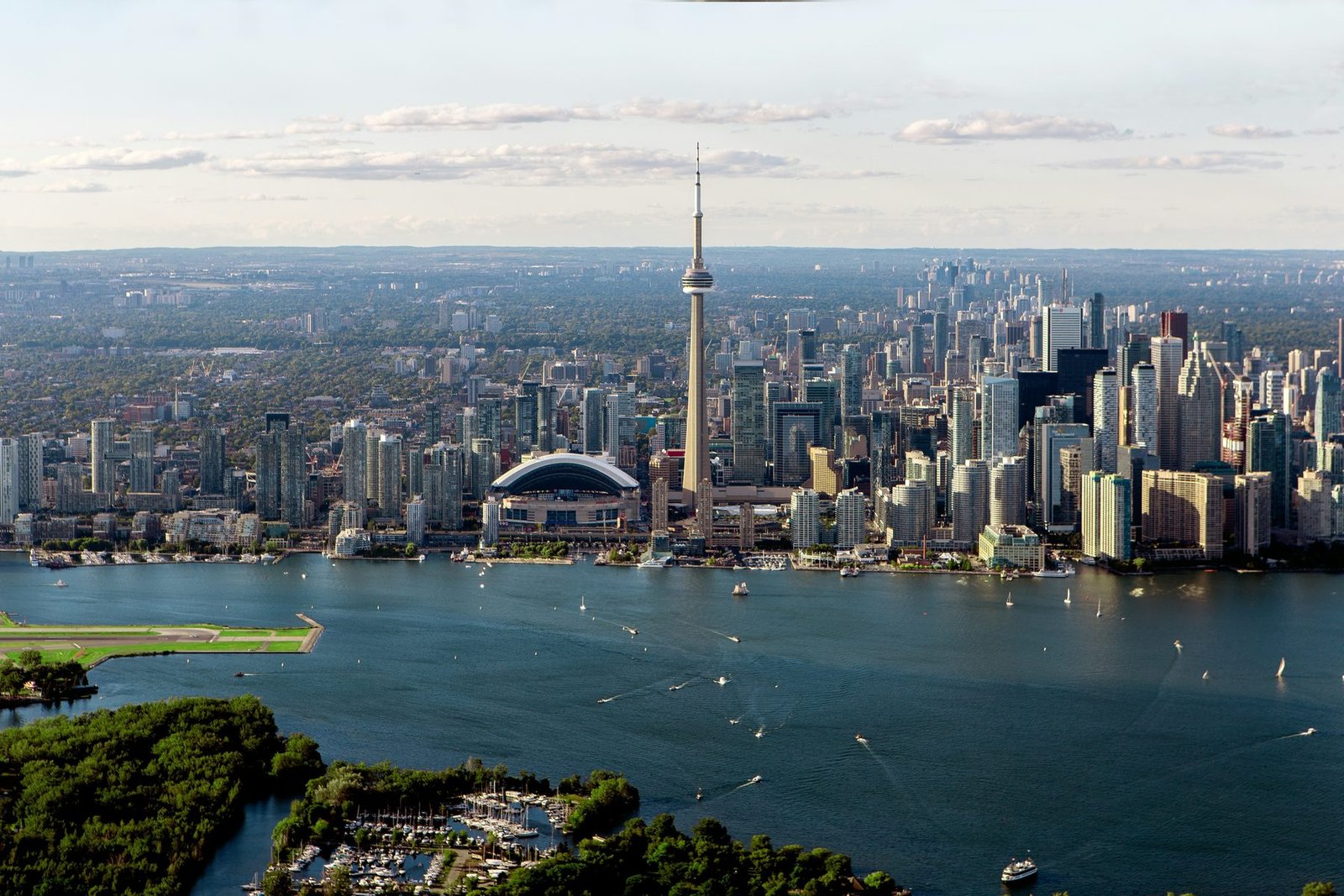
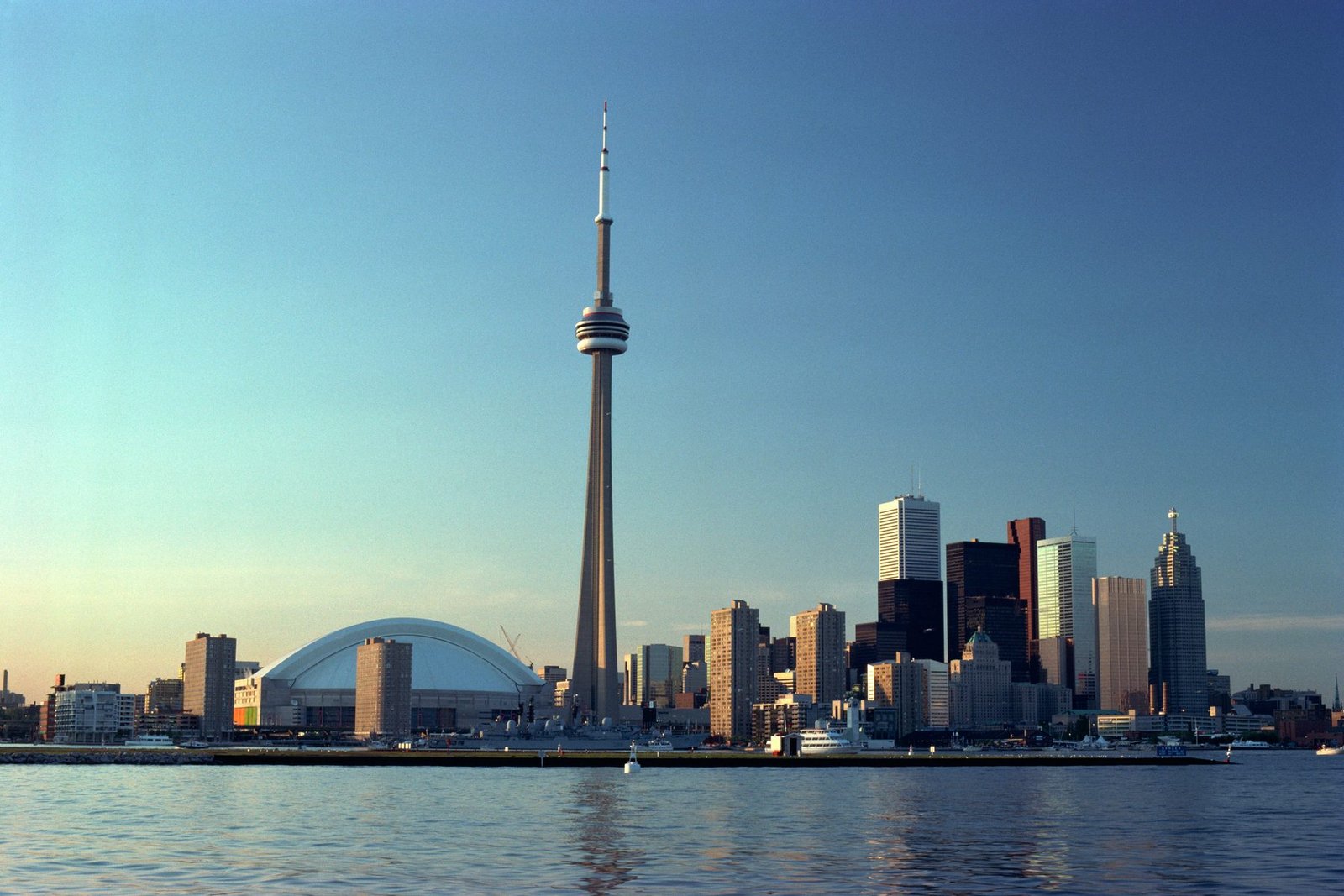
Above Toronto's harbourfront on Lake Ontario: the lake whose watershed and shoreline the Toronto Biennial of Art has taken as its founding curatorial frame since 2019, with venues consistently located along the lakeshore rather than in Toronto's downtown museum district. · Photograph: Wikimedia Commons
On view now
The 4th Toronto Biennial of Art, Things Fall Apart, curated by Allison Glenn, runs September 26 to December 20, 2026.
Toronto Biennial of Art was founded with a structural premise unusual within the international biennial conversation: that the question of whose land the biennial stages on should be the principal curatorial frame, not a preface to it.
By the Biennale Editorial Team
The Toronto Biennial of Art opened its first edition in September 2019, the second-newest of the major North American biennials, founded fourteen years after Performa, eleven after Prospect New Orleans, and a decade after the New Museum Triennial. Its founding Executive Director, Patrizia Libralato (who co-founded the biennial with Susannah Rosenstock and Melony Ward) had spent the better part of two decades in the Canadian and Italian gallery system (Wynick/Tuck Gallery, then Associate Director at Sable-Castelli Gallery until 2000, then five years in Italy on public and private gallery exhibitions in Venice, Verona and Vicenza), and the better part of a decade since her return to Toronto building the institutional and philanthropic infrastructure for a biennial the city did not have, in a city that had, across the late 1990s and 2000s, expanded its contemporary art infrastructure (the Art Gallery of Ontario's Frank Gehry renovation, the rebuilt Royal Ontario Museum, the Museum of Contemporary Art Toronto's relocation to the Sterling Road tower) without producing a biennial of its own. The institutional case for the Toronto Biennial (that Canada's largest English-speaking city needed a biennial commensurate with its international art-world standing) was not in itself a novel argument.
What was novel about the Toronto Biennial was the curatorial frame the founding team, led by Indigenous curator Candice Hopkins (Carcross/Tagish First Nation) with Tairone Bastien, chose as the biennial's founding premise. The 1st Toronto Biennial of Art (21 September – 1 December 2019), titled The Shoreline Dilemma, took the shoreline of Lake Ontario as its principal curatorial frame. The biennial was sited not in Toronto's downtown museum district but along a stretch of the lakeshore: from the Small Arms Inspection Building in Mississauga at one end, through the Power Plant and the harbourfront warehouses, to 259 Lake Shore Boulevard East. The founding premise was that the lakeshore (its ecology, its industrial-and-post-industrial history, the layered histories of Indigenous, settler, and migrant communities along it) was not the biennial's setting but the biennial's subject. The Lake Ontario watershed extends across Treaty 13 territory (the 1805 Toronto Purchase from the Mississaugas of the Credit), the Dish With One Spoon Wampum agreement between the Haudenosaunee and the Anishinaabe, the historical Carrying Place trail, and into the territories of multiple First Nations whose treaty and aboriginal-title claims to the watershed are continuing. The biennial took these histories not as background but as foreground.
The institutional argument the curatorial frame made (that the biennial form ought to begin with the question of whose land it stages on, not append the question to its programme through a perfunctory land acknowledgement) was new within the international biennial conversation in 2019. It is not new in the scholarship on settler-colonial contemporary art, particularly the body of work by Indigenous artists and curators in Canada, Aotearoa New Zealand, and Australia. What was new was its institutional weight at biennial scale: the curatorial frame was not a thematic gesture but the structural premise, and the choice of Indigenous co-curatorial leadership in Candice Hopkins was not a representational gesture but a curatorial decision about whose epistemological framework would organise the biennial's reading of the work.
The 2nd Toronto Biennial of Art (26 March – 5 June 2022), titled What Water Knows, The Land Remembers, was curated by a three-person team (Tairone Bastien, Candice Hopkins and Katie Lawson, with contributions from former TBA curators Clare Butcher and Myung-Sun Kim) and extended the watershed premise, engaging the Great Lakes ecosystem as a single hydrological unit and the Indigenous knowledge systems organised around it. The 2022 edition opened during the continuing pandemic and shaped its institutional argument by treating the relationship between human and non-human ecologies as both subject matter and curatorial method. The 3rd Toronto Biennial of Art (21 September – 1 December 2024), titled Precarious Joys, was curated by Dominique Fontaine and Miguel A. López, with Hopkins's continuing curatorial advisory role, a shift toward Latin American and African-diasporic conversations while preserving the lakeshore-and-watershed institutional frame.
The institutional outcome of three editions is that Toronto Biennial has produced a distinctive curatorial-institutional argument that has found international resonance disproportionate to the biennial's youth. The biennial's continuing premise (that the curatorial-historical work of the biennial form ought to include the work of making legible the land it operates on) has been studied within the post-2020 international biennial literature, and shaped the curatorial registers of subsequent biennials including the Sydney Biennale (whose 2026 edition opens under Hoor Al Qasimi with a First Nations Curatorial Fellow in Bruce Johnson McLean) and the documenta 16 curatorial process. Whether the institutional argument the Toronto Biennial has made will hold across continuing editions, and whether the institutional model is sustainable beyond the founding philanthropic generation, is the principal continuing question.
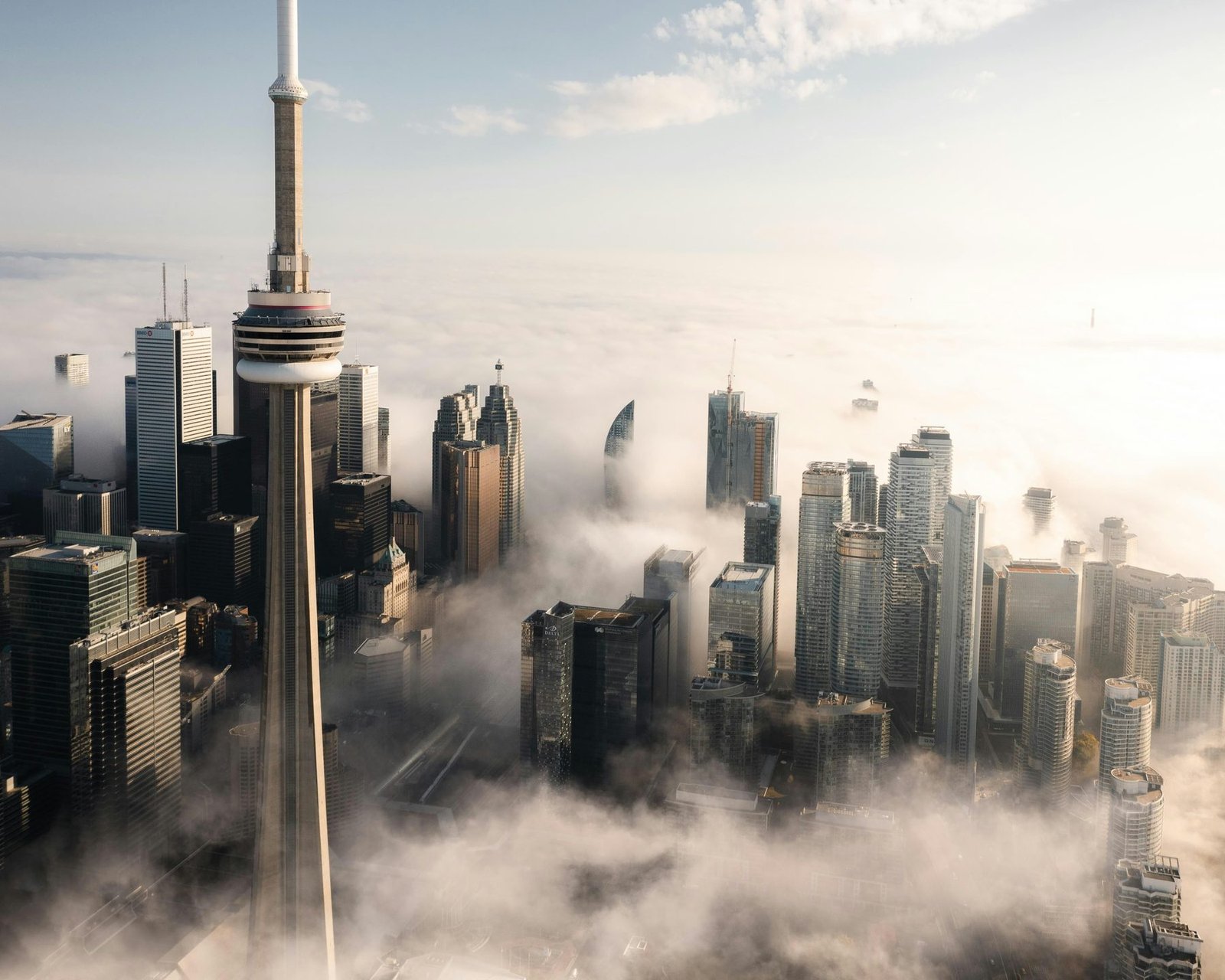
The downtown skyline and harbor from the air, Toronto. Photo: Marcin Skalij.
The institutional architecture
Toronto Biennial of Art operates as an independent not-for-profit cultural organisation under founding Executive Director Patrizia Libralato, funded by a private philanthropic base (the Power Corporation of Canada, the McLean Foundation, the Andrew and Valerie Pringle Family Foundation among others), provincial Ontario Arts Council and federal Canada Council support, and the City of Toronto. The institutional model is structurally distinct from the major museum-anchored biennials (the Whitney, the Sydney Biennale at the Art Gallery of New South Wales, the São Paulo Bienal at the Ciccillo Matarazzo Pavilion). Toronto Biennial does not have a permanent flagship venue and re-sites itself for each edition. The 4th Toronto Biennial of Art is scheduled to run 26 September – 20 December 2026 under New York-based curator Allison Glenn (Artistic Director of The Shepherd, Detroit), titled Things Fall Apart.
The 4th Edition 26 September – 20 December 2026
Glenn's Things Fall Apart — rupture as a generative force
The 4th Toronto Biennial of Art, announced in April 2026, takes its title from the Chinua Achebe novel (1958), whose title is itself drawn from W.B. Yeats's 1921 poem The Second Coming, and from the eponymous 1999 album by The Roots. Across all three references, the phrase marks the fractured moment as a generative one, not a terminal one. Curator Allison Glenn's premise is that the work of the biennial in 2026 is to read rupture not as collapse but as the condition under which new histories, new geographies and new systems become possible to imagine.
The edition opened on September 26, 2026 and runs through December 20, 2026, with Professional Preview Days on 24–25 September. The Art Museum at the University of Toronto: the Art Centre and the Justina M. Barnicke Gallery on the St. George campus, serves as TBA's principal exhibition hub for the first time, alongside the institution's continuing distributed-venue model across Toronto. The Art Museum's Executive Director and Chief Curator Barbara Fischer also joined the newly established National Curatorial Advisory, a six-curator committee of Canadian institutional voices that worked alongside Glenn through the curatorial process.
The defining structural shift of the 4th edition is the institution's first expansion beyond the Greater Toronto Area. The 2026 programme is staged with a series of partner projects across North America (including in Detroit, New York and Anchorage), extending the lakeshore-and-watershed institutional frame outward across global waterways: the Great Lakes region, the Atlantic Ocean, the Caribbean, the Persian Gulf and beyond. Water is the throughline that holds the edition together: a continuation of the founding curatorial argument carried into a wider geographic register.
2026 participating artists
TBA 2026 brings together over 30 artists and collectives from Canada, the SWANA region, the Caribbean, South America, Europe, the United States and beyond, with 17 newly commissioned works. The artist list as announced 17 April 2026 includes: Rouzbeh Akhbari · Rebecca Belmore · Dawoud Bey · Jean-Marc Bullet · Nani Chacon · Julien Creuzet · Bonnie Devine · Brendan Fernandes · Coco Fusco · Kent Monkman · Dala Nasser · Antonio Obá · Solange Pessoa · Dawit L. Petros · Céline Semaan · Charisse Pearlina Weston, and additional artists and collectives announced through 2026. The full roster is maintained at torontobiennial.org/artists.
A Second Reading The land-acknowledgement method and its critics
When the acknowledgement is the work
The Toronto Biennial's founding curatorial method (taking the question of whose land the biennial stages on as the principal frame, not a preface to it) has been praised within the international biennial conversation. It has also been questioned, and the questions are productive enough to record.
The principal critical reading turns on a structural tension internal to the land-acknowledgement-as-curatorial-method approach: namely, that the more institutional weight a settler institution places on the land-acknowledgement gesture, the more the gesture risks becoming a means by which the institution legitimates its continuing settler operation rather than a means by which the institution's continuing settler operation is rendered illegible or untenable. The argument, developed in the post-2015 Canadian Indigenous scholarship, particularly in the work of Audra Simpson (Mohawk) and the late Glen Coulthard (Yellowknives Dene), is that the institutional production of the land acknowledgement as a routine cultural form has, since the 2015 Truth and Reconciliation Commission's Calls to Action, outpaced the material redistribution of land, resources, and institutional authority that those Calls to Action argued for. A biennial that takes the land acknowledgement as its principal curatorial frame, on this reading, runs the risk of producing more of the institutional form (a curatorial gesture, a programme essay, a public-facing institutional language) without producing more of the institutional substance (returned land, redirected institutional authority, structural Indigenous control of the curatorial decision-making).
The Toronto Biennial's own institutional answer to this critique (implicit in its curatorial method, explicit in much of its programme essay and seminar material) has been that Indigenous co-curatorial leadership, substantive Indigenous artist representation across all three editions, and a continuing institutional commitment to programme on the Lake Ontario watershed as a hydrological-and-political unit constitutes a answer rather than a gestural one. Whether the answer is enough, and whether the institutional risk identified in the critique is sufficiently mitigated by the curatorial method actually pursued, is a question the post-2024 Canadian art conversation continues to find productive, and which the Toronto Biennial's continuing institutional history will answer over the coming decade.
In Toronto
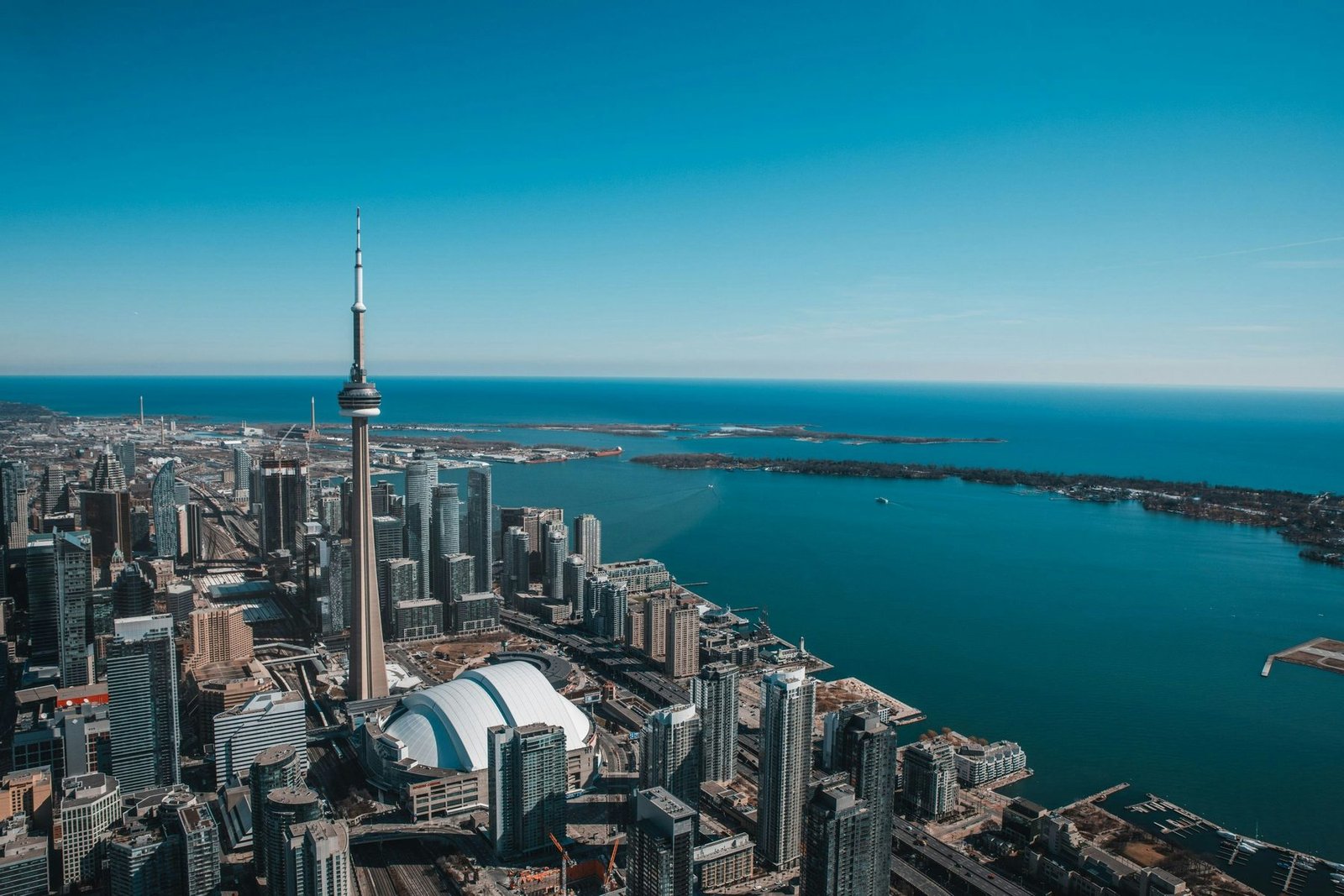
The CN Tower, the harbor and the islands from the air, Toronto.
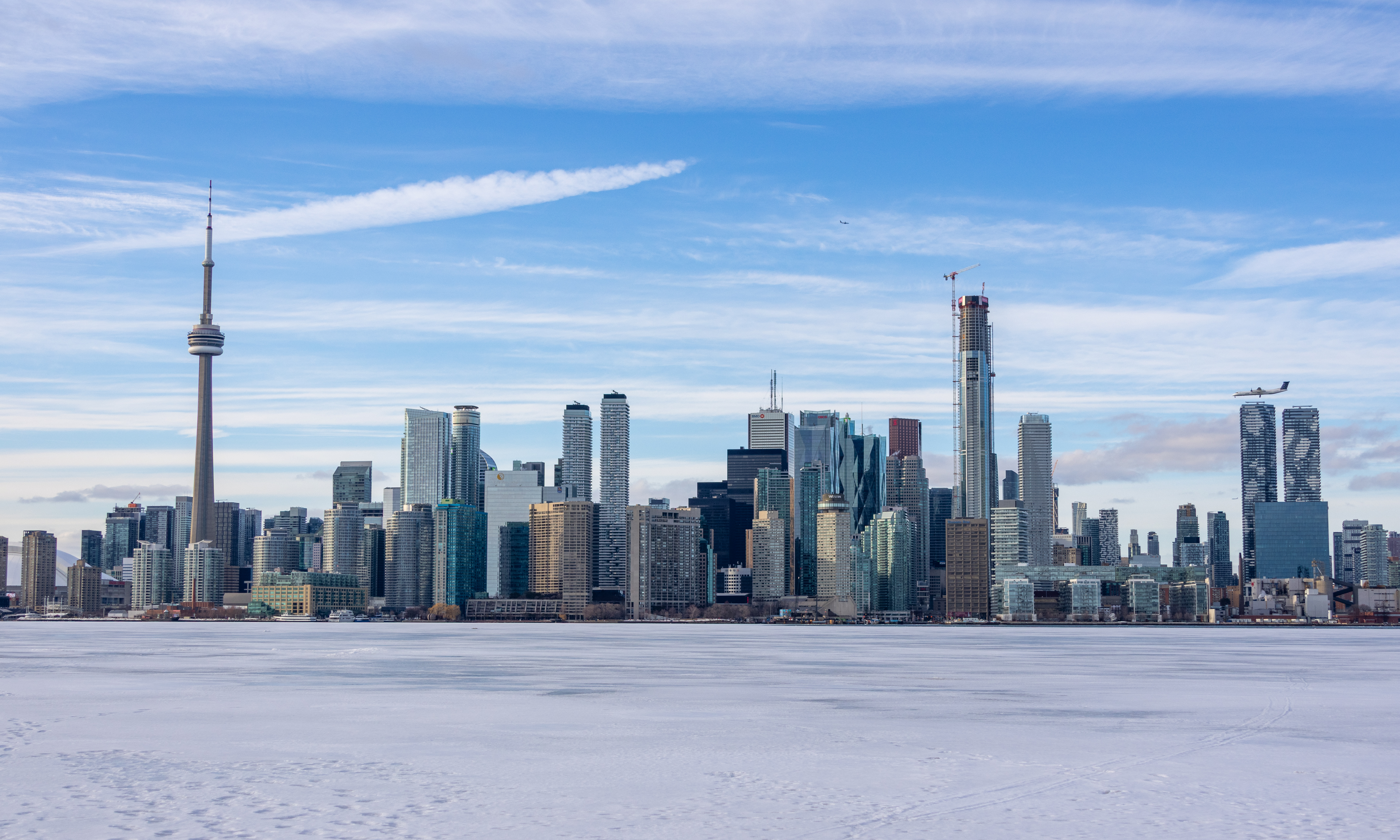
The CN Tower and the skyline from the lake, Toronto.
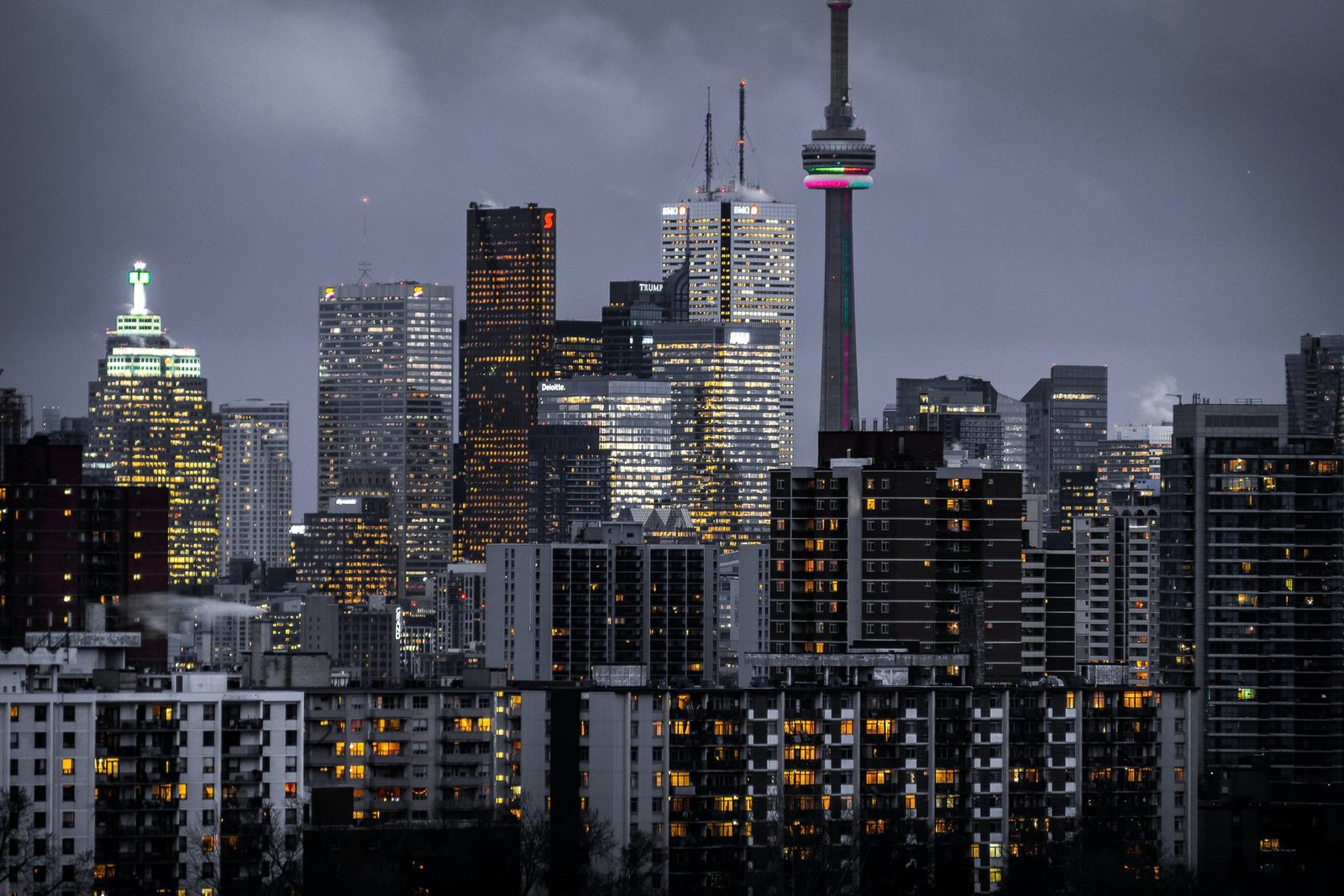
The CN Tower and downtown towers at night, Toronto. Photo: Zia Syed.
The Institutional Spine
Defining moments
Five episodes from the founding decade.
2017Founding
Libralato establishes the institution
The Toronto Biennial of Art was incorporated as an independent not-for-profit cultural organisation in the years leading up to its 2019 opening, under founding Executive Director Patrizia Libralato (from February 2017) and co-founders Susannah Rosenstock and Melony Ward. Libralato had spent a twenty-five-year career across the Canadian and Italian gallery system (Wynick/Tuck Gallery, then Associate Director at Sable-Castelli Gallery, Toronto, until 2000, then five years in Italy on public and private gallery exhibitions in Venice, Verona and Vicenza) before turning to the work of building the philanthropic and institutional base for a biennial Toronto did not have. The founding institutional decision that shaped everything that followed was the choice not to anchor the new biennial to an existing museum: the Toronto Biennial would re-site itself for each edition along the lakeshore, an independent multi-venue model structurally distinct from Canada's major museum-anchored institutions.
Sources: Toronto Biennial of Art archive; institutional filings
20191st edition
Hopkins and Bastien's Shoreline Dilemma
The 1st Toronto Biennial of Art (21 September – 1 December 2019) opened under Indigenous curator Candice Hopkins (Carcross/Tagish First Nation) with Tairone Bastien, titled The Shoreline Dilemma. The edition was sited along a stretch of the Lake Ontario lakeshore, from the Small Arms Inspection Building in Mississauga through the Power Plant and harbourfront warehouses, and established the biennial's founding institutional argument: that the watershed, not the museum, would be the principal curatorial frame.
Sources: Toronto Biennial of Art archive; Canadian Art, C Magazine, Frieze coverage
2020–22Pandemic
The bridging programme
Between the 1st (2019) and 2nd (2022) editions, the biennial sustained a bridging programme through the pandemic, including the public-facing Field Studies series and a continuing schedule of online and small-format physical programming that maintained the watershed curatorial frame as a continuing institutional argument rather than as a once-an-edition gesture. The institutional choice to programme through rather than across the pandemic shaped the biennial's continuing year-round operation.
Sources: Toronto Biennial of Art archive; Field Studies programme records
20222nd edition
Bastien, Hopkins and Lawson's What Water Knows
The 2nd Toronto Biennial of Art (26 March – 5 June 2022), What Water Knows, The Land Remembers, was curated by a three-person team: Tairone Bastien, Candice Hopkins and Katie Lawson (with contributions from former TBA curators Clare Butcher and Myung-Sun Kim). The edition extended the watershed premise inland from the shoreline, following the buried tributaries (Etobicoke Creek, the Laurentian Channel, Garrison Creek, Taddle Creek), and brought together 37 local and international artists across nine venues with 23 new commissions. Opening during the continuing pandemic, the edition shaped its institutional argument by treating the relationship between human and non-human ecologies as both subject matter and curatorial method.
Sources: Toronto Biennial of Art archive; 2022 catalogue
20243rd edition
Fontaine and López's Precarious Joys
The 3rd Toronto Biennial of Art (21 September – 1 December 2024), Precarious Joys, was curated by Dominique Fontaine and Miguel A. López. The edition featured 36 artists across 12+ venues, with a central hub at 32 Lisgar Street and additional hubs at 158 Sterling Road (MOCA) and Collision Gallery. The 3rd edition shifted the curatorial conversation toward Latin American and African-diasporic registers while preserving the lakeshore-and-watershed institutional frame, testing whether the biennial's founding premise could hold under a different curatorial team.
Sources: Toronto Biennial of Art archive; 2024 catalogue
20264th edition
Glenn's Things Fall Apart
The 4th Toronto Biennial of Art (26 September – 20 December 2026) is curated by New York-based curator Allison Glenn (Artistic Director of The Shepherd, Detroit) under the title Things Fall Apart, drawn from Achebe's 1958 novel by way of Yeats's The Second Coming and The Roots's 1999 album. The edition gathers over 30 artists and collectives (including Kent Monkman, Rebecca Belmore, Dawoud Bey, Julien Creuzet, Coco Fusco, Dala Nasser, Antonio Obá, Solange Pessoa, Dawit L. Petros and Charisse Pearlina Weston), with 17 newly commissioned works. The Art Museum at the University of Toronto serves as the principal exhibition hub for the first time, and the institution extends beyond the Greater Toronto Area through partner projects in Detroit, New York and Anchorage: water as the throughline that holds the lakeshore frame outward.
Canadian arts administrator. Co-founder (with Susannah Rosenstock and Melony Ward) and Executive Director of the Toronto Biennial of Art from February 2017. A twenty-five-year career across the Canadian and Italian gallery system before TBA: Wynick/Tuck Gallery, then Associate Director at Sable-Castelli Gallery, Toronto, until 2000, then five years in Italy creating and managing public and private gallery exhibitions, a national radio broadcast, and large-scale cultural and musical events in Venice, Verona and Vicenza. The institutional architect of the biennial's continuing operating model: independent, multi-venue, philanthropically-funded, and structurally distinct from Canada's major museum-anchored institutions.
Citizen of the Carcross/Tagish First Nation (Yukon Territory). Independent curator and writer. Senior Curator of the inaugural Toronto Biennial of Art (with Tairone Bastien, 2019) and co-curator of the 2nd edition (with Tairone Bastien and Katie Lawson, 2022). Curatorial team member of documenta 14 (Athens / Kassel, 2017). Curatorial team member of the Canadian Pavilion at the 58th Venice Biennale (2019), presenting the Inuit media collective Isuma. The principal curatorial architect of the Toronto Biennial's founding institutional argument and one of the most internationally visible Indigenous curators of her generation.
Independent curator based in Toronto, assistant professor at OCAD University. Co-curator of BOTH the 1st (2019, The Shoreline Dilemma, with Candice Hopkins) and 2nd (2022, What Water Knows, The Land Remembers, with Hopkins and Katie Lawson) Toronto Biennials. Curator of the first three Performa editions in New York (2005, 2007, 2009). Founder of the arts programme at Alserkal Avenue, Dubai. MA Center for Curatorial Studies, Bard College.
Source: Toronto Biennial of Art archive
Curator · 4th edition (2026)
Allison Glenn
American curator and writer, founding Artistic Director of The Shepherd in Detroit's North End and curator of the 4th Toronto Biennial of Art (Things Fall Apart, 26 September – 20 December 2026). Her research-driven, site-responsive practice frames rupture as a generative force: a reading drawn from Chinua Achebe by way of W.B. Yeats and The Roots. For TBA 2026 she has worked with a National Curatorial Advisory of six Canadian curators, including Barbara Fischer of the Art Museum at the University of Toronto (the edition's principal exhibition hub), and has extended the biennial beyond the Greater Toronto Area for the first time, with partner projects in Detroit, New York and Anchorage. The edition gathers over 30 artists and collectives across 17 newly commissioned works, with water as the throughline connecting the Great Lakes to the Atlantic, the Caribbean and the Persian Gulf.
Canadian curator Dominique Fontaine (founding director of the curatorial platform aPOSteRIORI) and Peruvian curator Miguel A. López, co-curators of the 3rd Toronto Biennial of Art (Precarious Joys, 2024). Fontaine's continuing curatorial practice engages African-diasporic conversations; López, formerly chief curator (2015–2017) and then co-director and chief curator (2018–2020) at TEOR/éTica in San José, Costa Rica, co-founder of Red Conceptualismos del Sur and of Bisagra in Lima, engages Latin American and Central American contemporary art. The 3rd edition shifted the curatorial conversation toward Latin American and African-diasporic registers while preserving the lakeshore-and-watershed institutional frame.
The First Nation whose territory includes parts of present-day Toronto and the Greater Toronto Area, party to the 1805 Toronto Purchase (Treaty 13) and the 2010 settlement of the Toronto Purchase Specific Claim. The Toronto Biennial of Art's founding institutional argument engages the Mississaugas of the Credit's continuing legal-and-cultural authority over the territory.
Independent not-for-profit cultural organisation founded 2017–2019. Operates the Toronto Biennial of Art and a continuing year-round programme of public-facing curatorial and educational work. Funded by a private philanthropic base (the Power Corporation of Canada, the McLean Foundation, the Andrew and Valerie Pringle Family Foundation among others), the Ontario Arts Council, the Canada Council for the Arts, and the City of Toronto.
The CN Tower and downtown towers above low cloud, Toronto.
Principal venues across the editions
Small Arms Inspection Building
Mississauga lakeshore · recurring venue since 2019
1352 Lakeshore Road East Mississauga, ON L5E 1G2
The Power Plant Contemporary Art Gallery
Harbourfront Centre · continuing partner
231 Queens Quay West Toronto, ON M5J 2G8
Museum of Contemporary Art Toronto (MOCA)
Sterling Road · partner venue
158 Sterling Road Toronto, ON M6R 2B7
Art Museum at the University of Toronto
University of Toronto Art Centre + Justina M. Barnicke Gallery · principal exhibition hub for the 4th edition (2026)
15 King's College Circle Toronto, ON M5S 3H7
Various lakeshore industrial sites
Re-sited each edition · the biennial does not maintain a permanent flagship
Lake Ontario lakeshore Toronto and Mississauga, ON
Quick answers
Toronto Biennial of Art: what people ask
When is the Toronto Biennial of Art 2026?
The 4th Toronto Biennial of Art, Things Fall Apart, runs from September 26 to December 20, 2026, in Toronto and along the Lake Ontario shoreline. Official 2026 Biennial page.
Who curates the 2026 Toronto Biennial of Art?
Allison Glenn is the curator of the 4th Toronto Biennial of Art, Things Fall Apart, on view from September 26 to December 20, 2026, in Toronto and Mississauga.
Where is the Toronto Biennial of Art held?
For its 2026 edition, the Toronto Biennial of Art's principal hub is the Art Museum at the University of Toronto, 15 King's College Circle. Recurring venues include the Small Arms Inspection Building in Mississauga, The Power Plant at Harbourfront Centre and the Museum of Contemporary Art Toronto.
When was the Toronto Biennial of Art founded?
The Toronto Biennial of Art was founded in 2019, with the Lake Ontario watershed as its founding curatorial frame. It is held every two years in the autumn; the 2026 edition is the fourth.
My Biennale
Carry the Biennale with you
Save this biennale to your circuit, follow its artists as their pages grow, and sync every opening and closing to your own calendar on the companion app.
Candice Hopkins & Tairone Bastien, eds. · 2019 · Toronto Biennial of Art / Art Metropole
Catalogue · 2022
What Water Knows, The Land Remembers
Tairone Bastien, Candice Hopkins & Katie Lawson, eds. · 2022 · Toronto Biennial of Art
Catalogue · 2024
Precarious Joys
Dominique Fontaine & Miguel A. López, eds. · 2024
Theory · Indigenous critique
Red Skin, White Masks: Rejecting the Colonial Politics of Recognition
Glen Coulthard (Yellowknives Dene) · 2014 · University of Minnesota Press
Theory · Indigenous sovereignty
Mohawk Interruptus: Political Life Across the Borders of Settler States
Audra Simpson (Mohawk) · 2014 · Duke University Press
Context · TRC
Truth and Reconciliation Commission of Canada · Calls to Action
TRC · 2015
Reference
Biennials and Beyond 1962–2002
Bruce Altshuler · Phaidon
Theory
The Biennale Reader
Filipovic · van Hal · Øvstebø, eds.
Images, attribution & rights
Photographs are reproduced from Wikimedia Commons under the Creative Commons licences stated in each caption. If you are the photographer of an image used here and wish to discuss its use, please write to contact@biennalemail.com.
Editorial content is original and credited to the Biennale Editorial Team.