Skip to content

Miami Art Week 2026  /  Real Estate & the Arts

Miami Art Week · November 30 to December 6, 2026

The city · Property and culture

The Ground Under the Art

Artists found the neighborhoods, developers bought them, and collectors turned out to be the developers: a reported guide to who owns Miami, what it costs, and who gets to stay.

Dec4–62026

Next edition

Art Basel Miami Beach

Opens Dec 4, 2026

Property and culture

The Other Miami Subject

Miami talks about property the way other cities talk about weather. The median single-family house in Miami-Dade County sold for $685,000 in July 2026, according to the Miami Association of Realtors, and the figure is discussed at dinner with the attention usually given to a hurricane track.

The first week of December is partly a property story too. The county’s art museum carries the name of Jorge M. Pérez, founder of the Related Group, the condominium developer. The Design District, where ICA Miami stands, is the work of Craig Robins and his company Dacra. Wynwood’s murals were commissioned by a landlord. The Faena District on Collins Avenue is a hotel, a condominium tower, and an arts center built as a single development.

Developers here collect, and they build with what they collect. Related’s president told Bisnow in December 2015 that the company tried to put art into every project, and it had hired a former foundation director to manage the commissions. The newest version skips the lobby and sells the artist’s name outright: Frida Kahlo Wynwood Residences, 244 furnished units priced from $500,000 to $1.6 million and due in 2028, The Art Newspaper reported in January 2026.

What follows is an account of how artists redrew the map, where the pressure has moved, what housing costs, who is renting to whom by the night, and what a resident receives in return for the tax bill. The collectors and City Hall have their own pages.

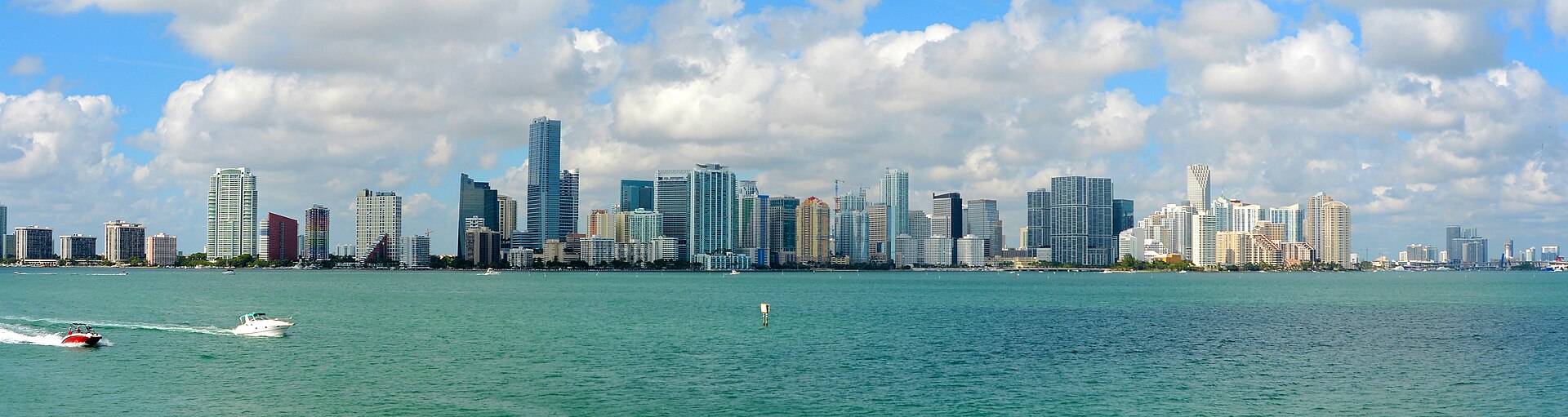
Miami skyline
The Miami skyline. In February 2024, 64% of the condominiums planned for the downtown core were designed for short-term rental, according to Bisnow. Photo: Wilfredor, Wikimedia Commons, CC0.
Biennale

“Real-estate development and art in Miami go hand in hand; you cannot separate them.”

— Loni Johnson, Miami artist and educator, to The Art Newspaper, December 8, 2023

Forty years, eight districts

How Artists Changed the Map

The pattern is old enough to have a first chapter. In the mid-1980s Tony Goldman’s company paid $3 million for the Park Central and Imperial hotels and an apartment house near Sixth Street, then bought a property a month on Ocean Drive for 18 months, by Bisnow’s account. Preservationists had already put the Art Deco District on the National Register in 1979; Goldman supplied the capital.

Lincoln Road

A few blocks north, ArtCenter/South Florida was founded in 1984 to give artists cheap studios in empty Lincoln Road storefronts. The street recovered around them. In 2014 the nonprofit sold its building at 800 Lincoln Road for $88 million, The Art Newspaper reported, renamed itself Oolite Arts, and announced a campus on the mainland. It is the rare case of artists selling at the top.

Wynwood

Dealers and artists declared a Wynwood arts district in 2003; developers began buying in 2005, and by 2015 the artists were priced out, in the chronology The Art Newspaper gives. Goldman Properties started assembling warehouses in 2004 and opened Wynwood Walls in November 2009 for about $3.5 million, according to an Urban Land Institute case study. The Walls drew more than 1.2 million visitors in 2016. By early 2017 prime retail on NW Second Avenue rented for $80 to $120 a square foot.

The Design District

Robins began buying derelict furniture showrooms in the late 1990s and estimates he paid about $15 million for roughly half the district, Bloomberg reported in 2025. He filled storefronts with galleries, co-founded Design Miami, and brought in L Catterton, the investment firm backed by LVMH. Retail rents there rose 67% in a year to $500 a square foot, Bloomberg found, and the 18 blocks are valued at about $4 billion. Robins told Bloomberg the aim was a creative neighborhood and not, in his phrase, “a luxury ghetto.”

Allapattah

The Rubell family bought a warehouse complex west of Wynwood in April 2015 for $4 million, about $53 a square foot, and opened a 100,000-square-foot museum there on December 4, 2019. Pérez opened El Espacio 23 nearby the same week. By then industrial owners were asking $200 to $350 a square foot, according to a Bloomberg report carried by The Business of Fashion. Superblue, an experiential art center, followed. Details not verified

“Art transforms neighborhoods. There are always frontiers. You just have to go there.”

— Mera Rubell, collector, to Bloomberg, via The Business of Fashion, December 2019

Little Haiti and Little River

Galleries moved north next: Nina Johnson, Piero Atchugarry, and Locust Projects are all in Little River or Little Haiti now. So did capital. After more than a year of protest, the Miami commission approved the Magic City Innovation District in Little Haiti by 3 votes to 0 on June 28, 2019, with $31 million pledged to a neighborhood trust, WLRN reported. Median household income in Little Haiti was then $24,800. By April 2026 the project was described as a $2.6 billion plan with a 25-story first tower and $6 million paid to the trust, and a second group proposed 5,700 apartments in Little River, according to Bisnow.

Both neighborhoods sit on a coastal ridge, 7 to 14 feet above sea level against about 4 for Miami Beach. Residents call the result climate gentrification. A city planning official told WLRN in 2019 that the city saw no correlation between height and development pressure.

Faena, Overtown, the West Grove

On Miami Beach, Alan Faena and the investor Len Blavatnik rebuilt Collins Avenue from 32nd to 36th Streets with buildings by OMA and Foster + Partners; the hotel opened in November 2015 and a penthouse sold for $60 million, W magazine reported. In Overtown, where Purvis Young once nailed paintings to boarded-up buildings, a $39 million federal grant awarded in July 2024 will replace 226 public housing units with 1,056 mixed-income ones, by WLRN’s account. In West Coconut Grove, designated Little Bahamas in 2022, the African American share of residents fell from about 90% to about 45% by 2020, according to University of Miami research cited by WLRN.

“When art spaces, studios, and galleries move into a neighborhood because it has cheaper rent, that is a harbinger of gentrification.”

— Robin Bachin, University of Miami, to Bloomberg, via The Business of Fashion, December 2019

What Happened to the Artists

Both accounts are true. The case for renaissance is visible: museums that did not exist in 2000, streets that were empty and are now full, a tax base. The case for displacement is in the studio ledgers. Fountainhead Studios, which housed 30 artists in Little Haiti for 15 years, lost its building after two sales, the second to a national developer in December 2021, Hyperallergic reported. Industrial real estate prices rose about 26% in two years, WLRN reported in August 2024; Oolite received roughly 300 applications for six free studios.

The countermeasures are institutional. Bakehouse Art Complex, in a 1926 bakery that artists bought for $10 in the mid-1980s, subsidizes its studios by 50% to 100% and proposes 350 affordable apartments on its Wynwood land, Axios reported in November 2025; the money is still being raised. Oolite pays resident artists a $12,000 housing stipend and plans a $30 million campus in Little River, first promised for 2022 and not yet built. Fountainhead still runs its residency. Miami City Ballet planned an 80-unit building with discounted rents for artists, by WLRN’s account. No artist community land trust was found in the record for this article.

Beyond the glass towers

Where It Is Happening Next

Eight districts where low buildings, independent shops, and artists still set the tone, with what is there, where to eat, and what is pressing on each. Restaurants are named only where a guide of record lists them; menus and hours change, so confirm before crossing town.

Mainland · north of 71st Street

Little River

Warehouses turned to galleries and studios: Primary, Homework Gallery, the music venue ZeyZey, and vintage dealers Mids Market and Casa Barcelona, all on Time Out’s list. Oolite’s campus is planned at 75 NW 72nd Street.

  • Eat: La Natural (a 2026 Michelin Bib Gourmand), Sunny’s Steakhouse, Tran An, Oori Bakeshop, per Time Out.
  • Pressure: a proposed 5,700-apartment district; one-bedroom rents averaging $1,525.

Mainland · west of Wynwood

Allapattah

A Dominican and Central American neighborhood of warehouses, now also home to the Rubell Museum, El Espacio 23, and the NW 22nd Street galleries.

  • Eat: Hometown Barbecue (Bib Gourmand), Plaza Seafood Market, Típico Hondureño, Papo Llega y Pon, per The Infatuation.
  • New: ZOKO Collective, a 32,000-square-foot dining and cocktail hall at 728 NW 29th Street, opened in September 2026, The Miami Guide reported.
  • Pressure: warehouses that cost about $53 a square foot in 2015 were offered at $200 to $350 by 2019; most residents rent.

Mainland · NE Second Avenue

Little Haiti

The Caribbean Marketplace at the Little Haiti Cultural Complex, Sweat Records, and Libreri Mapou, the pink bookstore founded on April 6, 1990. The tourism bureau keeps a shop list.

  • Eat: Naomi’s Garden, Haitian and Caribbean cooking since the 1970s, on Time Out’s list.
  • Pressure: Magic City’s towers; one-bedroom rents averaging $1,700 against a 2019 median household income of $24,800.

Miami Beach · 63rd to 87th Streets

North Beach

The Miami Beach Bandshell, Normandy Fountain, and North Shore Park, a free trolley ride from the fair. A $53.8 million community complex is planned on 72nd Street, Haute Living reported.

  • Eat: Mi Colombia, Marc’s Artisanal Pizzeria, Silverlake Bistro, Banchero, per The Infatuation.
  • Pressure: a voter-approved density increase in the Town Center; a 22-story, 206-unit tower finished in March 2025.

Miami · Grand Avenue

West Coconut Grove

Little Bahamas, a historically Black neighborhood of Caribbean heritage on a limestone ridge about 9 feet above sea level. A church-led group plans 56 small condominiums priced from $305,000 for local buyers, WLRN reported.

  • Eat: Chug’s Diner (Bib Gourmand) is in the Grove’s center; no West Grove listing was sourced.
  • Pressure: a 20-story mixed-income tower, and a Coconut Grove median home price of $1.4 million in February 2025.

Hialeah · East 15th Street

Leah Arts District

A mural district centered on 1055 East 15th Street, modeled openly on Wynwood, with Factory Town, an outdoor music venue in old industrial buildings, nearby, according to the Miami Herald.

  • Eat: no current guide listing was sourced.
  • Pressure: light so far; a developer plans more than 700 rental apartments in the separate Amelia District.

Miami · Flagler Street

Downtown

The city’s original main street is partway through a $32 million rebuild that began in May 2021; the third phase reopened in March 2026, WLRN reported. New World School of the Arts is two blocks north.

  • Eat: Tâm Tâm, Vietnamese, a 2026 Bib Gourmand.
  • Pressure: towers sold to investors for nightly rental. See below.

North Miami-Dade

Opa-locka

Founded in 1926 by the aviator Glenn Curtiss with Moorish Revival civic buildings. The nonprofit Ten North Group has staged Art of Transformation, a free Art Week program of African diaspora art, for 13 years, WLRN reported in December 2025.

  • Eat: none sourced.
  • Pressure: not documented in the sources read. Not found

New west of Wynwood: ZOKO Collective

The clearest recent sign of where Wynwood’s nightlife is drifting is a single address in Allapattah. ZOKO Collective opened in September 2026 at 728 NW 29th Street, according to The Miami Guide, which describes a 32,000-square-foot venue built on the Basque txoko, the members’ dining society, with several kitchens and bars under one roof and ordering allowed across all of them.

  • Inside: FRA Pizza, wood-fired; Zoko Tapas; and Lovecat, a cocktail bar. A café is to follow.
  • Who: Jerry Böck, the operator behind Doya and Wynwood Diner.
  • Hours, as reported: Thursday to Sunday, 6 pm to 1 am; an industry night at Lovecat on Mondays from 7 pm. Confirm with the venue.

It is an evening address, a few streets north of the NW 22nd Street galleries and the Rubell Museum. For the property story it is one more data point: hospitality at this scale has arrived in the warehouse district the galleries reached first. Single source

Coffee and shops, as far as the record goes

The pages read for this update name few cafés or boutiques by neighborhood, so few are printed. In the Design District, the district’s own site was featuring the jeweler John Hardy and a new Alaïa boutique on October 5. In Little Haiti and Lemon City, Time Out ranks El Bagel among the city’s best places to eat. Little River’s vintage dealers and Little Haiti’s bookshop and record store are in the tiles above. For the other districts, no coffee shop or boutique was named in a source read. Not found

Great neighborhoods to eat

  • Little River: La Natural, Sunny’s Steakhouse, Tran An, Ogawa; The Rooftop at The Citadel is on the tourism bureau’s rooftop list.
  • Allapattah: Hometown Barbecue, Plaza Seafood Market, Típico Hondureño; ZOKO Collective for the evening.
  • North Beach: Mi Colombia, Marc’s Artisanal Pizzeria, Banchero; Cafe Prima Pasta and Sushi Bichi are favorites of The Miami Guide.
  • Upper Eastside: Phuc Yea and Double Luck, both 2026 Bib Gourmands.
  • Little Havana: Sanguich De Miami, for the Cuban sandwich.
  • Design District and Buena Vista: Michael’s Genuine, Mandolin Aegean Bistro, El Turco.

Bib Gourmand names are from the 2026 Michelin list as published by the Greater Miami tourism bureau. More tables are on the beach page.

The market in 2026

What It Costs

$685,000median single-family sale, Miami-Dade, July 2026 (Miami Realtors)
$400,000median condo and townhouse sale, July 2026 (Miami Realtors)
12.0months of condo supply, against 4.8 for houses (Miami Realtors)
$2,277median asking rent, Miami, June 2026 (Realtor.com, via NBC 6)

Miami-Dade is two markets. Houses are scarce: 4.8 months of supply in July 2026, down from 6.6 a year earlier, with the median price up 3.8%. Condominiums are plentiful: 12 months of supply, a median that slipped 1.5% to $400,000, and nearly half of all sales paid in cash, according to the association’s July report. On Miami Beach the median sale across all property types was $549,636 in August 2026, down 3.6% in a year, with a typical listing taking 133 days to sell, by Redfin’s count. At the top the direction reverses: the median South Beach condominium above $2 million sold for $4.05 million in the second quarter, according to the brokerage Condo Black Book.

After Surfside

The split inside the condo market dates to June 2021, when Champlain Towers South collapsed in Surfside and 98 people died. Florida’s Senate Bill 4-D, passed in 2022, requires structural inspections and funded reserves for buildings of three stories or more once they reach 30 years, with a reserve deadline that fell on December 31, 2024. Associations passed the cost to owners in special assessments and higher monthly fees, as WLRN has reported. A study by the brokerage ISG World, reported by Bisnow in October 2024, found the average South Florida condominium older than 30 years had fallen from $325,000 in 2022 to $218,000, while units under 10 years old rose 9%; special assessments ran as high as $175,000 a unit. Legislators softened the terms in 2025: House Bill 913 lets associations pause reserve contributions for two years after an inspection and use lines of credit to fund them, HousingWire reported.

This matters to the art because the older buildings are the cheaper ones. The walk-up and the 1970s slab are where a modest income could still buy, and they are the stock being repriced.

Rent

The median asking rent in Miami was $2,277 in June 2026, down 2.6% in a year and still a third above the national figure, according to Realtor.com data reported by NBC 6. In Miami Beach’s larger apartment buildings the average asking rent was $3,449 in March 2026, up 10%, by the Realtors’ rental report. Miami is among the large metropolitan areas where at least 60% of renters spend more than 30% of income on housing, Harvard’s Joint Center found, as Florida Realtors reported in June 2026. The advocacy group Miami Homes For All put the county’s shortfall at 90,181 affordable rental units in a 2024 study covered by Axios.

The Stock

Five kinds of building make up the city a visitor sees. Single-family houses, scarce and rising. Walk-up apartment blocks and Art Deco buildings from the 1930s to the 1950s, most of them rentals: only 40.9% of Miami Beach homes are owner-occupied, Census figures for 2020–2024 show. Mid-century and 1970s condominium slabs, now under inspection. Warehouses, which became studios and then showrooms. And glass towers, a growing number built as condo-hotels. A breakdown of units by building type was not retrieved for this article.

Key numbers. Each row gives the month measured and the source.
MeasureFigureChange in a yearPeriodSource
Median single-family sale, Miami-Dade$685,000+3.8%July 2026Miami Association of Realtors
Median condo and townhouse sale, Miami-Dade$400,000−1.5%July 2026Miami Association of Realtors
Months of supply, houses4.8from 6.6July 2026Miami Association of Realtors
Months of supply, condos12.0from 14.1July 2026Miami Association of Realtors
Condo sales paid in cash47.5%from 48.8%July 2026Miami Association of Realtors
Median sale, Miami Beach, all types$549,636−3.6%August 2026Redfin
Average condo older than 30 years, South Florida$218,000from $325,000 in 2022September 2024ISG World, via Bisnow
Median asking rent, Miami$2,277−2.6%June 2026Realtor.com, via NBC 6
Average asking rent, Miami Beach apartments$3,449+10%March 2026Miami Realtors rental report
Median gross rent, Miami Beach$1,826n/a2020–2024U.S. Census Bureau
Owner-occupied homes, Miami Beach40.9%n/a2020–2024U.S. Census Bureau
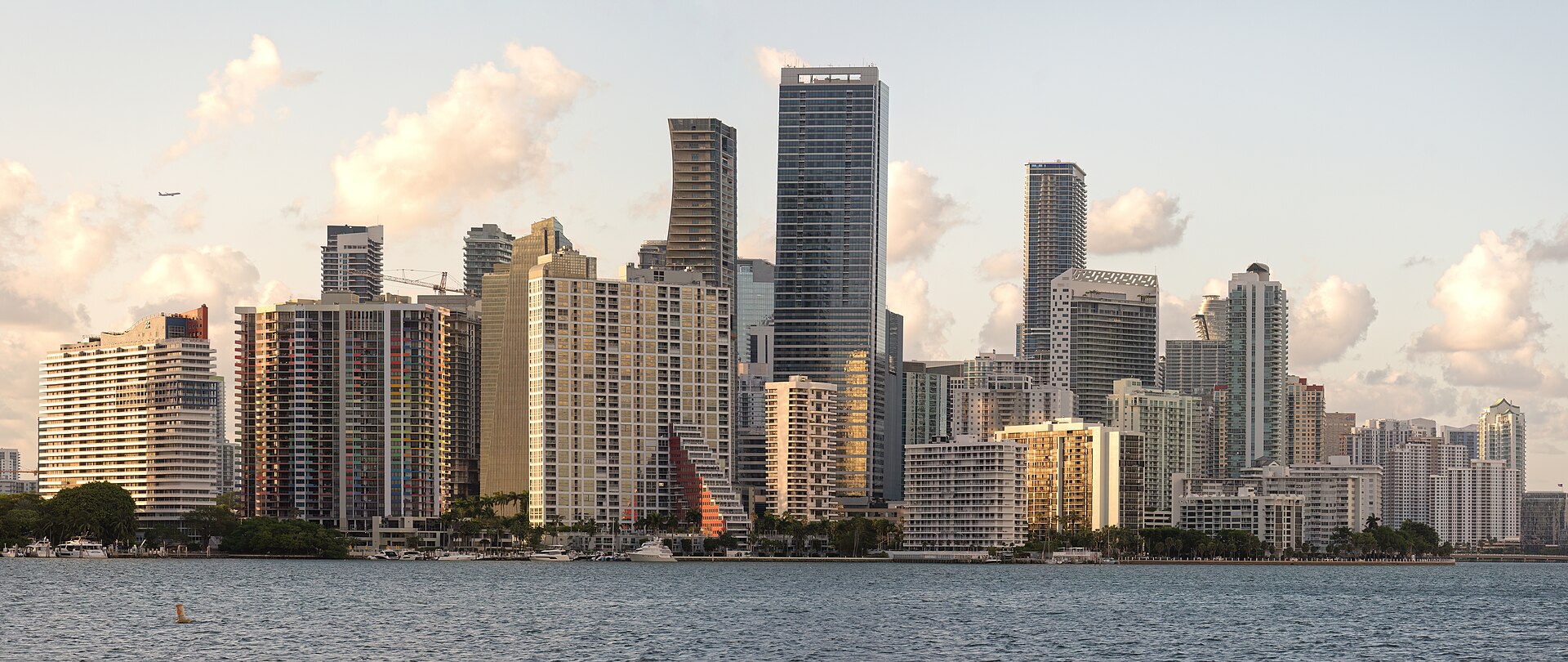
Downtown Miami across Biscayne Bay
Downtown Miami from across Biscayne Bay. Photo: Don Ramey Logan, Wikimedia Commons, CC BY-SA.

Airbnb, Vrbo, and the second home

Short Stays and Empty Rooms

Miami Beach has fought the nightly rental longer and harder than almost any American city. Rentals of less than six months and a day are banned in every single-family house and in many apartment buildings; the city publishes a list of 434 buildings where they are allowed, and a legal operator must show a business tax receipt and a resort tax number in every advertisement.

In 2016 the commission raised the first-offense fine to $20,000, rising by $20,000 a violation to $100,000. A homeowner, Natalie Nichols, sued. In October 2019 a circuit judge ruled the fines illegal because state law caps municipal penalties at $1,000 a day for a first violation and $5,000 for a repeat; the city said it would appeal, and the Third District Court of Appeal affirmed the ruling on July 22, 2020. The ban survived. The size of the stick did not. The city’s current fine schedule was not confirmed for this article.

The mainland went the other way. In February 2024, 26 projects with 8,467 units designed for short-term rental were planned in Downtown, Brickell, Edgewater, and Miami Beach, 55.6% of the condominium pipeline there, and only four of the projects were on the beach, Bisnow reported. These are small furnished units sold largely to buyers abroad. Across the three South Florida counties, the analyst Peter Zalewski counted nearly 70,000 short-term rental properties in AirDNA data in July 2025. AirDNA’s own page showed 1,521 active listings in Miami Beach on October 4, 2026, almost all of them entire homes, a figure that moved too sharply in a year to lean on. Single source The City of Miami requires a certificate of use and restricts rentals in low-density zones; the detail could not be confirmed on an official page.

The Vacancy Question

The best public measure is the Census category of homes held vacant for “seasonal, recreational or occasional use.” On that count Miami Beach has 13,817 such units, 22% of its housing stock and the second-largest total of any place in the country, according to the Miami Association of Realtors’ vacation-home report, published in March 2026 from the 2024 American Community Survey. Surfside is at 39%, Aventura 31%, Sunny Isles Beach 29%, Key Biscayne 50%. Three-quarters of 2025 sales in those markets were all cash.

The buyers are well documented. Foreign purchasers took 52% of South Florida new-construction and pre-construction sales over 22 months, led by Colombia, Mexico, Argentina, and Brazil, the association reported in November 2025. Countywide, 42.8% of February 2026 sales were cash, against 31% nationally, by the association’s monthly release.

Whether this produces dead blocks is harder to prove. The data shows that about one Miami Beach home in five is someone’s occasional address, and that the share is higher in the newest oceanfront towns. It does not show which buildings are dark, how many nights a seasonal unit is used, or how many units are held through companies; no public count of corporate ownership was found. The honest reading is that Miami Beach has lost residents, 1.6% of its population between 2020 and 2025 by Census estimate, while adding expensive housing, and that the two facts are compatible with the complaint. One broker offered Bisnow the counterargument: small investor units may end up as ordinary long-term homes.

The third-largest district in the country

The Schools

Property and schooling meet on the tax bill. Florida funds schools through a state formula that combines state revenue with a local property tax the state sets. For 2026–27 Miami-Dade’s share of that formula is $3.72 billion, of which $1.79 billion is raised locally at 3.057 mills, or $9,630 a student, according to the Florida Department of Education.

Voters add to it. In 2018, and again in 2022, Miami-Dade approved an extra property tax for teacher pay and school police. The renewal is on the ballot on November 3, 2026: one mill, about $585 million a year, 88% to salaries and 12% to safety, running to June 2031, according to the school board’s resolution.

By the state’s measure the district performs. It earned an A for 2025–26, its seventh since 2018, WLRN reported, and its 2024–25 graduation rate was 93.1% including charter schools, by the district’s annual report. It is also shrinking. Enrollment fell by 13,200 this year to 313,000, and the district cut $89 million from a $7.4 billion budget mid-year. The superintendent attributed most of the loss to a collapse in arrivals from abroad, with housing costs a second factor, WLRN reported in March 2026.

The Arts Magnets

Two public high schools feed the scene directly, and both admit by audition or portfolio. Design and Architecture Senior High, DASH, founded in 1990, sits at 4001 NE Second Avenue in the Design District; U.S. News ranked it 96th in the country and 13th in Florida in its 2026–27 list, Caribbean National Weekly reported. Daniel Arsham and Adler Guerrier are alumni. New World School of the Arts, downtown since 1987 and ranked 23rd in the state, counts Hernan Bas and Morel Doucet among its graduates. Miami Arts Studio 6–12 at Zelda Glazer was 24th.

What Miami Beach Adds

Miami Beach has no school district of its own, so it buys extras for the county schools inside its limits. The city’s list of funded programs, updated in August 2026, comes to about $3 million: $657,000 in prekindergarten scholarships, $372,000 for a STEAM program with The Bass that reaches 4,500 students, $139,000 for mental health staff, and teacher training for the International Baccalaureate.

The return on the tax bill

What Residents Get

A Miami Beach address comes with a list of concessions, most of them unlocked by a Florida ID and a recent utility bill. Prices for pools and golf are set by the parks department and are not published on the pages read; confirm with the city.

Resident benefits as listed on official pages in October 2026.
AmenityWho qualifiesCostSource
Street and lot parkingRegistered Miami Beach residents$1 an hour; garage permit $70 a month plus taxCity parking department
Citywide trolleyEveryoneFree; four routes, 8 am to 11 pm dailyCity of Miami Beach
The BassZIP codes 33139, 33140, 33141Free membership, a $50 value, with Art Week preview invitationThe Bass
The Wolfsonian–FIUAll Florida residentsFree ($12 for others); free to all Fridays 6 to 9 pmThe Wolfsonian
Fitness centersMiami Beach residents$29 a month ($52 for others); free at 55 and overParks and Recreation
Pools, youth centers, golfMiami Beach residentsPreferred rates at Flamingo Park, Scott Rakow, and Normandy Isle pools and two city golf courses; amounts not publishedParks FAQ
Beach chairs and umbrellasResidents, with sign-up35% off the concessionaire’s ratesCity perks page
Citi BikeMiami Beach residentsThree free 30-minute rides, or one free month a year for subscribersCity of Miami Beach
Art Basel and festival ticketsMiami Beach residentsDiscounted; amount not statedCity perks page
Botanical Garden; Jewish Museum of FloridaEveryoneGarden free; museum free on SaturdaysCity perks page
Pérez Art Museum MiamiEveryoneFree every second SaturdayPAMM
City of Miami trolleyEveryoneFree; 13 routes including Wynwood, Allapattah, and Little HaitiCity of Miami

The city also runs free outdoor films from October to May and a monthly Culture Crawl. Mainland residents get less from the City of Miami by way of published perks; none beyond the trolley was confirmed. Library and county museum passes were not sourced.

The closing arithmetic

What It Means for the Art

Start with a studio. In an informal survey reported by WLRN in 2024, 40 of 50 Miami artists said they could pay up to $500 a month for a place to work. One artist-run building then charged $450 for 300 square feet, which is $18 a square foot a year. Retail space in the Design District rents for $500. The work is made at one price and sold at another, a few miles apart.

Then add a home. Bakehouse found that about 85% of its artists earn $50,000 or less and spend close to half of it on housing. The average one-bedroom in Miami was $2,558 a month in April 2026, about $30,700 a year. An artist at the top of that band who rents alone has roughly $19,000 left for tax, food, and a studio.

The reason the patron class and the developer class overlap is in the same ledgers. Several of Miami’s largest art fortunes were made in land, its museums stand on sites assembled by people who understood land, and art has proved the most reliable way to change what a district is worth. Robins, Pérez, the Rubells, and the Goldmans are collectors who bought buildings, or builders who bought art, depending on the year. The arrangement gave the city its institutions in 25 years. It also means the people who fund the art own the ground the artists rent.

Five Things to Watch in 2027

  • The school referendum. If voters renew the one-mill tax on November 3, 2026, the money runs from July 2027. If they do not, about $585 million a year in teacher pay goes with it.
  • The homestead amendment. A state ballot measure would raise the homestead exemption from $50,000 to $150,000 in 2027 and $250,000 in 2028, school taxes excluded, Fox 35 reported. It needs 60%. City budgets, which pay for arts grants and the Miami Beach school extras, would absorb the loss.
  • Two campuses. Whether Bakehouse’s 350 apartments are financed, and whether Oolite breaks ground in Little River.
  • The older condos. The 2025 relief was temporary by design: a pause on reserve payments lasts two years, and more buildings reach inspection age each year.
  • The north. Magic City’s first tower and the Little River plan will show whether community-benefit money arrives at the pace of construction. On the beach, the unsigned convention center agreement with Art Basel is the other open file.

This article is reporting, not advice. Biennale is not a broker, a lawyer, or a financial adviser, and nothing here is a recommendation to buy, sell, or rent.

Sources. Miami Association of Realtors: July 2026 single-family and condo summaries, February 2026 sales release, March 2026 rental report, vacation-home report, and international buyers report. Redfin, Miami Beach, August 2026. U.S. Census Bureau QuickFacts. Florida Realtors, June 25, 2026. NBC 6, August 1, 2026. Axios Miami, March 20, 2024, and November 14, 2025. Bisnow: October 25, 2024, February 3, 2025, February 6, 2024, April 26, 2026. HousingWire. WLRN: condo market, studio space, Magic City, district grades, enrollment, vacancy, 2019. The Art Newspaper: December 8, 2023, March 6, 2019, January 29, 2026. Hyperallergic, October 8, 2023. Bloomberg, 2025. Urban Land Institute. City of Miami Beach pages on short-term rentals, resident perks, and education. Miami-Dade County Public Schools rankings release, August 21, 2026. Florida Department of Education. Research notes with every page consulted are kept on file. Neighborhood additions, read October 5, 2026: The Miami Guide on ZOKO Collective; Miami Design District. Corrections: contact@biennale.nyc.