The sixth edition of the Kochi-Muziris Biennale, "For the Time Being," arrives at a crucial moment in the event's history. Following institutional challenges and labor disputes, this edition promises a radical shift toward process, collaboration, and accountability.
Anticipating the Dialogue
The 6th Kochi-Muziris Biennale, For the Time Being, is shaped by a nuanced dialectic: the juxtaposition of the ephemeral against the enduring.
The curatorial direction, deeply influenced by performance artist Nikhil Chopra, has deliberately selected foundational figures of time-based art (Abramović, Sehgal, Hassabi) to explore the limits and capabilities of the body in space and time. This emphasis on performance means that the works will require commitment and presence from the viewer, reinforcing the concept that the artwork exists only "for the time being."
Conversely, the exhibition is grounded by artists focusing on durable materiality and site history (Mahama, Bopape, Nari Ward, Gulam Mohammed Sheikh). The strategic focus on 50 new commissions that must work with Kochi's resource realities suggests that the KMB 2025 will be defined by works that are not imported artifacts but are made in Kochi, using local labor and materials. This operational necessity transforms into a conceptual strength, embedding the artworks within the city's economic and material history.
"By centering marginalized narratives and collective practices, the KMB 2025 attempts to perform a self-corrective measure, using the platform to address ethical concerns related to production and community engagement."
Finally, the deliberate inclusion of collectives and artists focused on social justice, displacement, and labor organizing (such as the Panjeri Artists' Union, Kirtika Kain, and LaToya Ruby Frazier) signals a critical response to the KMB's own history of institutional controversy, particularly the past labor exploitation scandals. The success of For the Time Being will thus be measured not only by its aesthetic achievement but also by its commitment to realizing the full potential of its mandate to "collaborate locally" and responsibly.
Look Over Here: A Curated Journey Through the Digital Coverage of the Kochi-Muziris Biennale
An editorial guide to essential resources, hidden archives, and unexpected perspectives on South Asia's most ambitious art experiment.
The Kochi-Muziris Biennale exists as much in digital space as it does in the weathered warehouses of Fort Kochi. Since 2012, this sprawling festival has generated an equally sprawling digital footprint: a constellation of documentation, debate, and discovery that continues to expand with each edition. As we approach the sixth iteration, opening December 12, 2025, under the curatorial direction of performance artist Nikhil Chopra and HH Art Spaces, we've assembled a comprehensive guide to navigating this virtual archipelago of resources, perspectives, and revelations.
This is not merely a list of links but an editorial cartography: a way of understanding how the Biennale lives, breathes, and evolves across digital platforms. From official channels to underground Reddit threads, from academic archives to Instagram reels, each resource offers a different lens through which to view this remarkable cultural phenomenon.
I. The Institutional Architecture
Official Foundations
At the heart of the Biennale's digital presence lies its official website, a portal that has evolved from simple event listing to sophisticated cultural platform. Here, the curatorial statement for the 2025 edition reveals Chopra's vision of the Biennale as a "living ecosystem" rather than a finished spectacle, a radical departure from conventional biennial models that prioritizes process over product, friendship economies over market dynamics.
The Kochi Biennale Foundation's YouTube channel serves as the event's living archive, documenting not just the artworks but the conversations, performances, and ephemeral moments that define each edition. These videos capture what static documentation cannot: the humidity in the air during an opening, the sound of monsoon rain on tin roofs during a performance, the particular quality of light filtering through colonial-era windows.
For those seeking governmental perspective and tourism integration, the Kerala Tourism portal positions the Biennale within the state's broader cultural tourism strategy. This institutional framing reveals how the event has become integral to Kerala's self-presentation as a progressive, culturally sophisticated destination, a narrative that both supports and sometimes constrains the Biennale's radical potential.
Curatorial Vision and Artist Networks
The announcement of Chopra's appointment generated significant coverage, each outlet offering different insights into his vision. The Hindu's coverage emphasizes the official governmental support, while ArtNews's artist list announcement focuses on the international art world implications of bringing together figures like Marina Abramović with emerging South Asian voices.
Most revealing is the e-flux announcement, which positions the Biennale within global contemporary art discourse. The platform's reach ensures that Kochi enters conversation with Venice, documenta, and other major exhibitions, while maintaining its distinctive character as an artist-led, Global South initiative.
The HH Art Spaces Foundation website provides crucial context for understanding the curatorial collective's approach. Their Goa-based practice of creating "friendship economies" and sustaining artist-run spaces offers a blueprint for how the 2025 Biennale might operate: less as a top-down curatorial vision and more as a horizontal network of creative collaborations.
II. The Archival Imagination
Digital Museums and Cultural Memory
Google Arts & Culture has emerged as an unexpected ally in preserving and disseminating the Biennale's legacy. Their partnership page offers high-resolution documentation of past editions, allowing global audiences to experience installations that existed only briefly in Kochi's humid climate. This digital preservation raises fascinating questions about the relationship between ephemeral art and permanent archives, between site-specific work and its virtual afterlife.
"The platform's ability to zoom into minute details of installations reveals aspects invisible to on-site visitors: the texture of materials weathering in coastal air, the intricate layering of mixed-media works, the subtle interplay of light and shadow captured at precise moments."
This microscopic view complements the panoramic perspective offered by on-ground experience, creating a hybrid form of engagement that is neither purely virtual nor entirely physical.
Media Coverage and Critical Discourse
The evolution of media coverage reveals shifting perceptions of the Biennale's significance. The Indian Express's preview for the 2025 edition focuses on accessibility and public engagement, while TNA Magazine's guide offers practical navigation tips that acknowledge the event's sprawling, sometimes overwhelming nature.
Particularly noteworthy is The New Indian Express's report about venue changes for 2025, specifically the reduced role of Aspinwall House. This architectural shift signals broader transformations in how the Biennale relates to colonial heritage spaces: a move away from the romantic repurposing of colonial infrastructure toward engagement with more contemporary, perhaps more politically neutral, spaces.
III. The Street and the People
Grassroots Documentation
The real pulse of the Biennale often beats strongest in informal digital spaces. The Reddit thread on artist hangouts reveals the parallel social infrastructure that emerges during the event: the cafes, informal gathering spaces, and late-night adda sessions where the real work of cultural exchange happens. Another Reddit discussion seeking leads demonstrates how local knowledge networks operate outside official channels, with residents sharing insider tips about lesser-known venues and events.
The existence of platforms like Book an Artist, which connects visitors with local street artists, points to the broader creative ecosystem the Biennale has catalyzed. This isn't just about the main event but about how it has transformed Kochi into a year-round destination for artistic production and exchange.
Maverick Bird's documentation of Kochi street art captures the permanent traces left by temporary events: murals that remain long after specific Biennales end, transforming the city's visual landscape in lasting ways. These interventions blur the boundary between official Biennale programming and organic urban transformation.
Social Media as Living Archive
The Instagram reel tagged to the Biennale represents a new form of cultural documentation: immediate, visceral, and democratic. These bite-sized visual narratives capture aspects of the event that traditional documentation misses: the crowds navigating narrow Fort Kochi streets, the unexpected encounters between artworks and daily life, the moments of confusion, delight, or contemplation that define the visitor experience.
Social media also reveals the Biennale's impact beyond art world circles. Local residents document how their neighborhoods transform, small business owners share stories of seasonal economic boosts, and students post about educational workshops that introduce them to contemporary art for the first time.
IV. Critical Perspectives and Academic Discourse
Theoretical Frameworks
The Avery Review's comparative analysis of Kochi and Katowice offers crucial theoretical perspective, examining how post-industrial cities in the Global South and former Eastern Bloc use biennials as instruments of urban regeneration. This comparative framework reveals patterns and pitfalls, showing how Kochi's model both follows and diverges from global trends.
Academic engagement with the Biennale extends beyond formal publications. The Quora thread asking "What is the Kochi Biennale" might seem basic, but the range of responses (from art professionals to local residents to confused tourists) reveals the event's multiple meanings and contested definitions. The inability to pin down a single answer is perhaps the Biennale's greatest strength.
Institutional Partnerships and Support
The Hindustan Times piece on the Ardee Foundation reveals how the Biennale has inspired similar initiatives across India, creating a network of art spaces and events that extend its influence far beyond Kerala. This ripple effect transforms the Biennale from isolated event to catalyst for broader cultural transformation.
Meanwhile, profiles like Artsy's Vanguard feature on Sayan Chanda show how artists associated with the Biennale gain international recognition, creating career trajectories that wouldn't have been possible without this platform. These success stories validate the Biennale's role as a launching pad for South Asian artists into global circuits.
V. The Practical and the Poetic
Navigation and Logistics
Festivals from India's blog guide offers practical wisdom accumulated over multiple editions: the best times to visit specific venues (early morning for Aspinwall House to avoid crowds, late afternoon for Pepper House to catch the golden light), which auto-rickshaw drivers know the off-circuit venues, where to find the best filter coffee between installations.
These practical details matter because they determine how visitors actually experience the art. The Biennale's democratic ambitions mean little if people can't navigate its complexity, if they're too exhausted to engage with demanding works, or if they miss crucial venues because of poor signposting.
The Venues as Characters
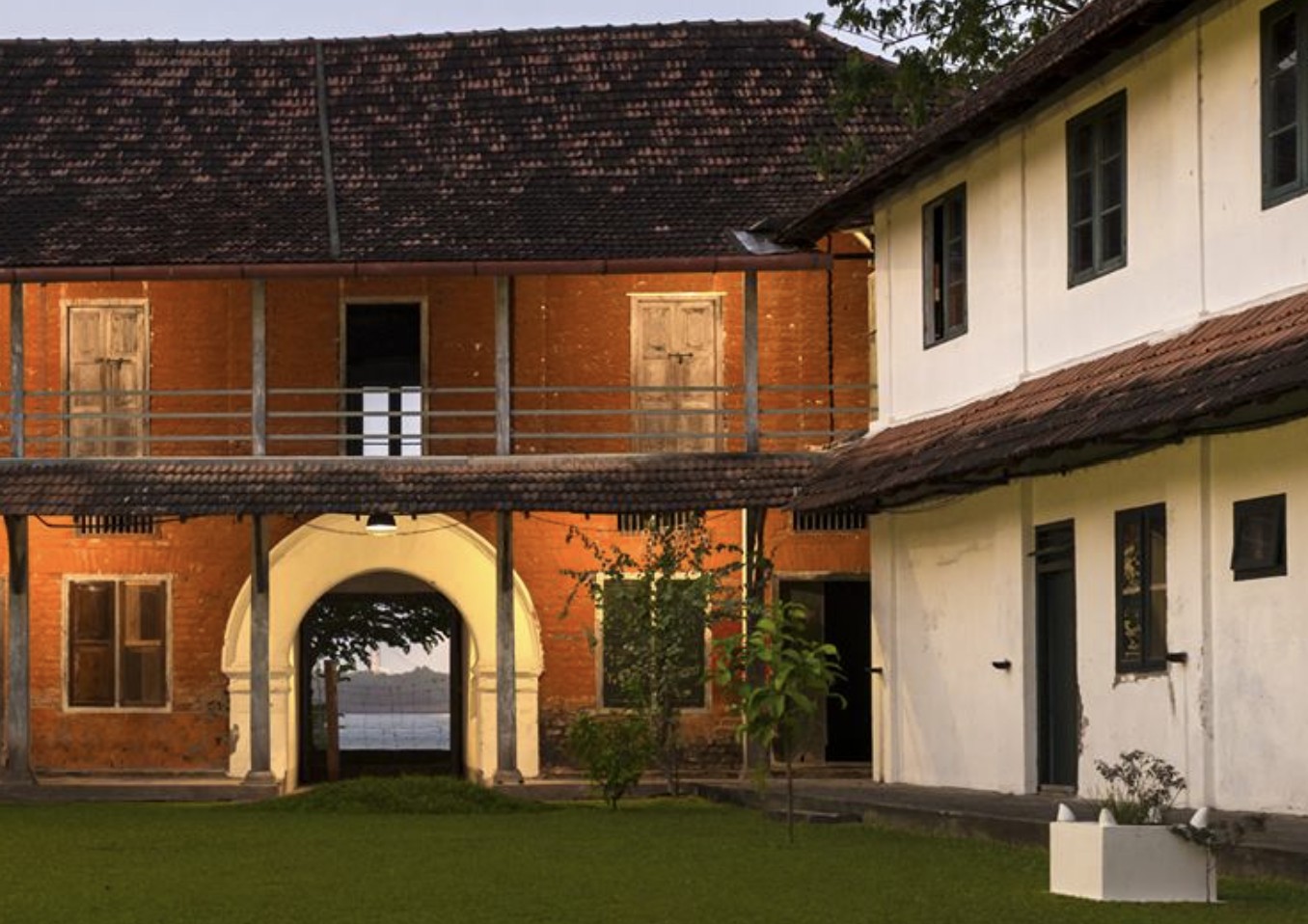
Each Biennale venue carries its own history and atmosphere. Aspinwall House, the colonial-era warehouse complex that has served as the primary venue since 2012, embodies the event's relationship with colonial heritage, simultaneously preserving and subverting these spaces through contemporary intervention. The announcement that the 2025 edition will reduce its reliance on Aspinwall signals a shift in this relationship, perhaps acknowledging the need to move beyond the romantic repurposing of colonial architecture.
The transformation of spice warehouses into art spaces isn't just practical reuse but a form of historical commentary, turning sites of colonial extraction into platforms for postcolonial expression.
VI. Expanding the Frame
Additional Critical Resources
The Asia Art Archive's documentation preserves ephemeral materials (exhibition catalogs, artist statements, curatorial notes) that might otherwise disappear. This archival work ensures that future researchers can access primary sources, not just journalistic accounts.
Ocula's coverage provides consistent critical perspective from the commercial art world, tracking which artists gain market traction post-Biennale and how the event influences collecting patterns in South Asia.
The Serendipity Arts Foundation's analysis examines the Biennale's impact on arts infrastructure development across India, showing how it has inspired new funding models, institutional partnerships, and educational initiatives.
Environmental and Ethical Considerations
The Contemporary Art Writing Daily's critique raises uncomfortable questions about the Biennale's environmental impact: the carbon footprint of international travel, the sustainability of temporary installations, the tension between global ambition and ecological responsibility. These critiques are essential for the Biennale's evolution, pushing it toward more sustainable models that don't sacrifice international dialogue for environmental ethics.
The Caravan's investigative piece examines the economics of the Biennale: who benefits, who's excluded, how resources flow through the local economy. This economic analysis reveals both the event's democratic achievements and its persistent inequalities, showing how even radical cultural initiatives operate within existing power structures.
The Digital Future
As we look toward the 2025 edition, new digital platforms will undoubtedly emerge. NFT documentation of performances, virtual reality archives of installations, AI-generated responses to artworks: these technologies will create new ways of experiencing and preserving the Biennale.
Yet the most valuable digital resources may remain the simplest: the blog post by a first-time visitor overwhelmed by their encounter with contemporary art, the WhatsApp group where local artists coordinate unofficial events, the Instagram story that captures a fleeting moment of beauty or absurdity. These informal documentations preserve what official archives miss: the human scale of encounter, the unexpected connections, the transformative potential of art when it escapes institutional frames.
VII. Toward a Living Archive
The Kochi-Muziris Biennale's digital presence isn't just documentation; it's continuation. Online engagement extends the event's temporal and geographic boundaries, allowing global audiences to participate in discussions, debates, and discoveries that begin in Fort Kochi but ripple outward through digital networks.
This digital archipelago also serves a crucial democratic function. While physical attendance requires resources (travel costs, accommodation, time away from work), digital engagement is relatively accessible. A student in rural Kerala can explore the same documentation as a curator in New York, leveling hierarchies that typically structure art world access.
However, we must also acknowledge what digital documentation cannot capture: the sensation of Kerala's humid air on skin, the sound of multiple languages mixing in gallery spaces, the exhaustion of navigating Fort Kochi's narrow streets, the unexpected encounter with art in a space that smells of pepper and salt air. These embodied experiences remain irreducible to digital representation, ensuring that pilgrimage to Kochi itself retains unique value.
Conclusion: The Biennale as Method
The links gathered here are invitations to join this ongoing experiment. Whether you're planning a physical visit to Kochi or exploring from afar, whether you're an art professional or curious newcomer, these resources offer multiple entry points into one of contemporary art's most vital conversations.
The Biennale's true achievement isn't just bringing international art to India or Indian art to international attention. It's creating a new model for how art can function in the world: rooted in place but globally connected, economically sustainable but ethically committed, institutionally supported but artist-led. The digital traces gathered here (from official websites to Reddit threads, from academic analyses to Instagram reels) collectively map this achievement while pointing toward future possibilities.
Look over here, these links tell us. But also look beyond them, toward the horizons they open, the questions they pose, the futures they imagine. The Kochi-Muziris Biennale, in both its physical and digital manifestations, invites us to see not just art but possibility itself.
Essential Links Directory
Official Channels:
Curatorial Vision:
Media Coverage:
Community & Grassroots:
Critical & Academic:
Practical Guides:
Extended Network: