The capital
Paris
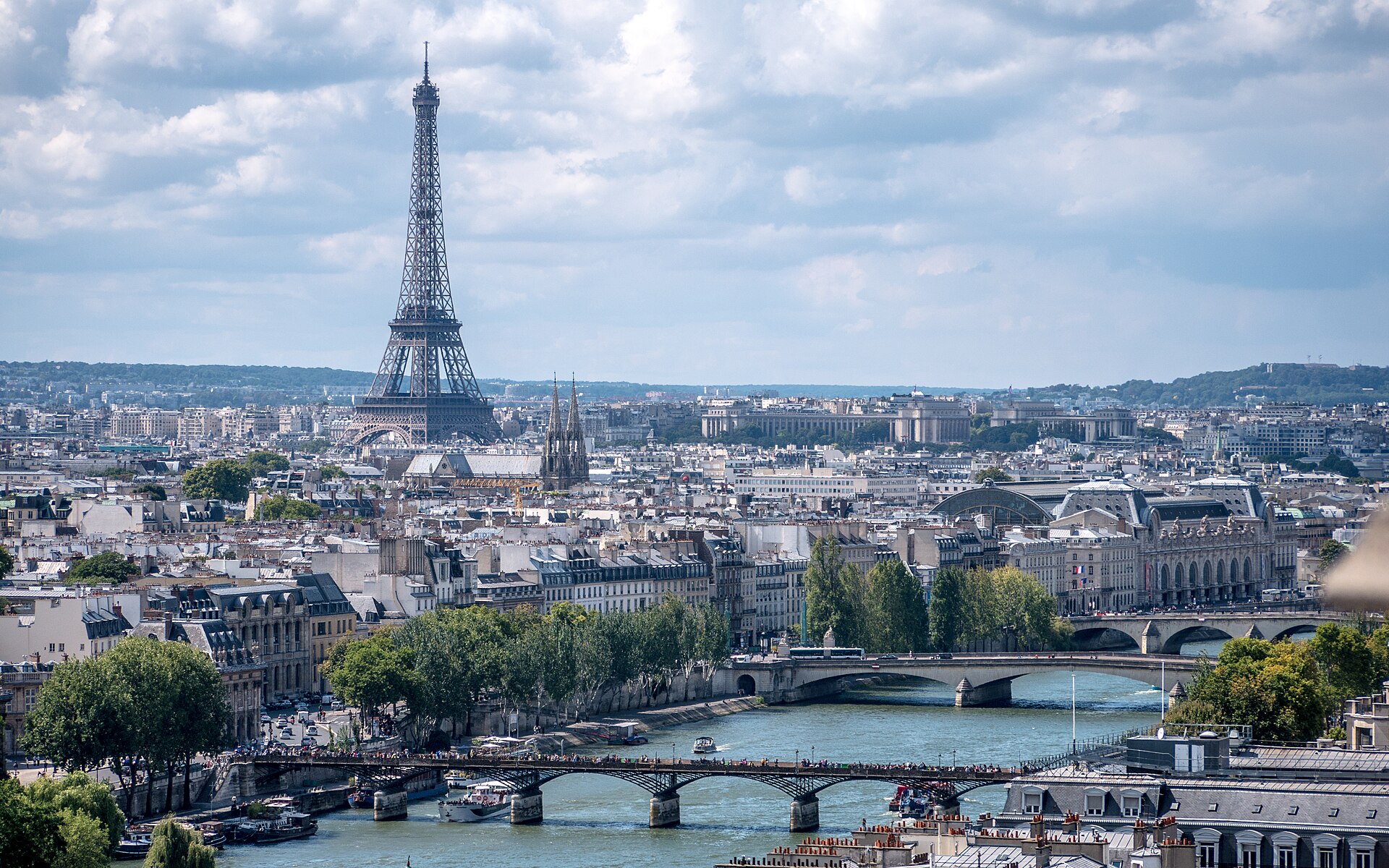
The Louvre and Orsay for the canon; the Palais de Tokyo, the Bourse de Commerce and the Fondation Louis Vuitton for the present; the Marais and Saint-Germain for galleries. October is the month.
Biennale / Country hubs / France
Country hubs · Free to read · Updated October 5, 2026
Country hub · Europe
In the country where the state invented cultural policy, the state is short of money and the market is doing the growing.
Autumn 2026
France is the country that gave the world the culture ministry, the national museum and the resale royalty, and for most of the last 60 years its art life has been a public service with a private sector attached. In the autumn of 2026 the proportions are changing. The Louvre has a new director, appointed after an €88 million jewel theft exposed how badly the building had been maintained. The Centre Pompidou is closed until 2030. The culture budget has been cut twice in a year. And in the Grand Palais, on October 23, Art Basel Paris opens its fifth edition with 211 exhibitors in a market that grew 9% last year.
The thesis of this page is that French art in 2026 is being carried by the part of the system the state does not run. Sales rose to $4.5 billion in 2025, the first increase in three years, and France now accounts for more than half the art market of the European Union. Private foundations built by luxury fortunes, the Fondation Louis Vuitton, the Bourse de Commerce and the Fondation Cartier among them, supply much of the exhibition calendar that the national museums once owned. The ministry, under its second minister of the year, is managing decline with dignity: a restitution law passed unanimously in April, and a €1.1 billion plan for the Louvre survived the scandal that might have buried it.
None of this makes France less worth visiting. The Louvre drew 9 million people in 2025. The Lyon Biennale is open until December 13. Paris in the third week of October is, for five days, the center of the trade. But a visitor should know that the old assumption, that in France the state will provide, is under review, and that a presidential election in spring 2027 will decide how the review ends.
Below: the market, the politics, the public, then six cities, a calendar and the institutions to plan around. Biennale is free to read.
The market
French sales of art and antiques reached $4.5 billion in 2025, up 9%, lifting the country’s share of the world market to 8%, according to the Art Basel and UBS Global Art Market Report 2026. The report calls it a decisive turnaround after two years of decline, with both auctions and dealers contributing and the total back above its 2019 level. France is the fourth-largest art market in the world and the largest in the EU, with more than half of the bloc’s value, as Art Basel notes in its own announcement. The whole EU managed $8.4 billion.
The fair is the visible sign. Art Basel Paris runs October 23 to 25 at the Grand Palais, with preview days on October 21 and 22. It has 211 exhibitors from 41 countries and territories, more than 60 of them with spaces in France, nearly 30 first-time participants, and a record 12 joint booths, a sign of galleries sharing costs, according to the organizer. It is the first edition directed by Karim Crippa. Around it, the directory lists Asia Now from October 19 to 24 and AKAA, the fair for art from Africa, on the same three days as the main event.
Two cautions. The Paris auction results for 2026 were not available for this report; the October sales that accompany the fair are still to come. 2026 Paris auction total not found And the gallery trade has casualties here as elsewhere: Air de Paris, a fixture of the scene, is named among recent bankruptcies in Artnet News’s reading of the exhibitor list.
The auction regulator, the Conseil des maisons de vente, counted €5.66 billion in public auction sales of all kinds in 2025 (art, vehicles and other goods), up 11.2% and a record, Gazette Drouot reported in July. Sales held entirely online overtook live sales for the first time. Last October’s Paris auction week gives a baseline for this one: Christie’s took €92.4 million and Sotheby’s €73.5 million, by Artnet News’s count. At Drouot the same week, a Picasso portrait of Dora Maar unseen since 1944 sold for €32 million with fees, the highest auction price in France in 2025, according to The Art Newspaper France.
The most consequential rule is a small number. Since January 1, 2025, France has applied a reduced VAT rate of 5.5% across art sales and imports, replacing the old system under which dealers paid tax on their margin, as a KPMG note on the reform explains. The change implemented an EU directive that French galleries had feared: their trade body warned in 2023 of irreparable harm if the standard 20% rate were applied instead. The government chose the lowest rate available, and the market’s first year under it was its first year of growth since 2022. Italy has since cut its own rate to 5%.
A second tax fight is unresolved. On October 31, 2025, the National Assembly approved at first reading an amendment by the deputies Jean-Paul Matteï and Philippe Brun that would turn the property wealth tax into a tax on unproductive wealth, artworks included. Twenty-seven organizations, Art Basel and the galleries’ trade body among them, signed a statement against it, The Art Newspaper reported. Whether the measure survived into the final budget could not be confirmed for this page. Fate of the art wealth-tax amendment not confirmed
The older rule is the droit de suite, the artist’s resale royalty, which France introduced in 1920 and the rest of the EU later adopted. It adds a cost to secondary sales and sends a share to artists and their heirs. Buyers from outside Europe should also know that the Louvre now charges them more than Europeans at the door, a principle that may spread.

“Art Basel Paris has grown into a genuine part of the cultural fabric of this city”
— Karim Crippa, director, Art Basel Paris, in the fair’s 2026 gallery announcementPolitics and money
Culture in France is run from the rue de Valois. The Ministry of Culture funds the national museums, appoints their directors with the president, and sets the rules for heritage, from export licenses to restitution. Regions, departments and cities pay for much of the rest. The model assumes a state that spends.
It is spending less. The 2026 budget cut culture by €216 million to about €4.2 billion and halved the youth culture pass, Apollo reported last November. In June two decrees cancelled roughly €38 million more in commitments, part of about €6 billion in savings the government attributed to the economic effects of the war in the Middle East, according to ActuaLitté. The government says the June cuts fall on reserves, not on programs. The culture branch of the CGT union called it a war budget. Below the national level it is worse: 47% of large local authorities reduced their culture budgets in 2025, including 60% of regions and 64% of departments, by the annual barometer of the Observatoire des politiques culturelles.
“The tap is turned off, and culture is being suffocated.”
— Dominique Blanc, actress of the Comédie-Française, on the 2026 budget, quoted in Apollo, November 7, 2025
Rachida Dati, minister since 2024, resigned on February 25, 2026, to run for mayor of Paris. Her successor, named the next day, is Catherine Pégard, a former journalist and presidential adviser who ran the Palace of Versailles for more than a decade, according to Livres Hebdo. Pégard is an administrator of heritage, not a campaigner, and her first months have been spent on files she inherited.
The largest of those is the Louvre. On October 19, 2025, thieves used a vehicle-mounted lift to reach the Apollo Gallery and left with eight pieces of Napoleonic jewelry valued at €88 million. Four suspects were arrested; the jewels have not been recovered. A parliamentary inquiry found systemic failures and outdated surveillance, The National reported. Laurence des Cars, the first woman to direct the museum, resigned in February, and President Macron called it an act of responsibility. Her replacement is Christophe Leribault, 62, who came from Versailles and before that the Musée d’Orsay, according to Museums Journal.
The rebuilding plan, called Louvre Nouvelle Renaissance, went ahead. In May the government selected Selldorf Architects with Studios Architecture Paris for a project with two new entrances and a separate space for the Mona Lisa, now estimated at €1.1 billion, Apollo reported. Supporters say the museum cannot go on receiving 9 million people a year through its present entrance. Staff and some heritage specialists reply that the plan favors the grand gesture over the water leaks and aging security systems that the theft made famous.
The argument has a price. The CGT union asked for the new entrance and the Mona Lisa complex to be cancelled in favor of basic maintenance, and by January 19, 2026, the museum had counted nine strike days in a month and three full closures, each costing about €400,000, The Art Newspaper reported.
A National Assembly commission published 40 recommendations on May 13, after about 100 hearings. It found that cameras cover 54% of the Louvre’s galleries, criticized presidential control of top museum appointments, and put the sector’s need at €20 billion to €25 billion over a decade, according to The Art Newspaper. The thefts did not stop. On July 23 the gold torc of the Lady of Vix was taken from the Musée du Pays Châtillonnais in Burgundy, and Pégard answered with a national plan of 33 measures and €30 million over three years for local museums; more than 3,100 sites have been mapped as sensitive. Dominique Garcia, president of the archaeology institute Inrap, urged museums to show copies of precious-metal objects. Pégard replied that replacing masterworks with copies would be a grave mistake, the paper reported in July.
The ministry’s clear success of 2026 is legal. In April parliament gave final approval, unanimously, to a framework law allowing the return of objects taken by force from former colonies between June 1815 and April 1972, without a separate act of parliament for each case, The Art Newspaper reported. Requests are pending from Algeria, Benin, Ivory Coast, Madagascar, Mali, Senegal, Ethiopia and Chad. The left-wing deputy Éric Coquerel tried and failed to remove the 1815 start date, which he argued shields Napoleonic booty and earlier transfers from the Americas. The first returns under the law will show how wide the door really is.
The law was promulgated on the night of May 9 to 10, just before the Africa-France summit in Nairobi. A request must come from a state; a bilateral scientific committee and a national commission examine it, and a decree concludes it. Military items, public archives and archaeological shares are excluded, according to The Art Newspaper France.
Society
The public has not stepped back. The Louvre had 9 million visits in 2025, up from 8.7 million; Versailles 8.4 million; the Musée d’Orsay and the Orangerie together 4.9 million; and the City of Paris museums 5.2 million, up 6.5%, according to figures gathered by L’Écho touristique. The Centre Pompidou drew 2.6 million in the months before it shut.
Who those visitors are is the political question. At the Louvre 73% come from abroad, and at Versailles 81%. Since January 14, 2026, visitors from outside the European Economic Area pay €32 at the Louvre, €10 more than before, a rise meant to bring in €15 million to €20 million a year, as Artnet News reported. Britain considered the same idea this year and rejected it. France has made it policy.
At home, the youth culture pass, President Macron’s signature measure, was cut from €300 to €150 for 18-year-olds and ended for those aged 15 and 16. Louvre staff have walked out over crowding, pay and conditions. And the weight of programming has shifted toward private patrons. The Fondation Louis Vuitton, the Bourse de Commerce and the Fondation Cartier now supply many of the large exhibitions of the Paris season. Admirers call it generosity. Critics, the filmmaker Justine Triet among them, call it the commercialization of culture. Both are describing the same buildings.
The generosity is partly public money. Under the 2003 Aillagon law companies receive a 60% tax rebate on gifts, falling to 40% above €2 million for larger companies, and the Fondation Louis Vuitton received €518.1 million in tax reductions between 2003 and 2014. The Pinault Collection, a private company, receives no such rebates, The Art Newspaper reported.
The Pompidou’s closure, for a renovation led by AIA, Moreau Kusunoki and Frida Escobedo, has turned the national collection of modern art into a traveling one. A program the museum calls Constellation lends it to partner venues across France and abroad, and a new storage and exhibition site, the Centre Pompidou Francilien, is due to open in Massy, south of Paris, in autumn 2026, according to the museum. In Paris this season the Pompidou’s name is on Cézanne et nous at the Grand Palais, from September 23, 2026, to January 17, 2027, by the museum’s program for the closure.
France’s pavilion at the Venice Biennale, open until November 22, shows Yto Barrada’s Comme Saturne, curated by Myriam Ben Salah and produced by the Institut français, as the Biennial Foundation records. After the jury resigned over the participation of Russia and Israel and the awards were replaced by visitor-voted prizes, Barrada was among nearly 100 artists who withdrew from the running on May 9 in solidarity with the jurors, The Art Newspaper France reported.
The cities
France is centralized, and its art is less so than it looks from Paris. The state’s own policy of decentralization put serious museums in Metz and Lyon, and the summer belongs to the south.
The capital
The Louvre and Orsay for the canon; the Palais de Tokyo, the Bourse de Commerce and the Fondation Louis Vuitton for the present; the Marais and Saint-Germain for galleries. October is the month.
Open to December 13, 2026
Host since 1991 of France’s main contemporary art biennale. The 18th edition, curated by Catherine Nichols, takes economy, labor and care as its subject, according to the organizers’ announcement.
The Pompidou that is open
With the Paris building closed, Centre Pompidou-Metz is the place to see the national modern collection under the museum’s own name.
The Mediterranean port
France’s second city and its Mediterranean port. There is no directory page yet; it is on the list.
Photography, every summer
A small Roman town that fills each summer for the Rencontres d’Arles, the photography festival. 2027 dates not yet announced
Gothic north
The cathedral city of Picardy, on the directory for its Gothic architecture and public art, and an easy day from Paris.
Biennales and fairs
| Event | City | Most recent or next | What it is | Directory |
|---|---|---|---|---|
| Lyon Biennale | Lyon | September 19 to December 13, 2026 | Contemporary art biennale, 18th edition | Series |
| Art Basel Paris | Paris | October 23–25, 2026 (previews October 21–22) | The leading French fair, at the Grand Palais | Fair |
| Asia Now | Paris | October 19–24, 2026 | Fair for Asian contemporary art | Fair |
| AKAA | Paris | October 23–25, 2026 | Fair for art and design from Africa | Fair |
| Post-Fair | Paris | October 19–24, 2026 | New satellite fair on rue du Temple, 34 galleries, free entry | Fair |
| Paris Internationale | Paris | October 20–24, 2026 (preview October 19), per the organizer | Satellite fair, 12th edition, about 70 galleries | Not yet listed |
| Design Miami Paris | Paris | October 20–25, 2026, per the organizer | Design fair, fourth Paris edition | Not yet listed |
| Paris Photo | Paris | November 12–15, 2026, at the Grand Palais, per the organizer | The photography fair, 29th edition | Not yet listed |
| Art Paris | Paris | April 1–4, 2027, per The Art Newspaper France | Spring fair at the Grand Palais, 29th edition, with Australia as guest country | Not yet listed |
| Art-o-rama | Marseille | August 28–30, 2026, per The Art Newspaper France. 2027 dates not yet announced | Fair for younger galleries, 20th edition | Not yet listed |
| French Pavilion, Venice Biennale | Venice | Through November 22, 2026 | Yto Barrada, Comme Saturne | Guide |
| Rencontres d’Arles | Arles | Held each summer. 2027 dates not yet announced | Photography festival | Not yet listed |
| PhotoQuai | Paris | Last held 2015. No edition announced | Photography biennale, dormant | Series |
Museums and players
Going there
Book the Louvre before anything else. Visitors from outside the European Economic Area pay €32, and the museum is in the middle of a long argument with its own building, so check for closures. Then add the rest: start a trip on My Biennale, open the Paris page, and use the ticket pages and exhibition listings to see what is on. Remember that the Centre Pompidou is closed; do not plan a morning around it.
If the trip is for the fair, come for October 21 to 25 and expect the city to be full. The satellite fairs and the foundations’ autumn shows are timed to the same week, and the Lyon Biennale, two hours south by fast train, makes a natural extension. Outside October, Paris is easier and cheaper, and the south is at its best in early summer.
Two artists’ choices make a short list inside the museums. The New York Times reported on April 17, 2026, that Walid Raad named the Louvre’s paintings by Nicolas Poussin among the works he goes back to, and that Toyin Ojih Odutola chose the Roman dodecahedra at Lugdunum, Lyon’s Roman museum, objects whose purpose archaeologists dispute. For rail travelers, The New York Times reported on January 6, 2026, that Orient Express is restoring original carriages from the 1920s and 1930s under the Parisian architect Maxime d’Angeac, for a return to service in 2027. The full-scale models the Times described at the Musée des Arts Décoratifs in Paris were scheduled to stay only through April 2026, so do not plan a visit around them.
France sits at the center of the European circuit. The European biennale page places Lyon beside Venice, Kassel and the rest; Biennale Traveller covers trains, flights, hotels and luggage. London is a little over two hours away by rail, and its page is here: Art in the United Kingdom.
What to watch
Sources. Art Basel and UBS Global Art Market Report 2026; Art Basel Paris; The Art Newspaper; Apollo; Museums Journal; The National; Livres Hebdo; ActuaLitté; Banque des Territoires; L’Écho touristique; Centre Pompidou; Gazette Drouot; Artnet News; The Art Newspaper France on the Drouot Picasso, Post-Fair, the restitution law, the Venice withdrawals, Art Paris 2027 and Art-o-rama; The Art Newspaper on the wealth-tax amendment, the Louvre strikes, the parliamentary report, the security plan and philanthropy rules; Biennial Foundation; Centre Pompidou program during closure; Paris Photo; Paris Internationale; Design Miami; The New York Times (January 6, 2026, and April 17, 2026); the Biennale directory for event dates. Figures are as published by those sources; event dates should be confirmed with organizers. Corrections: contact@biennale.nyc.