The capital
London
Tate Modern, the British Museum, the V&A, the Serpentine and the Whitechapel, plus the auction houses and the West End and East End gallery districts. October is Frieze month.
Biennale / Country hubs / UK
Country hubs · Free to read · Updated October 5, 2026
Country hub · Europe
Britain has decided what it wants to keep, which is free museums, an arm’s-length arts council and London’s place in the trade, and has not yet decided how to pay for any of it.
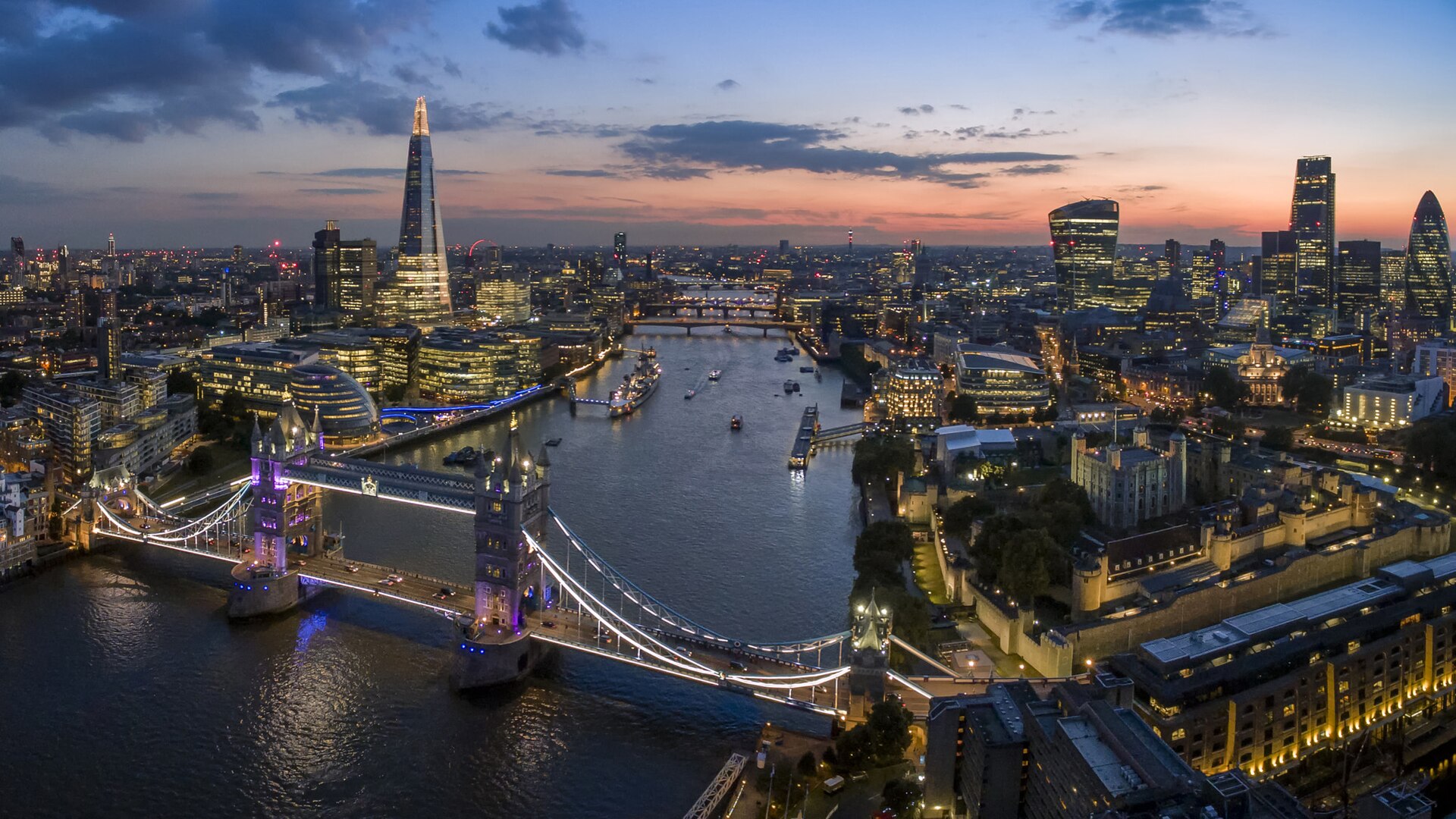
Autumn 2026
On September 28, 2026, the culture secretary, Lisa Nandy, confirmed that the British government would not charge overseas visitors to enter the national museums, as The Art Newspaper reported. It had spent six months considering the idea. The decision came just over two weeks before Frieze London opens in Regent’s Park, ten weeks after Andy Burnham became prime minister, and three weeks before Arts Council England begins taking applications for a funding round its own chief executive has described as tight and competitive.
Those three dates describe the country. Britain remains the second-largest art market in the world, with 18% of global sales. Its national museums are free, and 43% of the people walking through them in 2023–24 came from abroad. Its auction rooms had a first half in 2026 that more than doubled the one before. And its public spending on culture, at 0.25% of GDP in 2022, was the lowest among comparable European nations, according to Baroness Hodge’s independent review of the Arts Council.
The thesis here is that British art in 2026 is defined by a set of commitments made without a budget attached. The new government has kept Lisa Nandy as culture secretary, kept the Arts Council, kept free admission, and inherited a National Gallery in deficit and a Tate between directors. Outside London the picture is often brighter than the capital assumes: Scottish museums are above their pre-pandemic numbers, and Liverpool and Glasgow run the two biennials that matter. Ten years after the Brexit vote, the trade has stopped arguing about whether leaving hurt and started counting what it costs.
This page covers the market, the politics and the public, then the practical part: six cities, a calendar, and the institutions to plan around. Biennale is free to read.
The market
The United Kingdom sold $10.5 billion of art and antiques in 2025, up 2%, for a stable 18% of the world market, according to the Art Basel and UBS Global Art Market Report 2026. Public auction sales grew; dealer sales, in the report’s word, were more subdued. In 2016 the share was 21%, by The Art Newspaper’s ten-year audit of Brexit, which also found the UK’s slice of the Old Master trade down from 52% in 2014 to 38% in 2025.
The 2026 salerooms have been better than the trend. Sotheby’s Modern and contemporary evening sale on March 4 made £131 million with fees, more than double the previous March, with 98% of lots sold and a Francis Bacon self-portrait at £16 million, The Art Newspaper reported. In June the house sold the Lewis Collection, described as the most valuable single-owner sale ever held in Europe; reported totals range from $390 million to $406 million depending on the count. ArtTactic put London’s first-half auction total at $1.42 billion, up 131%, the same paper reported.
The primary market is thinner. Tiwani Contemporary announced its closure in May after 15 years. Beers closed at the end of August and Sid Motion closes this month, according to Artnet News. Several international names are absent from Frieze London this year, the same outlet reported. The fair itself has not shrunk: more than 170 galleries from 42 countries, with nearly 140 more at Frieze Masters, by the organizer’s count.
Three facts of British law and tax matter to anyone buying or shipping. Art imported into the UK pays import VAT at a reduced 5%, low by European standards until France and Italy cut their own rates. Britain also kept the artist’s resale right, a royalty owed to living artists and recent estates when work is resold through the trade. And since Brexit, movement to the continent has paperwork: a work sent to an EU exhibition travels on a temporary customs carnet valid for 12 months, as Ocula’s survey of the decade sets out.
The trade’s own assessment is mixed. The Society of London Art Dealers had eight members who were branches of EU galleries in 2016 and has none now. The UK stayed outside the EU’s new import-licensing regime for cultural goods. It also abolished the non-dom tax status that kept some collectors resident. Paul Hewitt of the dealers’ society told The Art Newspaper that Brexit is less a single cause than an amplifier of other pressures.
“The ‘Brexit gloom’ narrative always missed the point about how deeply entrenched the London market actually is.”
— Leila Alexander, global director, White Cube, to Ocula, June 22, 2026

“Money is tight. This is going to be a really competitive investment round.”
— Darren Henley, chief executive, Arts Council England, quoted in Museums Journal, September 24, 2026Politics and money
Culture in Britain is governed at arm’s length. The culture department, known as DCMS, funds the national museums directly and hands most other arts money to Arts Council England, which decides who gets it. Scotland, Wales and Northern Ireland run their own arts bodies. The principle, that ministers set the budget and stay out of the choices, is older than any of the people now applying it.
Andy Burnham became prime minister on July 20 and kept Lisa Nandy as culture secretary, The Art Newspaper reported. The arts brief went to Ruth Mackenzie, made a peer for the purpose, who ran the Cultural Olympiad in 2012 and was most recently director of arts at the British Council. She oversees museums, libraries, cultural property and the department’s relationship with the Arts Council, according to the paper’s account of her appointment.
Baroness Hodge’s review told the government to keep the Arts Council, protect the arm’s-length principle, and scrap much of how the council works. It found public spending per head on culture down 18% through the Arts Council and 48% through local authorities between 2009–10 and 2022–23. The council’s answer is a new National Portfolio: applications open October 20, decisions come in summer 2027, and grants run for five fixed years from April 2028, with regional boards and a shorter form, as Museums Journal reported. The current portfolio funds 985 organizations.
Supporters call this devolution with the paperwork removed. Skeptics note that the budget has not grown and that a simpler form does not make a larger pot. Alison Cole of the Cultural Policy Unit, a think tank, argues that devolution should reshape the council’s role without shrinking it.
The live dispute of 2026 was the museum door. In March the government said it was considering charges for overseas visitors, an idea floated by a former interim director of the British Museum and taken up in the Hodge review, as Artnet News reported. Tristram Hunt of the V&A opposed it and favored a hotel levy instead; the Cultural Policy Unit estimated that such a levy could raise £1.2 billion a year across the UK. On September 28 the culture secretary confirmed that the charge was dropped, as The Art Newspaper reported. The government said its effects “would not be felt equally across the sector,” in the words carried by Agence France-Presse on October 1. The funding gap the charge was meant to fill remains.
Two further files sit on the minister’s desk. One is the law that stops national museums from deaccessioning, which campaigners for restitution want revisited. The other is copyright in the age of AI, where the Design and Artists Copyright Society wants consent and payment for artists whose work trains models. Meanwhile the diplomacy of objects continues by loan: the Bayeux Tapestry arrived at the British Museum in July for an exhibition that opened in September, with tickets at £25 to £33, Museums Journal reported. Nearly 70,000 people had signed a French petition against letting it travel.
Society
British attractions drew 165 million visits in 2025, up 2%, and the sector as a whole is still 7% below its pre-pandemic level, according to Association of Leading Visitor Attractions figures published by Museums Journal. The averages hide a split. The Natural History Museum had 7.1 million visits, the most any British attraction has recorded. The British Museum had 6.4 million. Tate Modern, at 4.5 million, is 26% below 2019. The National Gallery recovered 29% in a year to 4.1 million and is still 31% short.
The art museums, in other words, have the harder recovery. The National Gallery faces an £8.2 million deficit over two years and offered voluntary exit to nearly 500 staff, The Art Newspaper reported. Tate has had strikes, staff cuts and falling footfall, and will be led from January 2027 by Jessica Morgan, who returns from the Dia Art Foundation in New York. The head of the attractions association called 2025 “financially the toughest since the pandemic,” citing a rise in employers’ payroll tax.
The National Galleries of Scotland had 2.0 million visits, 27% above 2019, and the National Museum of Scotland 2.3 million. V&A East Storehouse, which opened in east London in May 2025, drew 416,300 people by December. In Norwich, the Sainsbury Centre received a gift of £91.2 million from Lord Sainsbury, Apollo noted in May.
For artists the decade since the referendum has meant visas, carnets and fewer European students. The artist Bob and Roberta Smith told Ocula that the country had made life unnecessarily difficult for itself. The Hodge review proposed a national program paying about £30,000 a year to 500 emerging and mid-career artists. It has not yet been funded.
The cities
London has the money and the museums. The biennials, and a good deal of the energy, are elsewhere.
The capital
Tate Modern, the British Museum, the V&A, the Serpentine and the Whitechapel, plus the auction houses and the West End and East End gallery districts. October is Frieze month.
June 5 to September 12, 2027
Home of the Liverpool Biennial, next co-curated by Lucía Sanromán and Aimee Harrison, according to the organizer.
Artist-run and proud of it
A city whose reputation rests on its art school and its artists. Glasgow International held its 11th edition in June 2026.
The national collections of Scotland
The National Galleries of Scotland drew 2.0 million visits in 2025, well above their 2019 figure. Best combined with Glasgow, under an hour away by train.
Art on the seafront
The Folkestone Triennial puts commissions around a Channel port. The 2025 edition, How Lies the Land?, closed last October.
A campus museum, newly endowed
The Sainsbury Centre, on the university campus, secured its future this year with a £91.2 million gift.
Biennales and fairs
| Event | City | Most recent or next | What it is | Directory |
|---|---|---|---|---|
| Frieze London | London | October 14–18, 2026 | The contemporary fair, more than 170 galleries. Frieze week guide | 2026 edition |
| Frieze Masters | London | October 14–18, 2026 | Antiquity to the 20th century, nearly 140 galleries | 2026 edition |
| Liverpool Biennial | Liverpool | June 5 to September 12, 2027 | Citywide contemporary art biennial | Series |
| Glasgow International | Glasgow | June 5–21, 2026. Next not yet announced | Biennial festival of contemporary art | Series |
| Folkestone Triennial | Folkestone | July 19 to October 19, 2025. Next not yet announced | Public art triennial | Series |
| London Design Biennale | London | June 5–29, 2025. Next not yet announced | National design pavilions | Series |
| Bayeux Tapestry | London | Opened September 2026 at the British Museum. Closing date to confirm | A one-time loan from France | British Museum |
Museums and players
Going there
The permanent collections of the national museums are free, which changes how to plan: go often and briefly, and spend the money on the ticketed exhibitions. Book those ahead, the Bayeux Tapestry above all. Start a trip on My Biennale and add the London museums from the London page; the ticket pages and exhibition listings show what is on by date.
Frieze week, October 14 to 18, is the one moment when London behaves like a fair city, with auctions and gallery openings stacked around the tents in Regent’s Park. The rest of the year the pace is civil. Liverpool and Glasgow are each a train ride from London and reward two nights; in a biennial year, give Liverpool three.
Britain pairs naturally with the continent, though the border is now a real one for artworks if not for visitors. The European biennale page sets the British shows beside Venice, Lyon and Kassel, and Biennale Traveller covers trains, flights and hotels for people who travel to look at art. Paris, a little over two hours from London by rail, has its own page: Art in France.
What to watch
Sources. Art Basel and UBS Global Art Market Report 2026; the Hodge review of Arts Council England; The Art Newspaper; Museums Journal; Ocula; Artnet News; Agence France-Presse; Frieze; Liverpool Biennial; the Biennale directory for event dates. Figures are as published by those sources; event dates should be confirmed with organizers. Corrections: contact@biennale.nyc.