Biennale / Country hubs / USA
Country hubs · Free to read · Updated October 5, 2026
Country hub · North America
Art in the United States
The largest art market on earth is having its best year since 2022, while the museums that give it meaning argue with Washington, with their own staff, and with the cost of rent.
Autumn 2026
Rich Rooms, Thin Walls
American art in the autumn of 2026 is two stories told in the same buildings. In one, the country holds 44% of world art sales, a Jackson Pollock has sold for $181.2 million, and Sotheby’s is preparing to offer a single Argentine collection in November with an estimate near $450 million. In the other, the secretary of the Smithsonian has announced his departure after a year of White House pressure, the president’s budget again proposes to abolish the federal arts agencies, and the staff of the Whitney Museum set a strike deadline for October 5, the week a Roy Lichtenstein retrospective opens.
The thesis of this page is that the two stories are connected by a single American habit: culture here is paid for privately and argued over publicly. There is no ministry of culture. Federal money is about 3% of the average museum’s income, according to SMU DataArts figures reported by The Art Newspaper. Trustees, donors, endowments and ticket buyers supply the rest. That arrangement makes the top of the system very rich and leaves almost everything beneath it exposed to a bad year, a hostile administration, or a landlord.
So the strength is real and so is the strain. The auction rooms in New York had their best first half since 2022. In the same months Pace cut 50 artists, three New York museum unions voted to authorize strikes, and the Center for an Urban Future counted 4.4% fewer artists living in the city than in 2019. A visitor will find the museums open, the fairs full, and the biennials sharper for the pressure. It helps to know what is holding the walls up.
What follows is the market, the politics, the public, and then the practical part: seven cities, a calendar of biennials and fairs, and the institutions worth planning a trip around. Biennale is free to read, and every directory link below goes to a page built for travel.
The market
Forty-Four Percent of Everything
Sales of art and antiques in the United States reached $26.0 billion in 2025, up 5%, or 44% of the world total, according to the Art Basel and UBS Global Art Market Report 2026. The next two markets, the United Kingdom and China, managed $19.0 billion between them. The same report notes that all ten of the highest auction prices of 2025 were paid in New York, and 39 of the top 50.
This year has widened the lead. The May sales in New York made about $2.5 billion with the day sessions, more than double the previous May at the evening level, by Artnet News’s count. Pollock’s Number 7A (1948), from the S.I. Newhouse collection, sold at Christie’s for $181.2 million. ArtTactic put first-half auction sales at Christie’s, Sotheby’s and Phillips at $6.8 billion worldwide, up 70%, as The Art Newspaper reported. The next test is November 18, when Sotheby’s offers 12 works from the Blaquier-Arrieta collection, led by a Van Gogh estimated at about $180 million, according to Artnet News.
Galleries on a different clock
The gallery trade did not share the rebound. Pace said in June that it would drop 50 of roughly 130 artists and a fifth of its staff, The Art Newspaper reported. Stephen Friedman closed his Tribeca space at the end of February. Luhring Augustine is closing its own Tribeca branch, according to Artnet News. Art Basel Miami Beach returns in December with a floor about 12% smaller. The longer argument is in the economic chapter of the 2026 review.
Tariffs, tax, and the rulebook
Three pieces of law shape what an American buyer pays. First, tariffs. The Supreme Court struck down the emergency “reciprocal” tariffs on February 20, 2026, and paintings, sculpture and prints had in any case been treated as duty-free informational materials, according to a timeline kept by the shipper Renwick Fine Art Services. Antiques and design were not spared. The replacement regime that began on July 24 is reported by Cultural Property News to exclude art, antiques and coins altogether. Single trade source Importers should confirm with a customs broker.
Second, tax. Under the 2025 budget law, from tax year 2026 donors who itemize can deduct only gifts above 0.5% of adjusted gross income, and the value of deductions for top-bracket taxpayers is capped at 35%, as the Tax Foundation explains. In a country where museums are built on gifts, that is cultural policy by another name. Third, fees and oversight. Sotheby’s and Christie’s now charge buyers 28% on the first $2 million, by Artnet’s survey. A Senate bill to bring dealers under anti-money-laundering rules, the Art Market Integrity Act, was introduced in July 2025. No vote on it was found for this report.
Building anyway
Private money kept pouring concrete through all of it. In Los Angeles, the Los Angeles County Museum of Art opened its $720 million David Geffen Galleries to the public on May 4, as LAist reported, and the Lucas Museum of Narrative Art, built at a cost of $1 billion, opened on September 22 with adult admission at $25, according to The Art Newspaper. In New York, the Met broke ground on September 15 on a $550 million wing for modern and contemporary art, The Art Newspaper reported.
Regional fairs are growing: the second edition of Untitled Art in Houston had 98 galleries, up from 88, and the third Atlanta Art Fair had 83 exhibitors, according to The Art Newspaper’s reports from Houston and Atlanta.
$26.0bnUS art sales in 2025, up 5% (Art Basel and UBS)
44%US share of world sales by value (Art Basel and UBS)
$181.2mPollock’s Number 7A, Christie’s New York, May 18, 2026 (Artnet News)
78%Value under guarantee in New York evening sales, 2025 (Bank of America and ArtTactic)

“What we saw in 2025 was not a return to speculation, but a return to discipline.”
— Drew Watson, head of art services, Bank of America Private Bank, in the bank’s 2026 U.S. Art Market ReportPolitics and money
Who Pays, Who Decides
The federal government funds culture through three small agencies and one large institution. Congress gave the National Endowment for the Arts $207 million for fiscal 2026, the National Endowment for the Humanities $207 million, and the Institute of Museum and Library Services $291.8 million. The White House budget for fiscal 2027, published in April, again proposes to eliminate all three, Artnet News reported. The American Alliance of Museums answered that the agencies have “a proven track record,” and that museums add more than $50 billion a year to the economy and support 726,000 jobs, in its statement on the proposal. Congress, which has funded the agencies each time, decides.
For fiscal 2027 the president’s request is $29 million for the NEA, with the stated intent of winding the agency down, according to the National Assembly of State Arts Agencies. The House Appropriations Committee has approved $135 million, a cut of $72 million. A stopgap measure funds the government through December 11, 2026, by the same group’s running account.
The Smithsonian
The large institution is the Smithsonian, and it has been the main stage. A 162-page White House report in July accused the National Museum of American History of “extreme political activism.” Secretary Lonnie G. Bunch III replied that the report was not a fair account of the museum’s work, ABC News reported. On September 8 he announced that he would step down at the end of 2026 after 38 years at the institution. He told NPR that age, not the president’s criticism, decided it. The Board of Regents has opened a national search.
The administration’s case is that national museums funded by taxpayers should present American history with more pride and less grievance. The museums’ case is that curators, not officials, should decide what goes on the wall. Both positions will be tested by whoever the Regents choose.
“It’s important to realize that the Smithsonian celebrates and loves America.”
— Lonnie G. Bunch III, secretary of the Smithsonian, to NPR, September 8, 2026
The pavilion in Venice
The same argument traveled to Venice. For the 61st Venice Biennale the State Department dropped the selection process that used to run through a National Endowment for the Arts panel. The pavilion, Alma Allen: Call Me the Breeze, was organized by the American Arts Conservancy with the curator Jeffrey Uslip and runs to November 22, 2026. William Eggleston and Barbara Chase-Riboud both declined, and the critic Robert Storr called the result a squandered opportunity, ARTnews reported. The State Department backed the project with a $375,000 grant and praised Allen as an embodiment of the American Dream. Allen told Ocula that he had been warned he would be blacklisted.
One painting in Santo Domingo
In August the dispute narrowed to a single canvas. Leah Campos, the ambassador to the Dominican Republic, had Kehinde Wiley’s Young Artists After Siamesas 1960 taken down from the embassy in Santo Domingo. The State Department’s Art in Embassies program commissioned the work in 2013. Erin Scavino, who now runs the program, called it “aesthetically terrifying” in an interview, and a department spokesperson told TIME that work by a person of “such violent and racist words and depictions” had no place in the department. Officials have also cited sexual assault accusations against Wiley, which he denies.
The New York Times reported on September 28, 2026, that Wiley, who painted Barack Obama’s official portrait, had written to the president, the secretary of state, Scavino, and Campos offering to buy the painting back. He told the paper that the removal saddened him. The White House declined to comment to the Times. The department has indicated that it is checking whether a sale would be legal, according to Artnet News.
“I just happen to be the guy who painted Obama.”
— Kehinde Wiley, artist, as quoted in The New York Times, September 28, 2026
Courts, borders, statehouses
Much of the year’s arts policy was made by judges. A federal judge ruled in May that the cancellation of more than $100 million in humanities grants was unconstitutional, and another ordered the president’s name off the facade of the Kennedy Center, according to the running list kept by the Greater Pittsburgh Arts Council. At the border, visas for visiting artists now take about a year to process against two to four months historically, NPR reported. In the states the picture varies: Florida’s governor signed a budget with $20 million for arts and culture and vetoed $3 million in grants for small groups and individual artists, according to Sarasota Magazine. The fuller account is in the political chapter.
Society
The Public, the Staff, the Heirs
More Americans go to museums than before the pandemic, and most museums are emptier. Both statements come from the same American Alliance of Museums analysis: about a third of adults now visit at least once a year, yet 55% of museums had fewer visitors than in 2019, at a median of 81% of the old traffic. Fewer tourists and fewer repeat visits explain the gap. Directors have responded by turning toward their own cities.
Labor
The people who hang the shows have organized. Staff at the Met voted 542 to 172 in January to join United Auto Workers Local 2110; the museum said its pay and benefits already exceed industry standards, The Art Newspaper reported. Guggenheim staff voted 93% to authorize a strike in June, with entry pay at $49,920, The Art Newspaper reported. By early October the unions at the Guggenheim, the Brooklyn Museum and the American Folk Art Museum had ratified contracts, according to Hyperallergic. The Whitney’s union, seeking a base salary of about $71,000, set a strike deadline of October 5; the museum said it was bargaining in good faith, as The Art Newspaper reported. Outcome not confirmed at publication
Artists and collectors
New York’s artist population has fallen 4.4% since 2019, and by 55% on the Lower East Side over a decade, according to Center for an Urban Future figures reported by QNS. On the buying side, a generation is arriving. Bank of America’s 2026 study of wealthy Americans found that 42% of rich Gen Z and Millennial respondents own art. Christie’s says 47% of its new clients in the first half were from those generations.
Mayor Zohran Mamdani appointed Diya Vij commissioner of cultural affairs in February, and the department’s fiscal 2027 budget of $323.8 million is described as the largest the city has appropriated in a year. Individual artist grants through the borough arts councils doubled from $5,000 to $10,000, Hyperallergic reported.
Returns
Restitution in 2026 came from a prosecutor’s office and from museums. The Manhattan district attorney’s office returned 657 antiquities valued at nearly $14 million to India, The Art Newspaper reported. The Met brokered the return of three sculptures to Nigeria under a long-term loan arrangement, and the Milwaukee Art Museum transferred ownership of two stoneware jars by the enslaved potter David Drake to his descendants, according to Hyperallergic’s reports on the Met and Milwaukee.
Technology
On March 2 the Supreme Court declined to hear Thaler v. Perlmutter, leaving in place the rule that a work made autonomously by a machine cannot be copyrighted, as Holland & Knight summarized. Human authorship remains the test. See the technology chapter and the society chapter for more.
The cities
Seven Places to Start
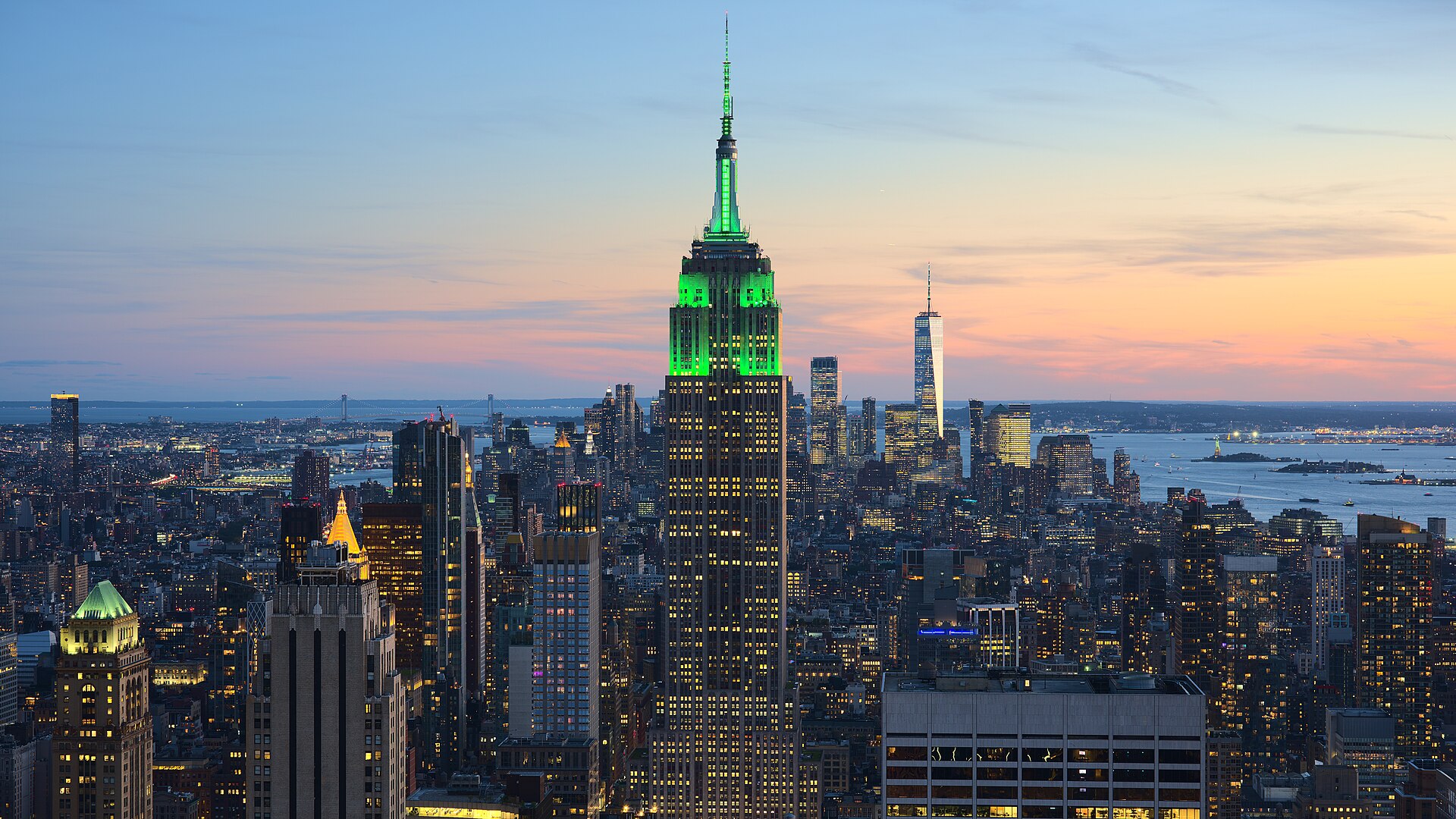
American art is regional in a way the market figures hide. New York sells it, but a great deal is made, shown and argued over elsewhere. These seven cities all have pages in the My Biennale directory.
Studios and space
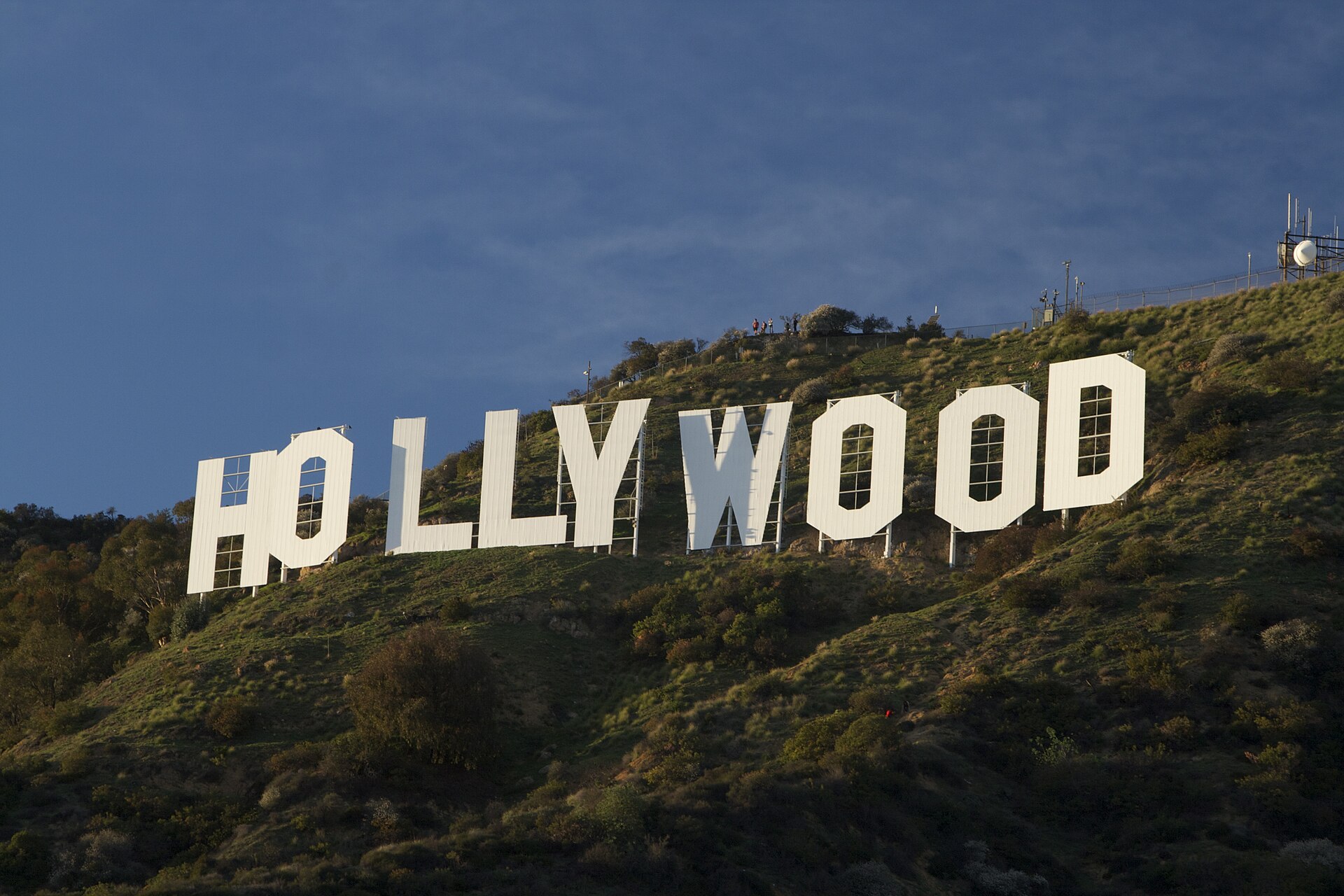
Los Angeles
A city of artists first. LACMA, the Hammer, MOCA and The Broad anchor it, and the Hammer’s biennial, Made in L.A., is the survey that matters locally.
One week in December
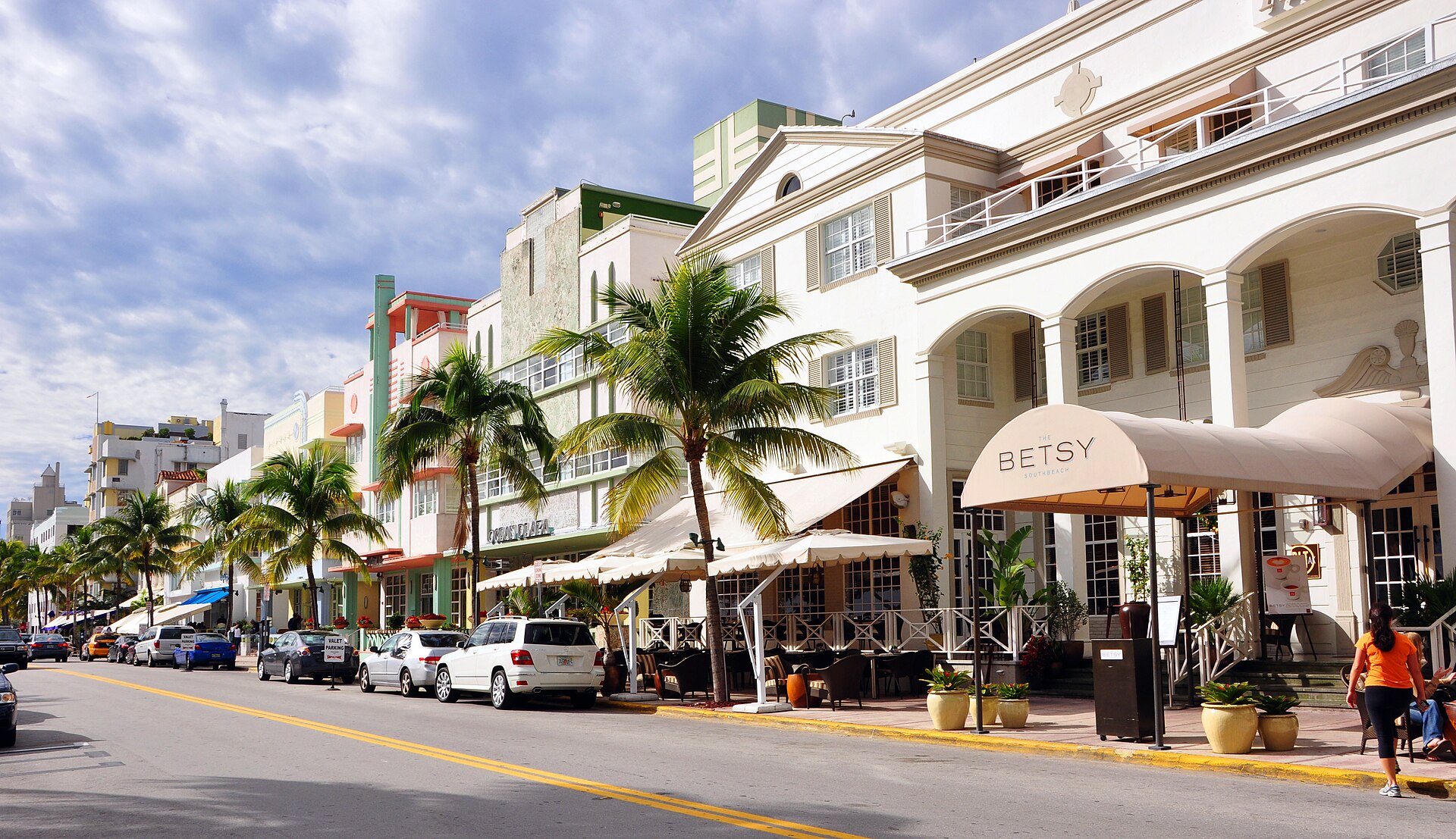
Miami and Miami Beach
Art Basel Miami Beach, December 4 to 6, 2026, with a ring of satellite fairs and private collections open to the public.
Miami Art Week guideCity guide
Photo: chensiyuan, Wikimedia Commons, CC BY-SA.
Collections and architecture
Chicago
The Art Institute for the encyclopedic day, the MCA for the contemporary one, and an architecture biennial whose sixth edition closed in February 2026.
Open to January 3, 2027
Pittsburgh
The 59th Carnegie International, If the word we, fills the Carnegie Museum of Art and four other venues with 61 artists, according to the museum.
The anniversary city
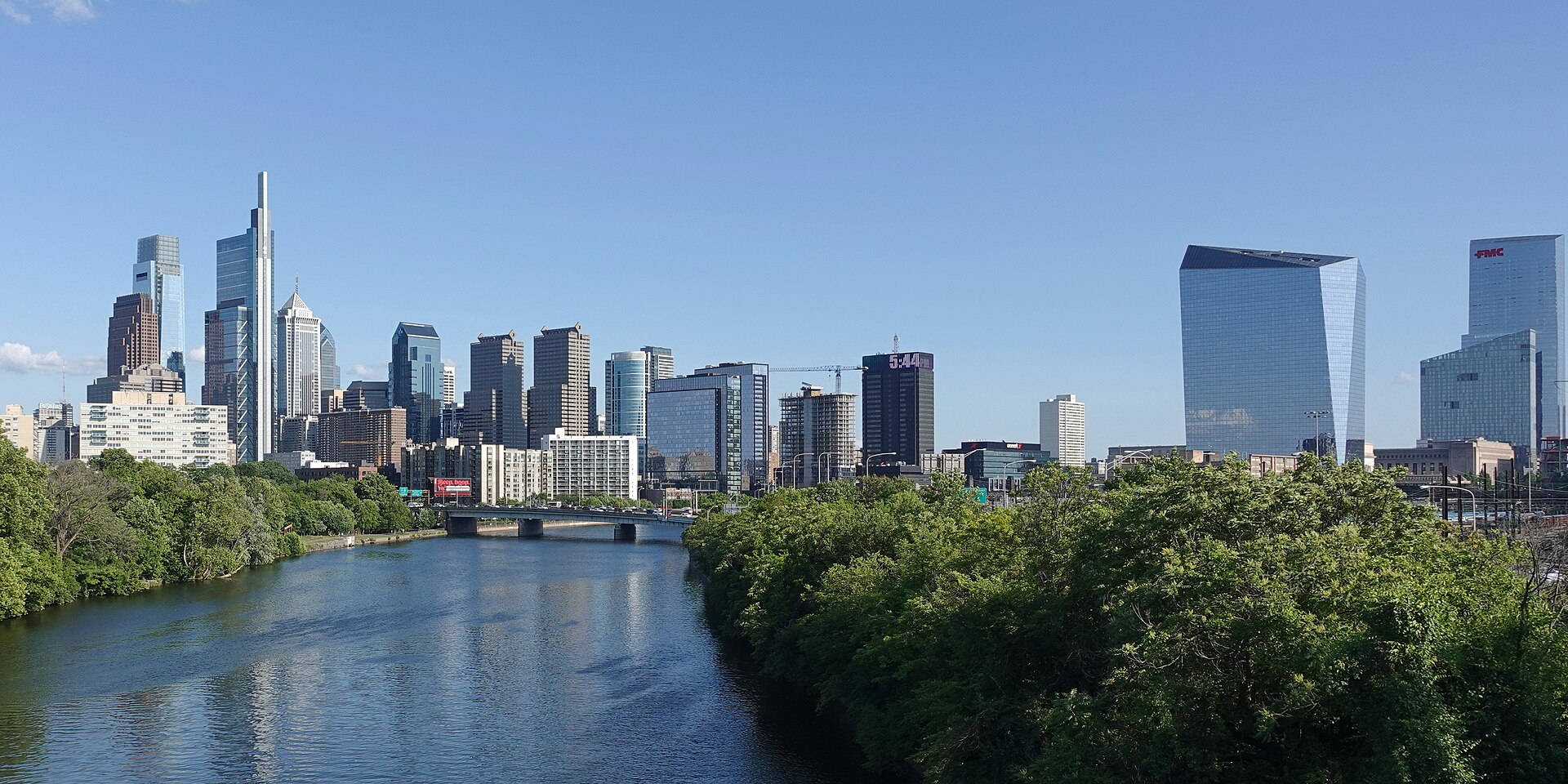
Philadelphia
Where the country’s 250th year is being marked, and where the question of how to tell national history is closest to the street.
Photo: 颐园居, Wikimedia Commons, CC BY-SA.
Biennales and fairs
The American Calendar
| Event | City | Most recent or next | What it is | Directory |
|---|---|---|---|---|
| Carnegie International | Pittsburgh | May 2, 2026 to January 3, 2027 | The oldest American survey of international art, 59th edition | Series |
| Art Basel Miami Beach | Miami Beach | December 4–6, 2026 | The largest fair in the Americas | Fair |
| Whitney Biennial | New York | 82nd edition: floor 5 closed August 23 and floor 1 September 7, 2026; floor 6 stays on view through October 12, 2026, per the museum. 2028 not yet announced | The survey of American art | Series |
| The Armory Show | New York | Held September 2026. 2027 dates not yet announced | New York’s September fair | 2026 edition |
| Frieze New York | New York | May 12–16, 2027, at The Shed, per Frieze | The compact spring fair | 2026 edition |
| Frieze Los Angeles | Los Angeles | February 25–28, 2027, in Santa Monica, per Frieze | The West Coast’s main fair | 2026 edition |
| Made in L.A. | Los Angeles | October 5, 2025 to March 1, 2026 | The Hammer Museum’s biennial of the region | Series |
| New Museum Triennial | New York | Listed for 2027. Dates not yet announced | Emerging artists from around the world | Series |
| Prospect New Orleans | New Orleans | Prospect.6 ran November 2, 2024 to February 2, 2025. Next not yet announced | A citywide triennial | Series |
| Performa | New York | November 1–23, 2025 | The performance biennial | Series |
| FotoFest | Houston | March 7 to May 10, 2026 | Photography biennial, 40 years old in 2026 | Series |
| Chicago Architecture Biennial | Chicago | September 19, 2025 to February 28, 2026 | Architecture, sixth edition | Series |
| Desert X | Coachella Valley | October 30, 2027 to May 7, 2028, per Desert X | Outdoor commissions in the desert | Series |
| Counterpublic | St. Louis | September 26 to December 12, 2026 | A triennial; the 2026 edition is titled Coyote Time | Organizer |
| NADA Miami | Miami | December 1–5, 2026 | The New Art Dealers Alliance fair, 24th edition | Organizer |
| FOG Design+Art | San Francisco | January 21–24, 2027 | Design and art fair | Organizer |
| Dallas Art Fair | Dallas | April 15–18, 2027 | 19th edition | Organizer |
| TEFAF New York | New York | May 14–18, 2027 | At the Park Avenue Armory, overlapping Frieze | Organizer |
Museums and players
Who to Know
Institutions
- The Metropolitan Museum of Art, New York. The encyclopedic museum, with about 6 million visits in 2025 by The Art Newspaper’s survey as summarized by Hypebeast.
- The Museum of Modern Art, New York. The modern canon and the argument with it.
- Whitney Museum of American Art, New York. Home of the biennial and, this month, of the labor dispute.
- Solomon R. Guggenheim Museum, New York. Settled with its union this autumn.
- Los Angeles County Museum of Art and the Hammer Museum, Los Angeles.
- Art Institute of Chicago, whose director has called international visitation sluggish.
- Hirshhorn Museum and Sculpture Garden and the Smithsonian American Art Museum, Washington.
- Dia Beacon, in the Hudson Valley, whose director leaves for Tate in January.
- Pérez Art Museum Miami, the anchor of the December week.
People
- Lonnie G. Bunch III, secretary of the Smithsonian until the end of 2026.
- Jessica Morgan, director of the Dia Art Foundation, named director of Tate from January 2027, as The Art Newspaper reported.
- Marcela Guerrero and Drew Sawyer, curators of the 2026 Whitney Biennial.
- Marc Glimcher, chief executive of Pace, who cut the gallery’s roster in June.
- Bridget Finn, director of Art Basel Miami Beach.
- Bonnie Brennan, chief executive of Christie’s.
- Naomi Beckwith, the American curator directing documenta 16 in Kassel in 2027.
Going there
How to Use the Country
Plan by season, not by state. The art year turns on New York’s big auction weeks in May and November, the Armory Show in September, and Miami in December, with the Frieze fairs in Los Angeles and New York between them. The Miami Art Week visitor guide is the most detailed thing on this site: fairs, tickets, museums, beds and beaches for December 4 to 6.
For everything else, start a trip on My Biennale and add cities as you go. Start a trip, then use the city guides, the ticket pages and the exhibition listings to fill it. A strike can change opening plans at short notice, so confirm hours with the museum the day before.
Distances are the American difficulty. New York to Beacon is a train ride; New York to Pittsburgh is a short flight; Los Angeles requires a car and patience. Biennale Traveller covers flights, trains, hotels and luggage for people who travel to look at art, and the North American biennale page lists the recurring shows by city.
Closing soon: Winslow Homer: Painter, Etcher at the Portland Museum of Art in Maine closes on October 18, 2026. The New York Times reported on October 1, 2026, that it is the museum’s best-attended exhibition of the year and that the museum books small tours of Homer’s studio at Prouts Neck, about 11 miles south.
What to watch
Five Things for 2027
- The next Smithsonian secretary. The Regents’ choice will show how much independence the institution keeps.
- The fiscal 2027 appropriations. The White House wants the NEA, NEH and IMLS closed. Congress has declined before. The House committee has approved $135 million for the NEA; the stopgap runs out on December 11.
- The charitable deduction. The first tax season under the new floor and cap will show whether gifts to museums fall.
- The middle of the market. ArtTactic says confidence has returned to it. Gallery closures say otherwise. One of them will be right by May.
- Museum contracts. The Whitney outcome sets the wage floor other unions will cite.
Sources. Art Basel and UBS Global Art Market Report 2026; Bank of America and ArtTactic; The Art Newspaper; Artnet News; NPR; American Alliance of Museums; Tax Foundation; Hyperallergic; Carnegie Museum of Art; The New York Times, September 28, 2026; The New York Times, October 1, 2026; TIME; ARTnews; Ocula; National Assembly of State Arts Agencies; NYC Mayor’s Office; LAist; Whitney Museum of American Art; Frieze; Desert X; Counterpublic; NADA; FOG Design+Art; Dallas Art Fair; TEFAF; Art Basel; the Biennale directory for event dates. Figures are as published by those sources; event dates should be confirmed with organizers. Corrections: contact@biennale.nyc.