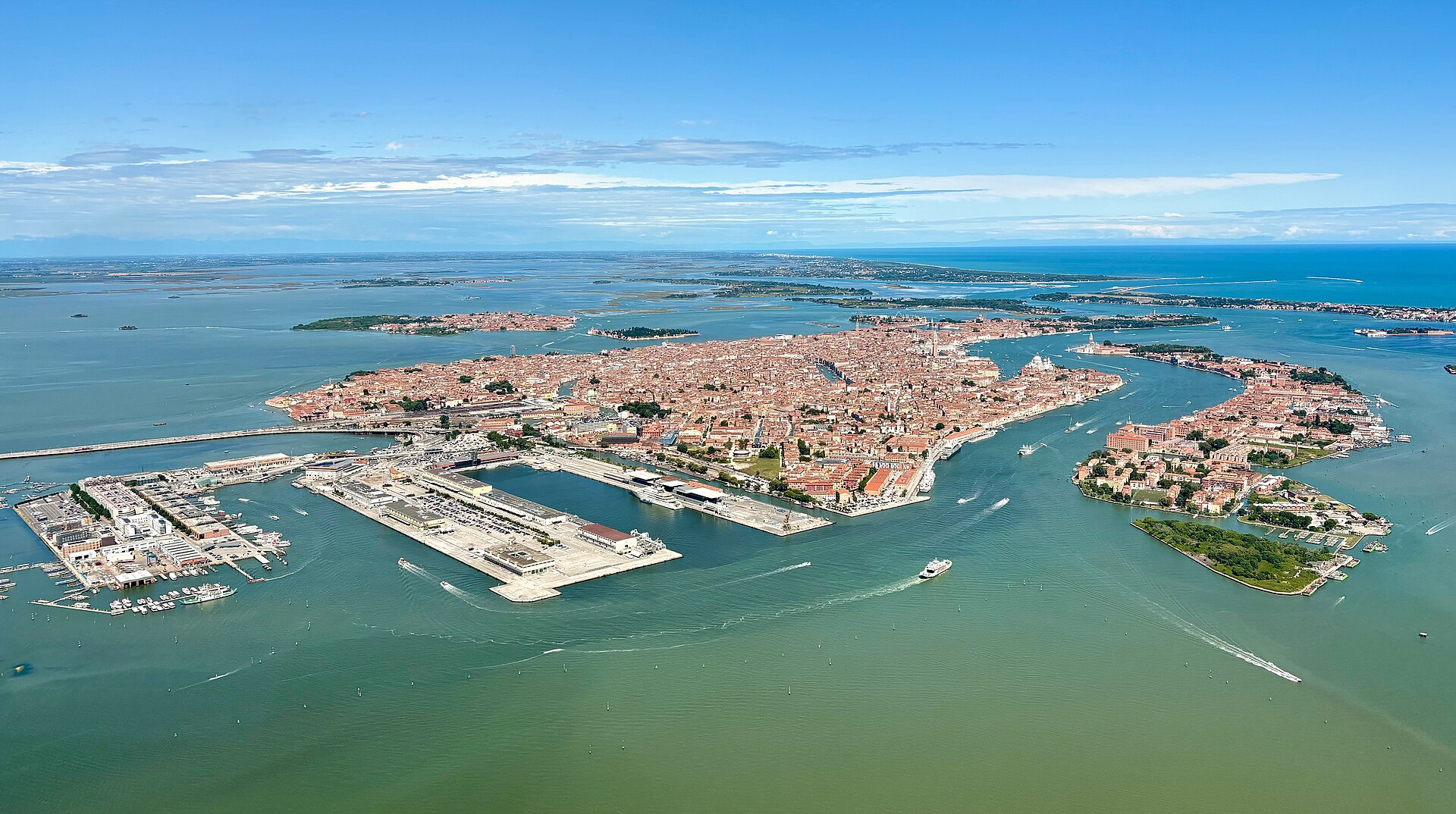
Veneto · Lagoon
Venice
The Biennale in the Giardini and Arsenale until November 22, with the Pinault spaces and the Peggy Guggenheim Collection year-round.
Photo: kallerna, Wikimedia Commons, CC BY-SA 4.0.
Biennale / Country hubs / Italy
Country hubs · Free to read · Updated October 5, 2026
Country hub · Europe
Rome cut the tax on art to the lowest rate in Europe and eased the export rules, then spent the spring arguing with its own Biennale about who decides what Venice shows.
Autumn 2026
Italy has done two things to its art world in eighteen months, and they point in opposite directions. It has let go of the market. Since July 2025 a sale of art carries 5% VAT, down from 22%, and since May 2026 an older work worth less than €50,000 can leave the country on a declaration, where the old line was €13,500. And it has tried to take hold of the exhibition. When the Venice Biennale accepted Russia’s return to the Giardini this year, the culture minister asked his own ministry’s representative on the board to resign, stayed away from an opening, and found that the foundation’s president would not move.
The thesis of this page is that both stories are about the same institution, the Italian state, discovering the limits of its reach. For half a century it policed the trade tightly and left the Biennale alone. In 2026 it has reversed the two settings. Dealers have what they asked for. Whether sales follow is not yet known: the one market figure on record for 2025 shows Italy down 2%, and nobody has published a full year under the new rate.
Venice, meanwhile, is in the last weeks of an edition that lost its jury, replaced its Golden Lions with a public vote, and saw more than 70 artists decline in advance to accept the result. The exhibition closes on November 22. The Venice Biennale visitor guide has the practical detail; what follows is the country around it, from Turin’s fair at the end of this month to the 50th Arte Fiera in February.
The market
The baseline is modest. Italy’s galleries, antique dealers and auction houses turned over €1.36 billion in 2023, with a wider economic effect of €3.86 billion, according to the Nomisma study commissioned by the trade and reported by Avvenire. The same study counted 1,618 galleries and 1,637 antique dealers, both numbers falling. For comparison, France alone sold $4.5 billion of art in 2025.
The government’s answer was fiscal. A decree of June 20, 2025 set a single 5% VAT rate on works of art, antiques and collectors’ items from July 1, replacing a system in which most gallery sales bore the full 22%. France charges 5.5% and Germany 7%, so Italy went from the highest rate among its neighbors to the lowest, as Finestre sull’Arte set out. Nomisma had argued that Italian collectors were paying up to 18% more than buyers abroad for the same work, and projected that at 5% the sector’s revenue could reach about €1.5 billion within three years.
That projection is still a projection. The Art Basel and UBS Art Market Report 2026 records Italian sales down 2% in 2025, a year that included only six months of the new rate. No full-year figure under 5% had been published at the time of writing. Not yet measured
The early evidence is anecdotal. At Artissima in November 2025, the first fair under the new rate, the gallery P420 reported 30 works sold at €5,000 to €40,000, The Art Newspaper reported. Foreign galleries have read the signal: Thaddaeus Ropac opened in Milan in September 2025, and Hauser & Wirth has agreed to buy part of Palazzo Forcella De Seta in Palermo, subject to official approval and with no opening date.
The second change came with Law No. 40 of March 17, 2026. The value below which a work more than 70 years old by a dead artist may be exported without a certificate of free circulation rose from €13,500 to €50,000. Below the line a declaration now suffices, valid for five years; books and library material stay at €13,500, and archaeology remains controlled whatever the price, according to the summary by the law firm Canella Camaiora. A foreign artist’s work can be held back only if it has specific relevance to Italian cultural history.
Supporters say the change makes Italian dealers competitive and brings the country closer to European practice, where the Union’s own line for paintings is €150,000. Critics see a one-way door. Anna Pelagotti, writing for Art-Test in April, argued that the law serves dealers and will drain the regional and lesser masters who document local history.
The ministry has also been spending. In March it bought Caravaggio’s portrait of Maffeo Barberini from a private Florentine owner for €30 million, among the highest prices the Italian state has paid for one work, and hung it in Palazzo Barberini, The Art Newspaper reported. Private giving has its own channel: the Art Bonus, a 65% tax credit on donations to public heritage, has drawn about €1.2 billion across 54,000 donations since 2014, by figures presented to Lombardy’s municipalities in June.
Not every public asset finds a taker. Milan’s tender to run the city-owned MUDEC for eight years closed on September 28, 2026, without a bid, including none from the incumbent, whose concession expires in March 2027, Finestre sull’Arte reported.

“Finally, VAT on works of art drops to 5 percent from 22 percent. This is a historic result.”
— Alessandro Giuli, Italy’s culture minister, June 20, 2025, as reported in English by Finestre sull’ArtePolitics and money
Culture in Italy runs through the Ministry of Culture in Rome, led by Alessandro Giuli. It appoints the directors of the state museums, funds heritage and cinema, and through its directorate for contemporary creativity, headed by Angelo Piero Cappello, commissions the Italian Pavilion in Venice. This year Giuli chose the artist Chiara Camoni, with the curator Cecilia Canziani, after a two-stage selection, as Finestre sull’Arte reported. The project is titled Con te con tutto.
La Biennale di Venezia is a different animal: a foundation with its own statute, its own board and its own president, Pietrangelo Buttafuoco. That distinction became the story of the year.
Russia had been absent since 2022. When the Biennale confirmed that the Russian pavilion would be used again in 2026, the European Commission condemned the decision and its agency opened a procedure to freeze a €2 million grant running to 2028, Euronews reported. Twenty-two countries protested alongside Ukraine. Giuli made his view known by going to Lviv instead of a Biennale inauguration, and on March 12 asked Tamara Gregoretti, the ministry’s representative on the board, to resign. She declined, saying she had followed the statute, according to Open.
The government was not of one mind. The deputy prime minister, Matteo Salvini, called the Commission’s pressure vulgar blackmail, and the president of the Veneto region, Alberto Stefani, said that peace is not built through censorship. Buttafuoco’s own defense was procedural. He told L’Espresso that the great misunderstanding was to credit him with a power of selection he does not hold: states that own pavilions apply, and the foundation does not vet them. He has described the Biennale as “the place where the world comes together”, in words quoted by The Art Newspaper. By Wikipedia’s account of the opening, the Russian display was open to the press in preview week and afterward could be seen only through the windows. Single source
Brussels did not wait for the close. The Commission’s executive agency, EACEA, terminated the €2 million grant on July 21, 2026, The Art Newspaper reported. The Biennale answered that the money paid for cinema projects unrelated to Russia and that it would challenge the decision, according to Reuters. In a September interview with Corriere della Sera, relayed in English by The Art Newspaper, Buttafuoco said that art, not Putin, had won in Venice. Giuli had said the opposite.
The second front was the prize. On April 22 the international jury said it would not consider participants from countries whose leaders face charges at the International Criminal Court, which meant Russia and Israel. All five jurors resigned on April 30. The Biennale, as Hyperallergic reported, dropped the Golden and Silver Lions for 2026 and created two Visitors’ Lions, voted by ticket holders and due on November 22. More than 70 artists and 22 national pavilions then withdrew from consideration.
“The jury acted like any conscionable people would have done. I’d rather support them than hope for some award.”
— Sohrab Hura, artist in the 2026 exhibition, to The Art Newspaper, May 11, 2026
The other side was put by Belu-Simion Fainaru, who represents Israel. He told the same paper that “as an artist, I am opposed to cultural boycotts as I believe in the importance of dialogue and exchange, especially in difficult times”. The Biennale’s reply to the withdrawals was dry: it took note, and said those who win will simply not collect.
That did not settle it. By June 3, 106 artists said they were weighing legal action because their names still stood on the awards list. The Biennale said votes for anyone who asked to withdraw would not be counted, The Art Newspaper reported.
Behind the theater is a ministry short of money. The 2026 budget cut the national cinema fund, worth €696 million a year, by €150 million this year and €200 million next. Giuli defended the cuts as necessary to protect heritage spending, while his own undersecretary called them an error to be recovered, Il Post reported. The ministry’s whole budget for 2026 is €3,066.6 million, 5.8% less than in 2025 and about 0.3% of state spending, according to the Chamber of Deputies’ budget dossier. Democratic Party deputies on the culture committee said it showed no vision, Exibart reported. Plans to extend Rome’s Galleria Borghese have drawn what The Art Newspaper’s headline called a fierce response.
Society
The audience is not in doubt. Italy’s state museums and sites received 60.8 million visitors in 2024, the highest figure since 2014, and took about €382 million at the door, according to the Ministry of Culture. Venice’s preview week drew 27,935 people, 4% more than in 2024, and about 10,000 came on the first public day, by the Biennale’s count. A full-season figure will follow the close.
Venice has put a price on the crowd. Its day-visitor fee (€5, or €10 for late booking) applied on 60 days in 2026 and raised €5.2 million from just under 680,000 tickets. The city’s budget councillor has floated a rise to as much as €30 from 2027, Reuters reported in September.
Contemporary art, though, is largely a private affair. The rooms that set the agenda in Milan belong to a fashion house and a tire maker: Fondazione Prada and Pirelli HangarBicocca. In Venice the Pinault Collection holds both Palazzo Grassi and Punta della Dogana. Turin has the Fondazione Sandretto Re Rebaudengo, and its fair, Artissima, lists the bank Intesa Sanpaolo as main partner.
The Art Bonus shows the same habit at smaller scale. Some 1,200 of Italy’s 7,894 municipalities have registered projects, and the 8,500 schemes funded so far are mostly restorations. The state keeps the monuments standing. Private money decides most of what is new.
Record takings sit beside insecure jobs. On January 4, 2026, more than 100 people protested at the Uffizi after the ticketing contract passed to CoopCulture and long-serving seasonal staff were not rehired. CoopCulture says it complied fully with the tender; the union Sudd Cobas demands permanent contracts, The Art Newspaper reported. On May 8 a 24-hour strike closed national pavilions at the Biennale, in what Hyperallergic described as the first cultural strike in its 131 years. A coalition of 19 groups then called a national culture strike for June 12 over pay, sick pay, and unregulated volunteering, according to Ocula.
The cities
Italy has no single art capital. Venice has the exhibition, Milan the money, Rome the ministry and Turin the fair with the sharpest eye. Naples and Bologna each run on their own clock.
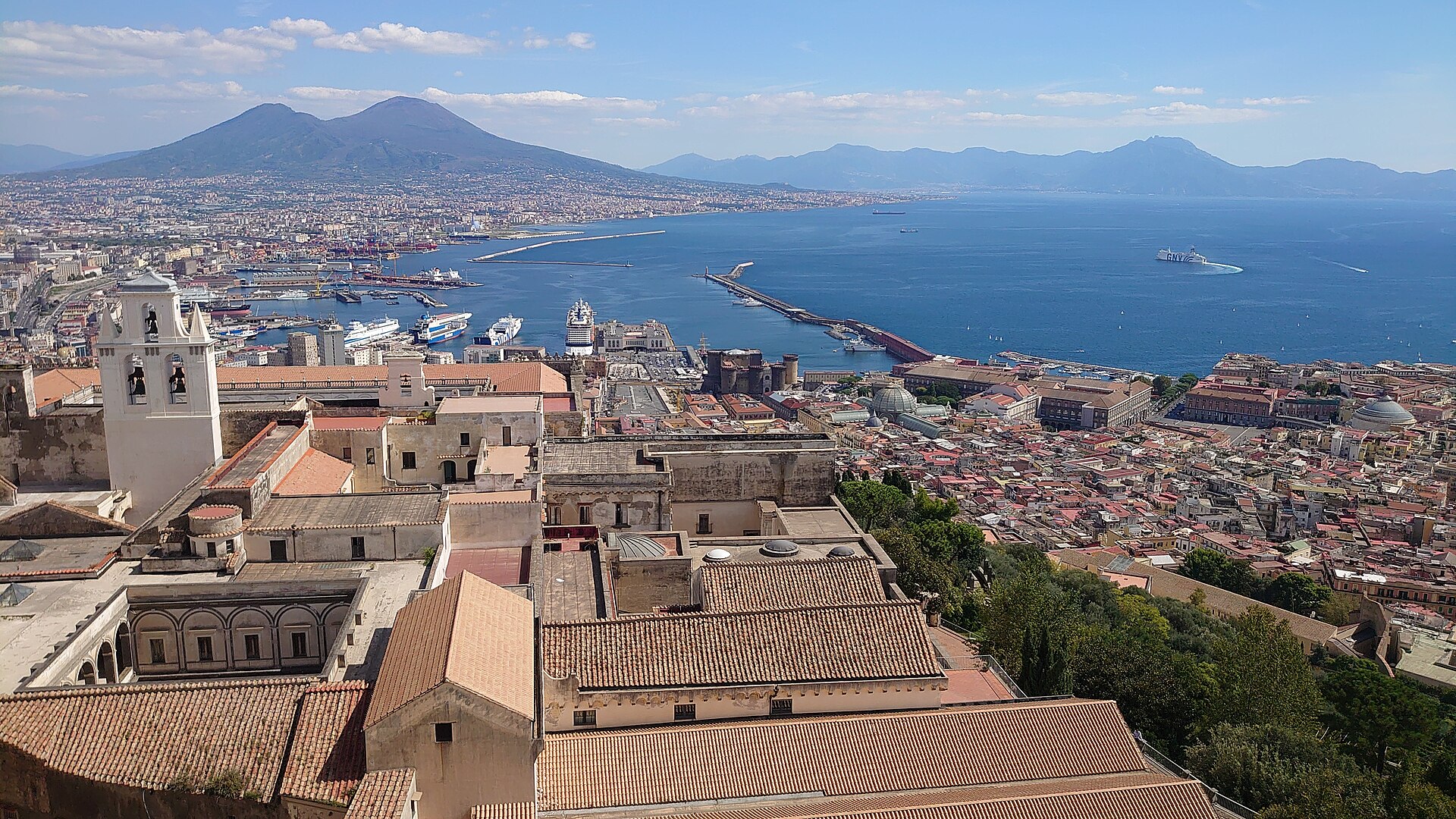
Veneto · Lagoon
The Biennale in the Giardini and Arsenale until November 22, with the Pinault spaces and the Peggy Guggenheim Collection year-round.
Photo: kallerna, Wikimedia Commons, CC BY-SA 4.0.
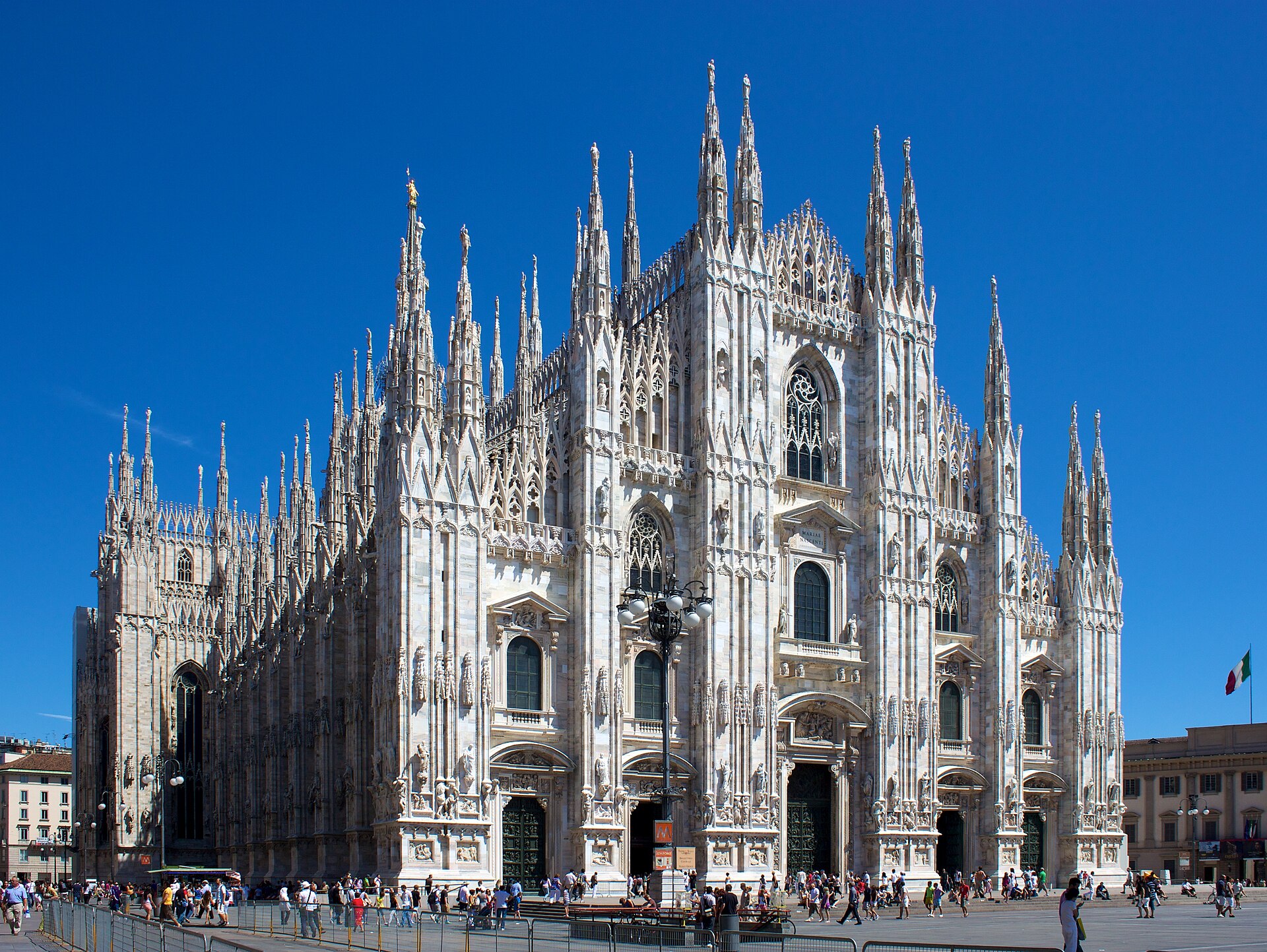
Lombardy
Fondazione Prada, Pirelli HangarBicocca, the Museo del Novecento and the Triennale, plus the country’s densest gallery scene.
Photo: Jiuguang Wang, Wikimedia Commons, CC BY-SA 3.0.
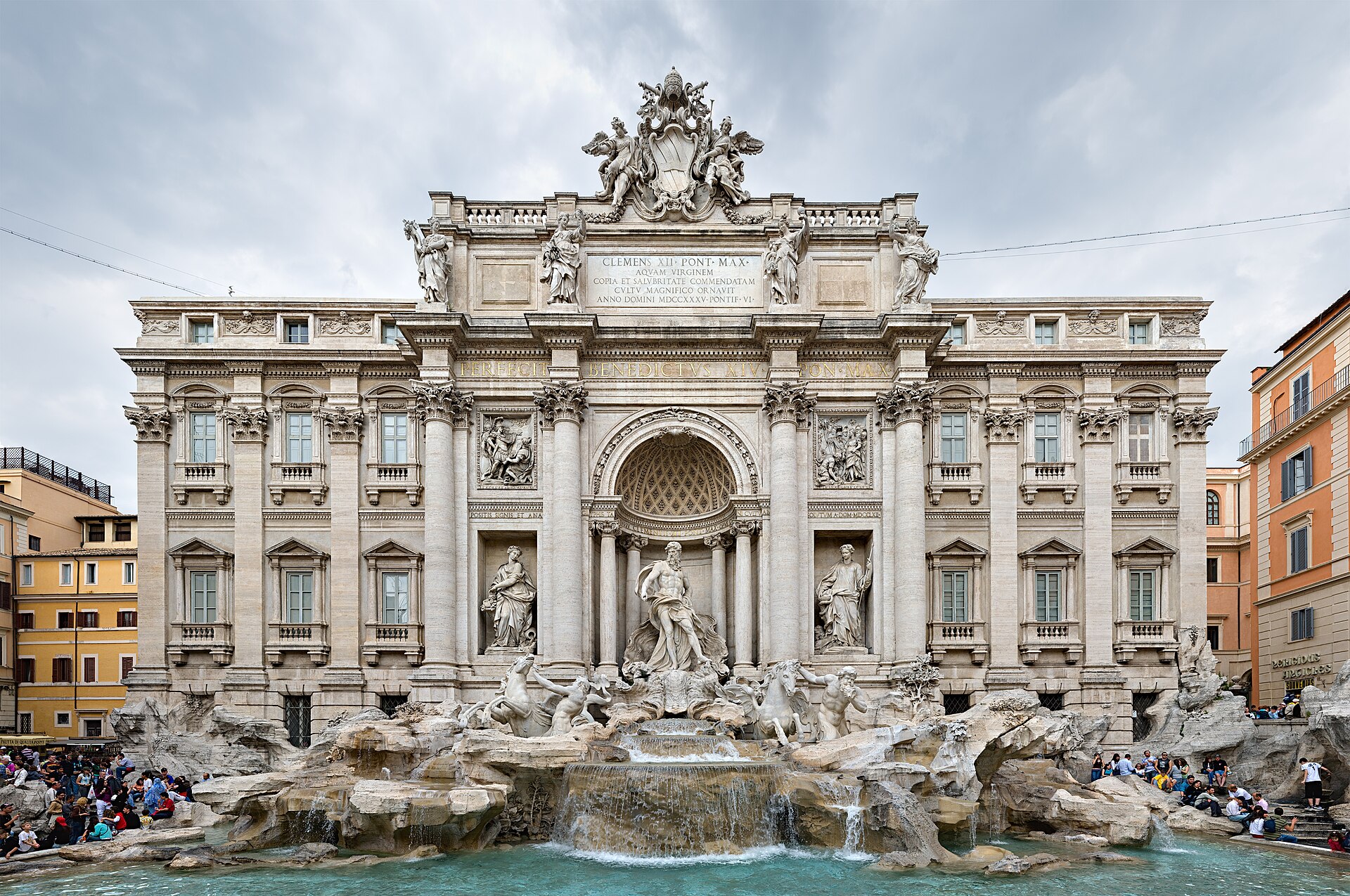
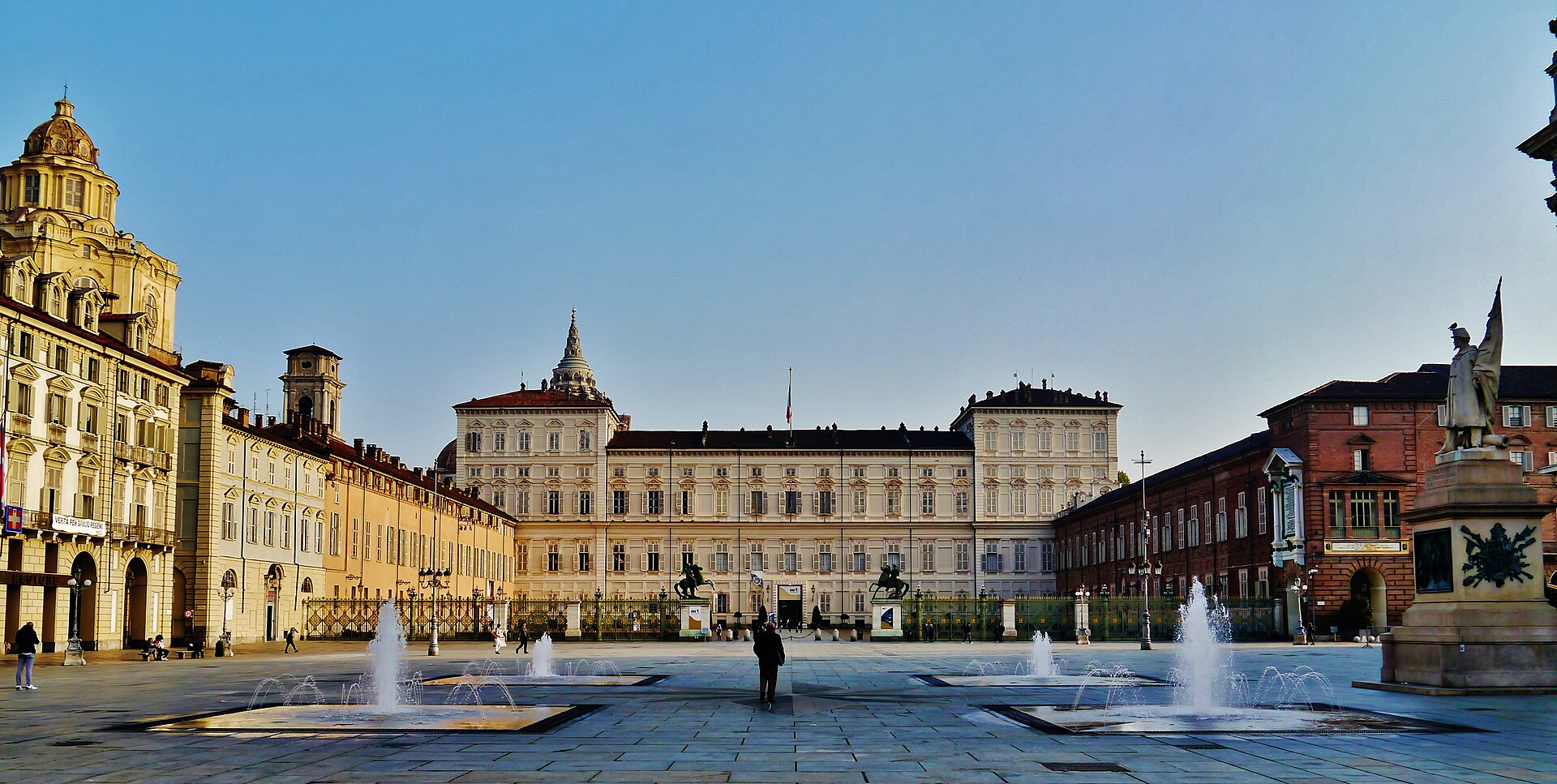
Piedmont
Artissima at the Oval, Castello di Rivoli on the hill, OGR in the old railway works and the Sandretto foundation.
Photo: Zairon, Wikimedia Commons, CC BY-SA 4.0.
Campania
Museo Madre for contemporary art, Capodimonte for everything before it, and the Fondazione Morra Greco in the old center.
Photo: Richard Nevell, Wikimedia Commons, CC BY-SA 4.0.
Tuscany
The Renaissance city also hosts the Florence Biennale, next scheduled for October 2027.
Bologna rewards more than a fair weekend. The New York Times reported in a March 2026 guide that the Museo Ottocento Bologna, opened in 2023, shows 85 works by the city’s 19th- and early-20th-century painters, and that the medieval Due Torri are closed for repairs until at least 2028. The Bologna city page keeps the listings.
The outlier is Cortina d’Ampezzo, the Dolomite resort that co-hosted the 2026 Winter Olympics with Milan. It is a ski town with a serious small museum: the Mario Rimoldi Museum of Modern Art holds a local collector’s gift of more than 300 works, Giorgio de Chirico and Giorgio Morandi among them, the Times reported in January 2026. The municipal museums closed during the Games, so confirm opening before making the trip.
In Venice, the Times critic Jason Farago chose five places for art in July 2026, most of them quiet, led by Antonello da Messina’s damaged Pietà at the Museo Correr. His advice, as quoted in The New York Times: “Take it slowly, look past the selfie sticks, and Venice is still sublime.” A second Times article that month followed the rail line west to Giotto’s Scrovegni Chapel in Padua, Andrea Palladio’s Teatro Olimpico in Vicenza, and Verona, where ArtVerona opens on October 9.
Biennales and fairs
The table sets out the recurring events with the dates their organizers have published. Where a date could not be confirmed, it says so.
| Event | City | Next or most recent | What it is | Directory |
|---|---|---|---|---|
| Venice Biennale (Art) | Venice | 61st edition, In Minor Keys, May 9–November 22, 2026 | The oldest and largest international art exhibition; 99 national participations | 2026 edition · Series |
| Venice Architecture Biennale | Venice | May 8–November 21, 2027 | The architecture exhibition, in alternate years | 2027 edition · Series |
| Artissima | Turin | 33rd edition, October 30–November 1, 2026, Oval Lingotto | Contemporary fair; 180 galleries from 35 countries; director Luigi Fassi | 2026 page |
| ArtVerona | Verona | 21st edition, October 9–11, 2026, Veronafiere, per the fair | Art fair; 113 galleries in five sections | Not yet listed |
| Arte Fiera | Bologna | 50th edition, February 5–7, 2027 (preview February 4), per the fair’s announcement | Modern and contemporary fair; artistic director Davide Ferri | Not yet listed |
| miart | Milan | 2027 dates not confirmed | Milan’s modern and contemporary fair, held in spring | Not yet listed |
| Paris Internationale Milano | Milan | First edition April 2026, in the week of miart. 2027 not yet announced | Milan edition of the Paris gallery fair; 34 galleries in its first year, per The Art Newspaper | Not yet listed |
| Triennale Milano | Milan | Most recent international exhibition 2025. Next not yet announced | Design and architecture triennial | Series page |
| Quadriennale di Roma | Rome | 18th edition, Fantastica, October 11, 2025–January 18, 2026 | Survey of Italian art, every four years | 2025 edition · Series |
| Florence Biennale | Florence | 16th edition, October 23–31, 2027 | Contemporary art and design exhibition | 2027 edition |
| Manifesta | Trentino-South Tyrol (2008), Palermo (2018) | No Italian edition scheduled; 2028 goes to Coimbra, Portugal | The roving European biennale | Series page |
Museums and players
Going there
For Venice this year, time is short. The Biennale closes on November 22, and late October and November are the calm weeks, with shorter lines and cooler light. The Venice Biennale visitor guide covers tickets, the two main sites and how to pace them; the Venice city page lists what else is open. Allow two days for the Giardini and the Arsenale.
The north makes a natural loop by rail. Artissima runs in Turin from October 30 to November 1, Milan is about an hour away by fast train, and Venice about two and a half hours beyond it. A traveler with a week can see a fair, the Milan foundations and the last days of the Biennale without flying. Build the route at My Biennale trips and check tickets before leaving, since the larger museums often require booking.
Winter and spring belong to Rome, Naples and Bologna, where Arte Fiera opens on February 5. Biennales in Europe places the Italian calendar among its neighbors, Art in Switzerland covers the next country north, and Biennale Traveller has the pieces on flights, beds and seasons. Everything here is free to read.
Rome has a category of bed that most visitors never find. The New York Times reported in April 2026 that about 350 guesthouses in the city belong to the Catholic Church, and that the Italian Religious Hospitality Association puts an average double at €90 a night against €190 for a hotel. Booking is mostly by email or phone, and several houses set a curfew.
2027
Sources. Finestre sull’Arte on the VAT decree, the Italian Pavilion and Artissima; Avvenire on the Nomisma study; Art Basel and UBS Art Market Report 2026; Chambers Art and Cultural Property Law 2026; Canella Camaiora and Art-Test on Law 40/2026; Ministry of Culture; Art Bonus; La Biennale di Venezia; Euronews; Open; L’Espresso; Hyperallergic; Il Post; The Art Newspaper on the award withdrawals and the Caravaggio; The Art Newspaper also on the EU grant, Buttafuoco in September, the threatened legal action, Artissima 2025, Ropac in Milan, Hauser & Wirth in Palermo, the Uffizi protest and Paris Internationale Milano; Reuters via KFGO on the Biennale’s challenge and Reuters via Daily Sabah on the access fee; Camera dei deputati and Exibart on the 2026 budget; Finestre sull’Arte on the MUDEC tender; Hyperallergic on the May 8 strike; Ocula on the national culture strike; ArtVerona; The New York Times on art in Venice, the Veneto, Bologna, Cortina d’Ampezzo and Rome’s religious guesthouses. Directory listings from My Biennale. Not found and so left out: sales data for a full year under the 5% rate, the result of the Biennale’s challenge to the EU decision, and 2027 dates for miart. Corrections: contact@biennale.nyc.